International Joint Research Center of National Animal Immunology, College of Veterinary Medicine, Henan Agricultural Universitygrid.108266.b, Zhengzhou, Henan, People's Republic of China.
Henan Engineering Laboratory of Animal Biological Products, Henan Agricultural Universitygrid.108266.b, Zhengzhou, Henan, People's Republic of China.
Microbiol Spectr. 2022 Dec 21;10(6):e0328222. doi: 10.1128/spectrum.03282-22. Epub 2022 Nov 15.
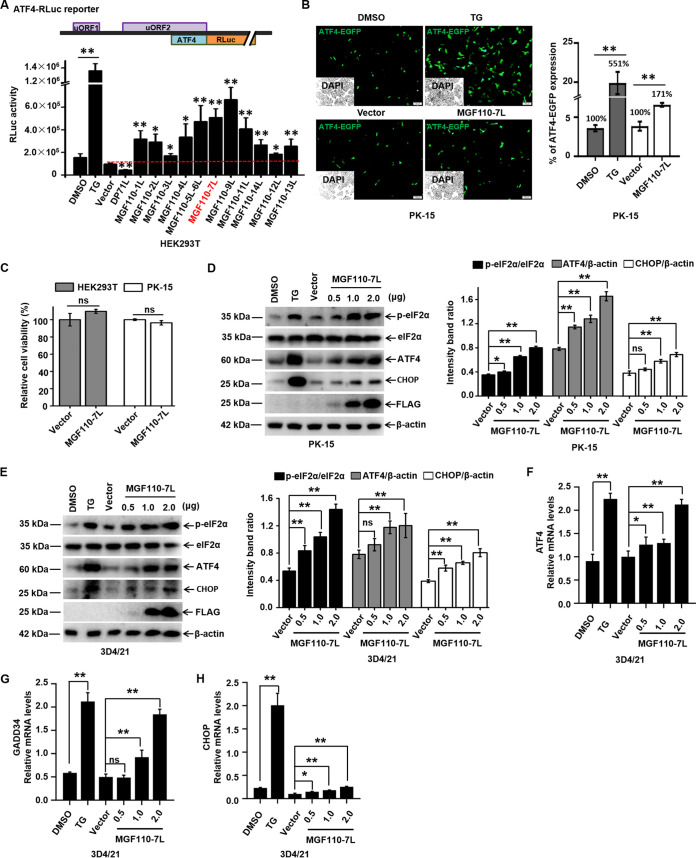
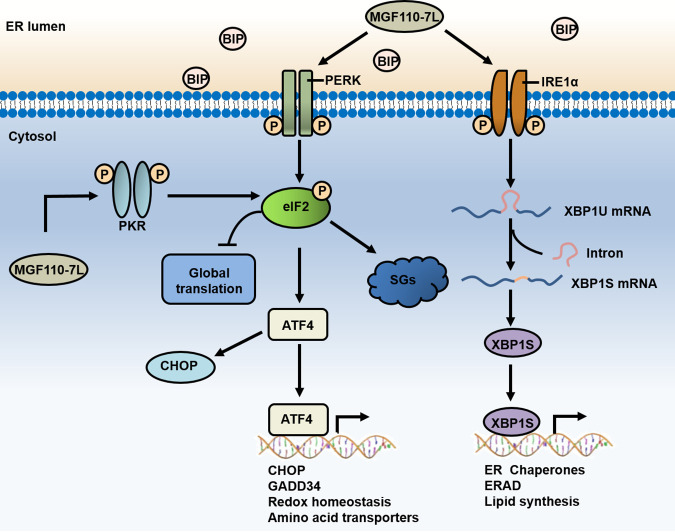
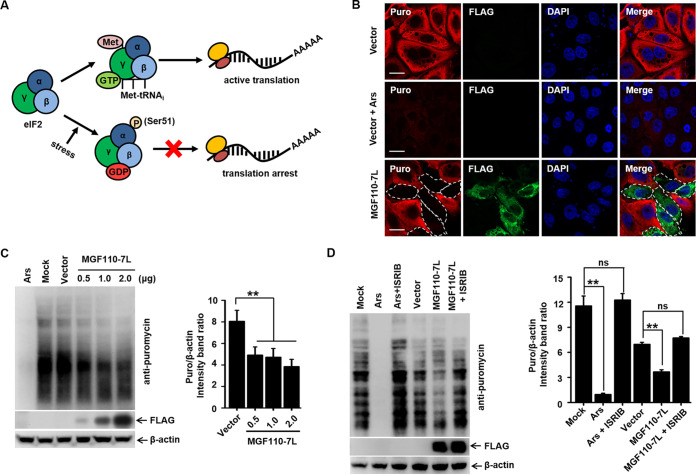
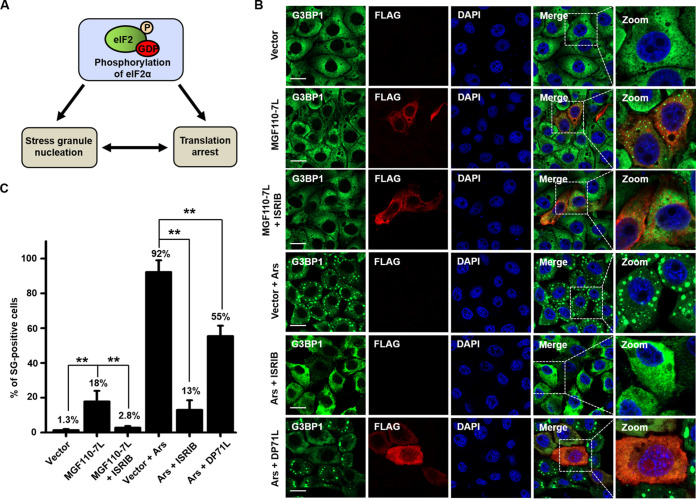
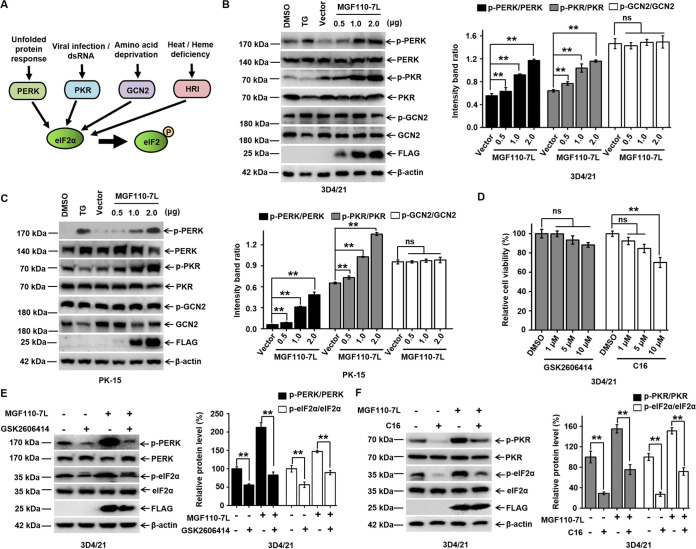
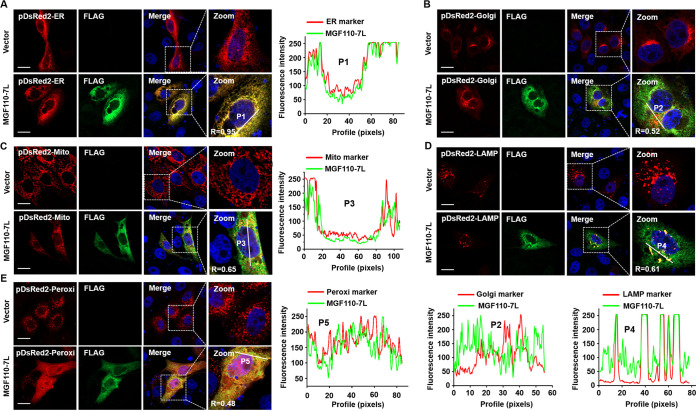
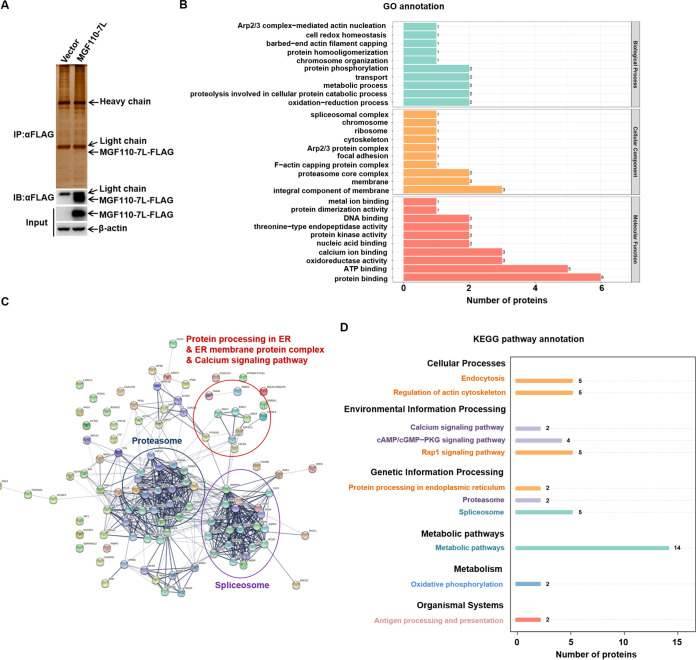
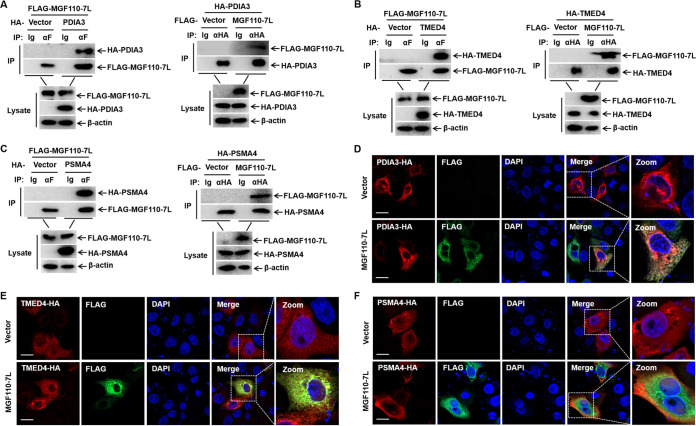
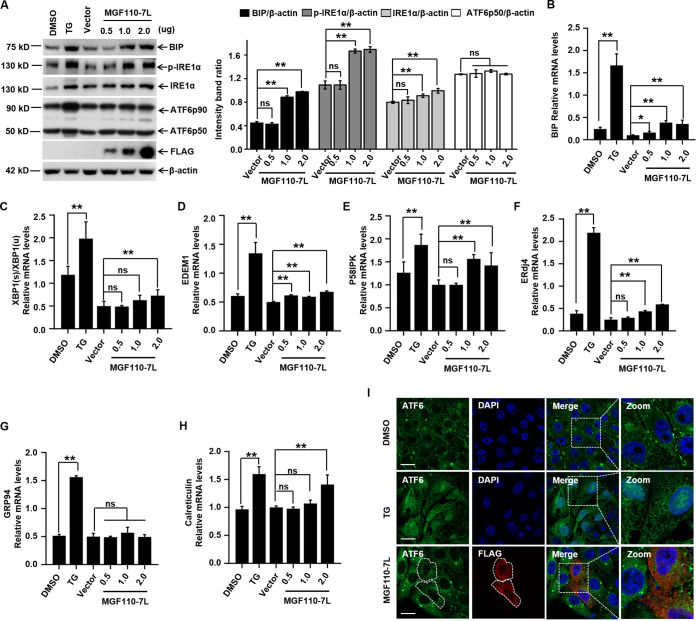
African swine fever (ASF) is a highly contagious and often lethal disease of pigs caused by ASF virus (ASFV) and recognized as the biggest killer in global swine industry. Despite exhibiting incredible self-sufficiency, ASFV remains unconditionally dependent on the host translation machinery for its mRNA translation. However, less is yet known regarding how ASFV-encoded proteins regulate host translation machinery in infected cells. Here, we examined how ASFV interacts with the eukaryotic initiation factor 2α (eIF2α) signaling axis, which directs host translation control and adaptation to cellular stress. We found that ASFV MGF110-7L, a previously uncharacterized member of the multigene family 110, remarkably enhanced the phosphorylation level of eIF2α. In porcine alveolar macrophage 3D4/21 and porcine kidney-15 cells, MGF110-7L triggered eIF2α signaling and the integrated stress response, resulting in the suppression of host translation and the formation of stress granules (SGs). Mechanistically, MGF110-7L-induced phosphorylation of eIF2α was mediated via protein kinase R (PKR) and PKR-like endoplasmic reticulum (ER) kinase (PERK), and this process was essential for host translation repression and SG formation. Notably, our subsequent analyses confirmed that MGF110-7L was overwhelmingly retained in the ER and caused a specific reorganization of the secretory pathway. Further proteomic analyses and biochemical experiments revealed that MGF110-7L could trigger ER stress and activate the unfolded protein response, thus contributing to eIF2α phosphorylation and translation reprogramming. Overall, our study both identifies a novel mechanism by which ASFV MGF110-7L subverts the host protein synthesis machinery and provides further insights into the translation regulation that occurs during ASFV infection. African swine fever (ASF) has become a socioeconomic burden and a threat to food security and biodiversity, but no commercial vaccines or antivirals are available currently. Understanding the viral strategies to subvert the host translation machinery during ASF virus (ASFV) infection could potentially lead to new vaccines and antiviral therapies. In this study, we dissected how ASFV MGF110-7L interacts with the eIF2α signaling axis controlling translational reprogramming, and we addressed the role of MGF110-7L in induction of cellular stress responses, eIF2α phosphorylation, translation suppression, and stress granule formation. These results define several molecular interfaces by which ASFV MGF110-7L subverts host cell translation, which may guide research on antiviral strategies and dissection of ASFV pathogenesis.
非洲猪瘟(ASF)是一种由 ASF 病毒(ASFV)引起的高度传染性且通常致命的猪病,被认为是全球养猪业的最大杀手。尽管 ASFV 表现出令人难以置信的自给自足能力,但它仍然无条件地依赖宿主翻译机制来进行其 mRNA 翻译。然而,目前对于 ASFV 编码蛋白如何在感染细胞中调节宿主翻译机制知之甚少。在这里,我们研究了 ASFV 如何与真核起始因子 2α(eIF2α)信号轴相互作用,该信号轴指导宿主翻译控制和对细胞应激的适应。我们发现,ASFV MGF110-7L,一种多基因家族 110 中以前未被表征的成员,显著增强了 eIF2α 的磷酸化水平。在猪肺泡巨噬细胞 3D4/21 和猪肾 15 细胞中,MGF110-7L 触发了 eIF2α 信号和综合应激反应,导致宿主翻译抑制和应激颗粒(SGs)的形成。在机制上,MGF110-7L 诱导的 eIF2α 磷酸化是通过蛋白激酶 R(PKR)和 PKR 样内质网(ER)激酶(PERK)介导的,这一过程对于宿主翻译抑制和 SG 形成是必不可少的。值得注意的是,我们随后的分析证实,MGF110-7L 主要保留在 ER 中,并导致分泌途径的特定重排。进一步的蛋白质组学分析和生化实验表明,MGF110-7L 可以触发 ER 应激并激活未折叠蛋白反应,从而导致 eIF2α 磷酸化和翻译重编程。总体而言,本研究不仅确定了 ASFV MGF110-7L 颠覆宿主蛋白合成机制的新机制,还进一步深入了解了 ASFV 感染期间发生的翻译调控。非洲猪瘟(ASF)已成为社会经济负担,威胁到粮食安全和生物多样性,但目前尚无商业疫苗或抗病毒药物。了解 ASFV 感染期间病毒颠覆宿主翻译机制的策略可能会导致新的疫苗和抗病毒疗法。在这项研究中,我们剖析了 ASFV MGF110-7L 如何与控制翻译重编程的 eIF2α 信号轴相互作用,并探讨了 MGF110-7L 在诱导细胞应激反应、eIF2α 磷酸化、翻译抑制和应激颗粒形成中的作用。这些结果定义了 ASFV MGF110-7L 颠覆宿主细胞翻译的几个分子界面,这可能为抗病毒策略的研究和 ASFV 发病机制的剖析提供指导。