State Key Laboratory of Veterinary Biotechnology, National African Swine Fever Para-reference Laboratory, National High Containment Facilities for Animal Diseases Control and Prevention, Harbin Veterinary Research Institutegrid.38587.31, Chinese Academy of Agricultural Sciences, Harbin, China.
Northeast Agricultural University, Harbin, China.
J Virol. 2022 Feb 9;96(3):e0166721. doi: 10.1128/JVI.01667-21. Epub 2021 Nov 17.
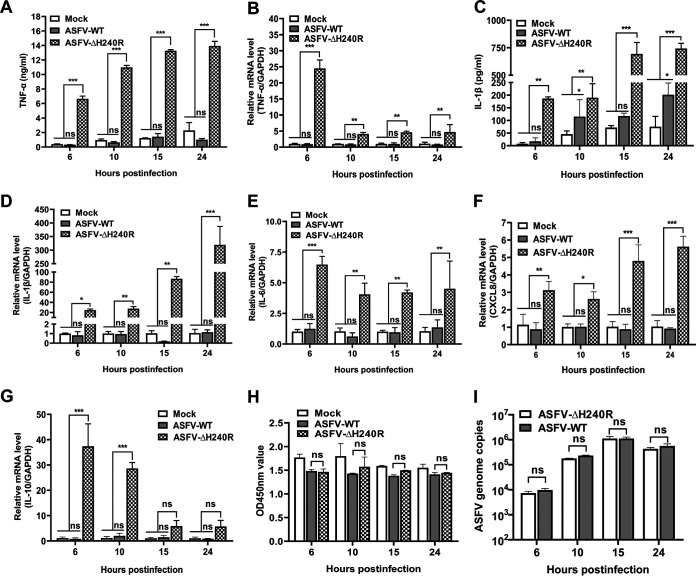
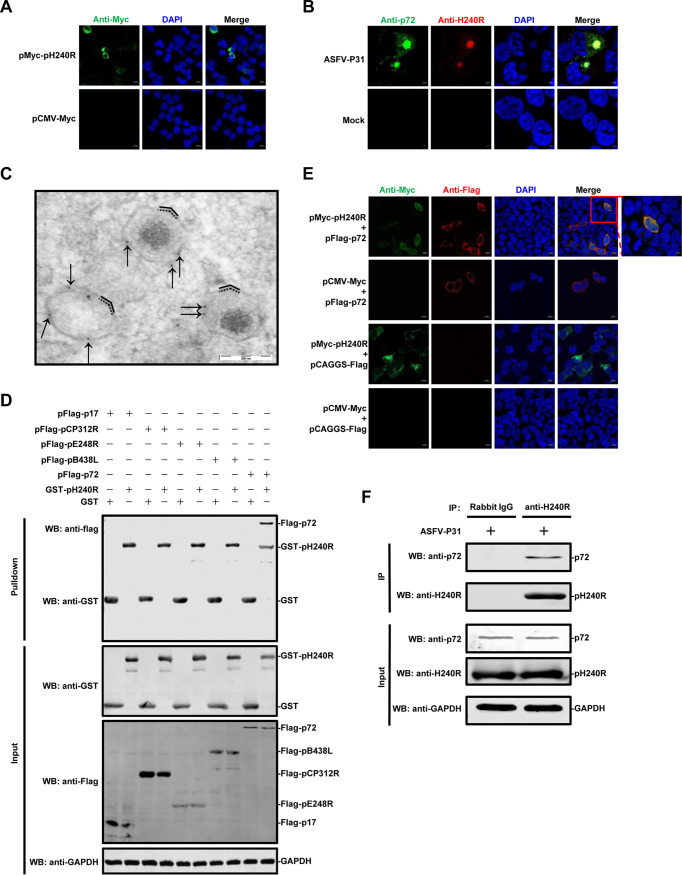
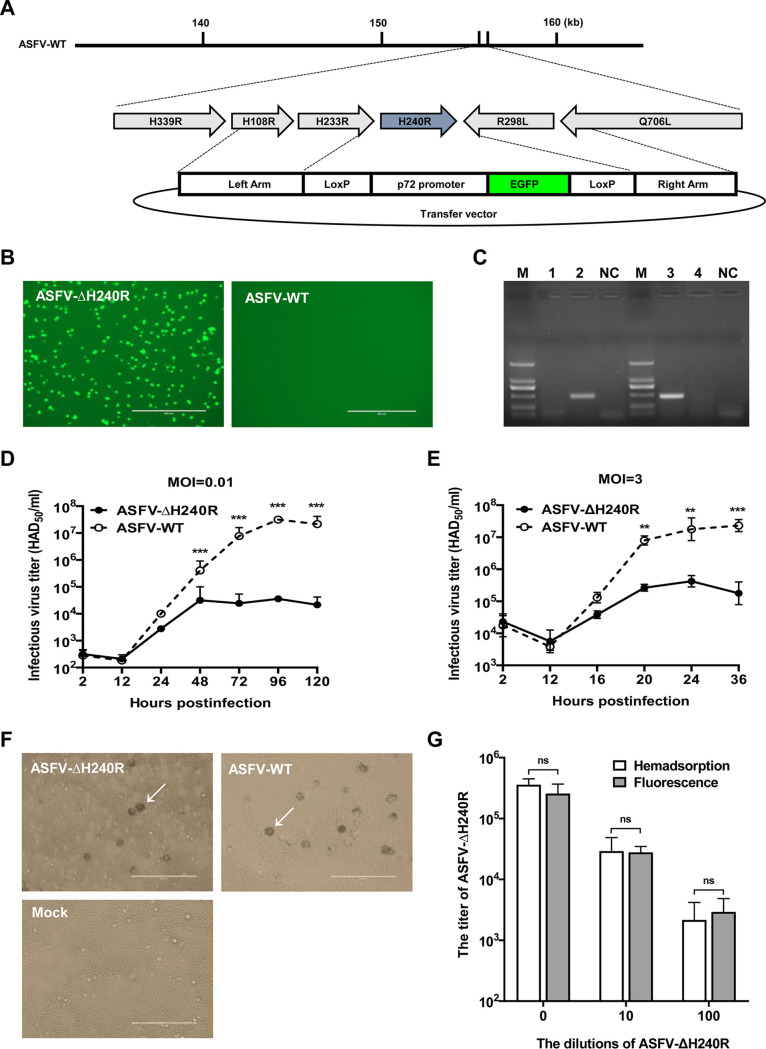
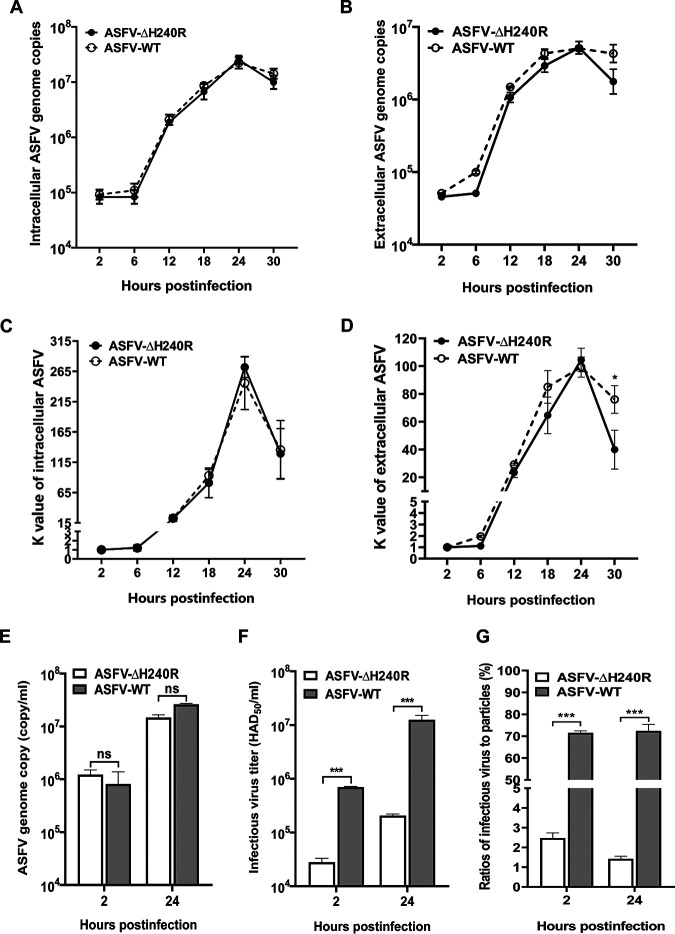
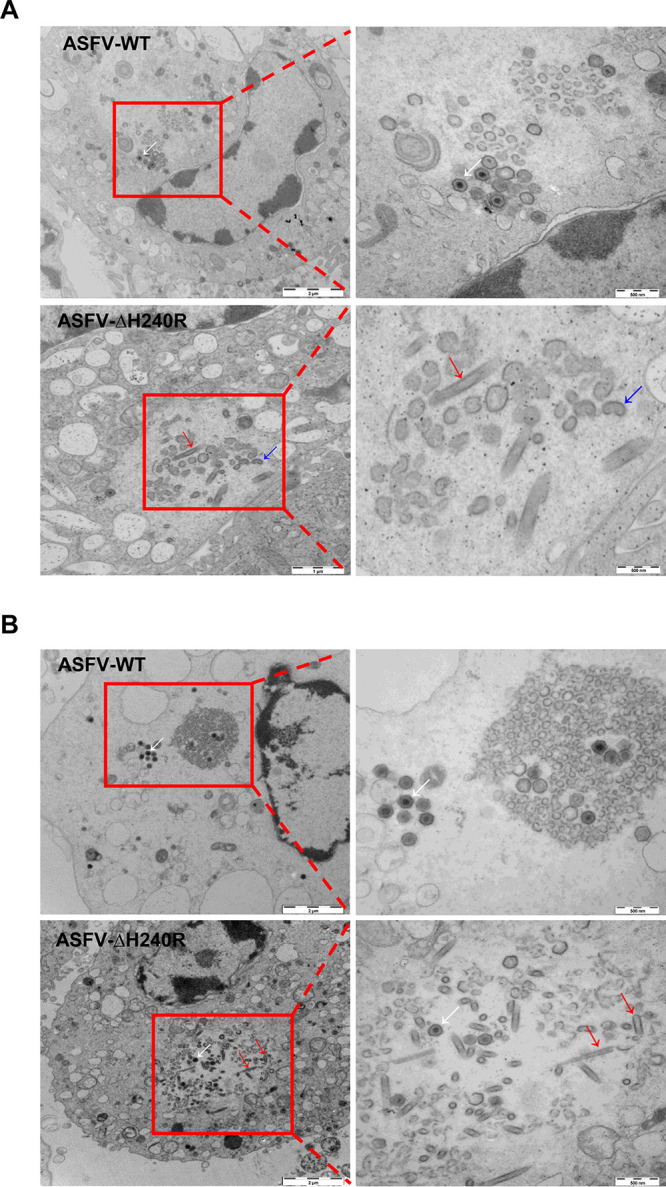
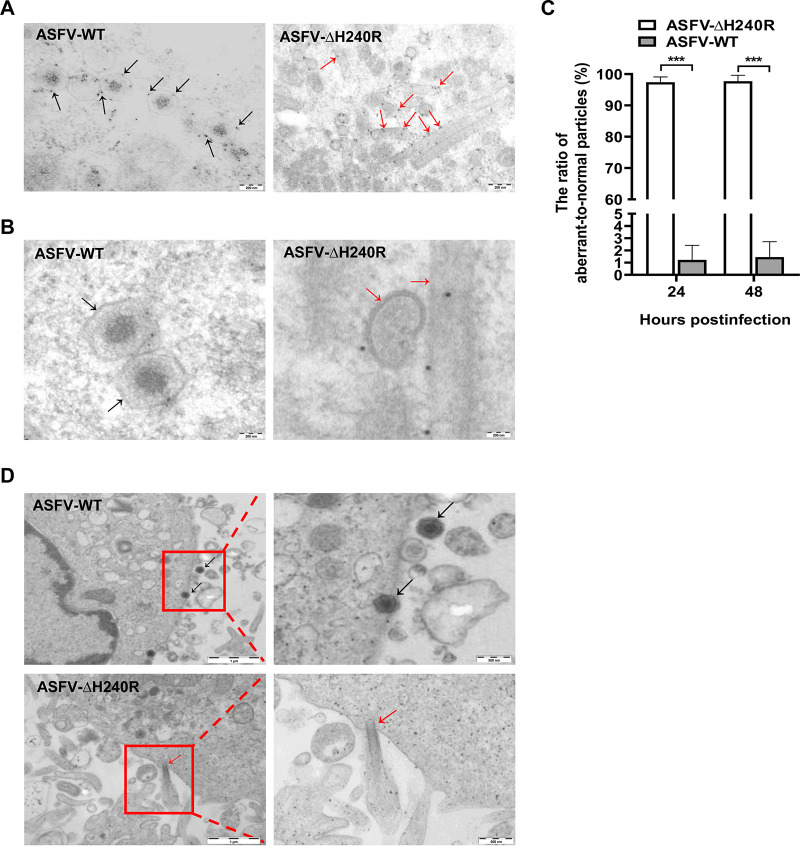
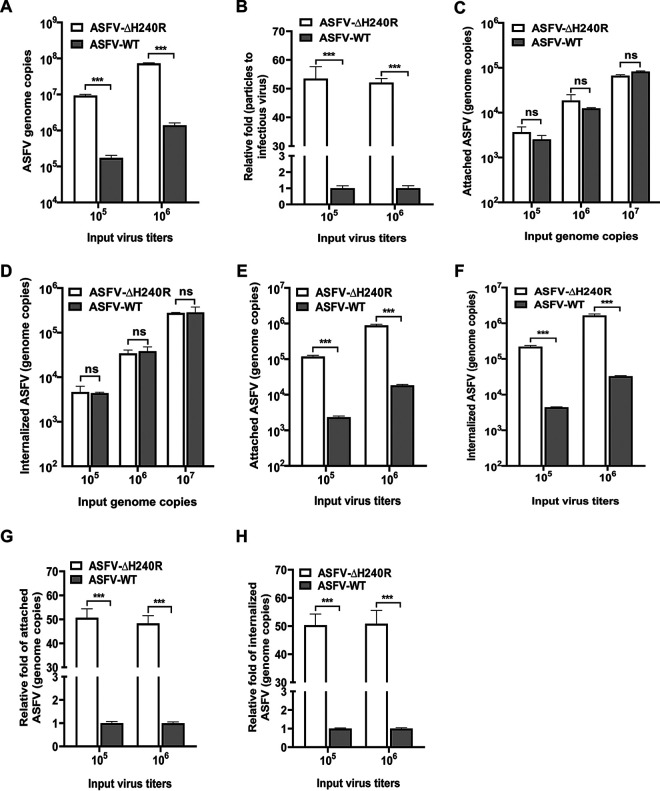
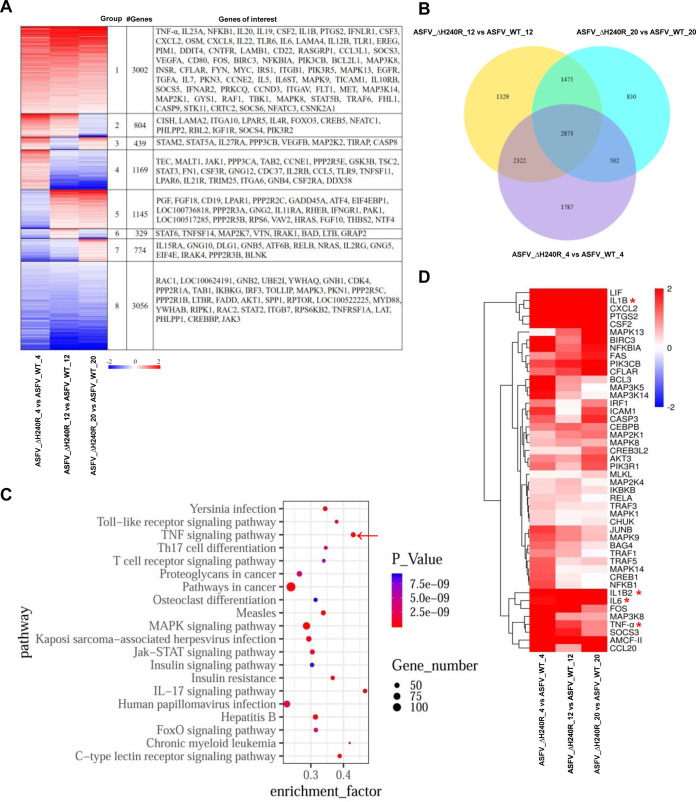
African swine fever virus (ASFV) is a complex nucleocytoplasmic large DNA virus that causes African swine fever, a lethal hemorrhagic disease that currently threatens the pig industry. Recent studies have identified the viral structural proteins of infectious ASFV particles. However, the functional roles of several ASFV structural proteins remain largely unknown. Here, we characterized the function of the ASFV structural protein H240R (pH240R) in virus morphogenesis. pH240R was identified as a capsid protein by using immunoelectron microscopy and interacted with the major capsid protein p72 by pulldown assays. Using a recombinant ASFV, ASFV-ΔH240R, with the gene deleted from the wild-type ASFV (ASFV-WT) genome, we revealed that the infectious progeny virus titers were reduced by approximately 2.0 logs compared with those of ASFV-WT. Furthermore, we demonstrated that the growth defect was due to the generation of noninfectious particles with a higher particle-to-infectious titer ratio in ASFV-ΔH240R-infected primary porcine alveolar macrophages (PAMs) than in those infected with ASFV-WT. Importantly, we found that pH240R did not affect virus-cell binding, endocytosis, or egress but did affect ASFV assembly; noninfectious virions containing large aberrant tubular and bilobulate structures comprised nearly 98% of all virions observed in ASFV-ΔH240R-infected PAMs by electron microscopy. Notably, we demonstrated that ASFV-ΔH240R infection induced high-level expression of inflammatory cytokines in PAMs. Collectively, we show for the first time that pH240R is essential for ASFV icosahedral capsid formation and infectious particle production. Also, these results highlight the importance of pH240R in ASFV morphogenesis and provide a novel target for the development of ASF vaccines and antivirals. African swine fever is a lethal hemorrhagic disease of global concern that is caused by African swine fever virus (ASFV). Despite extensive research, there exist relevant gaps in knowledge of the fundamental biology of the viral life cycle. In this study, we identified pH240R as a capsid protein that interacts with the major capsid protein p72. Furthermore, we showed that pH240R was required for the efficient production of infectious progeny virions as indicated by the deleted ASFV mutant (ASFV-ΔH240R). More specifically, pH240R directs the morphogenesis of ASFV toward the icosahedral capsid in the process of assembly. In addition, ASFV-ΔH240R infection induced high-level expression of inflammatory cytokines in primary porcine alveolar macrophages. Our results elucidate the role of pH240R in the process of ASFV assembly, which may instruct future research on effective vaccines or antiviral strategies.
非洲猪瘟病毒(ASFV)是一种复杂的核质大 DNA 病毒,可引起非洲猪瘟,这是一种致命的出血性疾病,目前对养猪业构成威胁。最近的研究已经确定了传染性 ASFV 颗粒的病毒结构蛋白。然而,几种 ASFV 结构蛋白的功能作用在很大程度上仍然未知。在这里,我们研究了 ASFV 结构蛋白 H240R(pH240R)在病毒形态发生中的功能。通过免疫电子显微镜鉴定 pH240R 是一种衣壳蛋白,并通过下拉测定与主要衣壳蛋白 p72 相互作用。使用重组 ASFV,ASFV-ΔH240R,从野生型 ASFV(ASFV-WT)基因组中删除了 基因,我们发现与 ASFV-WT 相比,感染性后代病毒滴度降低了约 2.0 个对数。此外,我们证明这种生长缺陷是由于在 ASFV-ΔH240R 感染的原代猪肺泡巨噬细胞(PAMs)中产生了无感染性颗粒,其颗粒与感染性颗粒的比例高于 ASFV-WT 感染的细胞。重要的是,我们发现 pH240R 不影响病毒-细胞结合、内吞作用或出芽作用,但影响 ASFV 组装;在 ASFV-ΔH240R 感染的 PAMs 中,电子显微镜观察到几乎 98%的所有病毒均包含大的异常管状和双叶状结构的非感染性病毒。值得注意的是,我们证明 ASFV-ΔH240R 感染可诱导 PAMs 中高水平表达炎症细胞因子。总的来说,我们首次表明 pH240R 是 ASFV 二十面体衣壳形成和感染性颗粒产生所必需的。此外,这些结果强调了 pH240R 在 ASFV 形态发生中的重要性,并为 ASF 疫苗和抗病毒药物的开发提供了新的靶点。非洲猪瘟是一种全球性关注的致命出血性疾病,由非洲猪瘟病毒(ASFV)引起。尽管进行了广泛的研究,但在病毒生命周期的基础生物学方面仍存在相关知识空白。在这项研究中,我们确定 pH240R 是一种与主要衣壳蛋白 p72 相互作用的衣壳蛋白。此外,我们表明 pH240R 是有效产生感染性后代病毒所必需的,这是由缺失的 ASFV 突变体(ASFV-ΔH240R)所证明的。更具体地说,pH240R 指导 ASFV 在组装过程中向二十面体衣壳发生形态发生。此外,ASFV-ΔH240R 感染可诱导原代猪肺泡巨噬细胞中高水平表达炎症细胞因子。我们的结果阐明了 pH240R 在 ASFV 组装过程中的作用,这可能为未来有效的疫苗或抗病毒策略研究提供指导。