Giannakas Christos, Manta Aspasia, Livanou Maria Effrosyni, Daniil Vasiliki, Paraskeva Angeliki, Georgiadou Maria-Konstantina, Griva Nefeli, Papaevangelou Vassiliki, Tsolia Maria, Leventhal John M, Soldatou Alexandra
Medical School, National and Kapodistrian University of Athens, Athens, Greece.
3rd Department of Pediatrics, National and Kapodistrian University of Athens, Rimini 1, 124 62, Chaidari, Greece.
BMC Med Educ. 2022 Nov 16;22(1):797. doi: 10.1186/s12909-022-03837-2.
Since child abuse and neglect (CAN) is prevalent worldwide, medical students should acquire basic knowledge, skills, and confidence in identifying and addressing CAN. Although significant educational efforts have been previously described, none has focused on using participatory methods to teach medical students CAN.
To: 1) develop a participatory educational workshop in CAN for medical students, 2) gather, train, and establish a peer-to-peer teaching group, and 3) assess the effectiveness of the workshop in gain of knowledge and improvement of self-confidence for participants.
A two-hour workshop was created with role-playing, the use of mannikins and peer-to-peer teaching. A 15-item knowledge and a 9-item self-confidence questionnaire were used before, right after, and six months after each workshop.
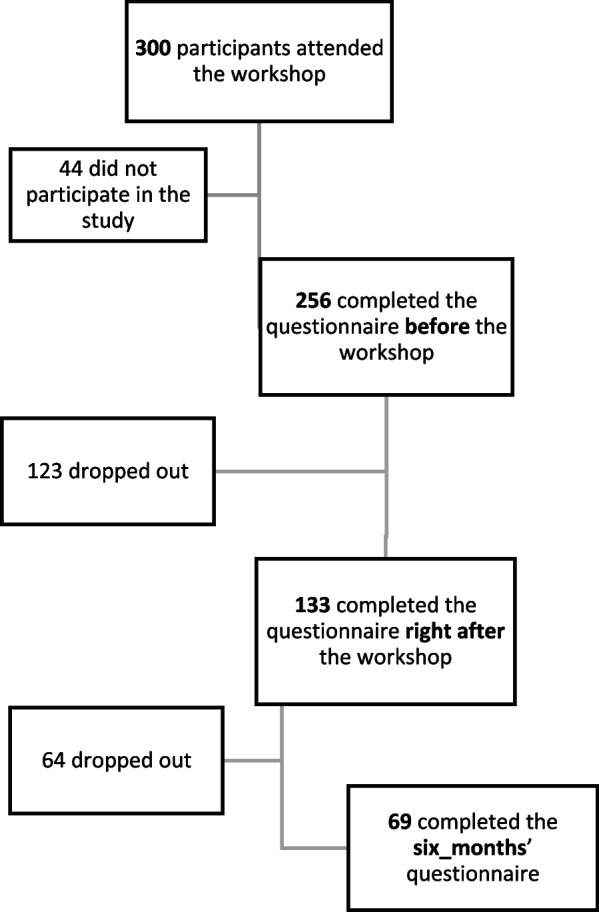
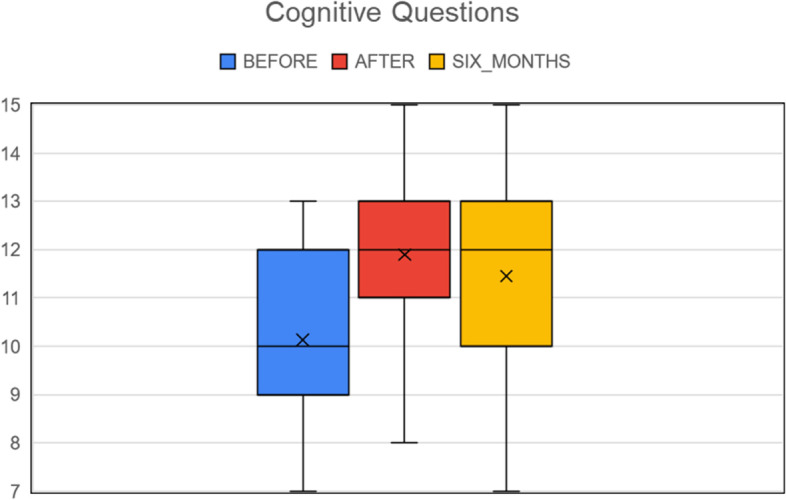
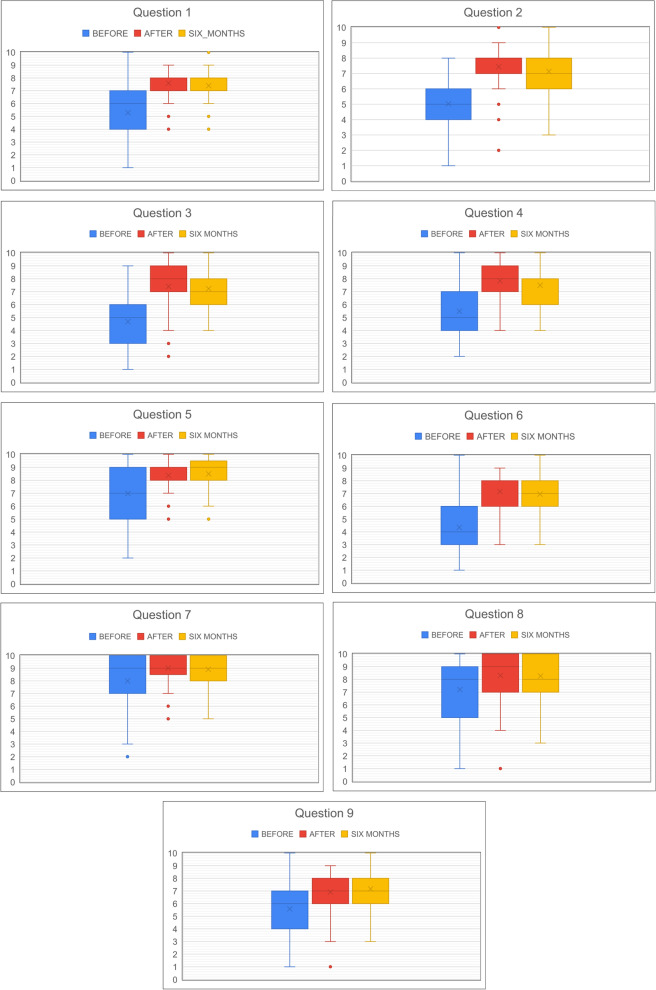
Nine workshops in two academic pediatric departments with a total attendance of 300 6th year medical students were conducted. For the 69 students who completed the questionnaires at all three times, there were statistically significant gains in knowledge right after (p < .001) and six months after (p < .0001) the workshops. Similarly, self-confidence increased right after (p < .0001) and six months after (p < .001) the workshops. Self-selection bias testing indicated that these 69 students who completed all three questionnaires were representative of those who completed the pre-testing and the testing right after.
We successfully established a peer-to-peer teaching group to conduct nine participatory workshops that improved the participants' knowledge and self-confidence in CAN. This feasible and novel active learning approach may help address inadequacies in medical curricula.
由于虐待和忽视儿童(CAN)在全球范围内普遍存在,医学生应掌握识别和应对CAN的基本知识、技能和信心。尽管此前已有大量教育方面的努力,但尚无一项专注于使用参与式方法来教授医学生CAN。
1)为医学生开发一个关于CAN的参与式教育工作坊;2)召集、培训并建立一个 peer-to-peer 教学小组;3)评估该工作坊在增加参与者知识和提高自信心方面的效果。
创建了一个两小时的工作坊,采用角色扮演、使用人体模型和 peer-to-peer 教学。在每个工作坊之前、之后以及六个月后,使用一份15项的知识问卷和一份9项的自信心问卷。
在两个儿科学术部门举办了9个工作坊,共有300名六年级医学生参加。对于在所有三个时间点都完成问卷的69名学生,工作坊之后(p <.001)和六个月后(p <.0001)知识有统计学上的显著增加。同样,工作坊之后(p <.0001)和六个月后(p <.001)自信心也有所提高。自我选择偏差测试表明,这69名完成所有三份问卷的学生代表了那些完成预测试和之后测试的学生。
我们成功建立了一个 peer-to-peer 教学小组,举办了9个参与式工作坊,提高了参与者在CAN方面的知识和自信心。这种可行且新颖的主动学习方法可能有助于弥补医学课程中的不足。