Boué Géraldine, Ververis Ermolaos, Niforou Aikaterini, Federighi Michel, Pires Sara M, Poulsen Morten, Thomsen Sofie T, Naska Androniki
Oniris, INRAE, SECALIM, Nantes, France.
Department of Hygiene, Epidemiology and Medical Statistics, School of Medicine, National and Kapodistrian University of Athens (NKUA), Athens, Greece.
Front Nutr. 2022 Oct 20;9:951369. doi: 10.3389/fnut.2022.951369. eCollection 2022.
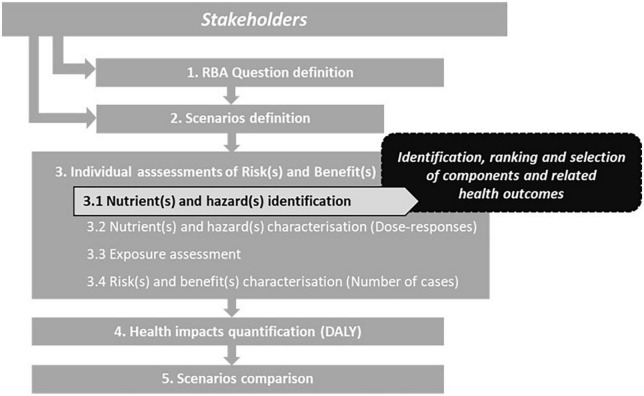
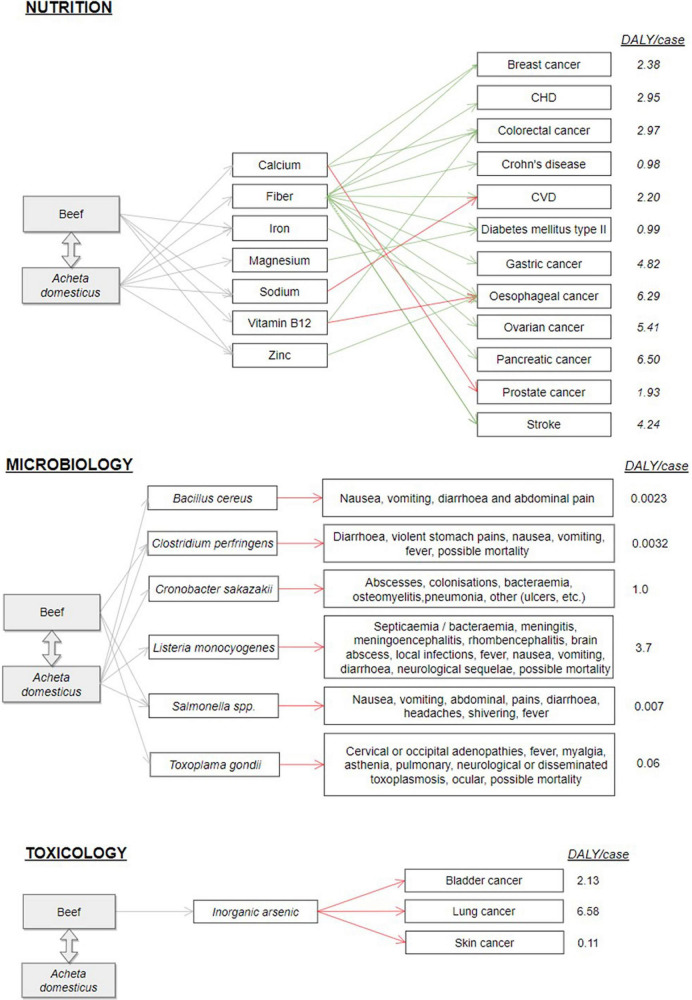
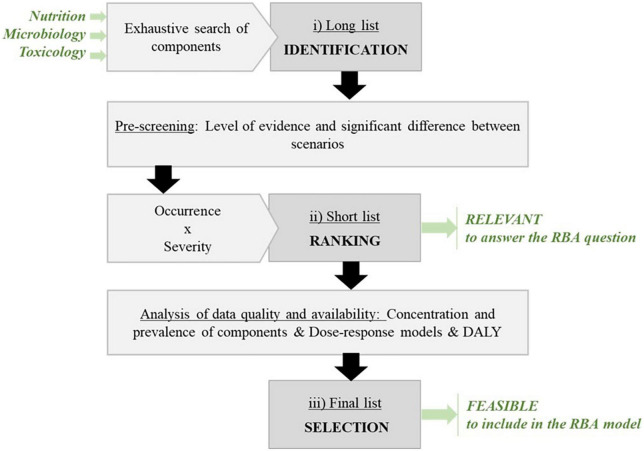
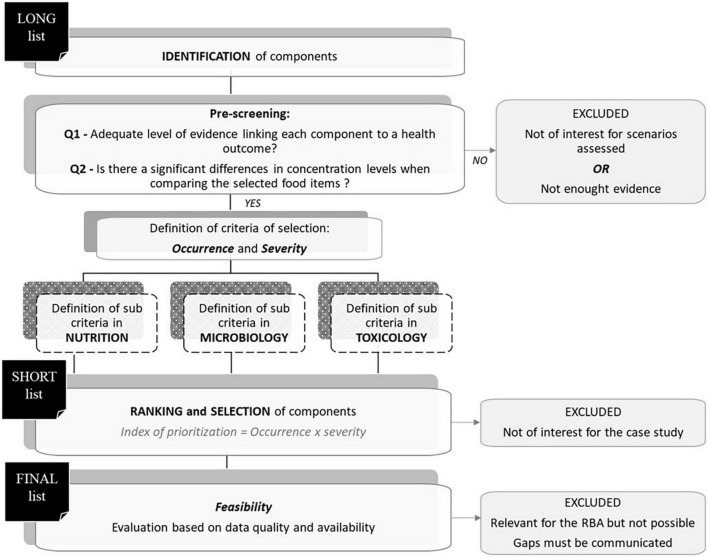
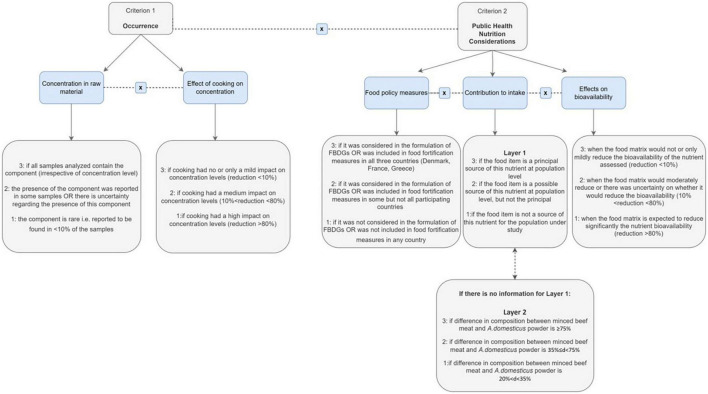
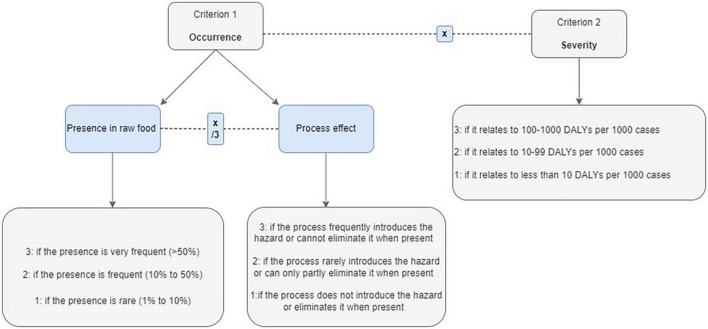
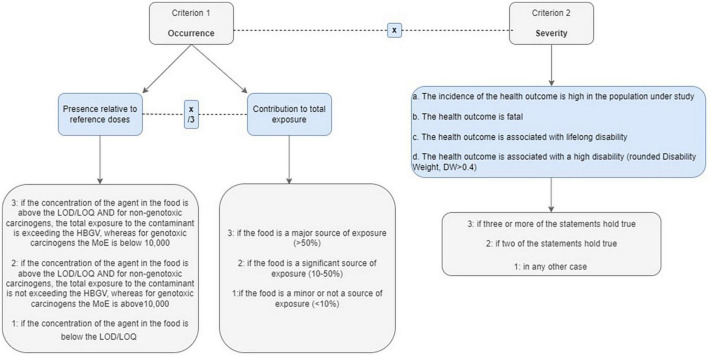
Investigating the impact of diet on public health using risk-benefit assessment (RBA) methods that simultaneously consider both beneficial and adverse health outcomes could be useful for shaping dietary policies and guidelines. In the field of food safety and nutrition, RBA is a relatively new approach facing methodological challenges and being subject to further developments. One of the methodological aspects calling for improvement is the selection of components to be considered in the assessment, currently based mainly on non-harmonized unstandardized experts' judgment. Our aim was to develop a harmonized, transparent, and documented methodological framework for selecting nutritional, microbiological, and toxicological RBA components. The approach was developed under the Novel foods as red meat replacers-an insight using Risk-Benefit Assessment methods (NovRBA) case study, which attempted to estimate the overall health impact of replacing red meat with an edible insect species, . Starting from the compositional profiles of both food items, we created a "long list" of food components. By subsequently applying a series of predefined criteria, we proceeded from the "long" to the "short list." These criteria were established based on the occurrence and severity of health outcomes related to these components. For nutrition and microbiology, the occurrence of health outcomes was evaluated considering the presence of a component in the raw material, as well as the effect of processing on the respective component. Regarding toxicology, the presence and exposure relative to reference doses and the contribution to total exposure were considered. Severity was graded with the potential contribution to the background diet alongside bioavailability aspects (nutrition), the disability-adjusted life years per case of illness of each hazard (microbiology), and disease incidence in the population, potential fatality, and lifelong disability (toxicology). To develop the "final list" of components, the "short list" was refined by considering the availability and quality of data for a feasible inclusion in the RBA model. The methodology developed can be broadly used in food RBA, to guide and reinforce a harmonized selection of nutritional, microbiological, and toxicological components and will contribute to facilitating RBA implementation, enabling the generation of transparent, robust, and comparable outcomes.
使用风险效益评估(RBA)方法来研究饮食对公众健康的影响,该方法同时考虑有益和有害的健康结果,这可能有助于制定饮食政策和指南。在食品安全和营养领域,RBA是一种相对较新的方法,面临着方法学挑战,有待进一步发展。需要改进的方法学方面之一是评估中要考虑的成分选择,目前主要基于未经协调的非标准化专家判断。我们的目标是制定一个统一、透明且有记录的方法框架,用于选择营养、微生物和毒理学RBA成分。该方法是在“新型食品替代红肉——使用风险效益评估方法的洞察”(NovRBA)案例研究中开发的,该案例研究试图估计用食用昆虫物种替代红肉对整体健康的影响。从两种食品的成分概况出发,我们创建了一份食品成分“长名单”。随后,通过应用一系列预先定义的标准,我们从“长名单”进入到“短名单”。这些标准是根据与这些成分相关的健康结果的发生情况和严重程度确定的。对于营养和微生物学,考虑原材料中成分的存在以及加工对相应成分的影响来评估健康结果的发生情况。对于毒理学,考虑相对于参考剂量的存在和暴露以及对总暴露的贡献。严重程度根据对背景饮食的潜在贡献以及生物利用度方面(营养)、每种危害每例疾病的伤残调整生命年(微生物学)以及人群中的疾病发病率、潜在死亡率和终身残疾(毒理学)进行分级。为了制定成分“最终名单”,通过考虑数据的可用性和质量,对“短名单”进行细化,以便能够切实纳入RBA模型。所开发的方法可广泛应用于食品RBA,以指导和加强营养、微生物和毒理学成分的统一选择,并将有助于促进RBA的实施,使产生透明、可靠和可比的结果成为可能。