Hirshberg Matthew J, Frye Corrina, Dahl Cortland J, Riordan Kevin M, Vack Nathan J, Sachs Jane, Goldman Robin, Davidson Richard J, Goldberg Simon B
Center for Healthy Minds, University of Wisconsin-Madison.
Healthy Minds Innovations Inc.
J Educ Psychol. 2022 Nov;114(8):1895-1911. doi: 10.1037/edu0000739. Epub 2022 Mar 17.
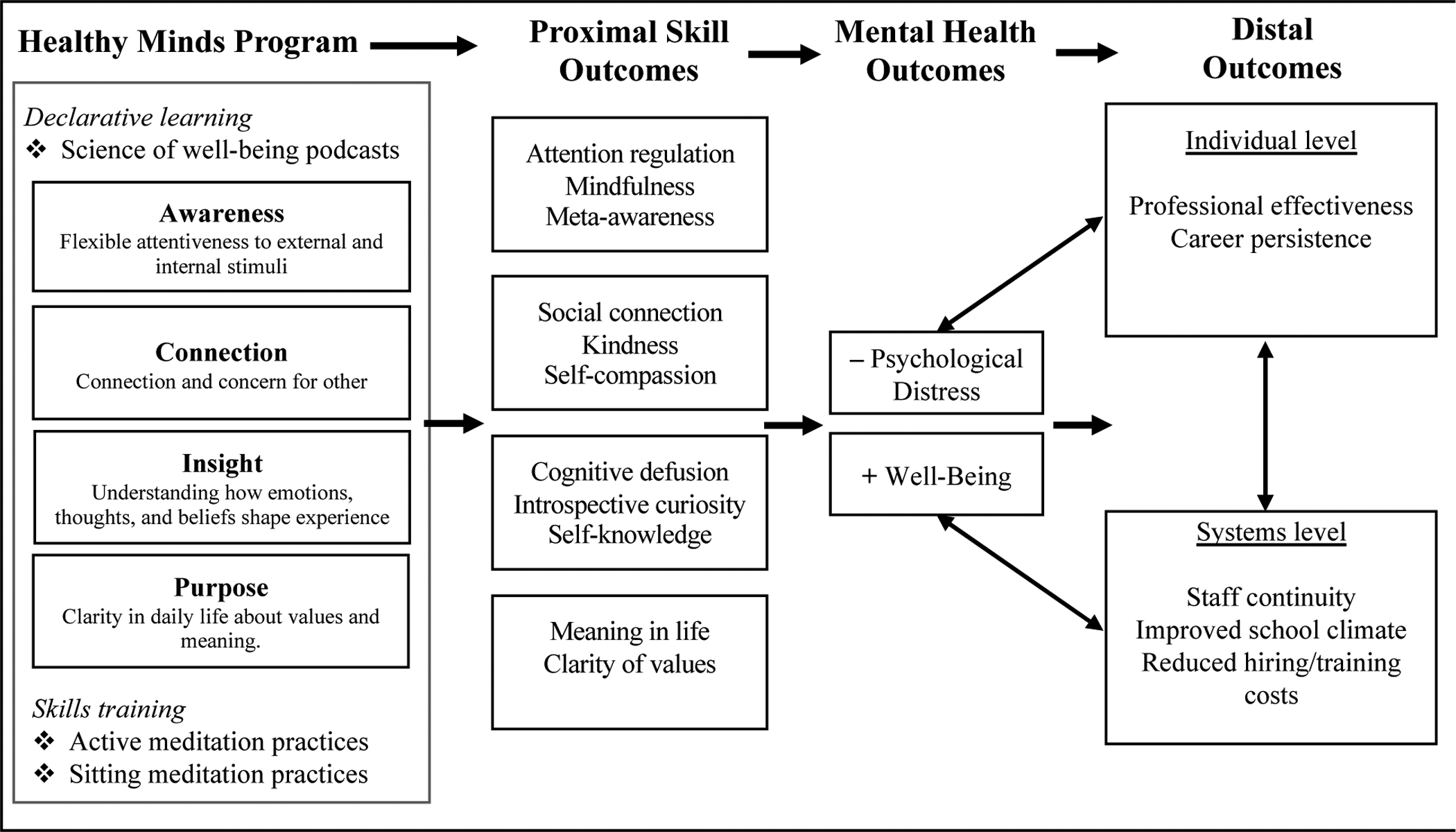
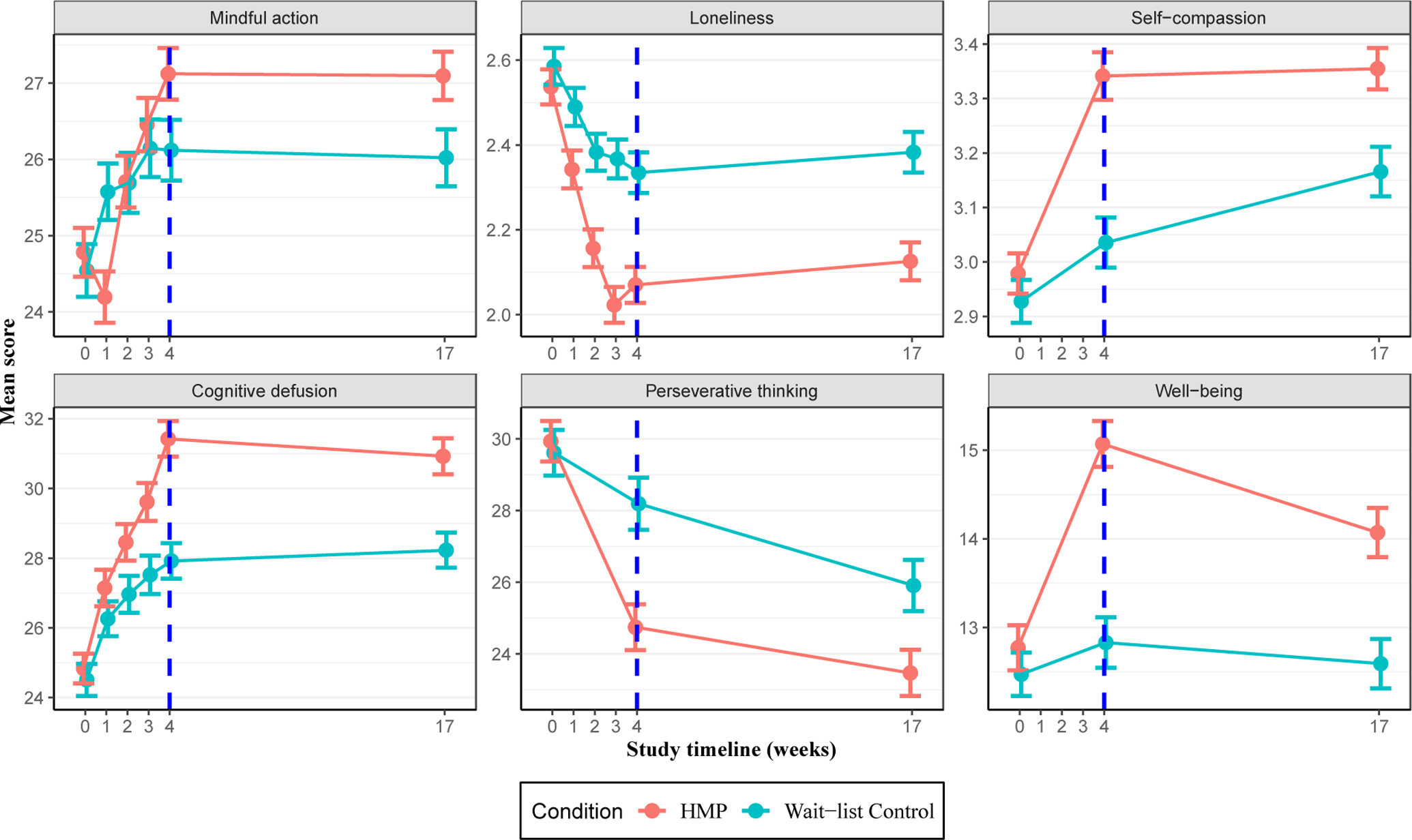
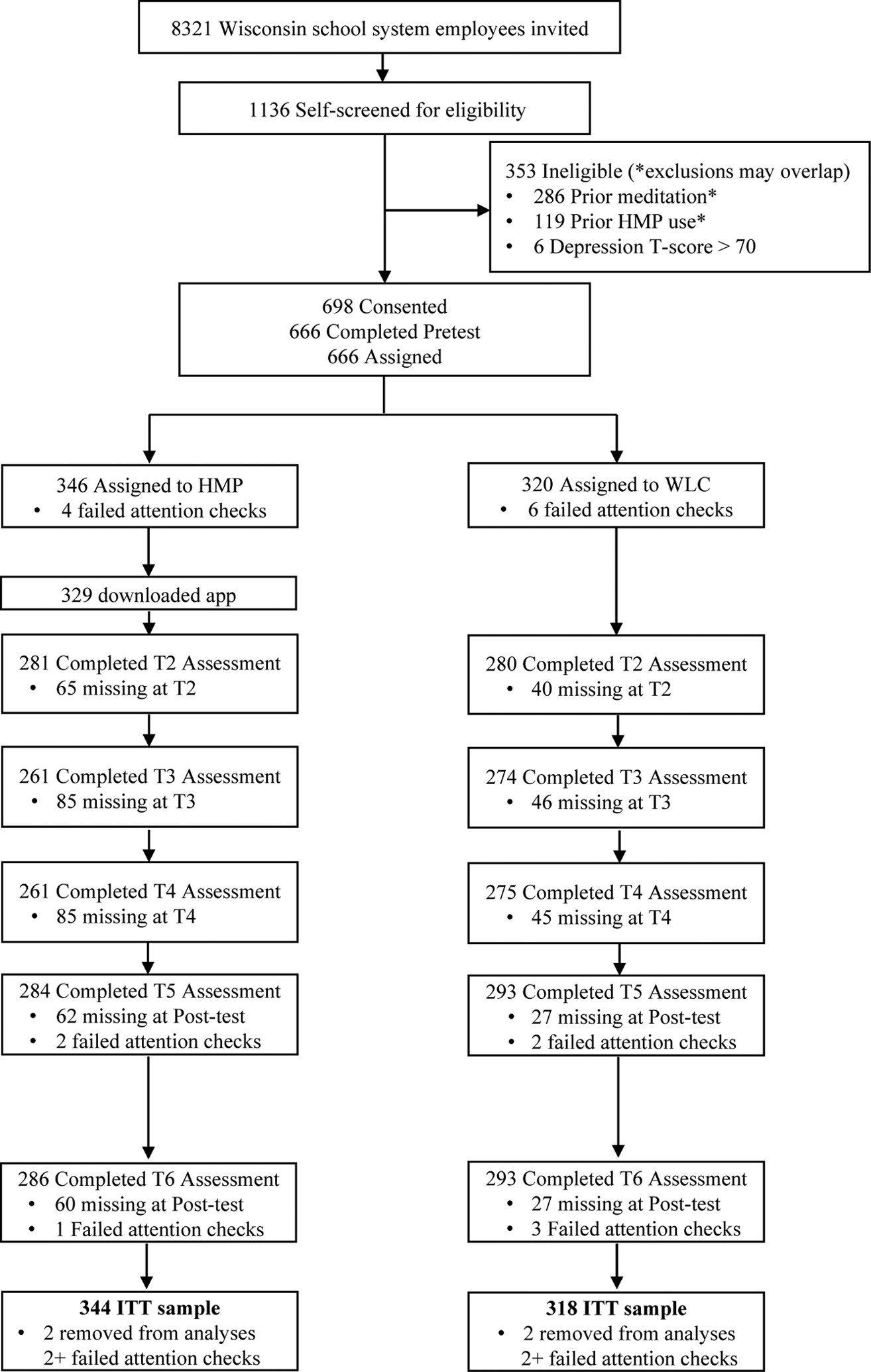
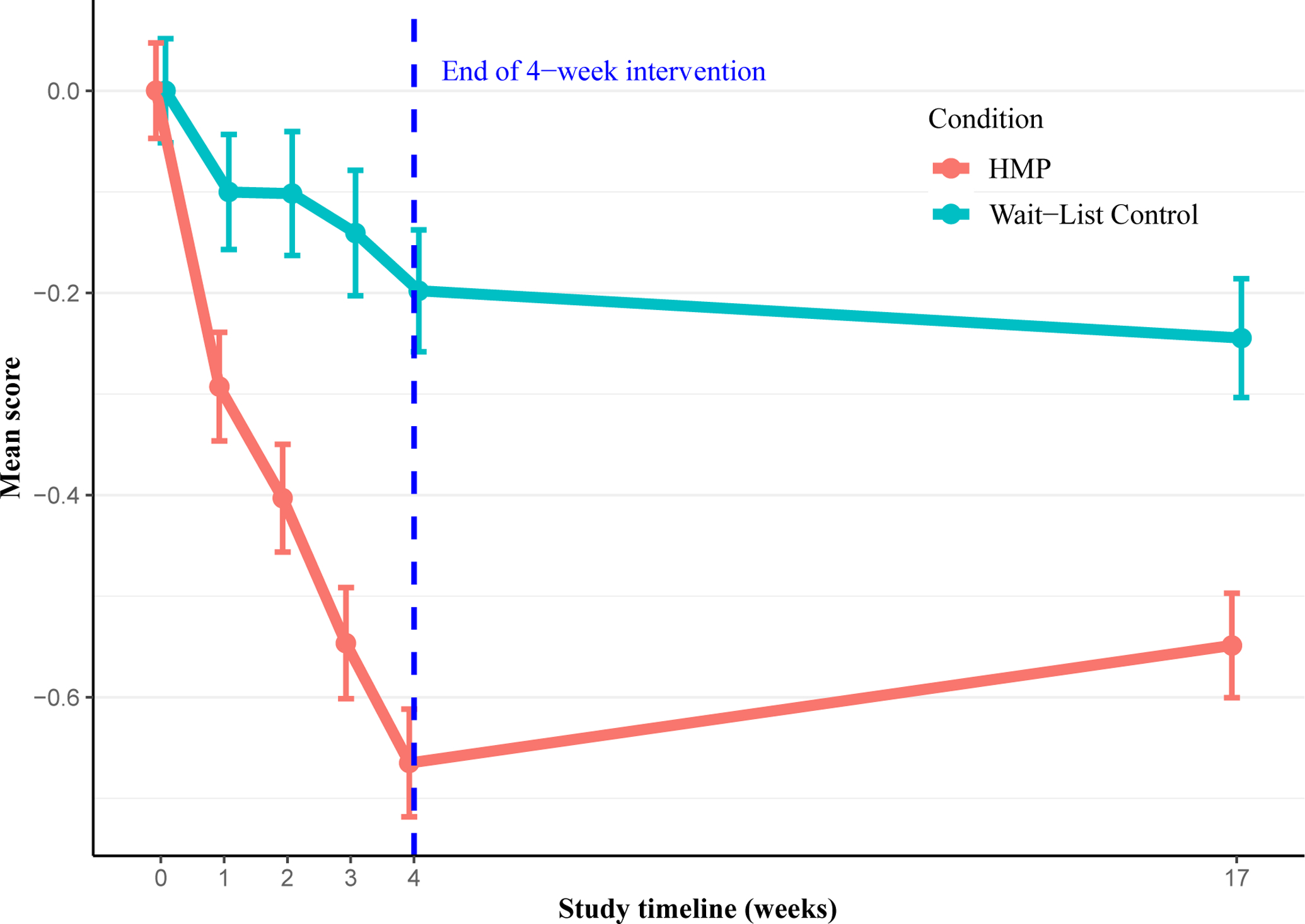
While the extraordinary pressures of the COVID-19 pandemic on student mental health have received considerable attention, less attention has been placed on educator well-being. School system employees play a vital role in society, and teacher levels of well-being are associated with the educational outcomes of young people. We extend extant research on the prevalence and correlates of educator distress during the pandemic by reporting on a pragmatic randomized wait-list controlled trial (=662; 64% teachers) of an innovative mental health promotion strategy implemented during the pandemic; a free four-week smartphone-based meditation app designed to train key constituents of well-being (Healthy Minds Program; HMP). Following our preregistered analysis plan and consistent with hypotheses, assignment to the HMP predicted significantly larger reductions in psychological distress, our primary outcome, at post-intervention (Cohen's =-0.52, 95% confidence interval [-0.68, -0.37], <.001) and at the three-month follow-up (=-0.33 [-0.48, -0.18], <.001). Also consistent with hypotheses, we observed similar indications of immediate and sustained benefit following the HMP on all six preregistered secondary outcomes selected to tap skills targeted in the app (e.g., perseverative thinking, social connection, well-being; absolute s=0.19-0.42, all s<.031 corrected except mindful action at follow-up). We found no evidence for elevated adverse events and the HMP was equally effective among participants with elevated baseline anxiety and depressive symptoms. These data suggest that the HMP may be an effective and scalable approach to supporting the mental health and well-being of teachers and other school system employees, with implications for employee retention and performance, and student outcomes.
虽然新冠疫情给学生心理健康带来的巨大压力已受到广泛关注,但教育工作者的福祉却较少受到关注。学校系统的员工在社会中发挥着至关重要的作用,教师的福祉水平与年轻人的教育成果相关。我们通过报告一项在疫情期间实施的创新型心理健康促进策略的实用随机等待列表对照试验(=662;64%为教师),扩展了关于疫情期间教育工作者困扰的患病率及其相关因素的现有研究;这是一款基于智能手机的免费四周冥想应用程序,旨在培养福祉的关键要素(健康心灵计划;HMP)。按照我们预先注册的分析计划并与假设一致,分配到HMP组的参与者在干预后(科恩效应量=-0.52,95%置信区间[-0.68,-0.37],<.001)和三个月随访时(=-0.33 [-0.48,-0.18],<.001),主要结局心理困扰的减少幅度显著更大。同样与假设一致,我们在所有六个预先注册的次要结局上观察到,HMP实施后立即和持续受益的类似迹象,这些次要结局是为了衡量该应用程序所针对的技能(例如,执着思维、社会联系、福祉;绝对效应量=0.19 - 0.42,除随访时的正念行动外,所有效应量经校正后均<.031)。我们没有发现不良事件增加的证据,并且HMP在基线焦虑和抑郁症状较高的参与者中同样有效。这些数据表明,HMP可能是一种有效且可扩展的方法,用于支持教师和其他学校系统员工的心理健康和福祉,对员工留用和绩效以及学生成绩具有重要意义。