Saleh Kholoud K, Xi Haibin, Switzler Corey, Skuratovsky Emily, Romero Matthew A, Chien Peggie, Gibbs Devin, Gane Lily, Hicks Michael R, Spencer Melissa J, Pyle April D
Department of Molecular, Cellular and Integrative Physiology, University of California Los Angeles, Los Angeles, CA 90095, USA.
Department of Microbiology, Immunology, and Molecular Genetics, University of California Los Angeles, Los Angeles, CA 90095, USA.
iScience. 2022 Oct 21;25(11):105415. doi: 10.1016/j.isci.2022.105415. eCollection 2022 Nov 18.
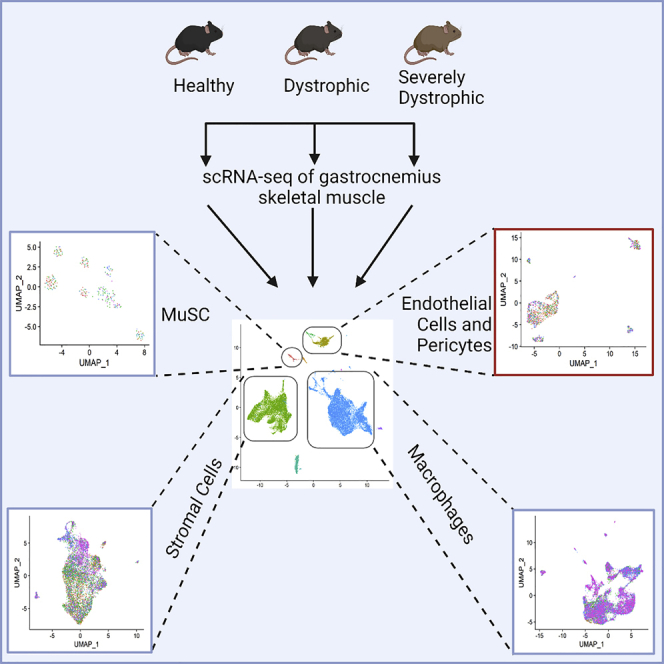
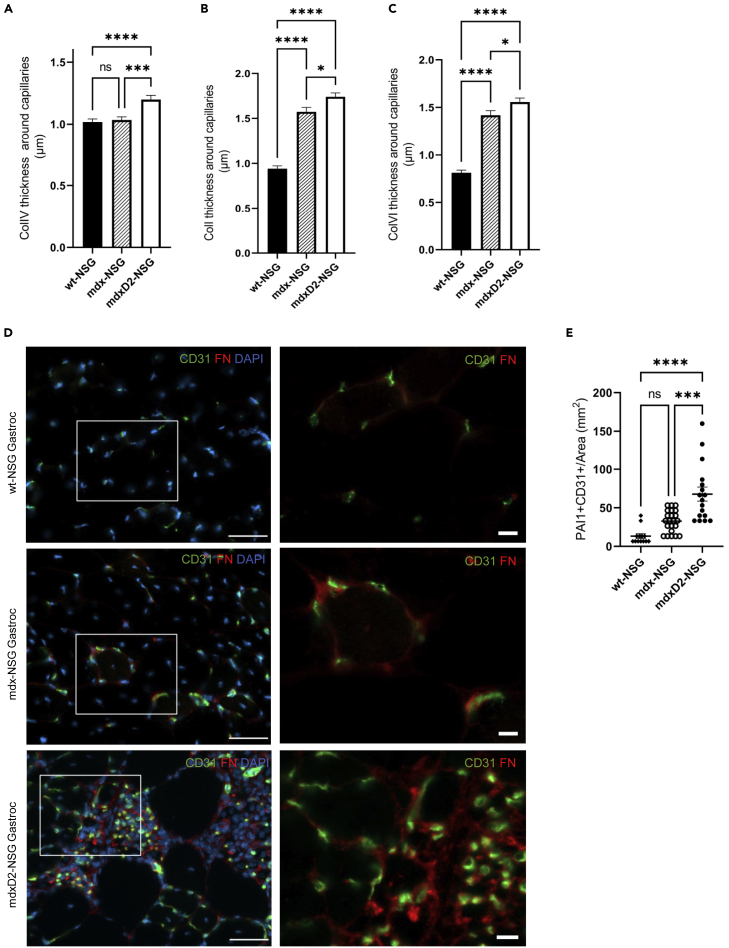
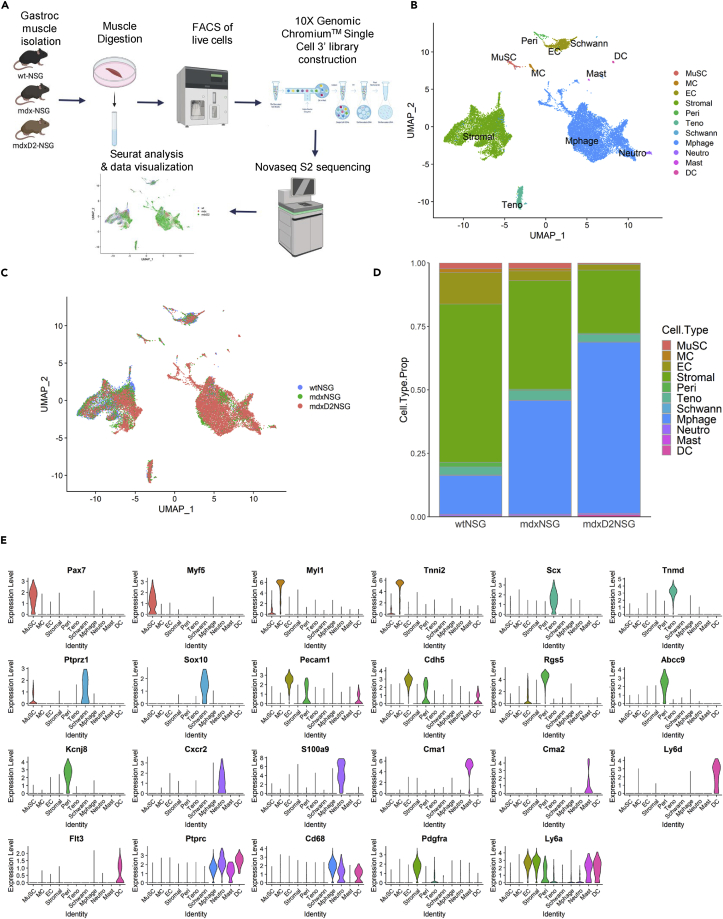
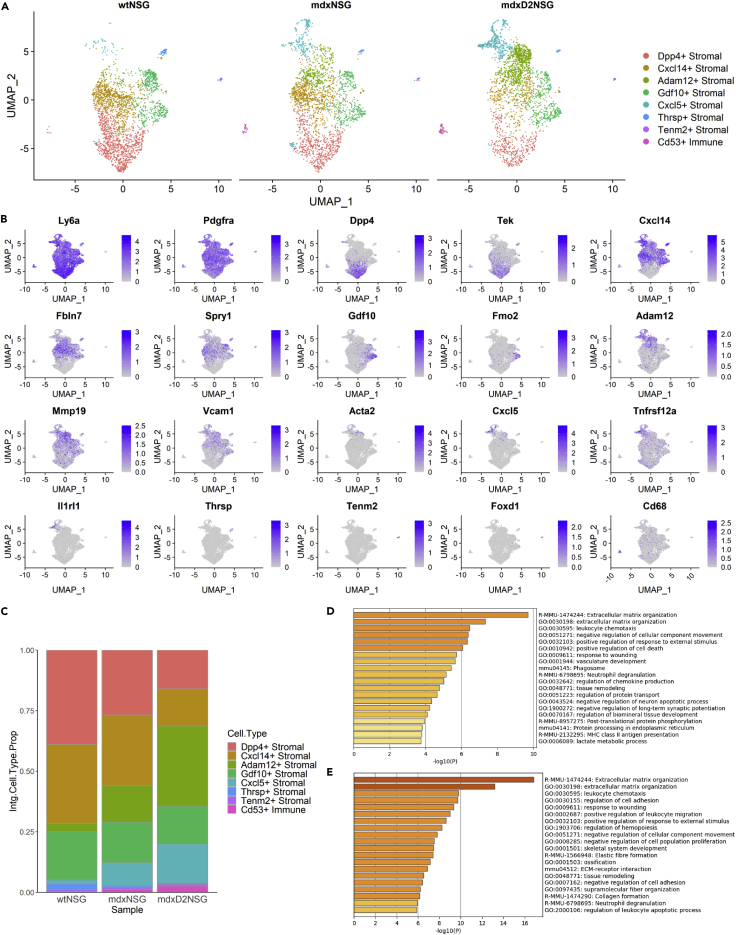
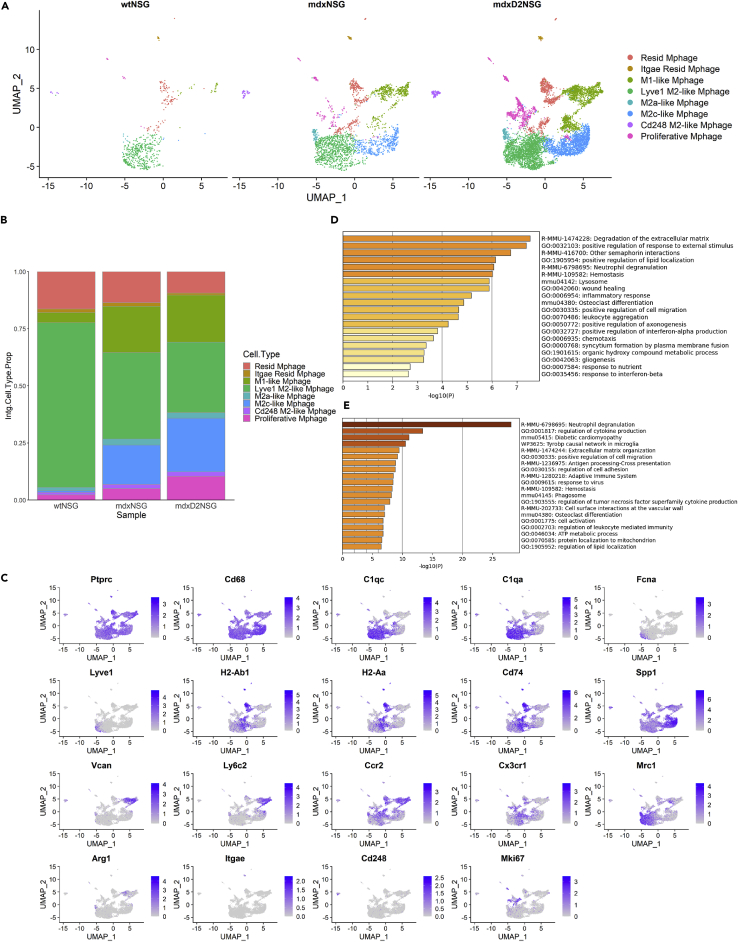
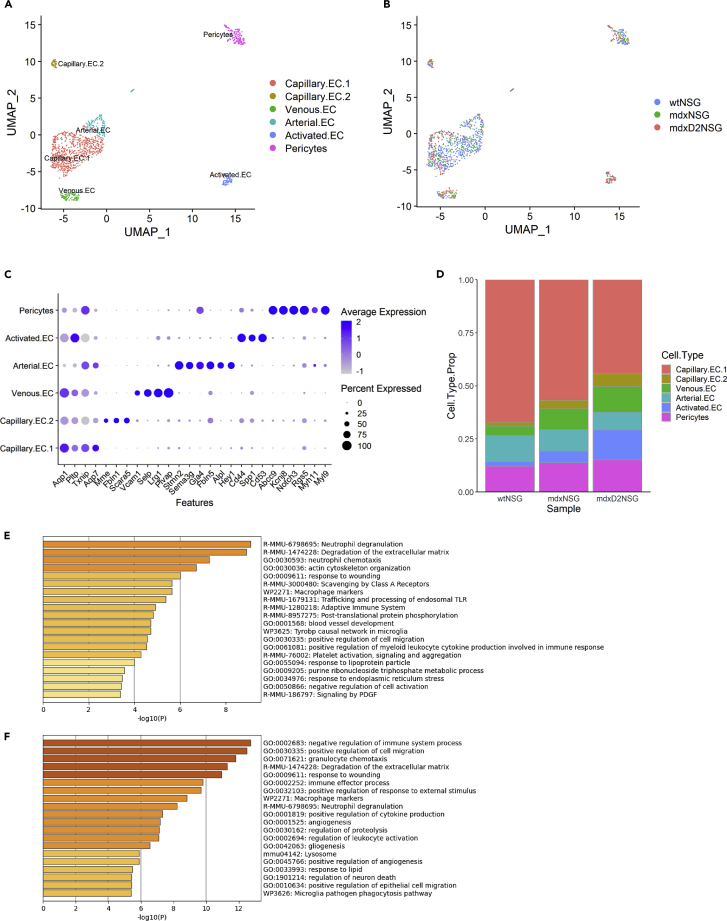
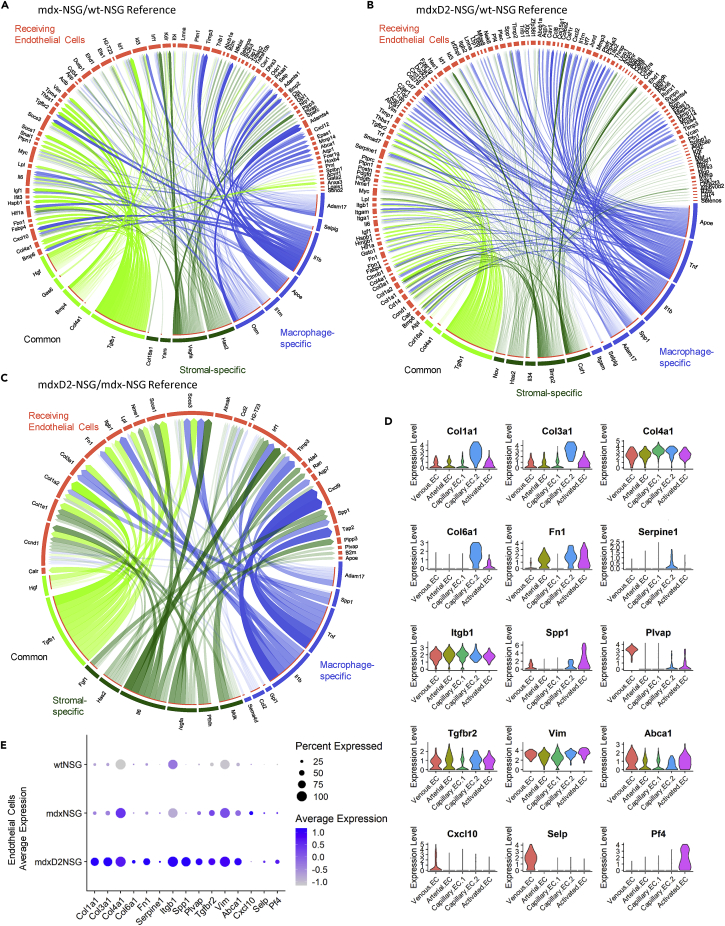
Duchenne muscular dystrophy (DMD) is caused by out-of-frame mutations in the DMD gene resulting in the absence of a functional dystrophin protein, leading to a devastating and progressive lethal muscle-wasting disease. Little is known about cellular heterogeneity as disease severity increases. Advances in single-cell RNA sequencing (scRNA-seq) enabled us to explore skeletal muscle-resident cell populations in healthy, dystrophic, and severely dystrophic mouse models. We found increased frequencies of activated fibroblasts, fibro-adipogenic progenitor cells, and pro-inflammatory macrophages in dystrophic gastrocnemius muscles and an upregulation of extracellular matrix genes on endothelial cells in dystrophic and severely dystrophic muscles. We observed a pronounced risk of clotting, especially in the severely dystrophic mice with increased expression of plasminogen activator inhibitor-1 in endothelial cells, indicating endothelial cell impairment as disease severity increases. This work extends our understanding of the severe nature of DMD which should be considered when developing single or combinatorial approaches for DMD.
杜兴氏肌肉营养不良症(DMD)由DMD基因中的移码突变引起,导致功能性抗肌萎缩蛋白缺失,引发一种毁灭性的进行性致命性肌肉萎缩疾病。随着疾病严重程度增加,关于细胞异质性的了解甚少。单细胞RNA测序(scRNA-seq)技术的进步使我们能够在健康、营养不良和严重营养不良的小鼠模型中探索骨骼肌驻留细胞群体。我们发现,营养不良的腓肠肌中活化成纤维细胞、纤维脂肪生成祖细胞和促炎巨噬细胞的频率增加,且营养不良和严重营养不良肌肉中的内皮细胞上细胞外基质基因上调。我们观察到凝血风险显著增加,尤其是在严重营养不良的小鼠中,其内皮细胞中纤溶酶原激活物抑制剂-1表达增加,表明随着疾病严重程度增加,内皮细胞功能受损。这项工作扩展了我们对DMD严重性的理解,这在开发针对DMD的单一或联合治疗方法时应予以考虑。