Podkalicka Paulina, Mucha Olga, Kaziród Katarzyna, Bronisz-Budzyńska Iwona, Ostrowska-Paton Sophie, Tomczyk Mateusz, Andrysiak Kalina, Stępniewski Jacek, Dulak Józef, Łoboda Agnieszka
Department of Medical Biotechnology, Faculty of Biochemistry, Biophysics and Biotechnology, Jagiellonian University, 30-387 Kraków, Poland.
Biomedicines. 2021 Apr 27;9(5):481. doi: 10.3390/biomedicines9050481.
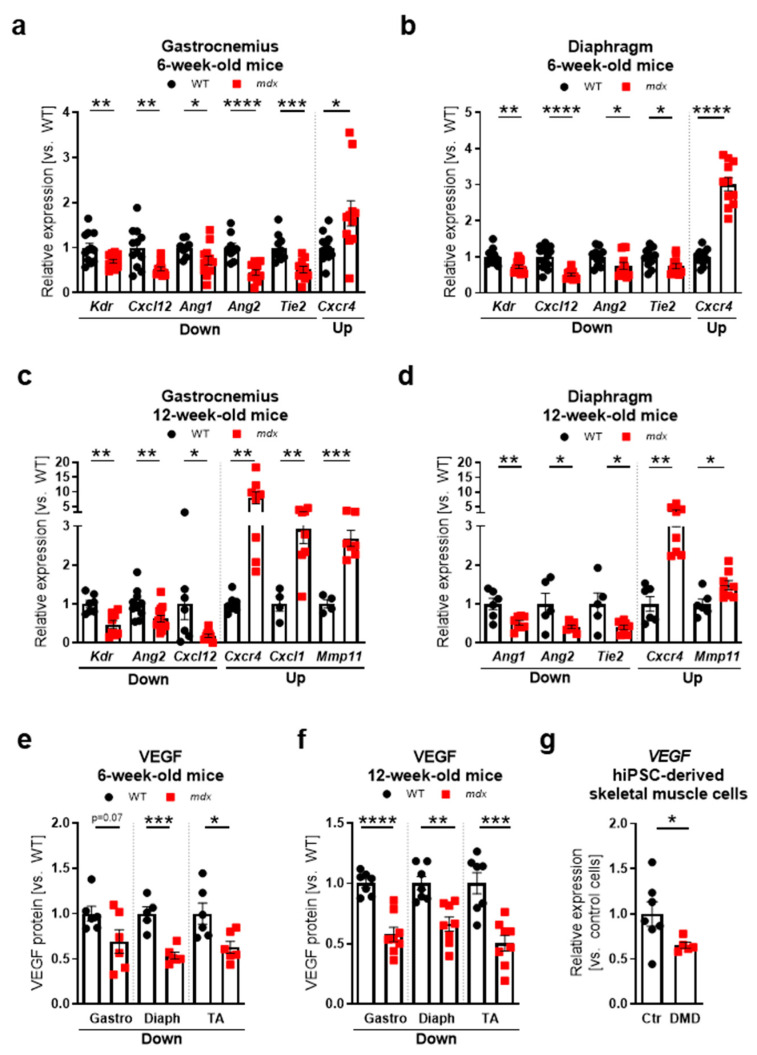
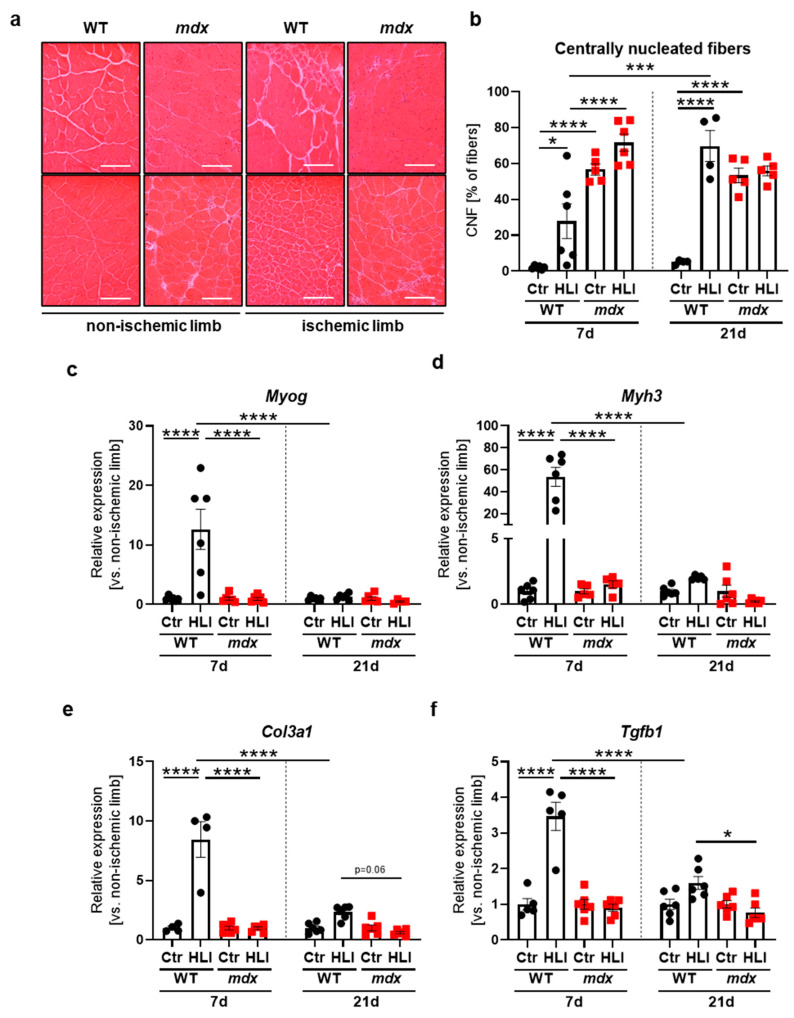
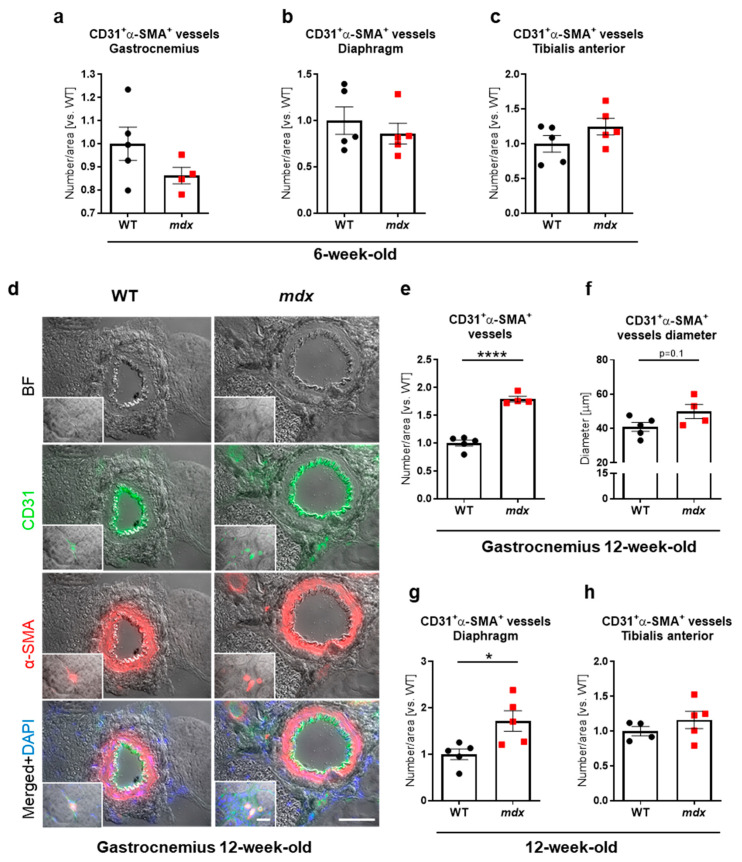
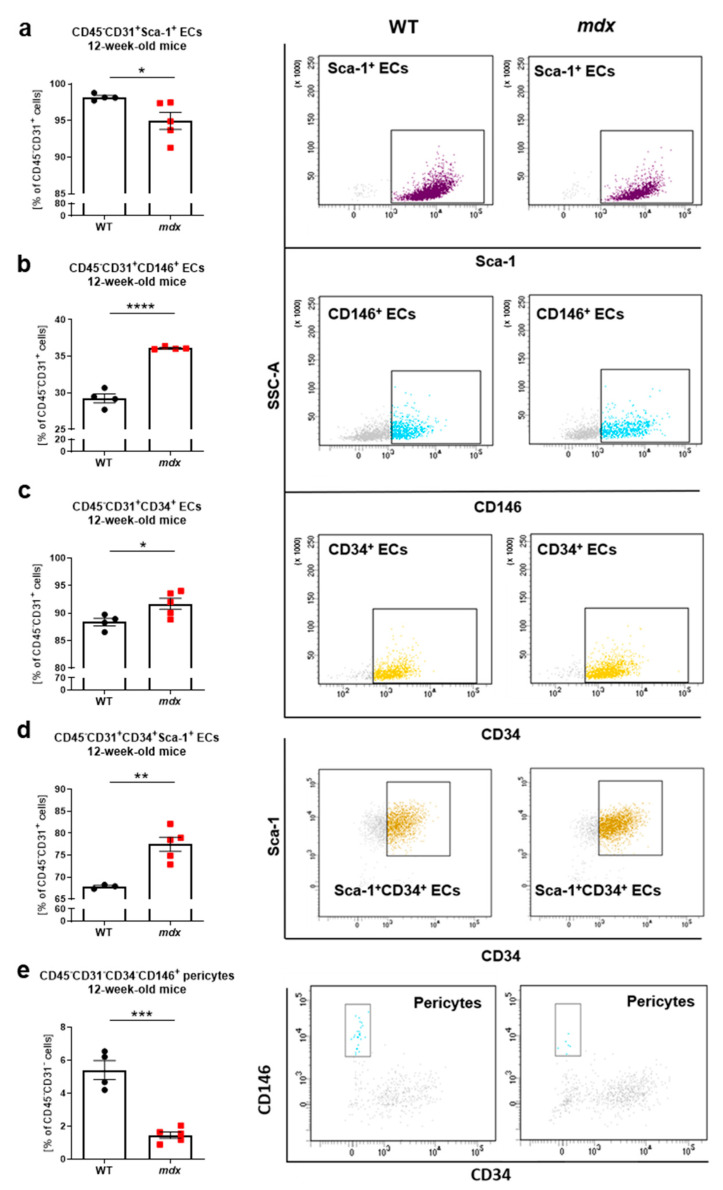
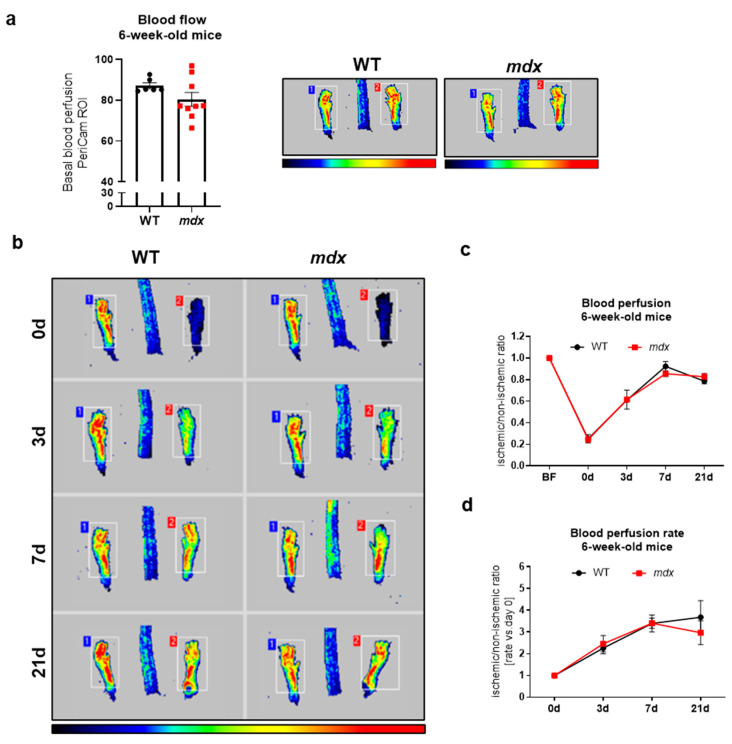
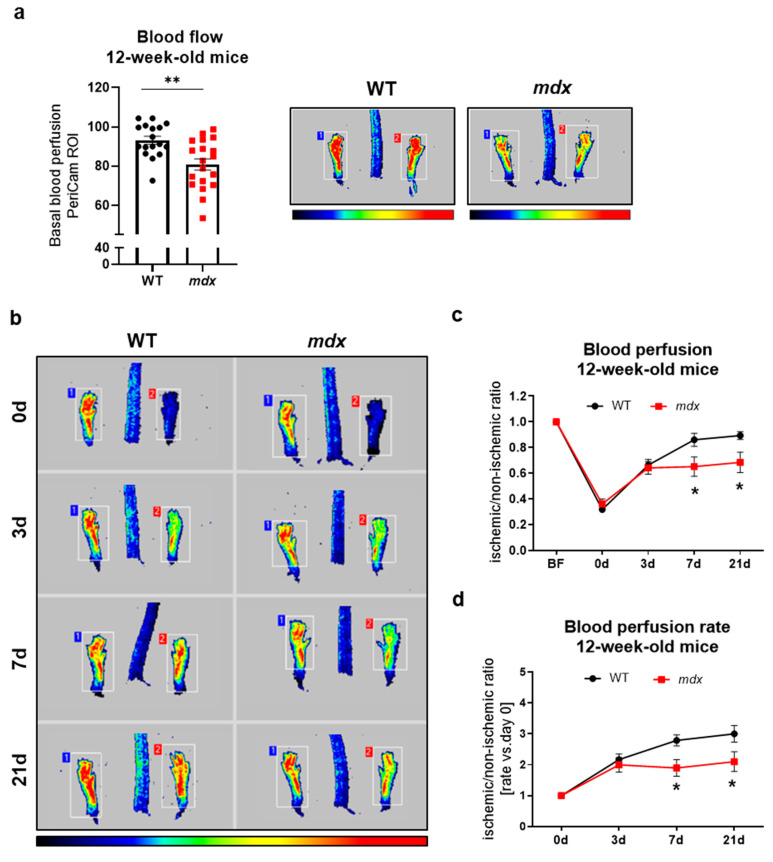
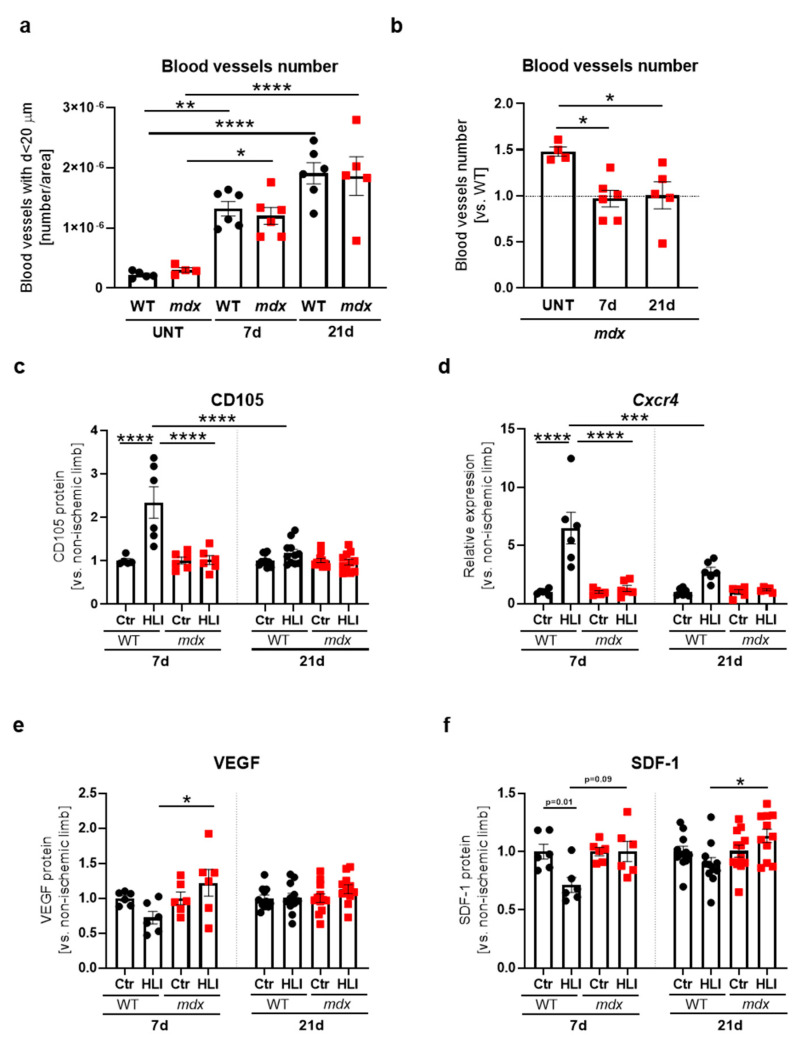
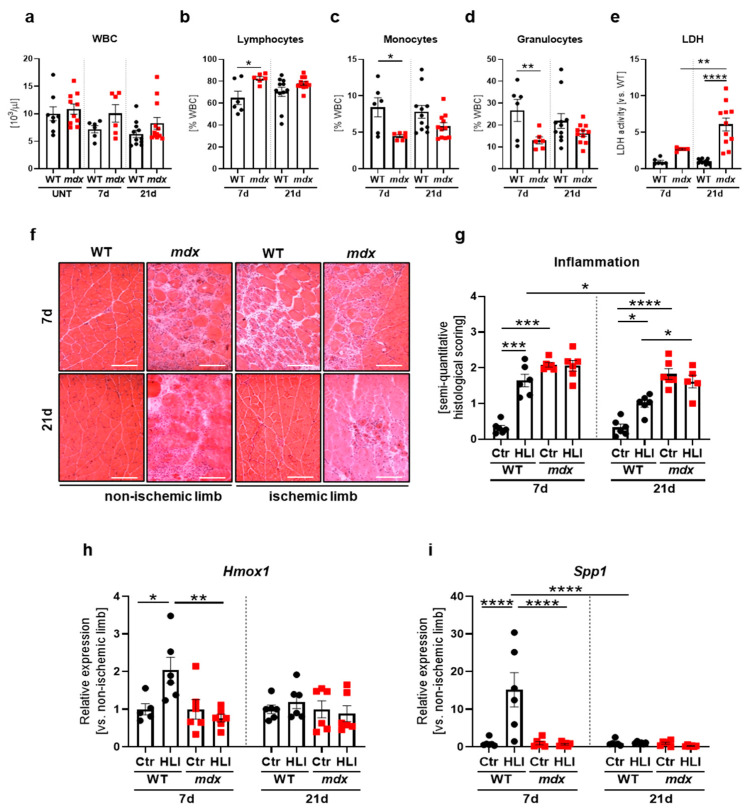
Duchenne muscular dystrophy (DMD), caused by a lack of functional dystrophin, is characterized by progressive muscle degeneration. Interestingly, dystrophin is also expressed in endothelial cells (ECs), and insufficient angiogenesis has already been hypothesized to contribute to DMD pathology, however, its status in mice, a model of DMD, is still not fully clear. Our study aimed to reveal angiogenesis-related alterations in skeletal muscles of mice compared to wild-type (WT) counterparts. By investigating 6- and 12-week-old mice, we sought to verify if those changes are age-dependent. We utilized a broad spectrum of methods ranging from gene expression analysis, flow cytometry, and immunofluorescence imaging to determine the level of angiogenic markers and to assess muscle blood vessel abundance. Finally, we implemented the hindlimb ischemia (HLI) model, more biologically relevant in the context of functional studies evaluating angiogenesis/arteriogenesis processes. We demonstrated that both 6- and 12-week-old dystrophic mice exhibited dysregulation of several angiogenic factors, including decreased vascular endothelial growth factor A (VEGF) in different muscle types. Nonetheless, in younger, 6-week-old animals, neither the abundance of CD31α-SMA double-positive blood vessels nor basal blood flow and its restoration after HLI was affected. In 12-week-old mice, although a higher number of CD31α-SMA double-positive blood vessels and an increased percentage of skeletal muscle ECs were found, the abundance of pericytes was diminished, and blood flow was reduced. Moreover, impeded perfusion recovery after HLI associated with a blunted inflammatory and regenerative response was evident in 12-week-old dystrophic mice. Hence, our results reinforce the hypothesis of age-dependent angiogenic dysfunction in dystrophic mice. In conclusion, we suggest that older mice constitute an appropriate model for preclinical studies evaluating the effectiveness of vascular-based therapies aimed at the restoration of functional angiogenesis to mitigate DMD severity.
杜兴氏肌肉营养不良症(DMD)由功能性肌营养不良蛋白缺乏引起,其特征为进行性肌肉退化。有趣的是,肌营养不良蛋白也在内皮细胞(ECs)中表达,并且已有假说认为血管生成不足是导致DMD病理的原因之一,然而,其在DMD小鼠模型中的状况仍不完全清楚。我们的研究旨在揭示与野生型(WT)小鼠相比,DMD小鼠骨骼肌中与血管生成相关的变化。通过研究6周龄和12周龄的小鼠,我们试图验证这些变化是否与年龄有关。我们使用了从基因表达分析、流式细胞术和免疫荧光成像等广泛的方法来确定血管生成标志物的水平并评估肌肉血管丰度。最后,我们实施了后肢缺血(HLI)模型,该模型在评估血管生成/动脉生成过程的功能研究背景下更具生物学相关性。我们证明,6周龄和12周龄的营养不良小鼠均表现出多种血管生成因子的失调,包括不同肌肉类型中血管内皮生长因子A(VEGF)的减少。尽管如此,在较年轻的6周龄动物中,CD31α-SMA双阳性血管的丰度以及基础血流及其在HLI后的恢复均未受到影响。在12周龄的DMD小鼠中,虽然发现CD31α-SMA双阳性血管数量较多且骨骼肌ECs百分比增加,但周细胞丰度减少,血流降低。此外,12周龄的营养不良小鼠中,HLI后灌注恢复受阻,伴有炎症和再生反应减弱。因此,我们的结果强化了营养不良小鼠中年龄依赖性血管生成功能障碍的假说。总之,我们建议,年龄较大的DMD小鼠构成了一个合适的临床前研究模型,用于评估旨在恢复功能性血管生成以减轻DMD严重程度的基于血管的疗法的有效性。