Shailaja Aswathy, Bruce Terri F, Gerard Patrick, Powell Rhonda R, Pettigrew Charles A, Kerrigan Julia L
Department of Plant and Environmental Sciences, Clemson University, Clemson, SC, USA.
Clemson Light Imaging Facility, Clemson University, Clemson, SC, USA.
Biofilm. 2022 Oct 28;4:100090. doi: 10.1016/j.bioflm.2022.100090. eCollection 2022 Dec.
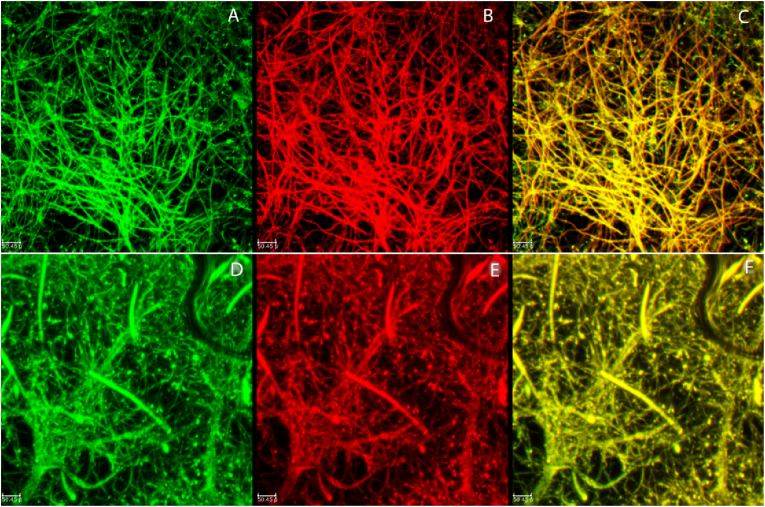
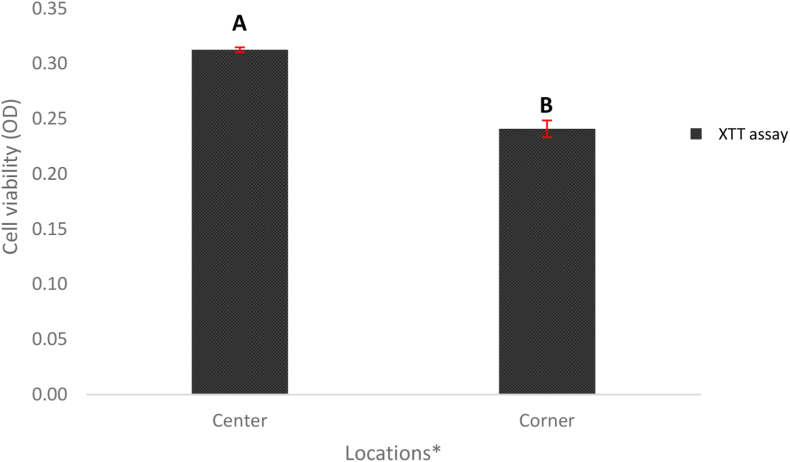
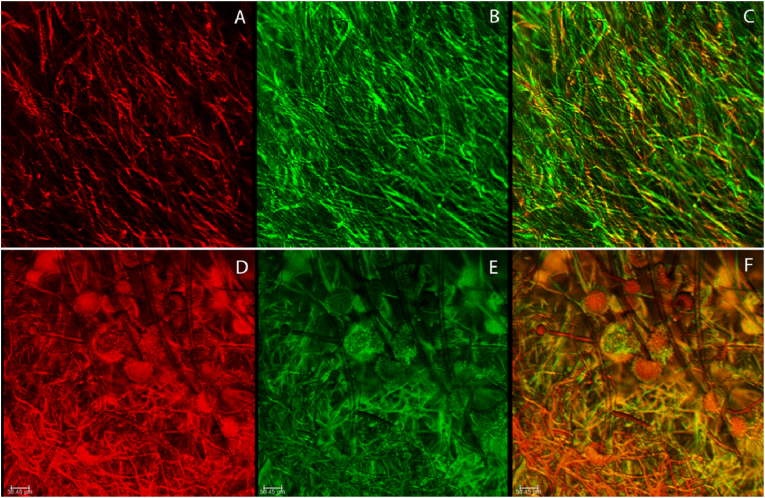
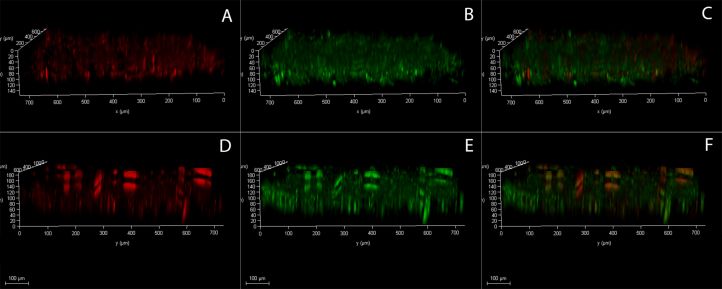
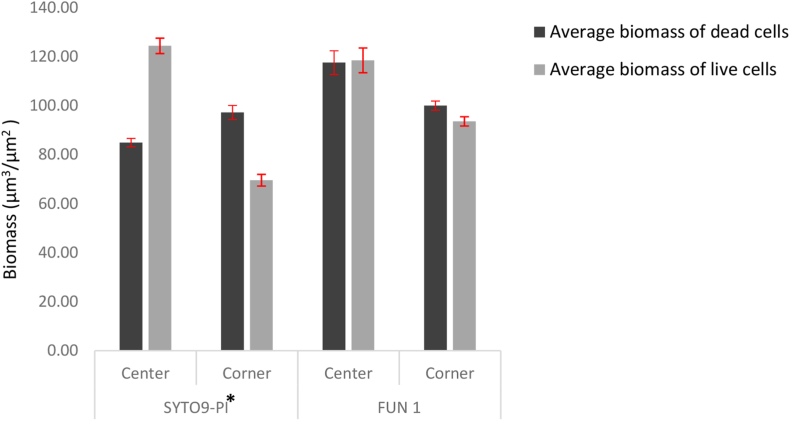
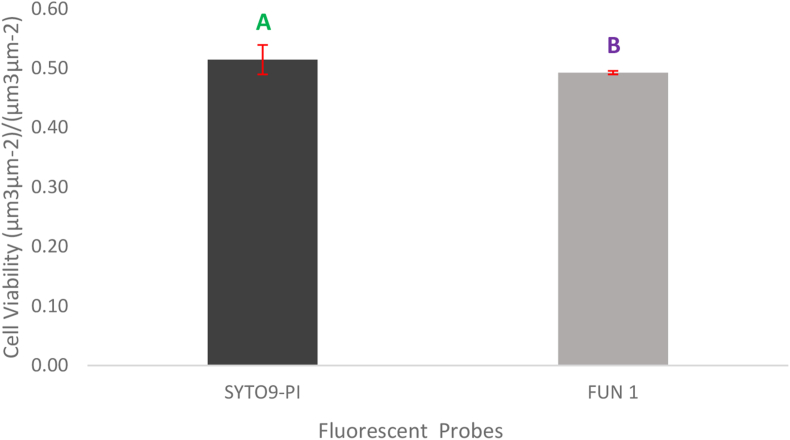
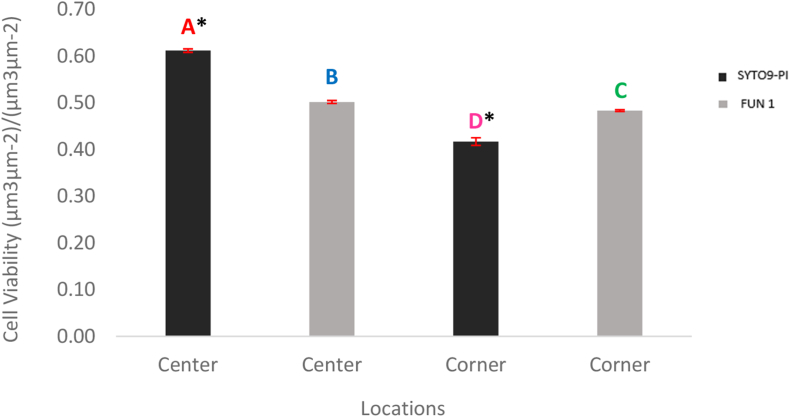
Filamentous fungi are ubiquitous and frequent components of biofilms. A means to visualize them and quantify their viability is essential for understanding their development and disruption. However, quantifying filamentous fungal biofilms poses challenges because, unlike yeasts and bacteria, they are not composed of discrete cells of similar size. This research focused on filamentous fungal biofilms that are representative of those in the built environment. The objective of this study was to develop a rapid method to examine biofilm structure and quantify live (metabolically active/ membrane undamaged) and dead (inactive/ membrane damaged) cells in biofilms utilizing a fluorescent probe staining method and confocal laser scanning microscopy (CLSM). For this, we compared two commercially available probe staining kits that have been developed for bacterial and yeast systems. One method utilized the classic cell stain FUN 1 that exhibits orange-red fluorescent intravacuolar structures in metabolically active cells, while dead cells are fluoresced green. The second method utilized a combination of SYTO9 and propidium iodide (PI), and stains cells based on their membrane morphology. SYTO9 is a green fluorescent stain with the capacity to penetrate the living cell walls, and PI is a red fluorescent stain that can only penetrate dead or dying cells with damaged cell membranes. Following staining, the biofilms were imaged using CLSM and biofilm volumes and thickness were quantified using COMSTAT, a computer program that measures biofilm accumulation from digital image stacks. The results were compared to independent measurements of live-dead cell density, as well as a classic cell viability assay-XTT. The data showed that the combination of SYTO9 and PI is optimal for staining filamentous fungal biofilms.
丝状真菌是生物膜中普遍且常见的组成部分。一种可视化它们并量化其活力的方法对于理解其发育和破坏至关重要。然而,量化丝状真菌生物膜存在挑战,因为与酵母和细菌不同,它们不是由大小相似的离散细胞组成。本研究聚焦于建筑环境中具有代表性的丝状真菌生物膜。本研究的目的是开发一种快速方法,利用荧光探针染色法和共聚焦激光扫描显微镜(CLSM)来检查生物膜结构并量化生物膜中活(代谢活跃/膜未受损)细胞和死(无活性/膜受损)细胞。为此,我们比较了两种为细菌和酵母系统开发的市售探针染色试剂盒。一种方法使用经典的细胞染料FUN 1,其在代谢活跃的细胞中呈现橙红色荧光液泡内结构,而死细胞发绿色荧光。第二种方法使用SYTO9和碘化丙啶(PI)的组合,并根据细胞膜形态对细胞进行染色。SYTO9是一种绿色荧光染料,能够穿透活细胞壁,而PI是一种红色荧光染料,只能穿透细胞膜受损的死细胞或濒死细胞。染色后,使用CLSM对生物膜进行成像,并使用COMSTAT(一种从数字图像堆栈测量生物膜积累的计算机程序)对生物膜体积和厚度进行量化。将结果与活死细胞密度的独立测量结果以及经典的细胞活力测定-XTT进行比较。数据表明,SYTO9和PI的组合对于染色丝状真菌生物膜是最佳的。