Department of Medical Oncology, Istanbul University Institute of Oncology, Istanbul, Turkey.
Medicine (Baltimore). 2022 Nov 11;101(45):e31726. doi: 10.1097/MD.0000000000031726.
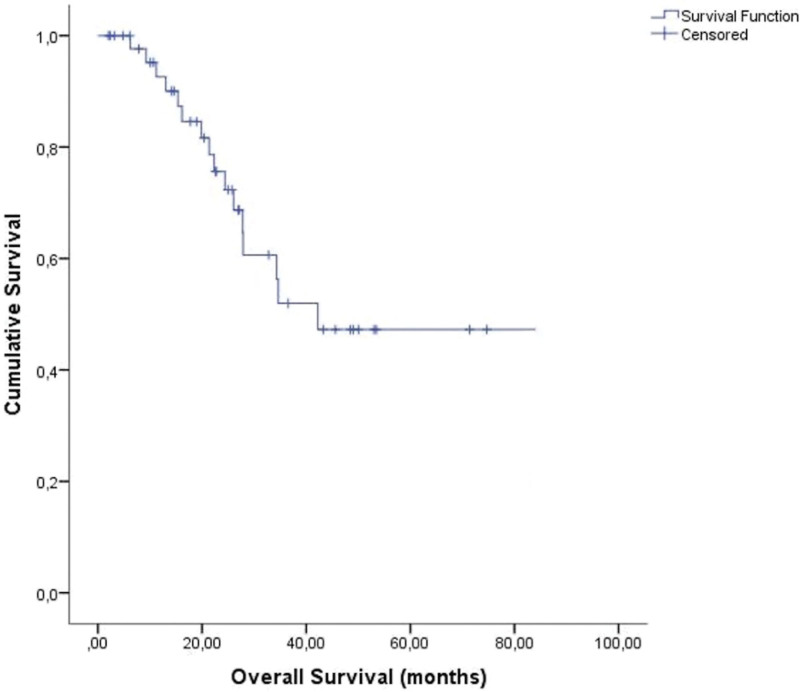
Epithelial Ovarian cancer (EOC) is the most lethal gynecologic cancer worldwide. Carboplatin (CP) is the main chemotherapeutic agent in the treatment of ovarian cancer. However, the development of a hypersensitivity reaction (HSR) in 10% to 15% of patients with EOC is an important limiting factor for the clinical use of CP. Herein, we aimed to investigate the efficacy and safety of CP-desensitization (CP-D) therapy in the treatment of recurrent patients with EOC. Forty-seven ovarian cancer cases treated with CP-desensitization at the Istanbul University Oncology Institute were retrospectively analyzed between 01.01.2017 and 01.01.2022. The decision for CP-D was based on the patients' history of HSR and/or a positive skin test. For all patients, a 6-hour 12-step rapid drug desensitization protocol with a 30-minutes premedication regimen was used. Forty-seven patients were included in this study, and the median age at diagnosis was 53 years (range; 27-80). Twenty-one (43.7%) patients had 1 or more comorbid diseases, and 12.7% had a previous history of drug allergy. On average, HSR due to carboplatin was identified after 9 (7-16) cycles, and carboplatin was administered n = 11 (range, 3-36) times to patients. The overall survival from the first desensitization procedure (0S2) was 42.2 months (range: 25.3-59.1), and the 1-, 2-, and 5-years survival rates were 92.6%, 75.6%, and 47.2%, respectively. The objective response rate (ORR) was 78.5%. Cumulatively, 496 CP-D procedures were performed, of which 478 (96.3%) were successfully completed. None of the patients included in this study developed severe (grade 3-4) HSR during CP administration (no adrenaline was used, no need for intensive care). No deaths due to CP-D were noted. CP-D is a beneficial and safe method in treating platinum-sensitive recurrent EOC patients with CP-induced HSR.
上皮性卵巢癌 (EOC) 是全球最致命的妇科癌症。卡铂 (CP) 是卵巢癌治疗中的主要化疗药物。然而,在 10%至 15%的 EOC 患者中,CP 引发的过敏反应 (HSR) 的发展是限制 CP 临床应用的一个重要因素。在此,我们旨在研究 CP 脱敏 (CP-D) 治疗在复发性卵巢癌患者中的疗效和安全性。对 2017 年 1 月 1 日至 2022 年 1 月 1 日期间在伊斯坦布尔大学肿瘤研究所接受 CP-D 治疗的 47 例卵巢癌病例进行回顾性分析。CP-D 的决定基于患者的 HSR 病史和/或皮试阳性。对于所有患者,采用 6 小时 12 步快速药物脱敏方案,给予 30 分钟的预处理方案。本研究共纳入 47 例患者,诊断时的中位年龄为 53 岁(范围:27-80)。21 例(43.7%)患者有 1 种或多种合并症,12.7%有药物过敏史。CP 所致 HSR 平均在 9(7-16)个周期后被发现,11(范围,3-36)次给予患者 CP。首次脱敏程序(0S2)的总生存时间为 42.2 个月(范围:25.3-59.1),1、2 和 5 年生存率分别为 92.6%、75.6%和 47.2%。客观缓解率(ORR)为 78.5%。共进行了 496 次 CP-D 治疗,其中 478 次(96.3%)成功完成。本研究中没有患者在 CP 治疗期间发生严重(3-4 级)HSR(未使用肾上腺素,无需重症监护)。没有因 CP-D 导致的死亡。CP-D 是治疗因 CP 引起的 HSR 而导致铂敏感复发性 EOC 患者的一种有益且安全的方法。