Research Institute for Farm Animal Biology (FBN), Institute of Genome Biology, Dummerstorf, Germany.
Department of Marine Biology, Institute for Biological Sciences, University of Rostock, Rostock, Germany.
Sci Rep. 2022 Nov 18;12(1):19881. doi: 10.1038/s41598-022-24386-0.
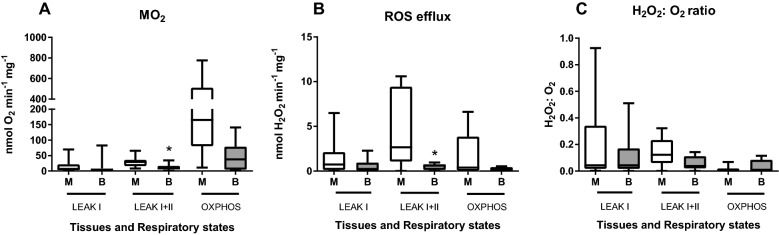
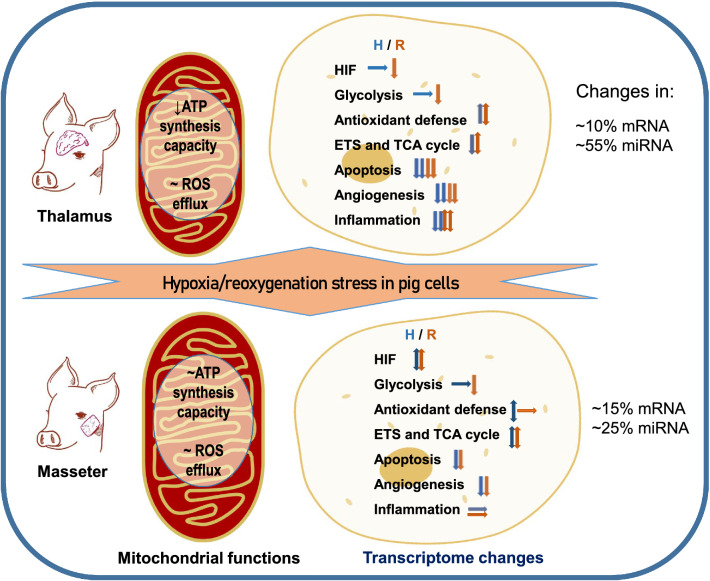
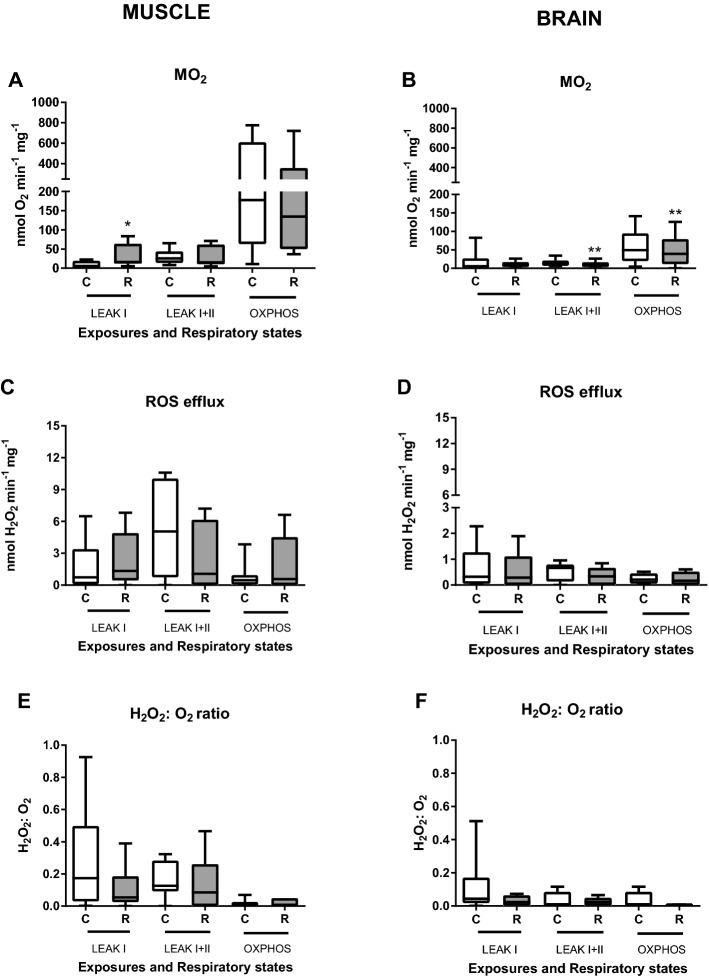
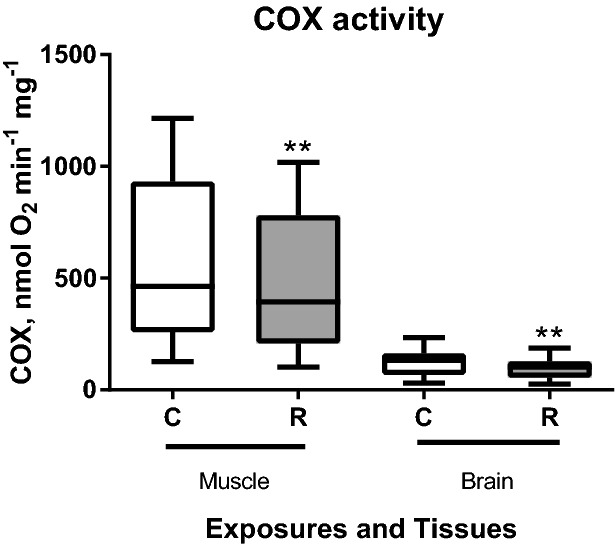
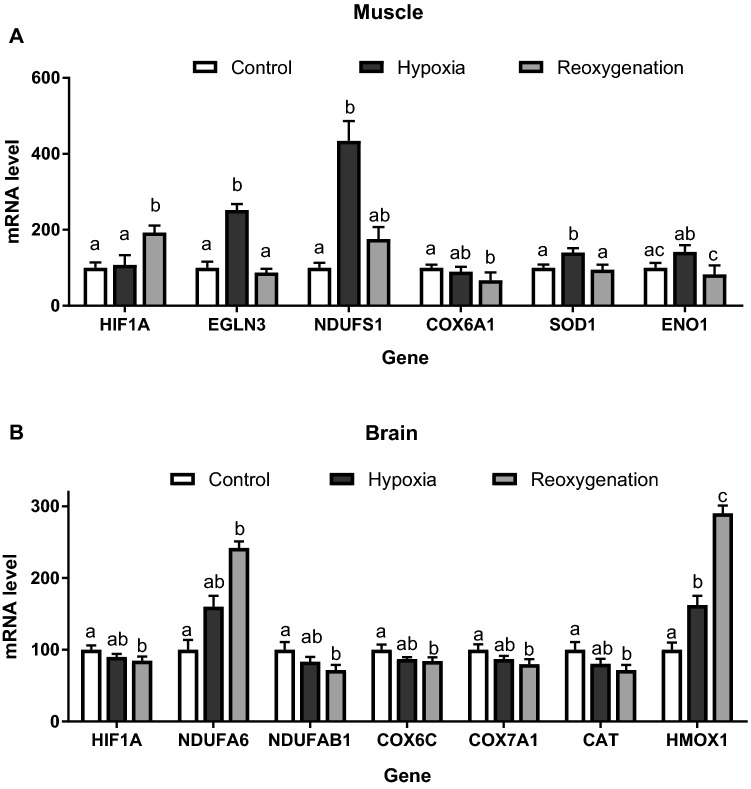
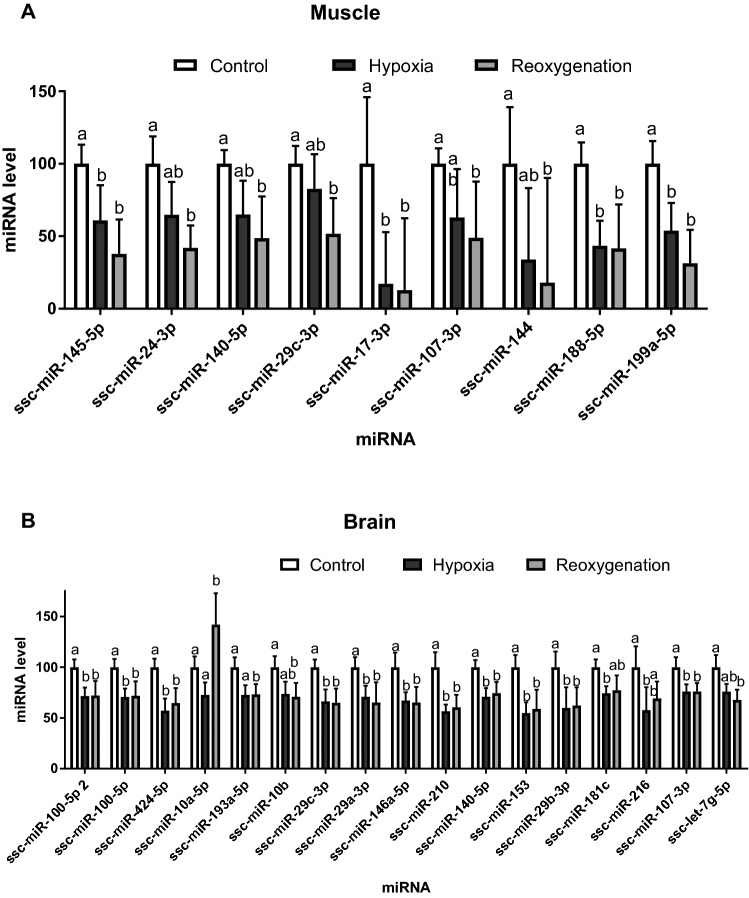
Oxygen fluctuations might occur in mammalian tissues under physiological (e.g. at high altitudes) or pathological (e.g. ischemia-reperfusion) conditions. Mitochondria are the key target and potential amplifiers of hypoxia-reoxygenation (H-R) stress. Understanding the mitochondrial responses to H-R stress is important for identifying adaptive mechanisms and potential therapeutic solutions for pathologies associated with oxygen fluctuations. We explored metabolic response to H-R stress in two tissue types (muscle and brain) with different degrees of hypoxia tolerance in a domestic pig Sus scrofa focusing on the cellular responses independent of the systemic regulatory mechanisms. Isolated cells from the skeletal muscle (masseter) and brain (thalamus) were exposed to acute short-term (15 min) hypoxia followed by reoxygenation. The mitochondrial oxygen consumption, reactive oxygen species (ROS) production rates and transcriptional profiles of hypoxia-responsive mRNA and miRNA were determined. Mitochondria of the porcine brain cells showed a decrease in the resting respiration and ATP synthesis capacity whereas the mitochondria from the muscle cells showed robust respiration and less susceptibility to H-R stress. ROS production was not affected by the short-term H-R stress in the brain or muscle cells. Transcriptionally, prolyl hydroxylase domain protein EGLN3 was upregulated during hypoxia and suppressed during reoxygenation in porcine muscle cells. The decline in EGLN3 mRNA during reoxygenation was accompanied by an upregulation of hypoxia-inducible factor subunit α (HIF1A) transcripts in the muscle cells. However, in the brain cells, HIF1A mRNA levels were suppressed during reoxygenation. Other functionally important transcripts and miRNAs involved in antioxidant response, apoptosis, inflammation, and substrate oxidation were also differentially expressed between the muscle and brain cells. Suppression of miRNA levels during acute intermittent hypoxia was stronger in the brain cells affecting ~ 55% of all studied miRNA transcripts than in the muscle cells (~ 25% of miRNA) signifying transcriptional derepression of the respective mRNA targets. Our study provides insights into the potential molecular and physiological mechanisms contributing to different hypoxia sensitivity of the studied tissues and can serve as a starting point to better understand the biological processes associated with hypoxia stress, e.g. during ischemia and reperfusion.
哺乳动物组织中的氧波动可能发生在生理条件下(例如高海拔地区)或病理条件下(例如缺血再灌注)。线粒体是缺氧再氧合(H-R)应激的关键靶标和潜在放大器。了解线粒体对 H-R 应激的反应对于确定与氧波动相关的病理学的适应机制和潜在治疗方法很重要。我们在国内猪 Sus scrofa 中研究了两种组织类型(肌肉和大脑)对不同缺氧耐受程度的代谢对 H-R 应激的反应,重点研究了与全身调节机制无关的细胞反应。从骨骼肌(咬肌)和大脑(丘脑)中分离出细胞,使其经历急性短期(15 分钟)缺氧,然后再进行复氧。测定线粒体耗氧量、活性氧(ROS)产生率以及缺氧反应性 mRNA 和 miRNA 的转录谱。猪脑细胞的线粒体显示出静息呼吸和 ATP 合成能力下降,而肌肉细胞的线粒体显示出强大的呼吸作用,对 H-R 应激的敏感性较低。ROS 的产生在脑或肌肉细胞的短期 H-R 应激中不受影响。在猪肌肉细胞中,脯氨酰羟化酶结构域蛋白 EGLN3 在缺氧期间上调,在复氧期间下调。在肌肉细胞中,EGLN3 mRNA 在复氧期间的下降伴随着缺氧诱导因子亚基 α(HIF1A)转录本的上调。然而,在脑细胞中,HIF1A mRNA 水平在复氧期间受到抑制。其他涉及抗氧化反应、细胞凋亡、炎症和底物氧化的功能重要的转录物和 miRNA 也在肌肉细胞和脑细胞之间表达不同。急性间歇性缺氧期间 miRNA 水平的抑制在脑细胞中更强,影响了所有研究 miRNA 转录物的55%,而在肌肉细胞中为25%的 miRNA,表明各自的 mRNA 靶标转录抑制。我们的研究提供了对导致研究组织中不同缺氧敏感性的潜在分子和生理机制的深入了解,并可以作为更好地理解与缺氧应激相关的生物学过程的起点,例如在缺血和再灌注期间。