Chen Hongyu, Lai Xiaoqin, Zhu Yihan, Huang Hong, Zeng Lingyan, Zhang Li
Key Laboratory of Transplantation Engineering and Immunology, Ministry of Health, West China Hospital, Sichuan University, Chengdu, Sichuan, China.
Laboratory of Pathology, West China Hospital, Sichuan University, Chengdu, Sichuan, China.
Clin Proteomics. 2022 Nov 21;19(1):44. doi: 10.1186/s12014-022-09381-x.
Lung cancer (LC) is a common malignant tumor with a high incidence and poor prognosis. Early LC could be cured, but the 5-year-survival rate for patients advanced is extremely low. Early screening of tumor biomarkers through plasma could allow more LC to be detected at an early stage, leading to a earlier treatment and a better prognosis.
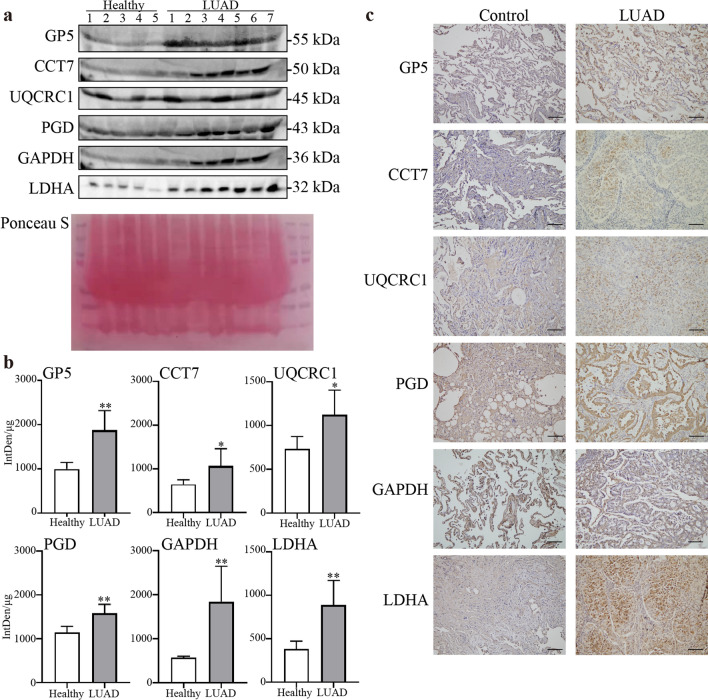
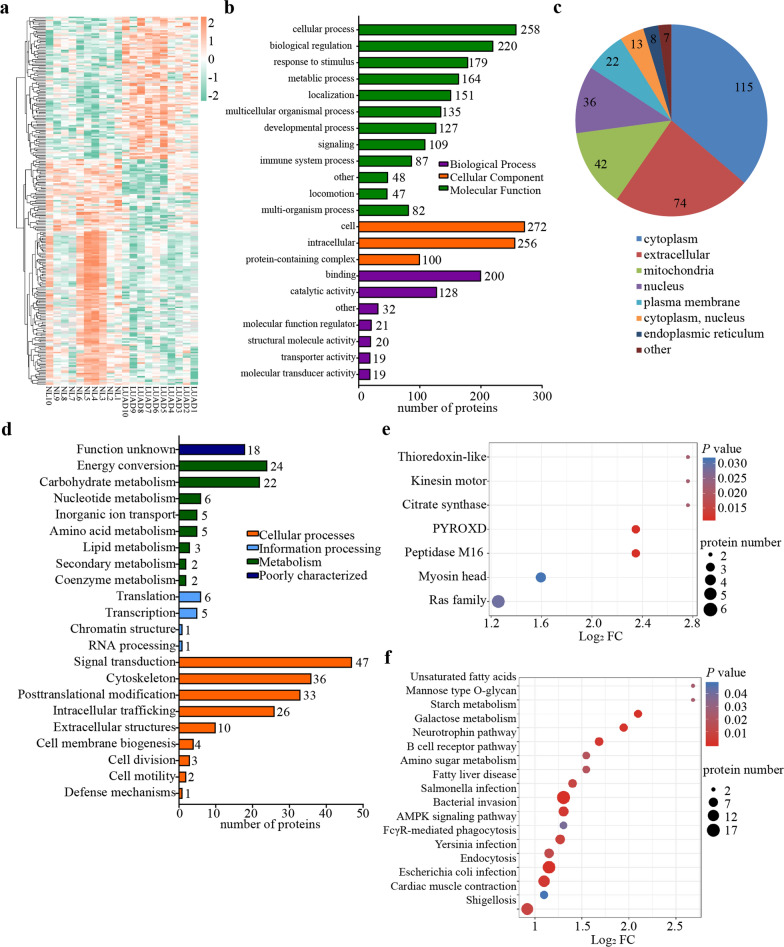
This study was based on total proteomic analysis and parallel reaction monitoring validation of peripheral blood from 20 lung adenocarcinoma patients and 20 healthy individuals. Furthermore, differentially expressed proteins closely related to prognosis were analysed using Kaplan-Meier Plotter and receiver operating characteristic curve (ROC) curve analysis.
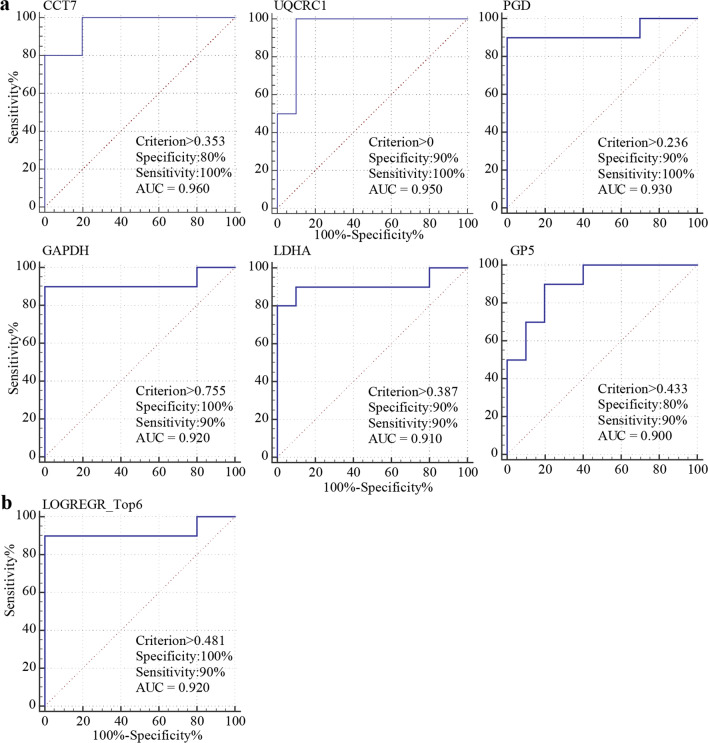
The candidate proteins GAPDH and RAC1 showed the highest connectivity with other differentially expressed proteins between the lung adenocarcinoma group and the healthy group using STRING. Kaplan-Meier Plotter analysis showed that lung adenocarcinoma patients with positive ATCR2, FHL1, RAB27B, and RAP1B expression had observably longer overall survival than patients with negative expression (P < 0.05). The high expression of ARPC2, PFKP, PNP, RAC1 was observably negatively correlated with prognosis (P < 0.05). 17 out of 27 proteins showed a high area under the curve (> 0.80) between the lung adenocarcinoma and healthy plasma groups. Among those proteins, UQCRC1 had an area under the curve of 0.960, and 5 proteins had an area under the curve from 0.90 to 0.95, suggesting that these hub proteins might have discriminatory potential in lung adenocarcinoma, P < 0.05.
These findings provide UQCRC1, GAPDH, RAC1, PFKP have potential as novel biomarkers for the early screening of lung adenocarcinoma.
肺癌(LC)是一种常见的恶性肿瘤,发病率高且预后较差。早期肺癌可以治愈,但晚期患者的5年生存率极低。通过血浆对肿瘤生物标志物进行早期筛查,可以使更多肺癌在早期被检测出来,从而实现更早的治疗和更好的预后。
本研究基于对20例肺腺癌患者和20例健康个体外周血的全蛋白质组分析和平行反应监测验证。此外,使用Kaplan-Meier Plotter和受试者工作特征曲线(ROC)分析对与预后密切相关的差异表达蛋白进行了分析。
使用STRING软件分析发现,候选蛋白GAPDH和RAC1与肺腺癌组和健康组之间的其他差异表达蛋白具有最高的连接性。Kaplan-Meier Plotter分析显示,ATCR2、FHL1、RAB27B和RAP1B表达阳性的肺腺癌患者的总生存期明显长于表达阴性的患者(P < 0.05)。ARPC2、PFKP、PNP、RAC1的高表达与预后明显负相关(P < 0.05)。27种蛋白质中有17种在肺腺癌组和健康血浆组之间显示出较高的曲线下面积(> 0.80)。其中,UQCRC1的曲线下面积为0.960,5种蛋白质的曲线下面积在0.90至0.95之间,表明这些核心蛋白可能在肺腺癌中具有鉴别潜力,P < 0.05。
这些发现表明,UQCRC1、GAPDH、RAC1、PFKP有潜力作为肺腺癌早期筛查的新型生物标志物。