Department of Medical Oncology, The Affiliated Hospital of Hangzhou Normal University, Hangzhou, Zhejiang, China.
Department of Radiation Oncology, The Second Affiliated Hospital, Zhejiang University School of Medicine, Hangzhou, Zhejiang, China.
Front Immunol. 2022 Nov 2;13:1001506. doi: 10.3389/fimmu.2022.1001506. eCollection 2022.
Hepatocellular carcinoma (HCC) is the most prevalent pathological type of liver cancer worldwide with high mortality and poor prognosis. N6-methyladenosine (m6A) can modify RNAs such as mRNA, lncRNA, miRNA, and tRNA, thereby playing a critical role in the pathogenesis of HCC. However, the role of m6A-associated small nuclear RNA (snRNA) in the prognostic value and immunotherapeutic response in HCC remains unclear.
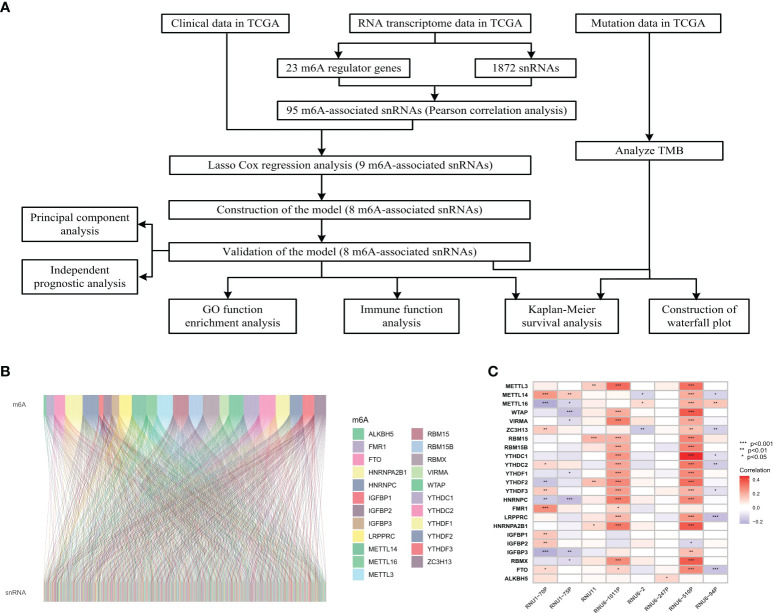
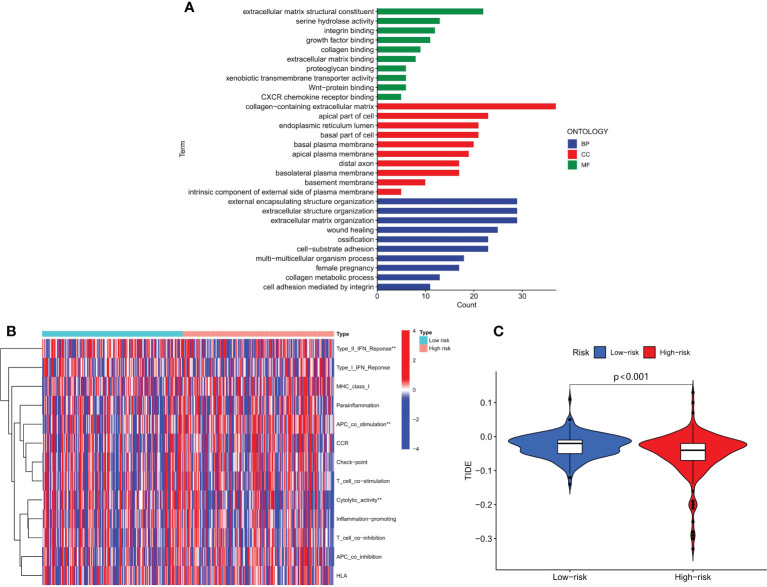
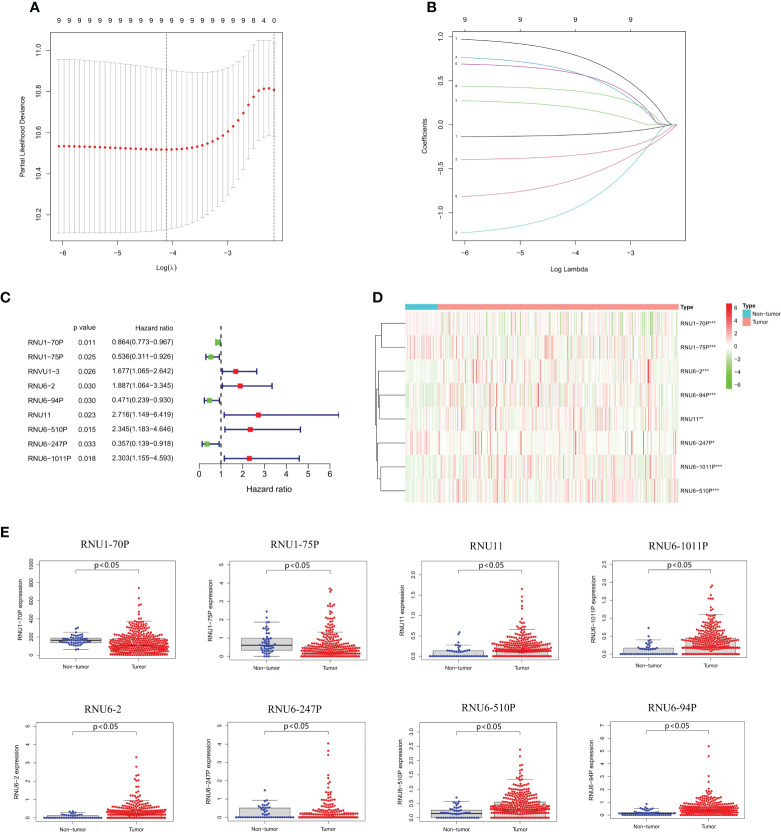
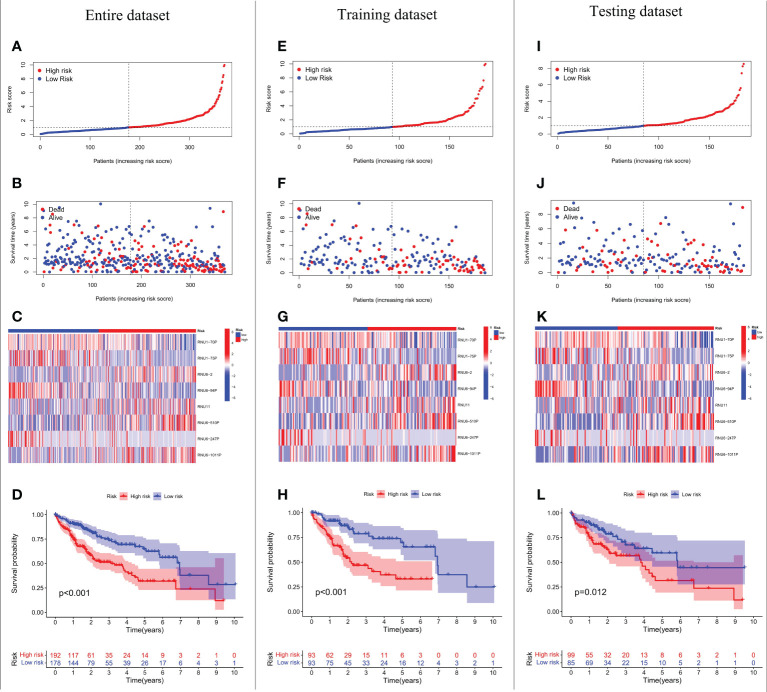
In this study, snRNA expression data, gene mutation data, and clinical data of HCC patients were acquired from The Cancer Genome Atlas (TCGA) database. We used the least absolute shrinkage and selection operator (LASSO) Cox regression analysis to identify significant prognostic m6A-associated snRNAs, and then developed a multivariate Cox model based on the selected snRNAs. HCC patients were split into low- and high-risk groups based on the median risk score. We subsequently performed Kaplan-Meier curve analysis to estimate overall survival (OS) by clinicopathological characteristics and tumor mutational burden (TMB) status in low- and high-risk HCC patients. Finally, we compared the immunotherapeutic response as represented by tumor immune dysfunction and exclusion (TIDE) scores between the two risk groups.
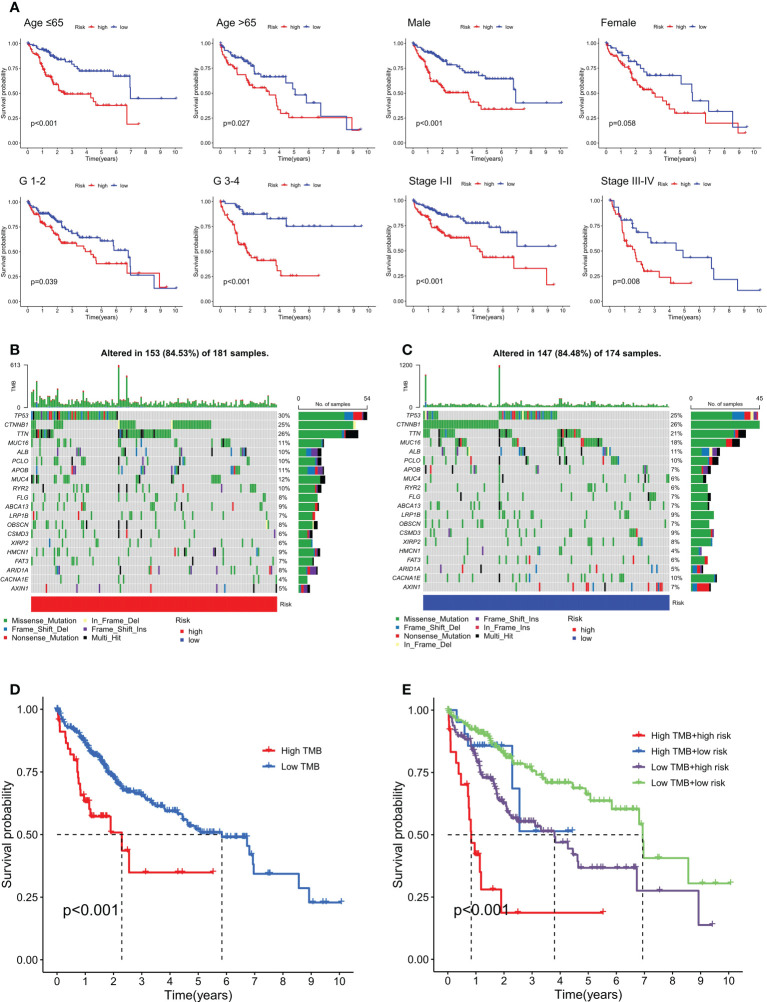
Eight m6A-associated snRNAs were selected as independent predictors to develop the risk model. Our results revealed that the OS of HCC patients in the high-risk group was significantly worse than that in the low-risk group on clinicopathologic characteristics, including age (≤65 years and >65 years), gender (male), grade (G I-II and G III-IV) and TNM staging (Stage I-II and Stage III-IV). In addition, the OS of low-TMB and low-risk group was longer than that of high-TMB and high-risk group. The TIDE score indicated that HCC patients in the high-risk group were more susceptible to immunotherapy.
Our study suggests that m6A-associated snRNAs may be useful biomarkers for the prognosis of HCC and that m6A-associated snRNA models can predict the effect of immunotherapy in HCC patients.
肝细胞癌(HCC)是全球最常见的肝癌病理类型,死亡率高,预后差。N6-甲基腺苷(m6A)可修饰 mRNA、lncRNA、miRNA 和 tRNA 等 RNA,从而在 HCC 的发病机制中发挥关键作用。然而,m6A 相关小核 RNA(snRNA)在 HCC 的预后价值和免疫治疗反应中的作用尚不清楚。
本研究从癌症基因组图谱(TCGA)数据库中获取 HCC 患者的 snRNA 表达数据、基因突变数据和临床数据。我们使用最小绝对收缩和选择算子(LASSO)Cox 回归分析来识别有意义的预后 m6A 相关 snRNA,并基于选定的 snRNA 建立多变量 Cox 模型。根据中位风险评分将 HCC 患者分为低风险组和高风险组。随后,我们根据临床病理特征和肿瘤突变负担(TMB)状态对低风险和高风险 HCC 患者进行 Kaplan-Meier 曲线分析,以评估总生存期(OS)。最后,我们比较了两个风险组之间的肿瘤免疫功能障碍和排除(TIDE)评分代表的免疫治疗反应。
选择了 8 个 m6A 相关 snRNA 作为独立预测因子来建立风险模型。我们的结果表明,高风险组 HCC 患者的 OS 在临床病理特征方面明显差于低风险组,包括年龄(≤65 岁和>65 岁)、性别(男)、分级(G I-II 和 G III-IV)和 TNM 分期(I-II 期和 III-IV 期)。此外,低 TMB 和低风险组的 OS 比高 TMB 和高风险组更长。TIDE 评分表明,高风险组 HCC 患者对免疫治疗更敏感。
我们的研究表明,m6A 相关 snRNA 可能是 HCC 预后的有用生物标志物,m6A 相关 snRNA 模型可预测 HCC 患者免疫治疗的效果。