Hacettepe University School of Medicine, Sihhiye, Ankara, Turkey.
Department of Basic Oncology, Hacettepe University Cancer Institute, Sihhiye, Ankara, Turkey.
Front Immunol. 2022 Oct 27;13:965312. doi: 10.3389/fimmu.2022.965312. eCollection 2022.
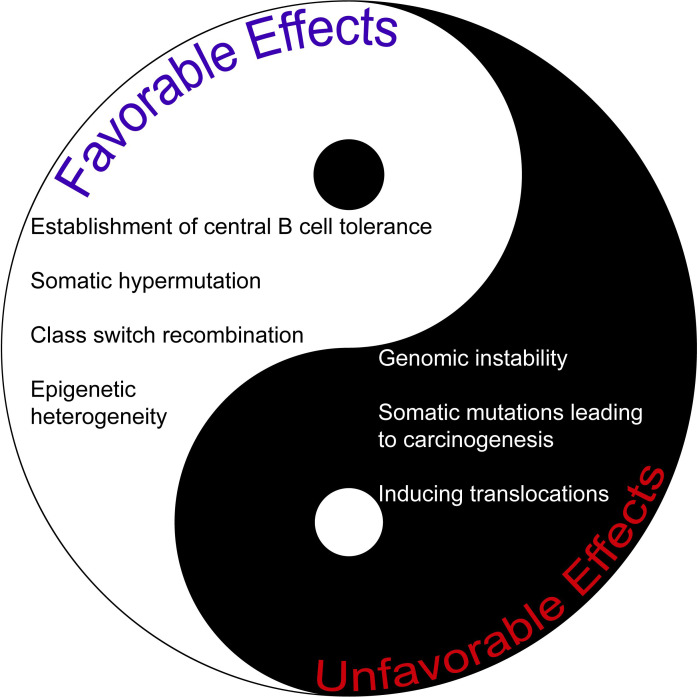
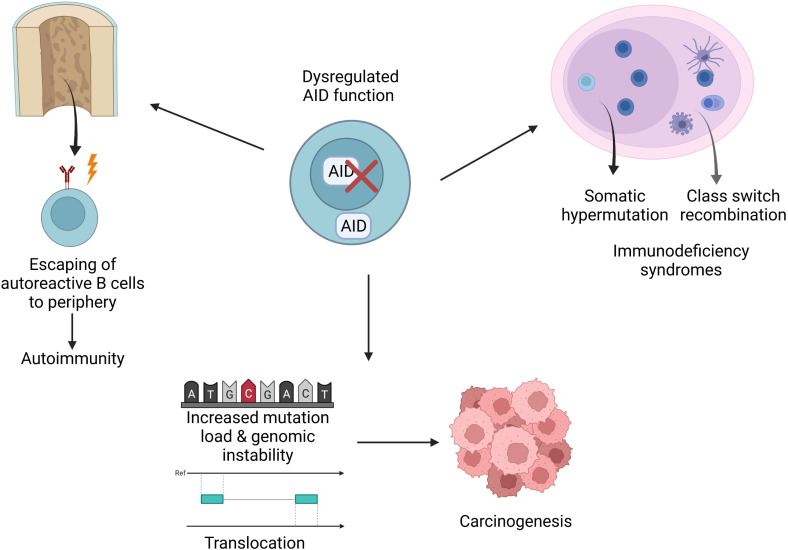
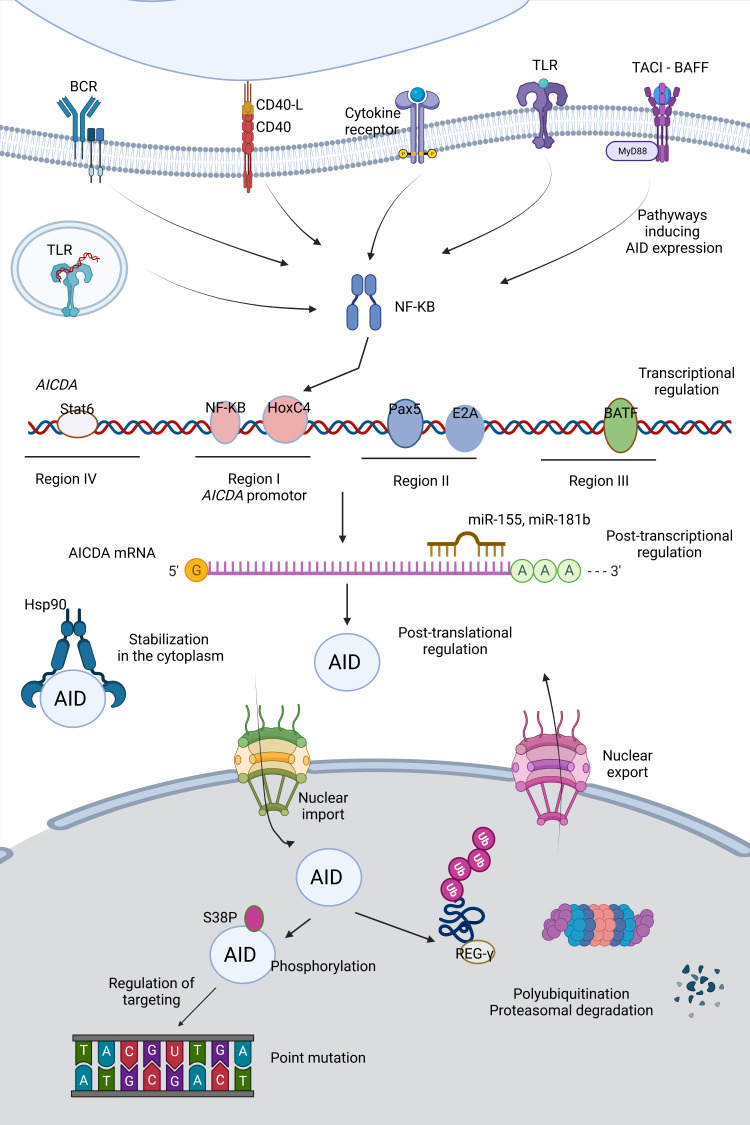
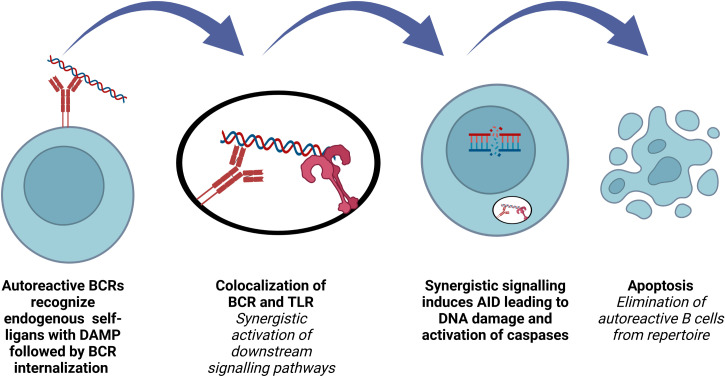
Activation induced cytidine deaminase (AID) protein is a member of APOBEC family. AID converts cytidine to uracil, which is a key step for somatic hypermutation (SHM) and class switch recombination (CSR). AID also plays critical roles in B cell precursor stages, removing polyreactive B cells from immune repertoire. Since the main function of AID is inducing point mutations, dysregulation can lead to increased mutation load, translocations, disturbed genomic integrity, and lymphomagenesis. As such, expression of AID as well as its function is controlled strictly at various molecular steps. Other members of the APOBEC family also play crucial roles during carcinogenesis. Considering all these functions, AID represents a bridge, linking chronic inflammation to carcinogenesis and immune deficiencies to autoimmune manifestations.
激活诱导胞苷脱氨酶(AID)蛋白是 APOBEC 家族的一员。AID 将胞嘧啶转化为尿嘧啶,这是体细胞高频突变(SHM)和类别转换重组(CSR)的关键步骤。AID 在 B 细胞前体阶段也发挥着关键作用,从免疫库中清除多反应性 B 细胞。由于 AID 的主要功能是诱导点突变,失调会导致突变负荷增加、易位、基因组完整性紊乱和淋巴瘤发生。因此,AID 的表达及其功能在各种分子步骤中受到严格控制。APOBEC 家族的其他成员在癌变过程中也起着至关重要的作用。考虑到所有这些功能,AID 代表了一个桥梁,将慢性炎症与癌变、免疫缺陷与自身免疫表现联系起来。