Huang Jimmy, Martinez Jenny, Diaz Daniel, Wolowich William R
Department of Pharmacy, Mount Sinai Medical Center, Miami Beach, FL, USA.
College of Pharmacy, Nova Southeastern University, Fort Lauderdale, FL, USA.
J Hematol. 2022 Oct;11(5):167-175. doi: 10.14740/jh1036. Epub 2022 Oct 31.
The purpose of this study was to investigate the association between anticoagulant dosing intensity in coronavirus disease 2019 (COVID-19) infected patients and its outcomes on venous thromboembolism (VTE) and all-cause mortality.
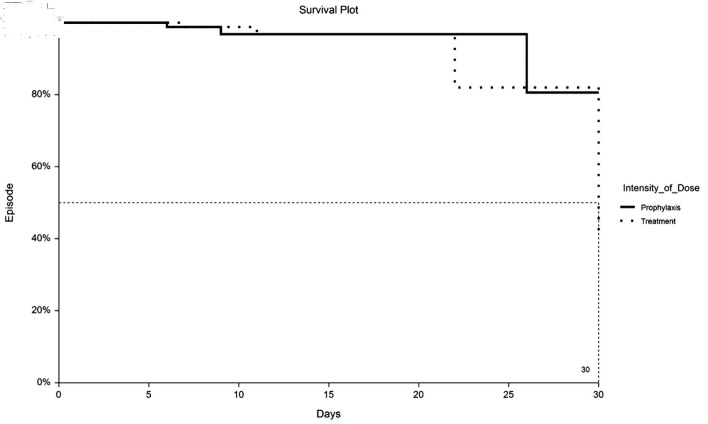
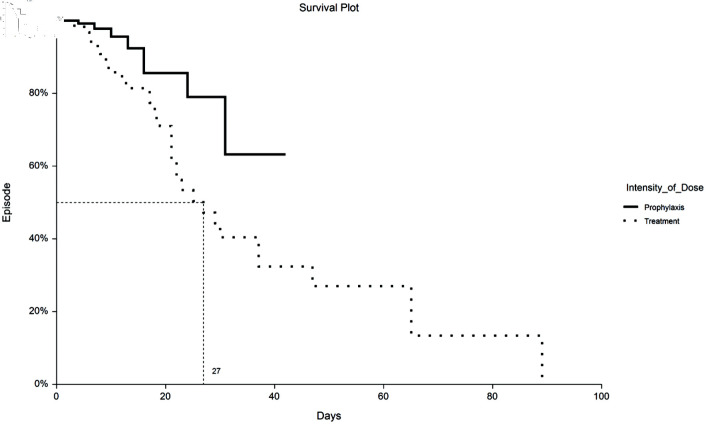
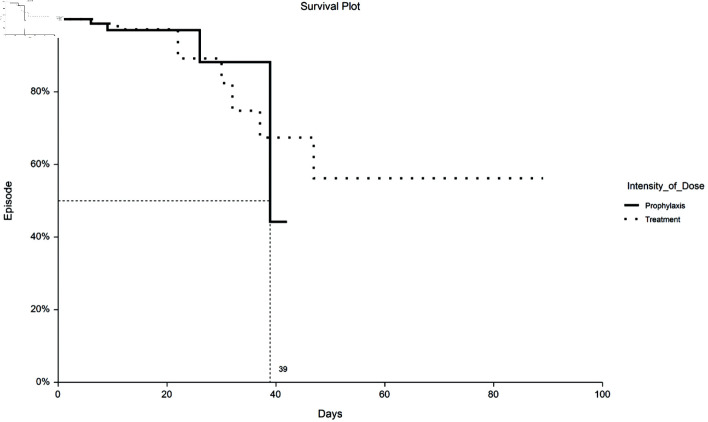
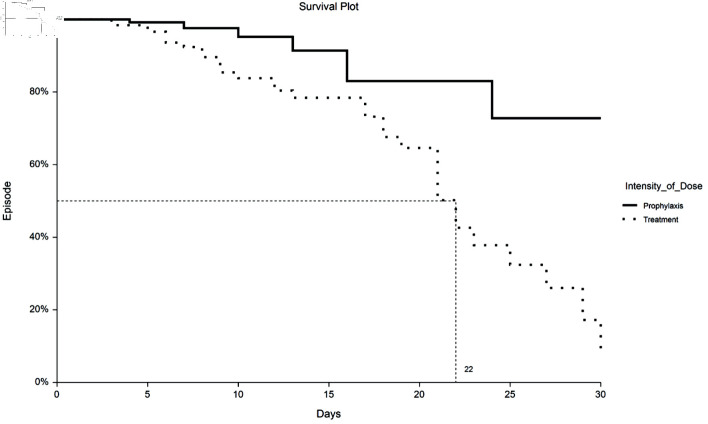
This is a retrospective observational study that examined different anticoagulation regimens among COVID-19 patients for prophylaxis of VTE. Primary outcomes of the study were VTE incidence and all-cause mortality for patients receiving prophylaxis-intensity (PPX) and therapeutic-intensity (TX) anticoagulation. Secondary outcomes were incidence of hemorrhagic events and hospital length of stay. Patients were matched (1:1) based on age and Charlson comorbidity score. Sub-group analyses evaluated outcomes within critically ill patients, between specific anticoagulant agents and comorbid conditions.
The primary outcome of VTE occurred in six patients within the prophylactic dose group and eight patients in the therapeutic-intensity dose group (risk ratio (RR): 2.02 (95% confidence interval (CI): 0.7 - 5.2); P = 0.2). Bleeding occurred in 15 (11%) patients in the prophylactic group and 27 (19%) patients in the therapeutic group (RR: 0.5 (95% CI: 0.3 - 1.0); P < 0.049). Hospital length of stay was shorter by 4 days in those treated with prophylactic-intensity anticoagulation (P = 0.003). Intensive care unit admission and ventilation were negatively correlated with mortality in a multivariate analysis.
Among hospitalized COVID-19 patients, the use of therapeutic-intensity anticoagulation did not show any benefits in reducing the occurrence of VTE. An increase in mortality and in the incidence of hemorrhagic events was statistically significant in the therapeutic-intensity group. Future prospective studies are warranted to evaluate anticoagulation therapy in COVID-19 infected patients.
本研究旨在调查2019冠状病毒病(COVID-19)感染患者的抗凝给药强度与其静脉血栓栓塞(VTE)结局和全因死亡率之间的关联。
这是一项回顾性观察研究,研究了COVID-19患者中不同的抗凝方案对VTE的预防作用。该研究的主要结局是接受预防强度(PPX)和治疗强度(TX)抗凝治疗的患者的VTE发生率和全因死亡率。次要结局是出血事件的发生率和住院时间。根据年龄和Charlson合并症评分对患者进行(1:1)匹配。亚组分析评估了重症患者、特定抗凝剂和合并症情况下的结局。
预防剂量组有6例患者发生VTE这一主要结局,治疗强度剂量组有8例患者发生(风险比(RR):2.02(95%置信区间(CI):0.7 - 5.2);P = 0.2)。预防组有15例(11%)患者出血,治疗组有27例(19%)患者出血(RR:0.5(95%CI:0.3 - 1.0);P < 0.049)。接受预防强度抗凝治疗的患者住院时间缩短了4天(P = 0.003)。在多变量分析中,重症监护病房入住率和通气与死亡率呈负相关。
在住院的COVID-19患者中,使用治疗强度的抗凝治疗在降低VTE发生率方面未显示出任何益处。治疗强度组的死亡率增加和出血事件发生率增加具有统计学意义。未来有必要进行前瞻性研究,以评估COVID-19感染患者的抗凝治疗。