School of Nursing, The Hong Kong Polytechnic University, Kowloon, Hong Kong SAR, China.
Department of Psychiatry, The University of Hong Kong, Pokfulam, Hong Kong SAR, China.
Front Public Health. 2022 Nov 4;10:1004558. doi: 10.3389/fpubh.2022.1004558. eCollection 2022.
Any infectious disease outbreak may lead to a negative detrimental psychological impact on individuals and the community at large, however; there was no systematic review nor meta-analysis that examined the relationship between the psychological/mental health impact of SARS and COVID-19 outbreak in Asia.
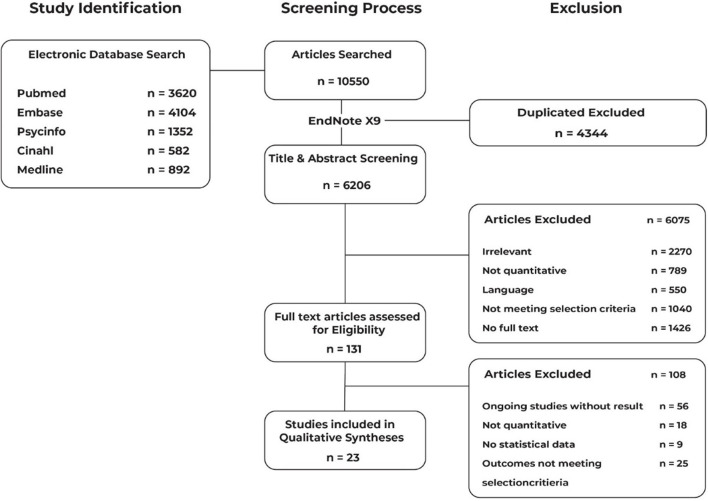
A systematic search was conducted using PubMed, EMBASE, Medline, PsycINFO, and CINAHL databases from 1/1/2000 to 1/6/2020. In this systematic review and meta-analysis, we analyzed the psychological impact on confirmed/suspected cases, healthcare workers and the general public during the Severe Acute Respiratory Syndrome (SARS) outbreak and Coronavirus disease (COVID-19) epidemics. Primary outcomes included prevalence of depression, anxiety, stress, post-traumatic stress disorder, aggression, sleeping problems and psychological symptoms.
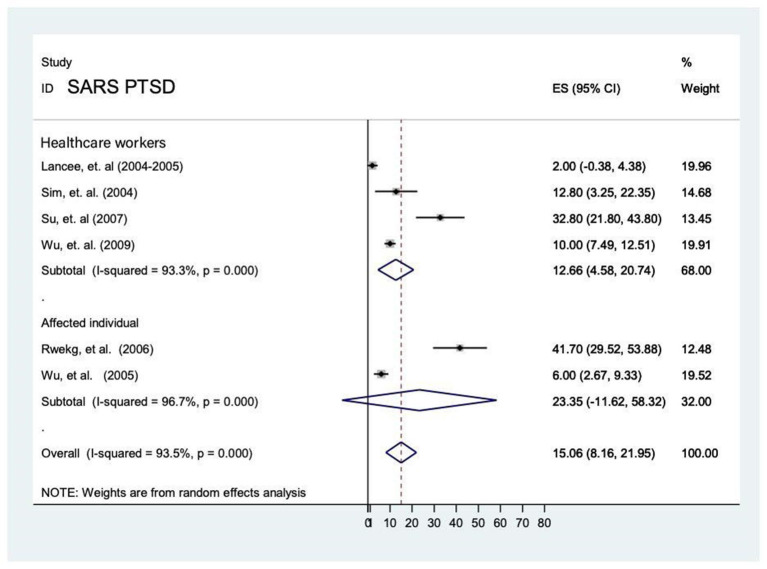
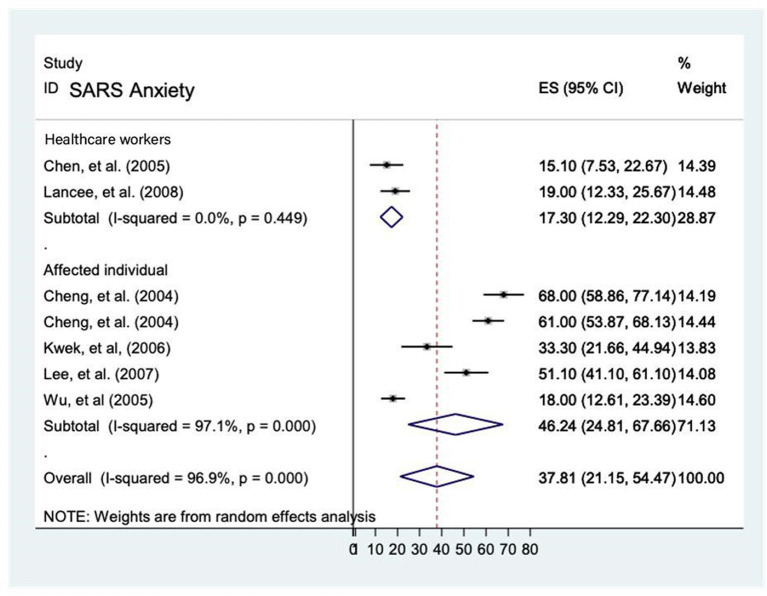
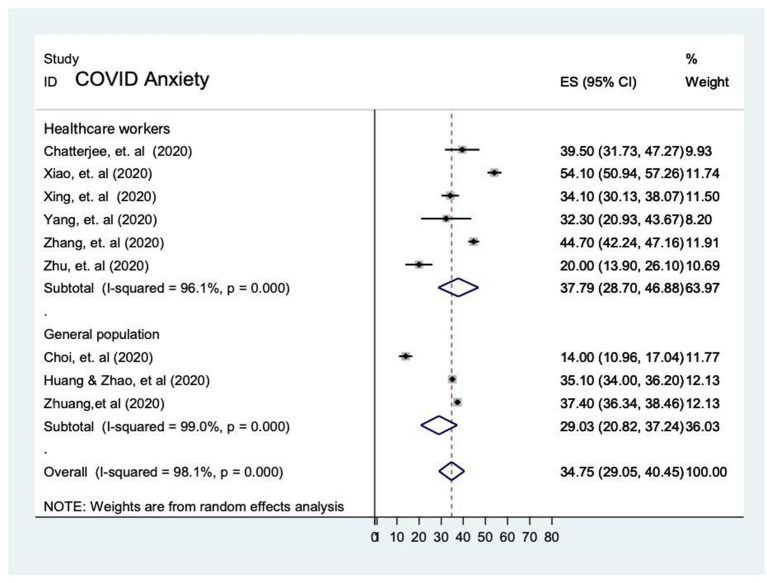
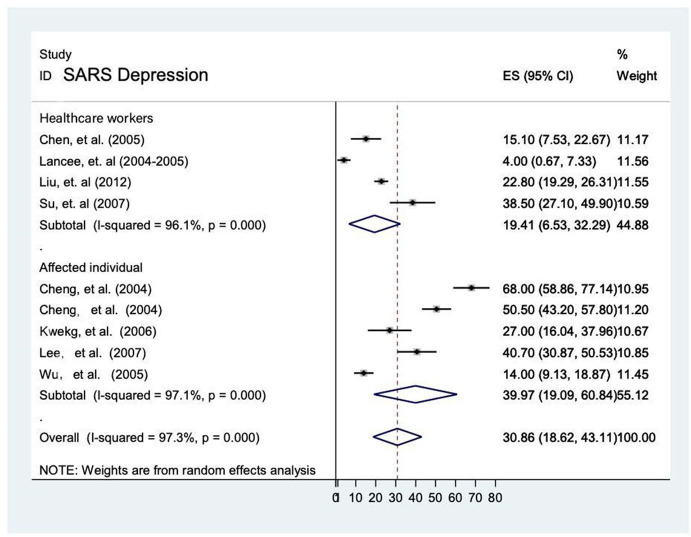
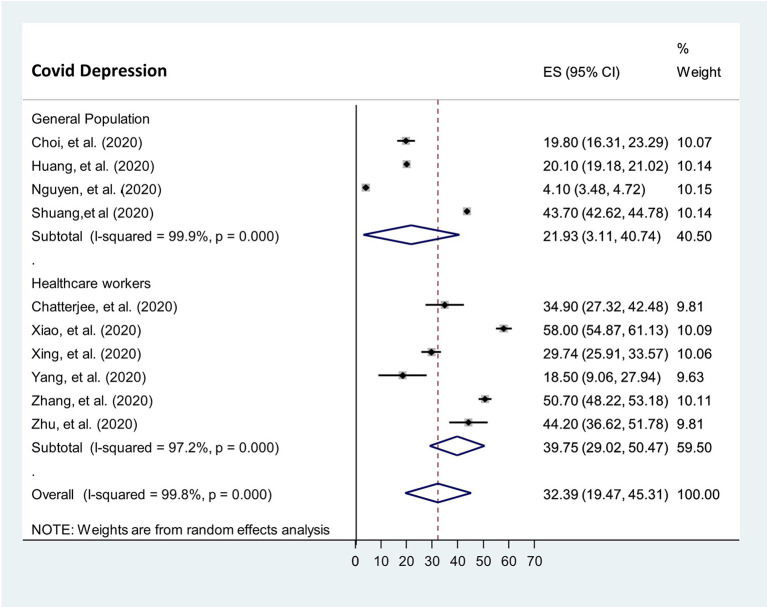
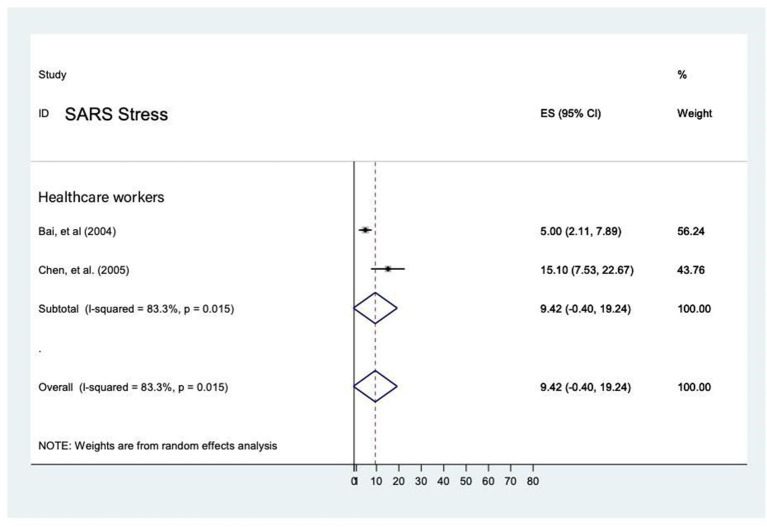
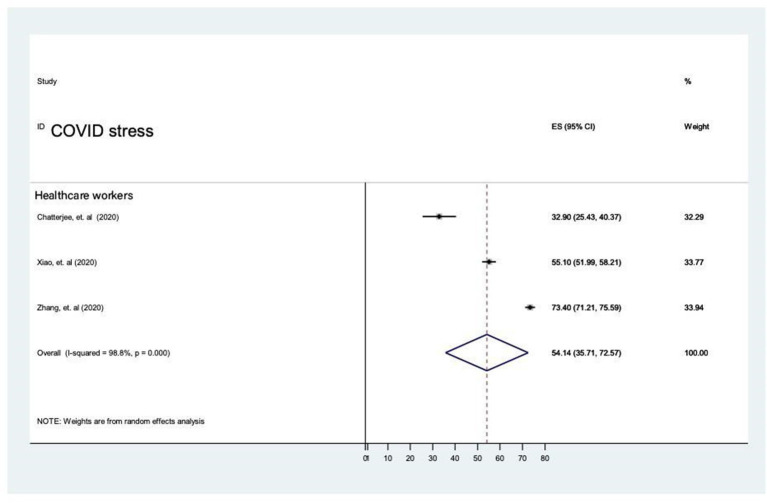
Twenty-three eligible studies ( = 27,325) were included. Random effect model was used to analyze the data using STATA. Of these studies, 11 were related to the SARS outbreak and 12 related to COVID-19 outbreaks. The overall prevalence rate of anxiety during SARS and COVID-19 was 37.8% (95% CI: 21.1-54.5, < 0.001, I2 = 96.9%) and 34.8% (95% CI: 29.1-40.4), respectively. For depression, the overall prevalence rate during SARS and COVID-19 was 30.9% (95% CI: 18.6-43.1, < 0.001, I2 = 97.3%) and 32.4% (95% CI: 19.8-45.0, < 0.001, I2 = 99.8%), respectively. The overall prevalence rate of stress was 9.4% (95% CI: -0.4 -19.2, = 0.015, I2 = 83.3%) and 54.1% (95% CI: 35.7-72.6, < 0.001, I2 = 98.8%) during SARS and COVID-19, respectively. The overall prevalence of PTSD was 15.1% (95% CI: 8.2-22.0, < 0.001) during SARS epidemic, calculated by random-effects model ( < 0.05), with significant between-study heterogeneity (I2 = 93.5%).
The SARS and COVID-19 epidemics have brought about high levels of psychological distress to individuals. Psychological interventions and contingent digital mental health platform should be promptly established nationwide for continuous surveillance of the increasing prevalence of negative psychological symptoms. Health policymakers and mental health experts should jointly collaborate to provide timely, contingent mental health treatment and psychological support to those in need to reduce the global disease burden.
CRD42020182787, identifier PROSPER.
任何传染病的爆发都可能对个人和整个社区产生负面影响,但目前还没有系统评价或荟萃分析来研究 SARS 和 COVID-19 爆发对亚洲地区人群心理健康的影响。
我们使用 PubMed、EMBASE、Medline、PsycINFO 和 CINAHL 数据库,从 2000 年 1 月 1 日至 2020 年 1 月 6 日进行了系统检索。在这项系统评价和荟萃分析中,我们分析了 SARS 爆发和 COVID-19 疫情期间确诊/疑似病例、医护人员和公众的心理健康影响。主要结局包括抑郁、焦虑、压力、创伤后应激障碍、攻击性、睡眠问题和心理症状的发生率。
纳入了 23 项符合条件的研究(=27325 人)。使用 STATA 采用随机效应模型分析数据。这些研究中,11 项与 SARS 爆发有关,12 项与 COVID-19 爆发有关。SARS 和 COVID-19 期间焦虑的总体发生率分别为 37.8%(95%CI:21.1-54.5,<0.001,I2=96.9%)和 34.8%(95%CI:29.1-40.4)。对于抑郁,SARS 和 COVID-19 期间的总体发生率分别为 30.9%(95%CI:18.6-43.1,<0.001,I2=97.3%)和 32.4%(95%CI:19.8-45.0,<0.001,I2=99.8%)。SARS 和 COVID-19 期间压力的总体发生率分别为 9.4%(95%CI:-0.4-19.2,=0.015,I2=83.3%)和 54.1%(95%CI:35.7-72.6,<0.001,I2=98.8%)。SARS 流行期间,通过随机效应模型计算 PTSD 的总体发生率为 15.1%(95%CI:8.2-22.0,<0.001)(<0.05),存在显著的异质性(I2=93.5%)。
SARS 和 COVID-19 疫情给个人带来了高度的心理困扰。应在全国范围内及时建立心理干预和数字心理健康平台,对负面心理症状的发生率进行持续监测。卫生政策制定者和精神卫生专家应共同合作,为有需要的人提供及时、适当的精神卫生治疗和心理支持,以减轻全球疾病负担。
CRD42020182787,标识符 PROSPER。