School of Life Sciences, State Key Laboratory of Biocontrol, Sun Yat-sen Universitygrid.12981.33, Guangzhou, Guangdong, China.
Netherlands Centre of Biodiversity Naturalis, Leiden, Netherlands.
Microbiol Spectr. 2022 Dec 21;10(6):e0279422. doi: 10.1128/spectrum.02794-22. Epub 2022 Nov 21.
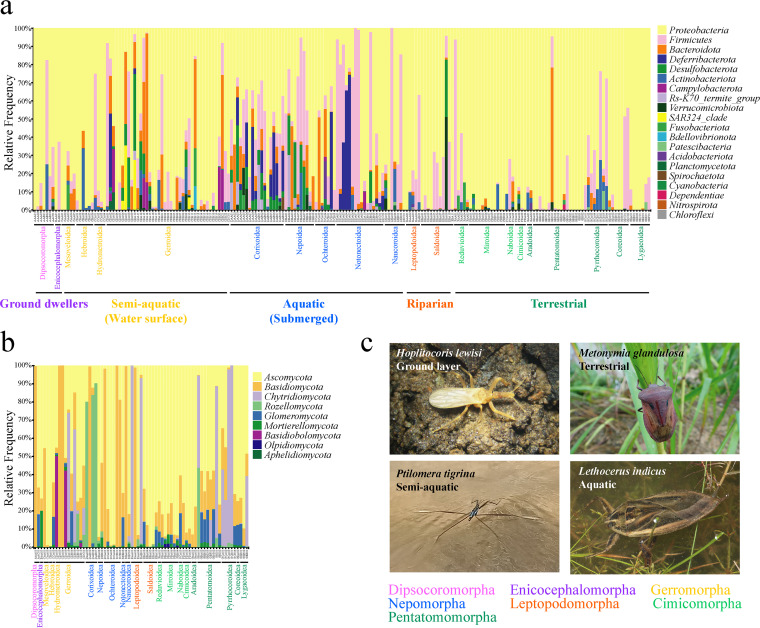
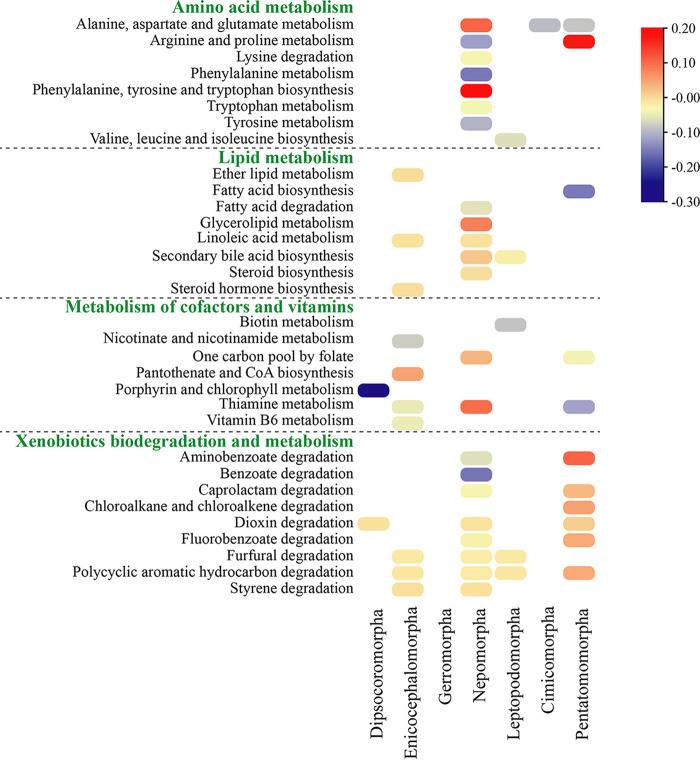
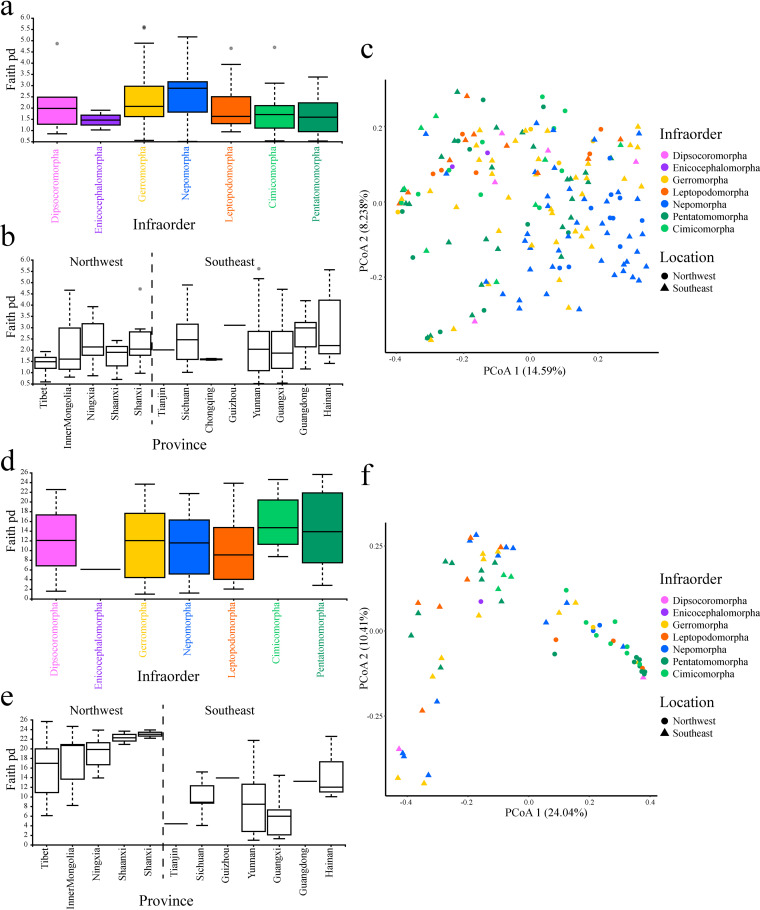
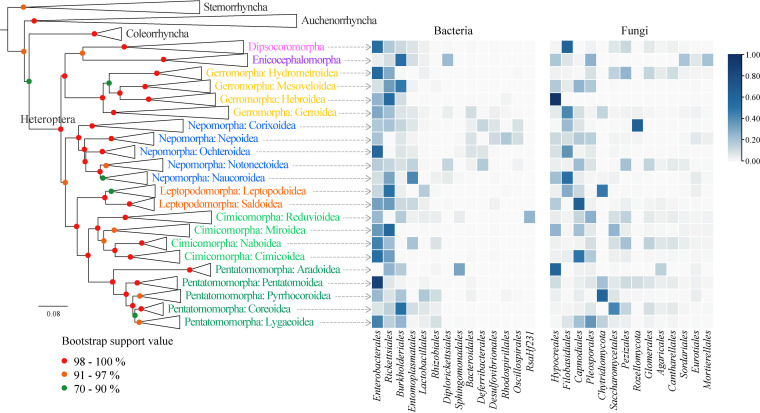
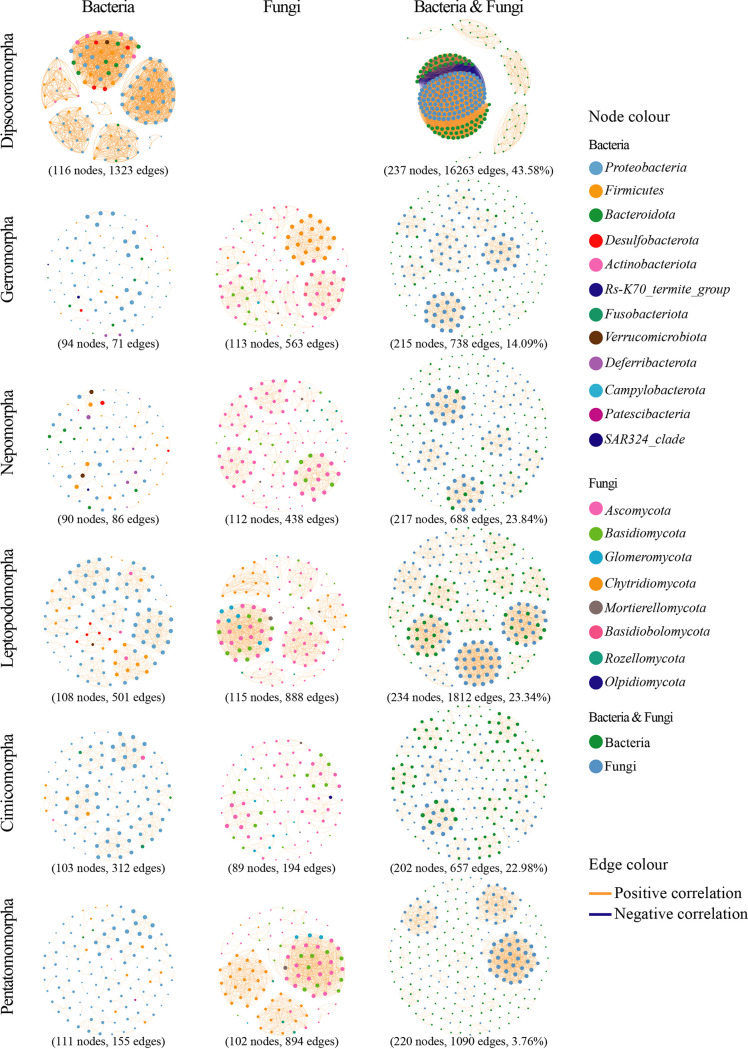
True bugs (Hemiptera, suborder Heteroptera) constitute the largest suborder of nonholometabolous insects and occupy a wide range of habitats various from terrestrial to semiaquatic to aquatic niches. The transition and occupation of these diverse habitats impose various challenges to true bugs, including access to oxygen for the aquatic species and plant defense for the terrestrial phytophagans. Although numerous studies have demonstrated that microorganisms can provide multiple benefits to terrestrial host insects, a systematic study with comprehensive higher taxa sampling that represents aquatic and semiaquatic habitats is still lacking. To explore the role of symbiotic microorganisms in true bug adaptations, 204 samples belonging to all seven infraorders of Heteroptera were investigated, representing approximately 85% of its superfamilies and almost all known habitats. The symbiotic microbial communities of these insects were analyzed based on the full-length amplicons of the bacterial 16S rRNA gene and fungal ITS region. Bacterial communities varied among hosts inhabiting terrestrial, semiaquatic, and aquatic habitats, while fungal communities were more related to the geographical distribution of the hosts. Interestingly, co-occurrence networks showed that species inhabiting similar habitats shared symbiotic microorganism association types. Moreover, functional prediction analyses showed that the symbiotic bacterial community of aquatic species displayed richer amino acid and lipid metabolism pathways, while plant-feeding true bugs benefited more from the symbiont-provided xenobiotics biodegradation pathway. These results deepened the recognition that symbiotic microorganisms were likely to help heteropterans occupy diverse ecological habitats and provided a reference framework for further studies on how microorganisms affect host insects living in various habitats. Symbiotic bacteria and fungi generally colonize insects and provide various benefits for hosts. Although numerous studies have investigated symbionts in terrestrial plant-feeding insects, explorations of symbiotic bacterial and fungal communities in aquatic and semiaquatic insects are rare. In this study, the symbiotic microorganisms of 204 aquatic, semiaquatic, and terrestrial true bugs were explored. This comprehensive taxon sampling covers ~85% of the superfamilies of true bugs and most insect habitats. Analyses of the diversity of symbionts demonstrated that the symbiotic microbial diversities of true bugs were mainly affected by host habitats. Co-occurrence networks showed that true bugs inhabiting similar habitats shared symbiotic microbial association types. These correlations between symbionts and hosts together with the functions of bacterial communities indicated that symbiotic microbial communities may help true bugs adapt to (semi)aquatic habitats.
真昆虫(半翅目,异翅亚目)构成了非全变态昆虫中最大的亚目,占据了从陆地到半水生到水生小生境的广泛栖息地。这些不同栖息地的过渡和占据给真昆虫带来了各种挑战,包括水生物种获取氧气和陆地植食性昆虫获取植物防御的挑战。尽管许多研究表明微生物可以为陆地宿主昆虫提供多种益处,但仍缺乏系统的研究,该研究全面涵盖了代表水生和半水生栖息地的更高分类群样本。为了探索共生微生物在真昆虫适应中的作用,对属于异翅亚目所有七个亚目的 204 个样本进行了调查,这些样本代表了其超级科的约 85%,几乎涵盖了所有已知的栖息地。基于细菌 16S rRNA 基因和真菌 ITS 区的全长扩增子分析了这些昆虫的共生微生物群落。栖息在陆地、半水生和水生栖息地的宿主之间的细菌群落存在差异,而真菌群落与宿主的地理分布更为相关。有趣的是,共现网络显示,栖息在相似栖息地的物种具有相似的共生微生物关联类型。此外,功能预测分析表明,水生物种的共生细菌群落具有更丰富的氨基酸和脂质代谢途径,而以植物为食的真昆虫则从共生体提供的外来化合物生物降解途径中受益更多。这些结果加深了人们的认识,即共生微生物可能有助于半翅目昆虫占据不同的生态栖息地,并为进一步研究微生物如何影响生活在各种栖息地的宿主昆虫提供了参考框架。共生细菌和真菌通常定植于昆虫,并为宿主提供各种益处。尽管许多研究已经调查了陆地植食性昆虫的共生体,但对水生和半水生昆虫的共生细菌和真菌群落的研究很少。在这项研究中,探索了 204 种水生、半水生和陆生真昆虫的共生微生物。这种全面的分类群采样涵盖了约 85%的真昆虫的超级科和大多数昆虫栖息地。共生体多样性的分析表明,真昆虫的共生微生物多样性主要受宿主栖息地的影响。共现网络显示,栖息在相似栖息地的真昆虫具有相似的共生微生物关联类型。这些共生体与宿主之间的相关性以及细菌群落的功能表明,共生微生物群落可能有助于真昆虫适应(半)水生栖息地。