The Institute of Translational Medicine, Tianjin Union Medical Center of Nankai University, Nankai University, Tianjin 300121, People's Republic of China.
Nankai International Advanced Research Institute, Shenzhen 518045, People's Republic of China.
Proc Natl Acad Sci U S A. 2022 Nov 29;119(48):e2212436119. doi: 10.1073/pnas.2212436119. Epub 2022 Nov 21.
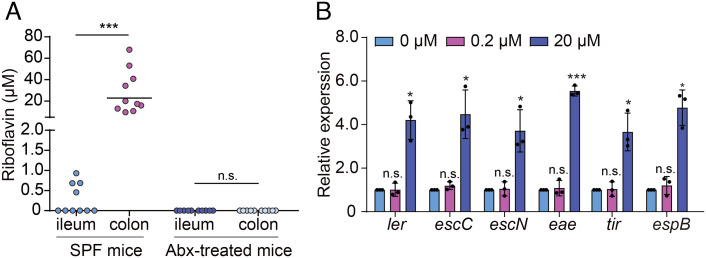
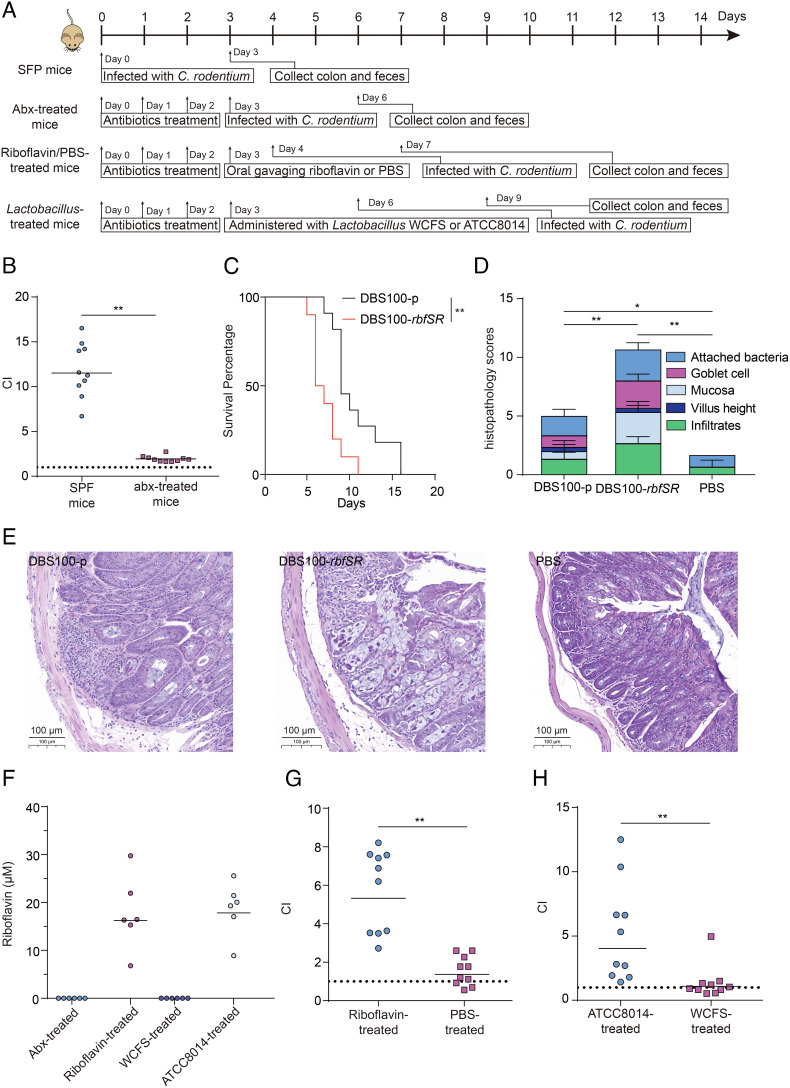
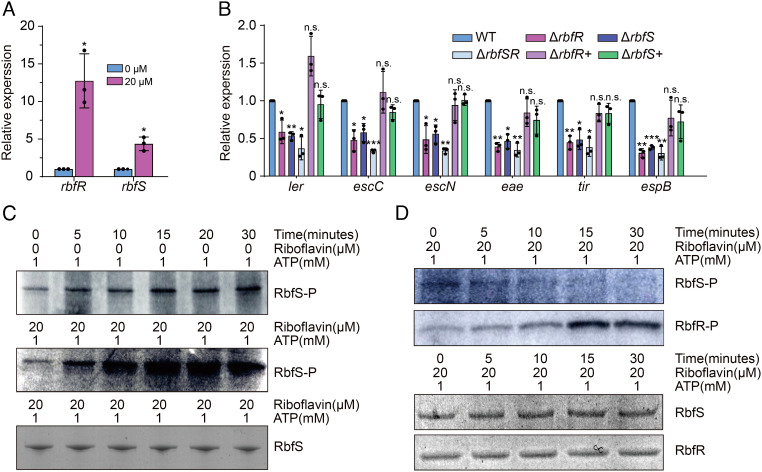
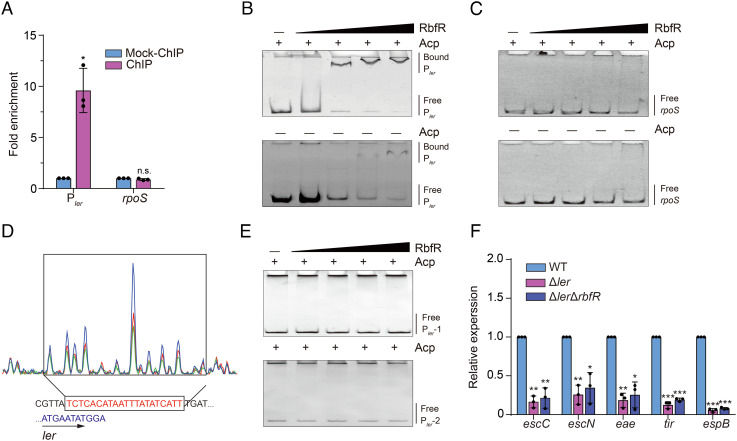
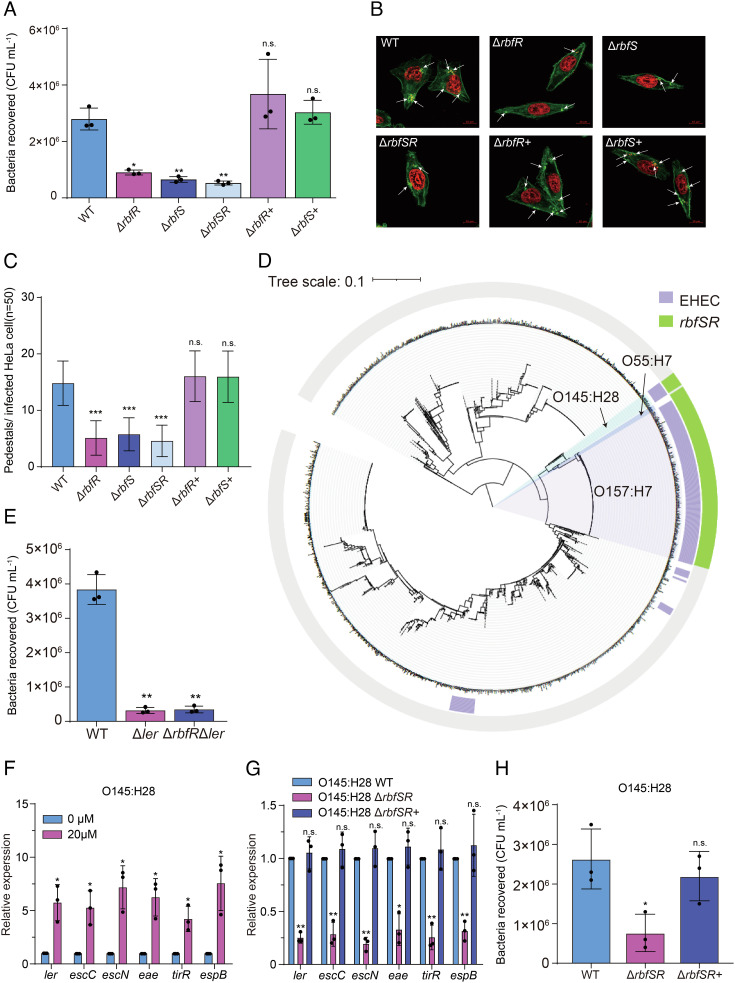
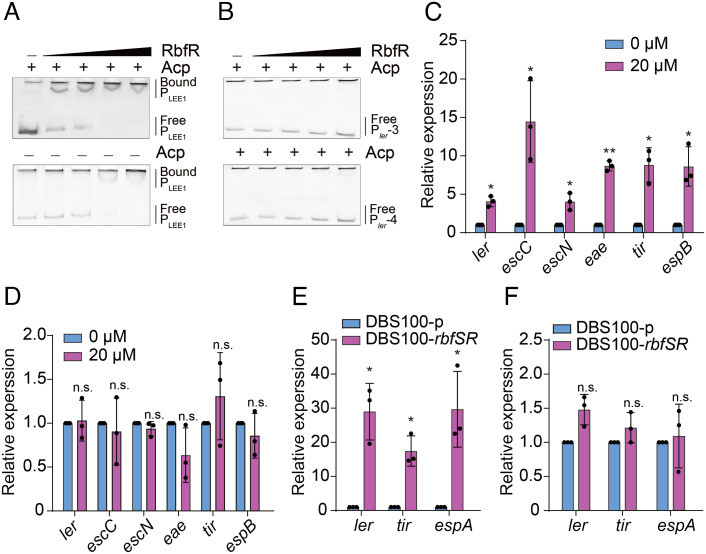
Riboflavin is produced by most commensal bacteria in the human colon, where enterohemorrhagic (EHEC) colonizes and causes diseases. Sensing environmental signals to site-specifically express the type-III secretion system (T3SS), which injects effectors into host cells leading to intestinal colonization and disease, is key to the pathogenesis of EHEC. Here, we reveal that EHEC O157:H7, a dominant EHEC serotype frequently associated with severe diseases, acquired a previously uncharacterized two-component regulatory system , which senses microbiota-produced riboflavin to directly activate the expression of LEE genes encoding the T3SS in the colon. is present in O157:H7 and O145:H28 but absent from other EHEC serotypes. The binding site of RbfR through which it regulates LEE gene expression was identified and is conserved in all EHEC serotypes and , a surrogate for EHEC in mice. Introducing into enabled bacteria to sense microbiota-produced riboflavin in the mouse colon to increase the expression of LEE genes, causing increased disease severity in mice. Phylogenic analysis showed that the O55:H7 ancestor of O157:H7 obtained which has been kept in O157:H7 since then. Thus, acquiring represents an essential step in the evolution of the highly pathogenic O157:H7. The expression of LEE genes and cell attachment ability of other EHEC serotypes in the presence of riboflavin significantly increased when was introduced into them, indicating that those serotypes are ready to use RbfSR to increase their pathogenicity. This may present a potential public health issue as horizontal gene transfer is frequent in enteric bacteria.
核黄素是大多数人类结肠共生菌产生的,而产志贺毒素的(EHEC)就在结肠定植并引起疾病。感应环境信号,在特定部位表达 III 型分泌系统(T3SS),将效应物注入宿主细胞,导致肠道定植和疾病,这是 EHEC 发病机制的关键。在这里,我们揭示了 EHEC O157:H7,一种与严重疾病频繁相关的优势 EHEC 血清型,获得了以前未表征的双组分调节系统,它感应微生物群产生的核黄素,直接激活 T3SS 的 LEE 基因表达在结肠中。存在于 O157:H7 和 O145:H28 中,但不存在于其他 EHEC 血清型中。通过该系统调节 LEE 基因表达的 RbfR 结合位点被鉴定出来,并在所有 EHEC 血清型和,一种小鼠中的 EHEC 替代物中保守。将引入到中,使细菌能够感应微生物群在小鼠结肠中产生的核黄素,增加 LEE 基因的表达,导致小鼠疾病严重程度增加。系统发育分析表明,O157:H7 的 O55:H7 祖先是获得的,此后一直在 O157:H7 中保留。因此,获得是 O157:H7 高度致病进化的关键步骤。当向其他 EHEC 血清型中引入时,LEE 基因的表达和细胞附着能力在核黄素存在下显著增加,表明这些血清型已准备好使用 RbfSR 来增加其致病性。由于肠道细菌中经常发生水平基因转移,这可能是一个潜在的公共卫生问题。