Department of Chemistry, Molecular Sciences Research Hub, Imperial College London, London W12 0BZ, U.K.
Department of Life Sciences, University of Bath, Bath BA2 7AX, U.K.
J Am Chem Soc. 2022 Dec 14;144(49):22493-22504. doi: 10.1021/jacs.2c07378. Epub 2022 Nov 22.
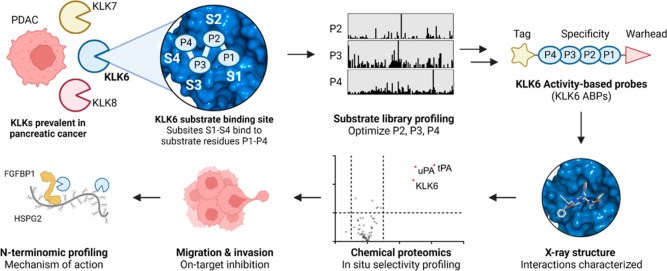
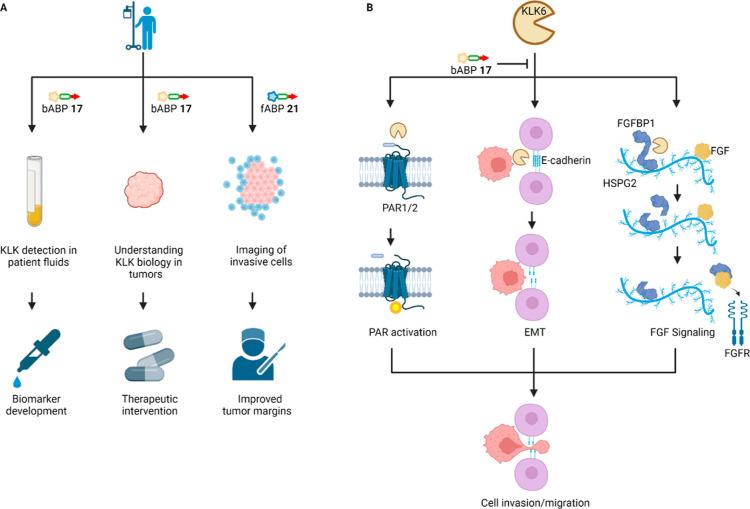
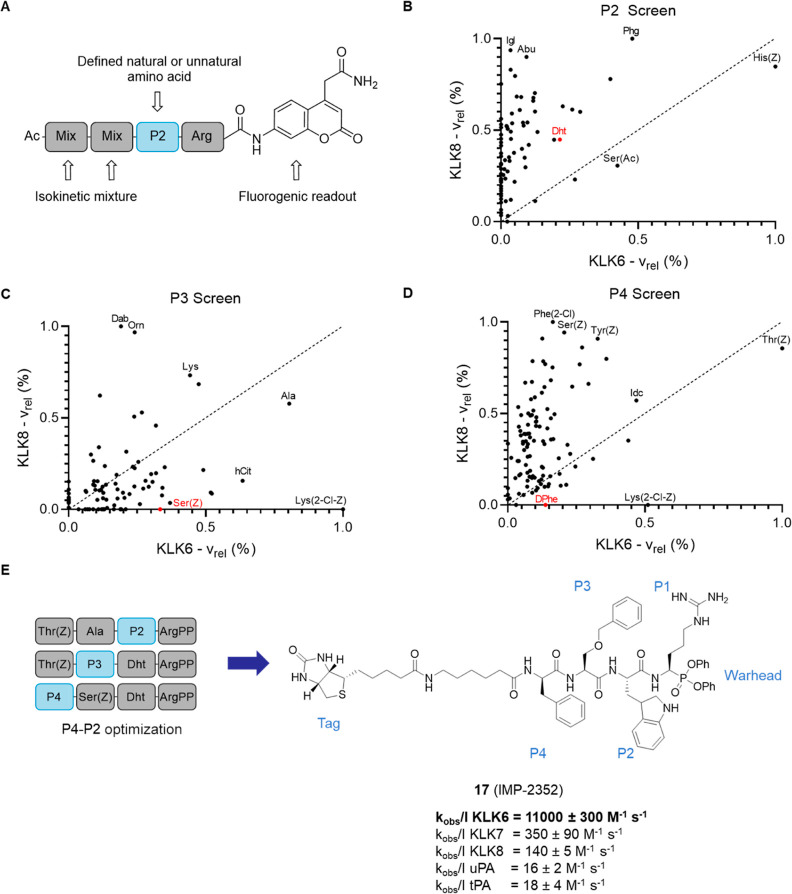
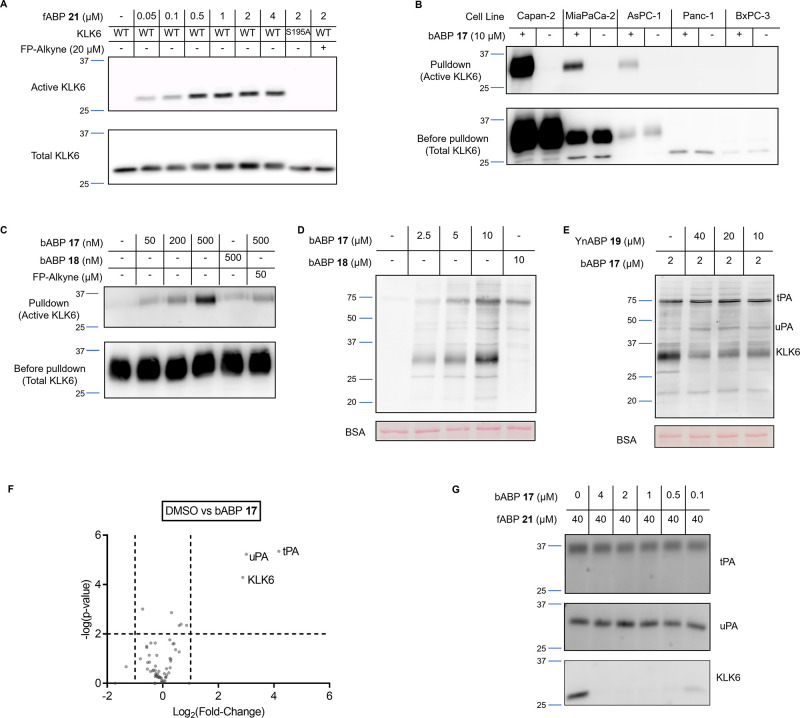
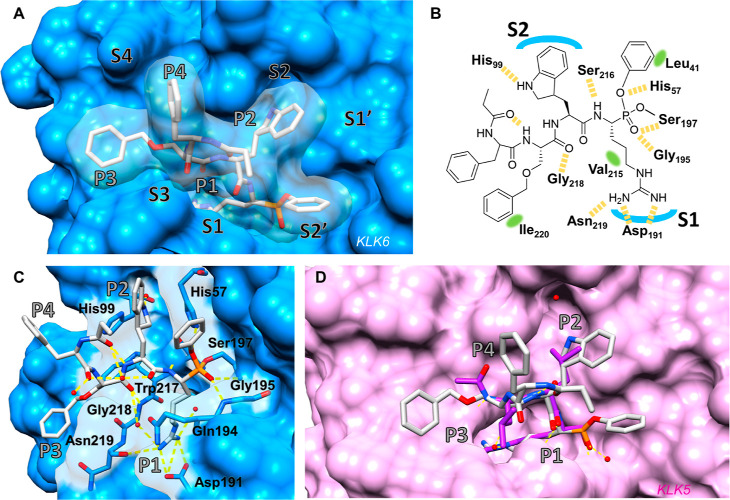
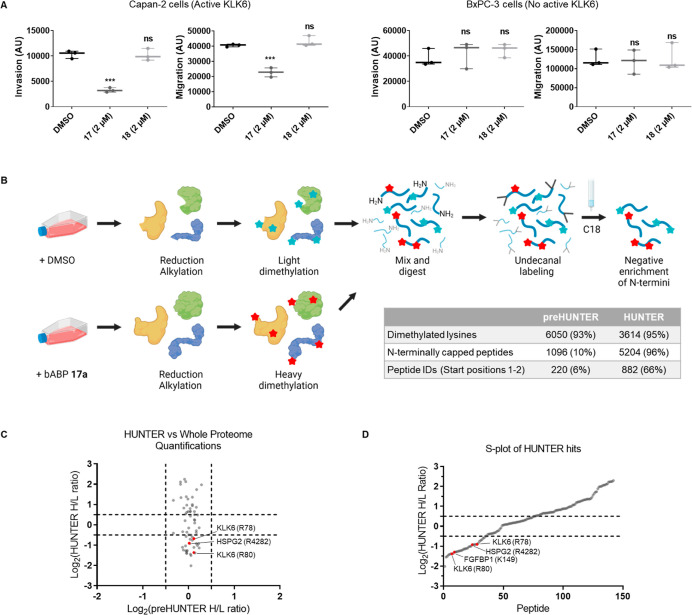
Pancreatic cancer has the lowest survival rate of all common cancers due to late diagnosis and limited treatment options. Serine hydrolases are known to mediate cancer progression and metastasis through initiation of signaling cascades and cleavage of extracellular matrix proteins, and the kallikrein-related peptidase (KLK) family of secreted serine proteases have emerging roles in pancreatic ductal adenocarcinoma (PDAC). However, the lack of reliable activity-based probes (ABPs) to profile KLK activity has hindered progress in validation of these enzymes as potential targets or biomarkers. Here, we developed potent and selective ABPs for KLK6 by using a positional scanning combinatorial substrate library and characterized their binding mode and interactions by X-ray crystallography. The optimized KLK6 probe IMP-2352 (/ = 11,000 M s) enabled selective detection of KLK6 activity in a variety of PDAC cell lines, and we observed that KLK6 inhibition reduced the invasiveness of PDAC cells that secrete active KLK6. KLK6 inhibitors were combined with N-terminomics to identify potential secreted protein substrates of KLK6 in PDAC cells, providing insights into KLK6-mediated invasion pathways. These novel KLK6 ABPs offer a toolset to validate KLK6 and associated signaling partners as targets or biomarkers across a range of diseases.
由于诊断较晚和治疗选择有限,胰腺癌的存活率是所有常见癌症中最低的。丝氨酸水解酶通过启动信号级联和切割细胞外基质蛋白,被认为介导癌症的进展和转移,而激肽释放酶相关肽酶(KLK)家族的分泌丝氨酸蛋白酶在胰腺导管腺癌(PDAC)中具有新兴作用。然而,缺乏可靠的基于活性的探针(ABPs)来分析 KLK 活性,阻碍了这些酶作为潜在靶点或生物标志物的验证进展。在这里,我们通过使用位置扫描组合底物文库,为 KLK6 开发了有效且选择性的 ABPs,并通过 X 射线晶体学对其结合模式和相互作用进行了表征。优化的 KLK6 探针 IMP-2352(/ = 11,000 M s)能够选择性地检测多种 PDAC 细胞系中的 KLK6 活性,我们观察到 KLK6 抑制降低了分泌活性 KLK6 的 PDAC 细胞的侵袭性。KLK6 抑制剂与 N-端蛋白质组学相结合,可鉴定 PDAC 细胞中 KLK6 的潜在分泌蛋白底物,为 KLK6 介导的侵袭途径提供了深入了解。这些新型 KLK6 ABPs 提供了一套工具,可用于验证 KLK6 及其相关信号伙伴作为一系列疾病的靶点或生物标志物。