
蜘蛛中最近向社会生活趋同转变的基因组特征。
Genomic signatures of recent convergent transitions to social life in spiders.
机构信息
Department of Biology, University of Pennsylvania, Philadelphia, PA, 19104, USA.
Department of Biological Sciences, Texas Tech University, Lubbock, TX, 79409, USA.
出版信息
Nat Commun. 2022 Nov 22;13(1):6967. doi: 10.1038/s41467-022-34446-8.
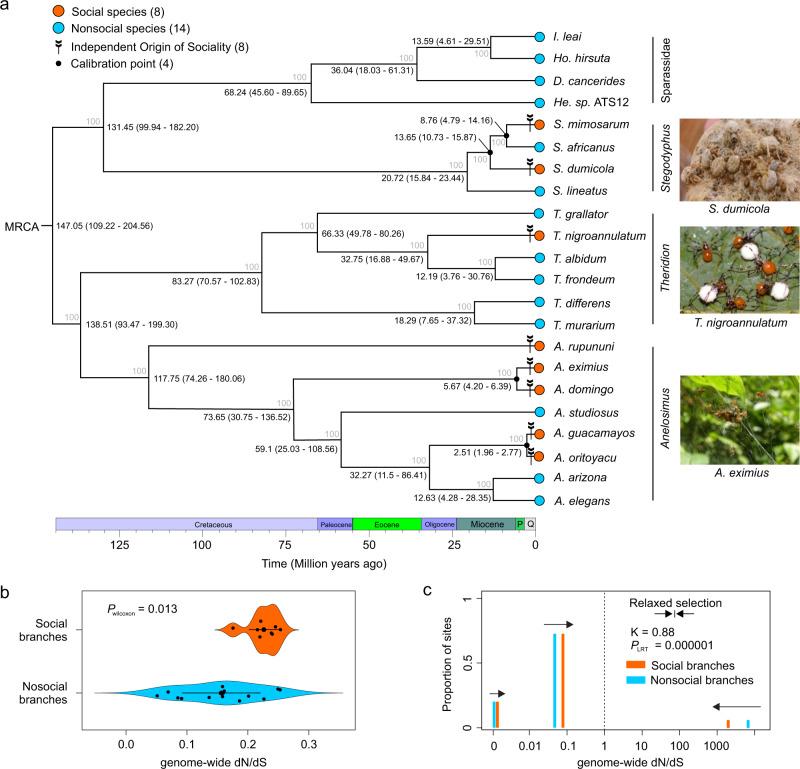
The transition from solitary to social life is a major phenotypic innovation, but its genetic underpinnings are largely unknown. To identify genomic changes associated with this transition, we compare the genomes of 22 spider species representing eight recent and independent origins of sociality. Hundreds of genes tend to experience shifts in selection during the repeated transition to social life. These genes are associated with several key functions, such as neurogenesis, behavior, and metabolism, and include genes that previously have been implicated in animal social behavior and human behavioral disorders. In addition, social species have elevated genome-wide rates of molecular evolution associated with relaxed selection caused by reduced effective population size. Altogether, our study provides unprecedented insights into the genomic signatures of social evolution and the specific genetic changes that repeatedly underpin the evolution of sociality. Our study also highlights the heretofore unappreciated potential of transcriptomics using ethanol-preserved specimens for comparative genomics and phylotranscriptomics.
从独居到群居生活的转变是一个主要的表型创新,但它的遗传基础在很大程度上是未知的。为了确定与这种转变相关的基因组变化,我们比较了代表 8 个最近和独立起源的群居性的 22 种蜘蛛物种的基因组。数百个基因在反复向群居生活转变的过程中往往会经历选择的转变。这些基因与几个关键功能有关,如神经发生、行为和新陈代谢,其中包括先前与动物社会行为和人类行为障碍有关的基因。此外,社会性物种具有更高的全基因组分子进化率,这与由于有效种群规模减少而导致的选择放松有关。总之,我们的研究为社会进化的基因组特征以及多次支持社会性进化的具体遗传变化提供了前所未有的见解。我们的研究还强调了以前未被重视的使用乙醇保存标本进行比较基因组学和系统发生转录组学的潜力。


 Zotero 插件