Division of General Pediatrics, Department of Pediatrics, CHU Sainte-Justine, Université de Montréal, Montréal, Quebec, Canada.
Division of Medical Genetics, Department of Pediatrics, CHU Sainte-Justine, Université de Montréal, Montréal, Quebec, Canada.
Am J Case Rep. 2022 Nov 30;23:e937967. doi: 10.12659/AJCR.937967.
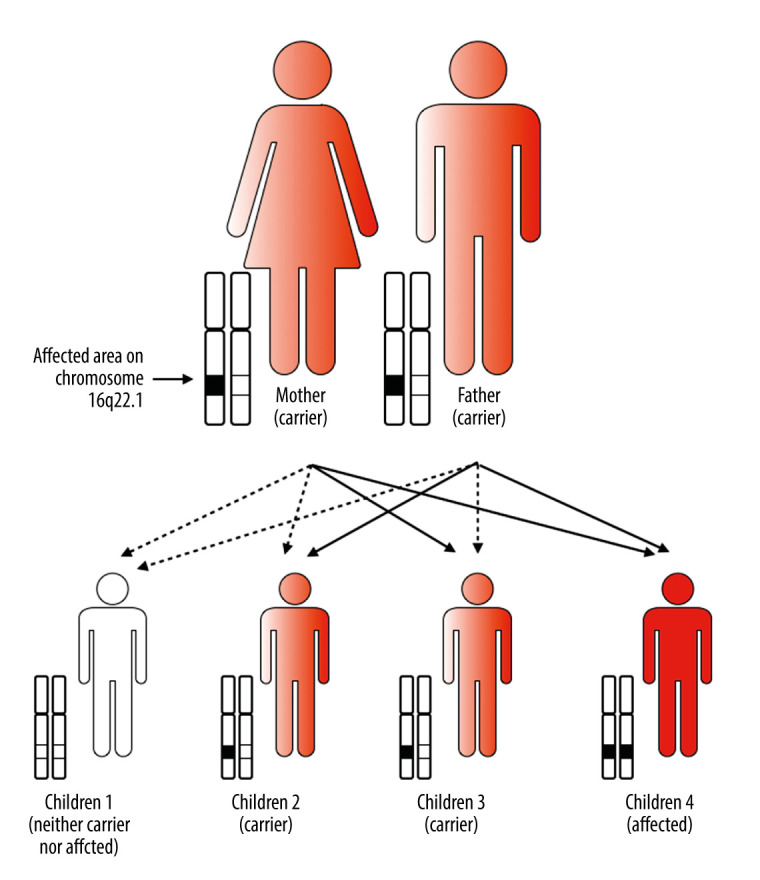
BACKGROUND Tyrosinemia Type II (TYRII) is a rare autosomal recessive inborn error of metabolism caused by deficiency of tyrosine aminotransferase (TAT), leading to hypertyrosinemia. TYRII patients often present in the first year of life with ocular and cutaneous findings, including corneal ulcers, pseudodendritic keratitis, and palmoplantar hyperkeratosis. The corneal involvement is often mistaken for herpes simplex virus (HSV) keratitis, which is a much commoner condition. CASE REPORT A previously healthy 10-month-old male infant was referred to Ophthalmology for acute onset photophobia. Bilateral dendritiform corneal lesions raised the suspicion for herpetic keratitis. Additionally, a papular, crusted lesion was found on his thumb after a few days of hospitalization, also raising concerns about HSV. The patient's clinical condition seemed to improve under intravenous acyclovir and supportive treatment. A conjunctival swab and crusted lesion on the thumb were tested for HSV using a polymerase chain reaction (PCR) technique, and both were negative. Nevertheless, given the clinical presentation and the favorable course of signs and symptoms, hospital discharge was planned with oral acyclovir. It was halted by an alternative diagnosis of autosomal recessive inborn error of metabolism, tyrosinemia type II, confirmed by elevated plasma tyrosine level and later by molecular analysis requested as a confirmatory investigation by the genetics medical team. CONCLUSIONS The corneal involvement in TYRII is often mistaken for HSV keratitis, and clinical course alone should not halt further investigations to rule out TYRII. Clinicians should suspect TYRII clinically when its characteristic ocular dendritiform lesions are present, namely in infancy or early childhood, and even in the absence of its typical cutaneous palmoplantar hyperkeratosis plaques.
酪氨酸血症 II 型(TYRII)是一种罕见的常染色体隐性遗传性代谢缺陷病,由酪氨酸转氨酶(TAT)缺乏引起,导致高酪氨酸血症。TYRII 患者常在生命的第一年出现眼部和皮肤表现,包括角膜溃疡、假树突状角膜炎和掌跖过度角化。角膜受累常被误诊为单纯疱疹病毒(HSV)角膜炎,而后者更为常见。
一名此前健康的 10 月龄男婴因急性畏光而被转至眼科就诊。双侧树枝状角膜病变提示疱疹性角膜炎。几天后,在其拇指上发现了一个丘疹状、结痂的病变,也引起了对 HSV 的关注。在静脉注射阿昔洛韦和支持治疗下,患儿的临床状况似乎有所改善。使用聚合酶链反应(PCR)技术对结膜拭子和拇指结痂病变进行 HSV 检测,结果均为阴性。然而,鉴于临床表现和体征及症状的良好转归,计划予患儿口服阿昔洛韦出院。但随后因另一种常染色体隐性遗传性代谢缺陷病——酪氨酸血症 II 型的诊断而中断,该诊断通过血浆酪氨酸水平升高以及遗传学医疗团队要求的分子分析得以确认。
TYRII 的角膜受累常被误诊为 HSV 角膜炎,仅凭临床病程不应停止进一步检查以排除 TYRII。当存在特征性眼部树枝状病变时,即婴儿期或幼儿期,即使没有典型的皮肤掌跖过度角化斑块,临床医生也应怀疑 TYRII。