Department of Human Genetics, Emory University School of Medicine, Atlanta, Georgia, USA.
Department of Epigenetics and Molecular Carcinogenesis, The University of Texas MD Anderson Cancer Center, Houston, Texas, USA.
Am J Med Genet A. 2023 Mar;191(3):718-729. doi: 10.1002/ajmg.a.63065. Epub 2022 Dec 1.
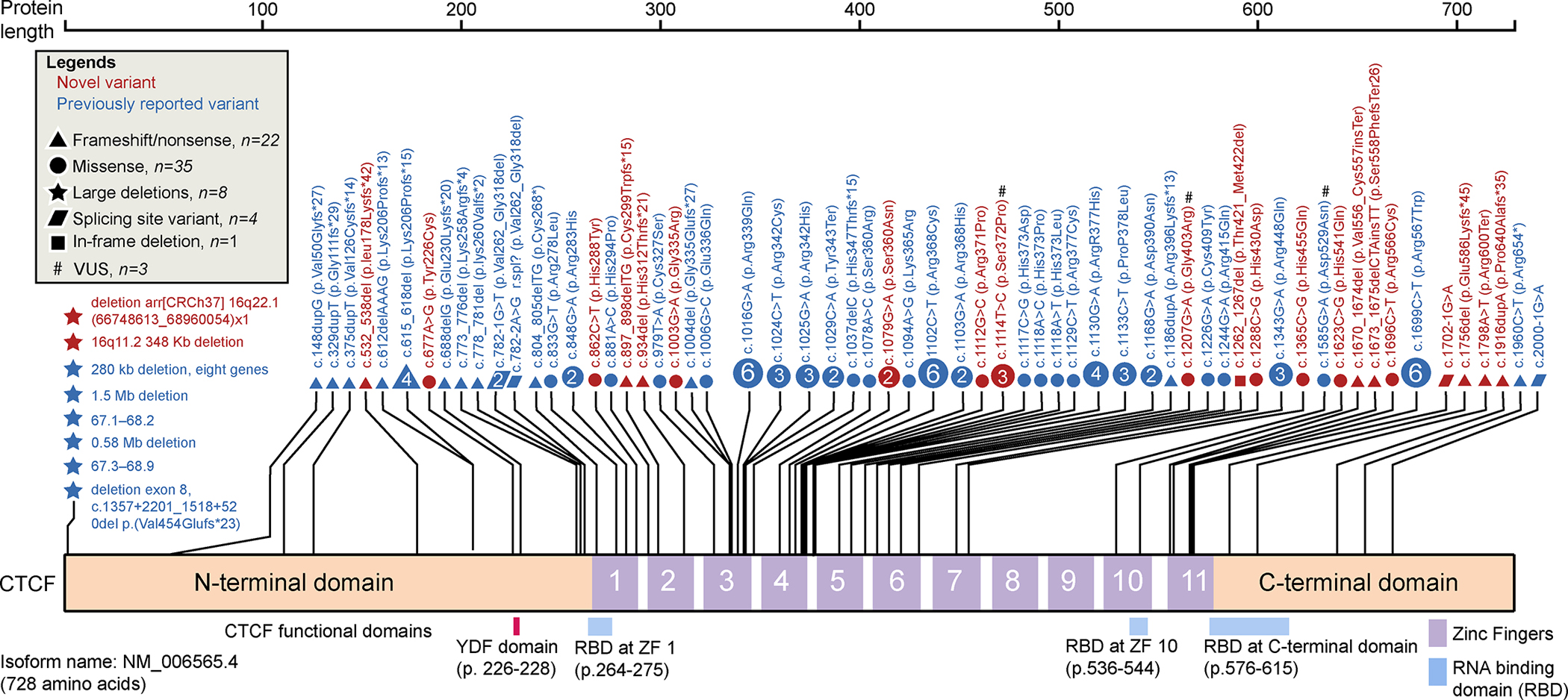
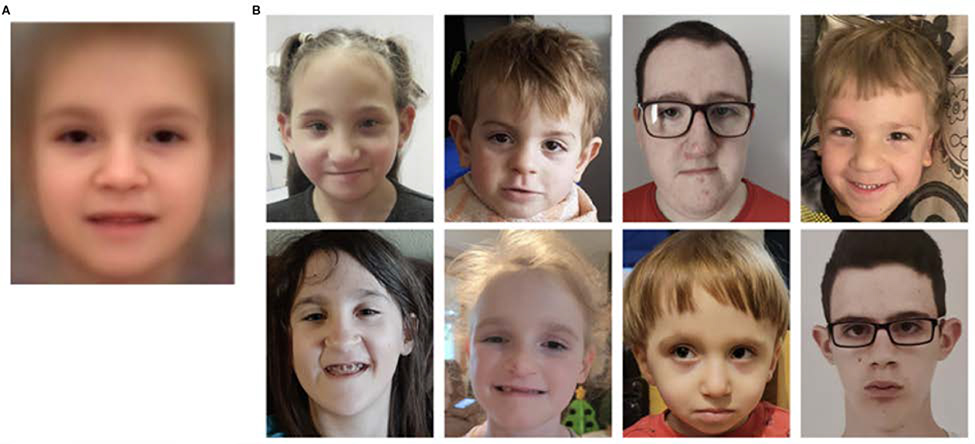
Monoallelic variants of CTCF cause an autosomal dominant neurodevelopmental disorder with a wide range of features, including impacts on the brain, growth, and craniofacial development. A growing number of subjects with CTCF-related disorder (CRD) have been identified due to the increased application of exome sequencing, and further delineation of the clinical spectrum of CRD is needed. Here, we examined the clinical features, including facial profiles, and genotypic spectrum of 107 subjects with identified CTCF variants, including 43 new and 64 previously described subjects. Among the 43 new subjects, 23 novel variants were reported. The cardinal clinical features in subjects with CRD included intellectual disability/developmental delay (91%) with speech delay (65%), motor delay (53%), feeding difficulties/failure to thrive (66%), ocular abnormalities (56%), musculoskeletal anomalies (53%), and behavioral problems (52%). Other congenital anomalies were also reported, but none of them were common. Our findings expanded the genotypic and phenotypic spectrum of CRD that will guide genetic counseling, management, and surveillance care for patients with CRD. Additionally, a newly built facial gestalt on the Face2Gene tool will facilitate prompt recognition of CRD by physicians and shorten a patient's diagnostic odyssey.
CTCF 单等位基因突变导致一种常染色体显性神经发育障碍,具有广泛的特征,包括对大脑、生长和颅面发育的影响。由于外显子组测序的应用增加,越来越多的 CTCF 相关疾病(CRD)患者被识别,因此需要进一步描述 CRD 的临床谱。在这里,我们检查了 107 名经鉴定的 CTCF 变异患者的临床特征,包括 43 名新患者和 64 名先前描述过的患者,包括面部特征和基因型谱。在 43 名新患者中,报告了 23 种新的变异。CRD 患者的主要临床特征包括智力残疾/发育迟缓(91%)伴有言语迟缓(65%)、运动迟缓(53%)、喂养困难/生长不良(66%)、眼部异常(56%)、骨骼肌肉异常(53%)和行为问题(52%)。也报告了其他先天性异常,但没有一种是常见的。我们的发现扩展了 CRD 的基因型和表型谱,将为 CRD 患者的遗传咨询、管理和监测护理提供指导。此外,在 Face2Gene 工具上新建的面部整体形象将有助于医生快速识别 CRD,并缩短患者的诊断之旅。