• 文献检索
  • 文档翻译
  • 深度研究
  • 学术资讯
  • Suppr Zotero 插件Zotero 插件
  • 邀请有礼
  • 套餐&价格
  • 历史记录
应用&插件
Suppr Zotero 插件Zotero 插件浏览器插件Mac 客户端Windows 客户端微信小程序
定价
高级版会员购买积分包购买API积分包
服务
文献检索文档翻译深度研究API 文档MCP 服务
关于我们
关于 Suppr公司介绍联系我们用户协议隐私条款
关注我们

Suppr 超能文献

核心技术专利:CN118964589B侵权必究
粤ICP备2023148730 号-1Suppr @ 2026

文献检索

告别复杂PubMed语法,用中文像聊天一样搜索,搜遍4000万医学文献。AI智能推荐,让科研检索更轻松。

立即免费搜索

文件翻译

保留排版,准确专业,支持PDF/Word/PPT等文件格式,支持 12+语言互译。

免费翻译文档

深度研究

AI帮你快速写综述,25分钟生成高质量综述,智能提取关键信息,辅助科研写作。

立即免费体验

卫星时间序列揭示伊朗植被生长与水资源短缺的相互关系。

Interrelations of vegetation growth and water scarcity in Iran revealed by satellite time series.

机构信息

Remote Sensing and Geoinformatics Section, Helmholtz Centre Potsdam GFZ German Research Centre for Geosciences, Potsdam, Germany.

Institute of Geodesy, University of Stuttgart, Stuttgart, Germany.

出版信息

Sci Rep. 2022 Dec 1;12(1):20784. doi: 10.1038/s41598-022-24712-6.

DOI:10.1038/s41598-022-24712-6
PMID:36456635
原文链接:https://pmc.ncbi.nlm.nih.gov/articles/PMC9715656/
Abstract

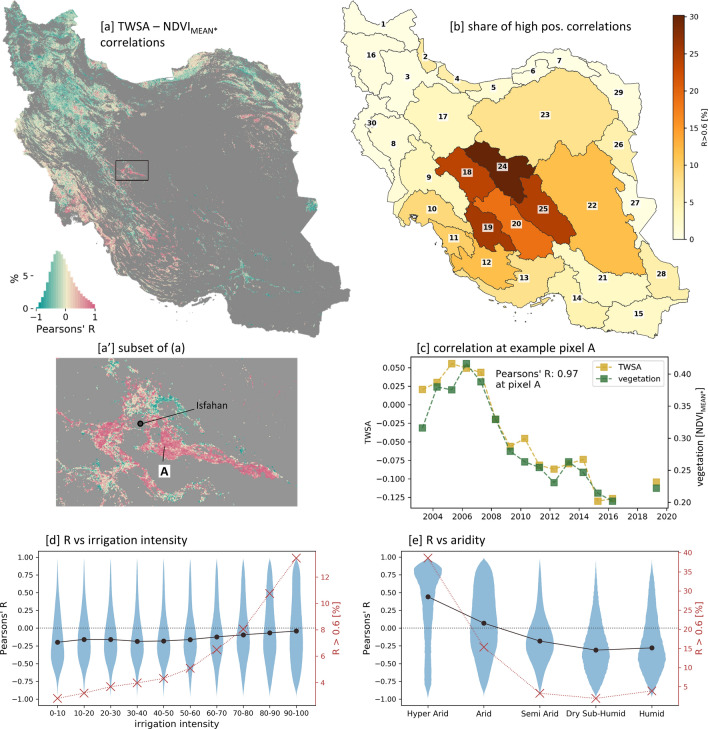
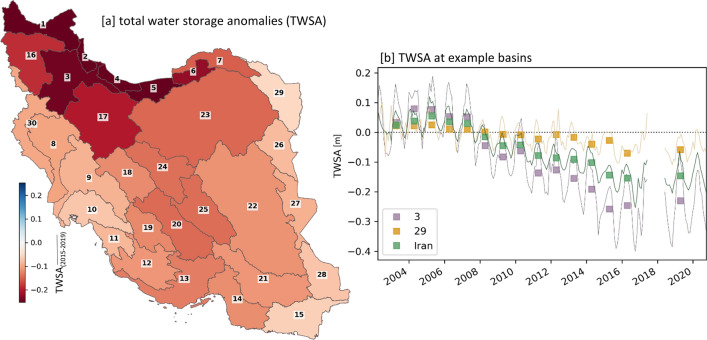
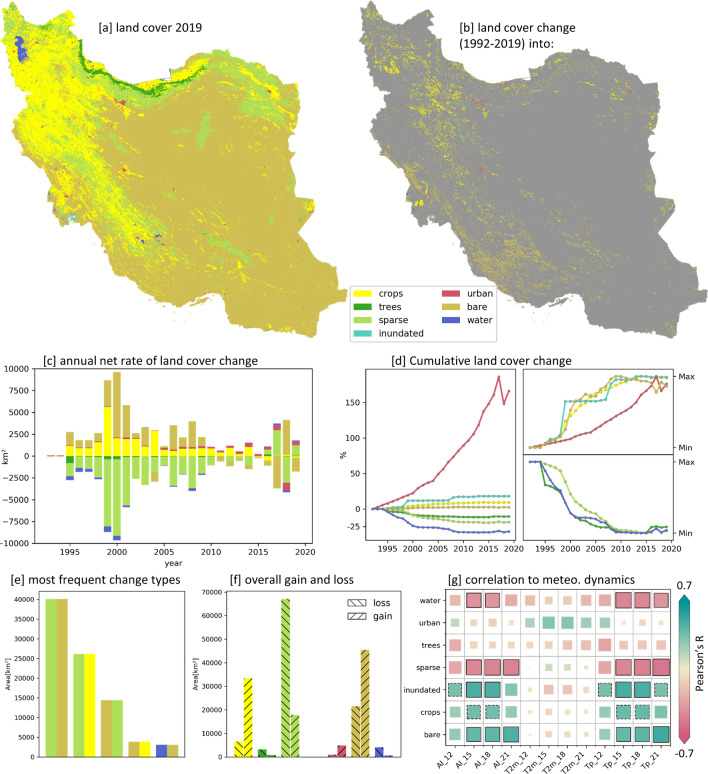
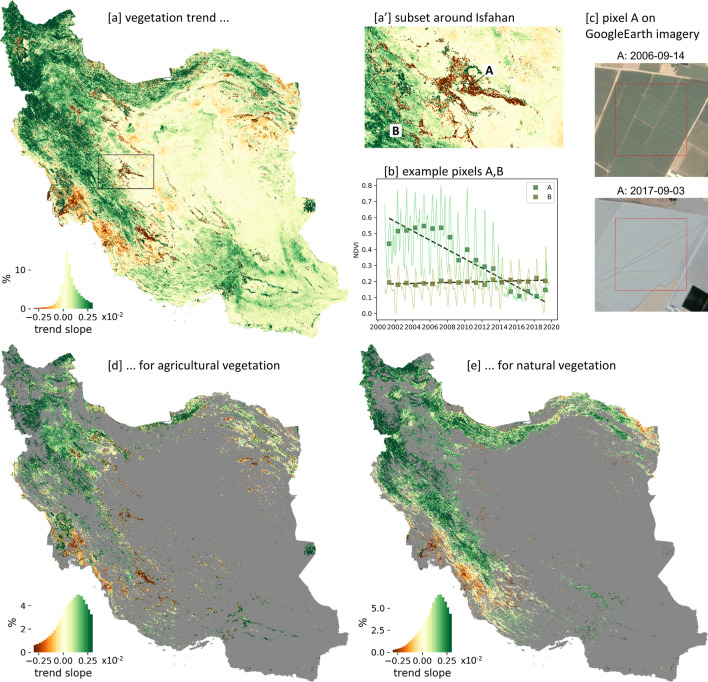
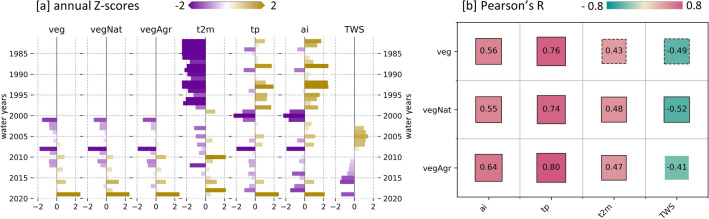
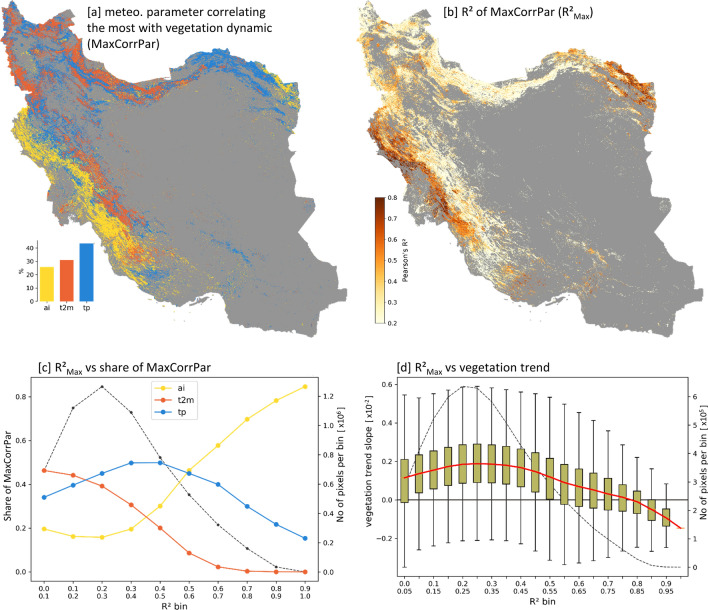
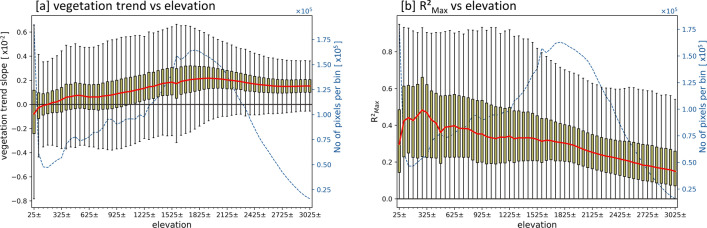
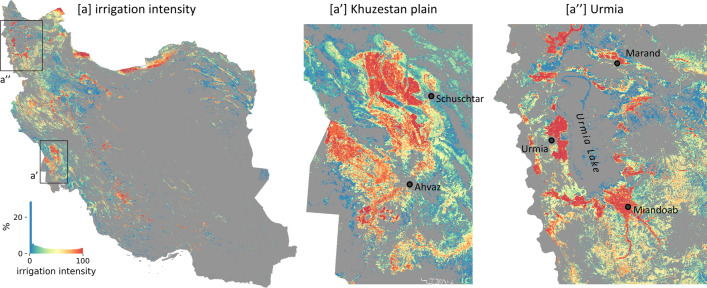
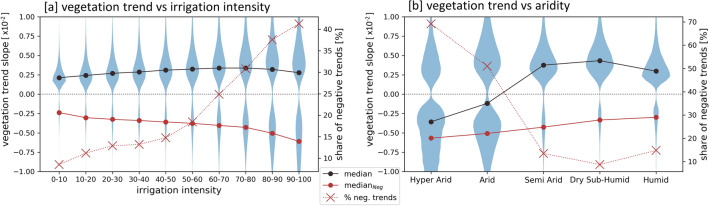
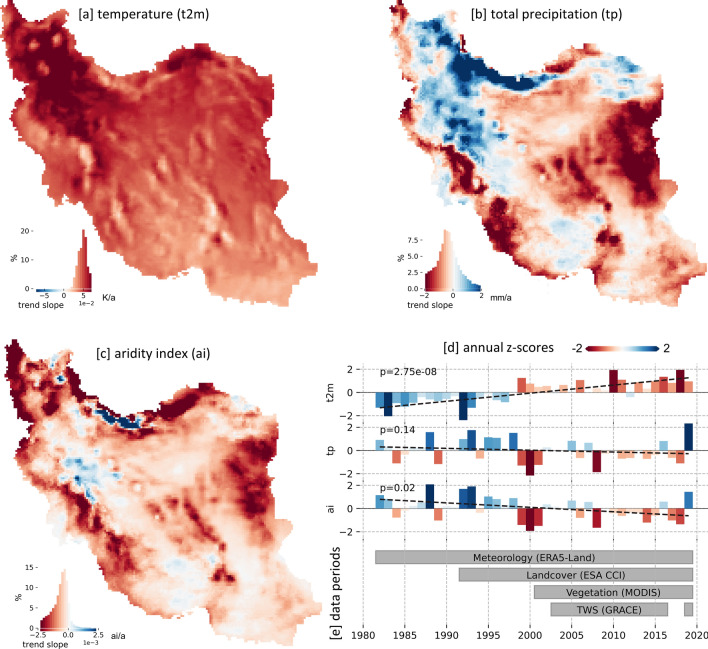
Iran has experienced a drastic increase in water scarcity in the last decades. The main driver has been the substantial unsustainable water consumption of the agricultural sector. This study quantifies the spatiotemporal dynamics of Iran's hydrometeorological water availability, land cover, and vegetation growth and evaluates their interrelations with a special focus on agricultural vegetation developments. It analyzes globally available reanalysis climate data and satellite time series data and products, allowing a country-wide investigation of recent 20+ years at detailed spatial and temporal scales. The results reveal a wide-spread agricultural expansion (27,000 km[Formula: see text]) and a significant cultivation intensification (48,000 km[Formula: see text]). At the same time, we observe a substantial decline in total water storage that is not represented by a decrease of meteorological water input, confirming an unsustainable use of groundwater mainly for agricultural irrigation. As consequence of water scarcity, we identify agricultural areas with a loss or reduction of vegetation growth (10,000 km[Formula: see text]), especially in irrigated agricultural areas under (hyper-)arid conditions. In Iran's natural biomes, the results show declining trends in vegetation growth and land cover degradation from sparse vegetation to barren land in 40,000 km[Formula: see text], mainly along the western plains and foothills of the Zagros Mountains, and at the same time wide-spread greening trends, particularly in regions of higher altitudes. Overall, the findings provide detailed insights in vegetation-related causes and consequences of Iran's anthropogenic drought and can support sustainable management plans for Iran or other semi-arid regions worldwide, often facing similar conditions.

摘要

伊朗在过去几十年中经历了水资源严重短缺。主要原因是农业部门大量不可持续的用水。本研究量化了伊朗水文气象水资源、土地覆盖和植被生长的时空动态,并评估了它们之间的相互关系,特别关注农业植被的发展。它分析了全球可用的再分析气候数据和卫星时间序列数据和产品,允许在详细的时空尺度上对最近 20 多年进行全国范围的调查。研究结果显示,伊朗广泛的农业扩张(27000 平方公里)和显著的种植集约化(48000 平方公里)。与此同时,我们观察到总储水量的大量减少,而这并不是气象水资源输入减少造成的,这证实了地下水的大量不可持续利用主要用于农业灌溉。由于水资源短缺,我们确定了农业地区的植被生长减少或减少(10000 平方公里),特别是在(超)干旱条件下的灌溉农业区。在伊朗的自然生物群落中,研究结果显示,植被生长和土地覆盖退化的趋势在 40000 平方公里范围内从稀疏植被到荒地,主要沿着西部平原和扎格罗斯山脉的山麓,同时广泛的绿化趋势,特别是在海拔较高的地区。总的来说,这些发现提供了有关伊朗人为干旱的植被相关原因和后果的详细信息,并可以为伊朗或世界其他半干旱地区的可持续管理计划提供支持,这些地区经常面临类似的情况。
https://cdn.ncbi.nlm.nih.gov/pmc/blobs/5e64/9715656/8ae3bdfc383d/41598_2022_24712_Fig11_HTML.jpg
https://cdn.ncbi.nlm.nih.gov/pmc/blobs/5e64/9715656/3979b1f1cc29/41598_2022_24712_Fig1_HTML.jpg
https://cdn.ncbi.nlm.nih.gov/pmc/blobs/5e64/9715656/050471cbf508/41598_2022_24712_Fig2_HTML.jpg
https://cdn.ncbi.nlm.nih.gov/pmc/blobs/5e64/9715656/e88ba5649aae/41598_2022_24712_Fig3_HTML.jpg
https://cdn.ncbi.nlm.nih.gov/pmc/blobs/5e64/9715656/3205daabf674/41598_2022_24712_Fig4_HTML.jpg
https://cdn.ncbi.nlm.nih.gov/pmc/blobs/5e64/9715656/9f11b8ead553/41598_2022_24712_Fig5_HTML.jpg
https://cdn.ncbi.nlm.nih.gov/pmc/blobs/5e64/9715656/07595dbf77a5/41598_2022_24712_Fig6_HTML.jpg
https://cdn.ncbi.nlm.nih.gov/pmc/blobs/5e64/9715656/ac52eb8dec5a/41598_2022_24712_Fig7_HTML.jpg
https://cdn.ncbi.nlm.nih.gov/pmc/blobs/5e64/9715656/3c3f229f3ce6/41598_2022_24712_Fig8_HTML.jpg
https://cdn.ncbi.nlm.nih.gov/pmc/blobs/5e64/9715656/a0c61c3335e4/41598_2022_24712_Fig9_HTML.jpg
https://cdn.ncbi.nlm.nih.gov/pmc/blobs/5e64/9715656/34baf1e6d27a/41598_2022_24712_Fig10_HTML.jpg
https://cdn.ncbi.nlm.nih.gov/pmc/blobs/5e64/9715656/8ae3bdfc383d/41598_2022_24712_Fig11_HTML.jpg
https://cdn.ncbi.nlm.nih.gov/pmc/blobs/5e64/9715656/3979b1f1cc29/41598_2022_24712_Fig1_HTML.jpg
https://cdn.ncbi.nlm.nih.gov/pmc/blobs/5e64/9715656/050471cbf508/41598_2022_24712_Fig2_HTML.jpg
https://cdn.ncbi.nlm.nih.gov/pmc/blobs/5e64/9715656/e88ba5649aae/41598_2022_24712_Fig3_HTML.jpg
https://cdn.ncbi.nlm.nih.gov/pmc/blobs/5e64/9715656/3205daabf674/41598_2022_24712_Fig4_HTML.jpg
https://cdn.ncbi.nlm.nih.gov/pmc/blobs/5e64/9715656/9f11b8ead553/41598_2022_24712_Fig5_HTML.jpg
https://cdn.ncbi.nlm.nih.gov/pmc/blobs/5e64/9715656/07595dbf77a5/41598_2022_24712_Fig6_HTML.jpg
https://cdn.ncbi.nlm.nih.gov/pmc/blobs/5e64/9715656/ac52eb8dec5a/41598_2022_24712_Fig7_HTML.jpg
https://cdn.ncbi.nlm.nih.gov/pmc/blobs/5e64/9715656/3c3f229f3ce6/41598_2022_24712_Fig8_HTML.jpg
https://cdn.ncbi.nlm.nih.gov/pmc/blobs/5e64/9715656/a0c61c3335e4/41598_2022_24712_Fig9_HTML.jpg
https://cdn.ncbi.nlm.nih.gov/pmc/blobs/5e64/9715656/34baf1e6d27a/41598_2022_24712_Fig10_HTML.jpg
https://cdn.ncbi.nlm.nih.gov/pmc/blobs/5e64/9715656/8ae3bdfc383d/41598_2022_24712_Fig11_HTML.jpg

相似文献

1
Interrelations of vegetation growth and water scarcity in Iran revealed by satellite time series.卫星时间序列揭示伊朗植被生长与水资源短缺的相互关系。
Sci Rep. 2022 Dec 1;12(1):20784. doi: 10.1038/s41598-022-24712-6.
2
Anthropogenic drought dominates groundwater depletion in Iran.人为干旱主导了伊朗地下水的消耗。
Sci Rep. 2021 Apr 28;11(1):9135. doi: 10.1038/s41598-021-88522-y.
3
Normalized difference vegetation index as the dominant predicting factor of groundwater recharge in phreatic aquifers: case studies across Iran.归一化差异植被指数是潜水含水层地下水补给的主要预测因子:伊朗各地的案例研究。
Sci Rep. 2020 Oct 15;10(1):17473. doi: 10.1038/s41598-020-74561-4.
4
Greening and browning of the Himalaya: Spatial patterns and the role of climatic change and human drivers.喜马拉雅山的绿化和褐化:空间格局及气候变化和人为驱动因素的作用。
Sci Total Environ. 2017 Jun 1;587-588:326-339. doi: 10.1016/j.scitotenv.2017.02.156. Epub 2017 Feb 27.
5
Anthropogenic depletion of Iran's aquifers.人为消耗伊朗含水层。
Proc Natl Acad Sci U S A. 2021 Jun 22;118(25). doi: 10.1073/pnas.2024221118.
6
Ecological assessment of Iran's terrestrial biomes for wildlife conservation.伊朗陆地生物群系的野生动物保护生态评估。
Sci Rep. 2023 Oct 18;13(1):17761. doi: 10.1038/s41598-023-45120-4.
7
Iran's Land Suitability for Agriculture.伊朗农业土地适宜性评估。
Sci Rep. 2017 Aug 9;7(1):7670. doi: 10.1038/s41598-017-08066-y.
8
Water-related limits to growth for agriculture in Iran.伊朗农业增长面临的与水相关的限制因素。
Heliyon. 2023 May 17;9(5):e16132. doi: 10.1016/j.heliyon.2023.e16132. eCollection 2023 May.
9
Multi-decadal analysis of water resources and agricultural change in a Mediterranean semiarid irrigated piedmont under water scarcity and human interaction.在水资源短缺和人类活动的影响下,对地中海半干旱灌溉山前地区水资源和农业变化的多年分析。
Sci Total Environ. 2022 Aug 15;834:155328. doi: 10.1016/j.scitotenv.2022.155328. Epub 2022 Apr 19.
10
SWAT-MODSIM-PSO optimization of multi-crop planning in the Karkheh River Basin, Iran, under the impacts of climate change.基于气候变化影响的伊朗卡伦河流域多作物规划的 SWAT-MODSIM-PSO 优化。
Sci Total Environ. 2018 Jul 15;630:502-516. doi: 10.1016/j.scitotenv.2018.02.234. Epub 2018 Feb 24.

本文引用的文献

1
Desertification of Iran in the early twenty-first century: assessment using climate and vegetation indices.二十一世纪初伊朗的荒漠化:利用气候和植被指数进行评估。
Sci Rep. 2021 Oct 15;11(1):20548. doi: 10.1038/s41598-021-99636-8.
2
Future global urban water scarcity and potential solutions.未来全球城市水资源短缺及潜在解决方案。
Nat Commun. 2021 Aug 3;12(1):4667. doi: 10.1038/s41467-021-25026-3.
3
Anthropogenic depletion of Iran's aquifers.人为消耗伊朗含水层。
Proc Natl Acad Sci U S A. 2021 Jun 22;118(25). doi: 10.1073/pnas.2024221118.
4
Freshwater availability status across countries for human and ecosystem needs.各国淡水供应状况,以满足人类和生态系统需求。
Sci Total Environ. 2021 Oct 20;792:148230. doi: 10.1016/j.scitotenv.2021.148230. Epub 2021 Jun 2.
5
Global land cover trajectories and transitions.全球土地覆盖轨迹与转变
Sci Rep. 2021 Jun 17;11(1):12814. doi: 10.1038/s41598-021-92256-2.
6
A scenario-based approach for urban water management in the context of the COVID-19 pandemic and a case study for the Tabriz metropolitan area, Iran.基于情景的 COVID-19 大流行背景下的城市水资源管理方法及其在伊朗大不里士都会区的案例研究。
Sci Total Environ. 2021 Oct 10;790:148272. doi: 10.1016/j.scitotenv.2021.148272. Epub 2021 Jun 7.
7
Global land use changes are four times greater than previously estimated.全球土地利用变化比之前估计的高出四倍。
Nat Commun. 2021 May 11;12(1):2501. doi: 10.1038/s41467-021-22702-2.
8
Anthropogenic drought dominates groundwater depletion in Iran.人为干旱主导了伊朗地下水的消耗。
Sci Rep. 2021 Apr 28;11(1):9135. doi: 10.1038/s41598-021-88522-y.
9
Battling Water Limits to Growth: Lessons from Water Trends in the Central Plateau of Iran.应对水资源增长极限的挑战:伊朗中央高原水资源趋势的启示。
Environ Manage. 2021 Jul;68(1):53-64. doi: 10.1007/s00267-021-01447-0. Epub 2021 Apr 7.
10
Natural and anthropogenic forcings lead to contrasting vegetation response in long-term vs. short-term timeframes.自然和人为因素在长期和短期时间框架内导致植被的反应截然不同。
J Environ Manage. 2021 May 15;286:112249. doi: 10.1016/j.jenvman.2021.112249. Epub 2021 Mar 4.