Wang Jing, Chen Jun-Feng, Ma Qiang, Mo De-Lin, Sun Jia-Jie, Ren Qiao-Ling, Zhang Jia-Qing, Lu Qing-Xia, Xing Bao-Song
Henan Key Laboratory of Farm Animal Breeding and Nutritional Regulation, Institute of Animal Husbandry and Veterinary Science, Henan Academy of Agricultural Sciences, Zhengzhou, China.
State Key Laboratory of Biocontrol, School of Life Sciences, Sun Yat-sen University, Guangzhou, China.
Front Genet. 2022 Nov 15;13:1019687. doi: 10.3389/fgene.2022.1019687. eCollection 2022.
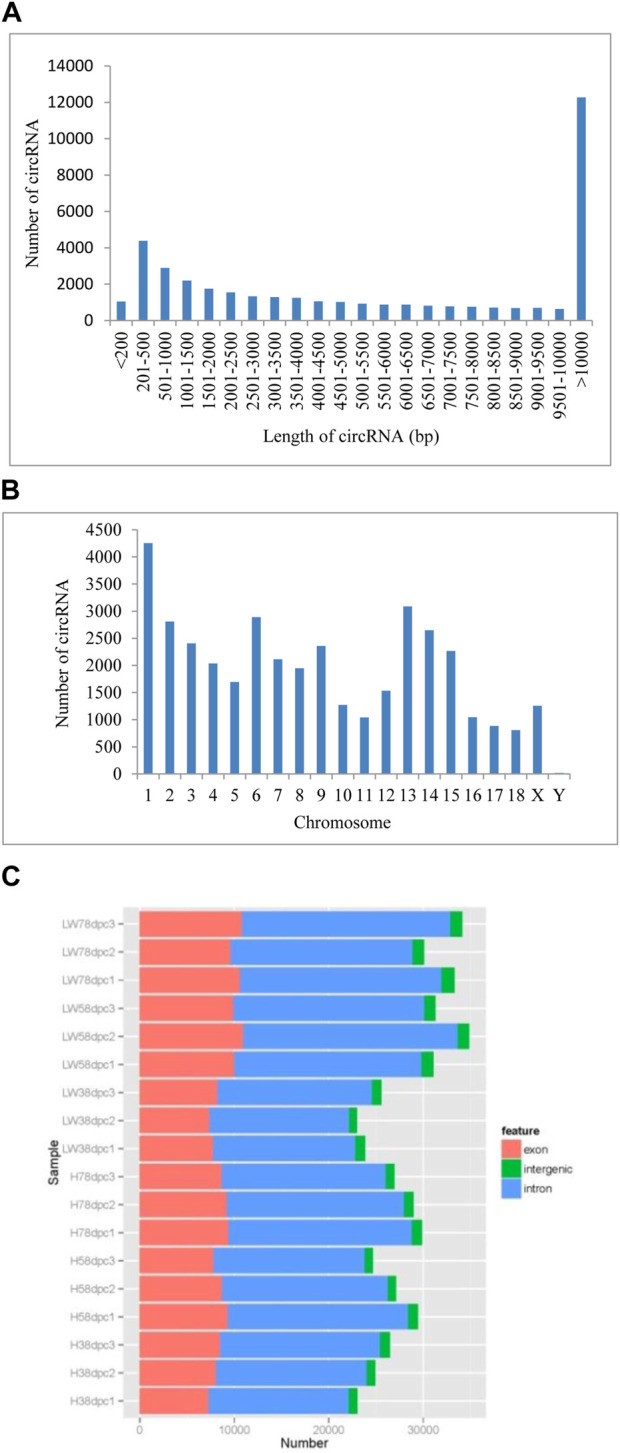
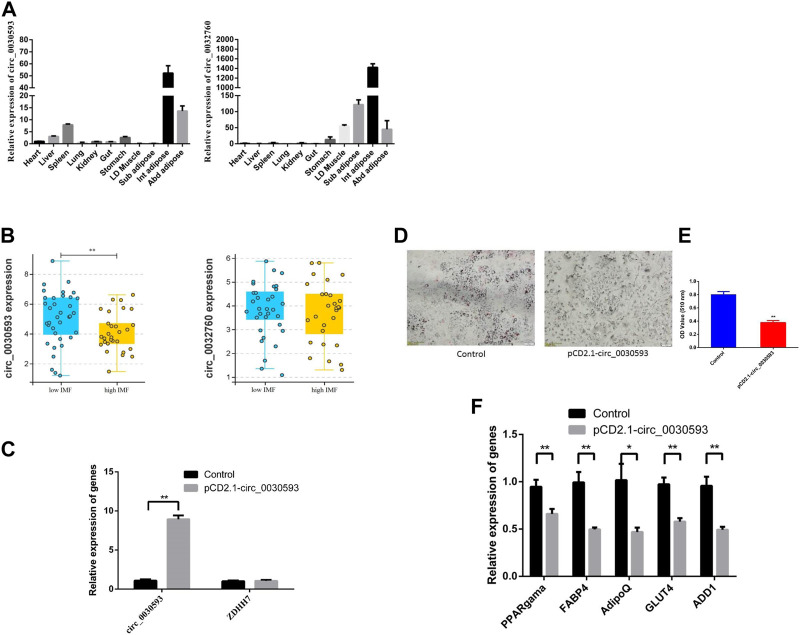
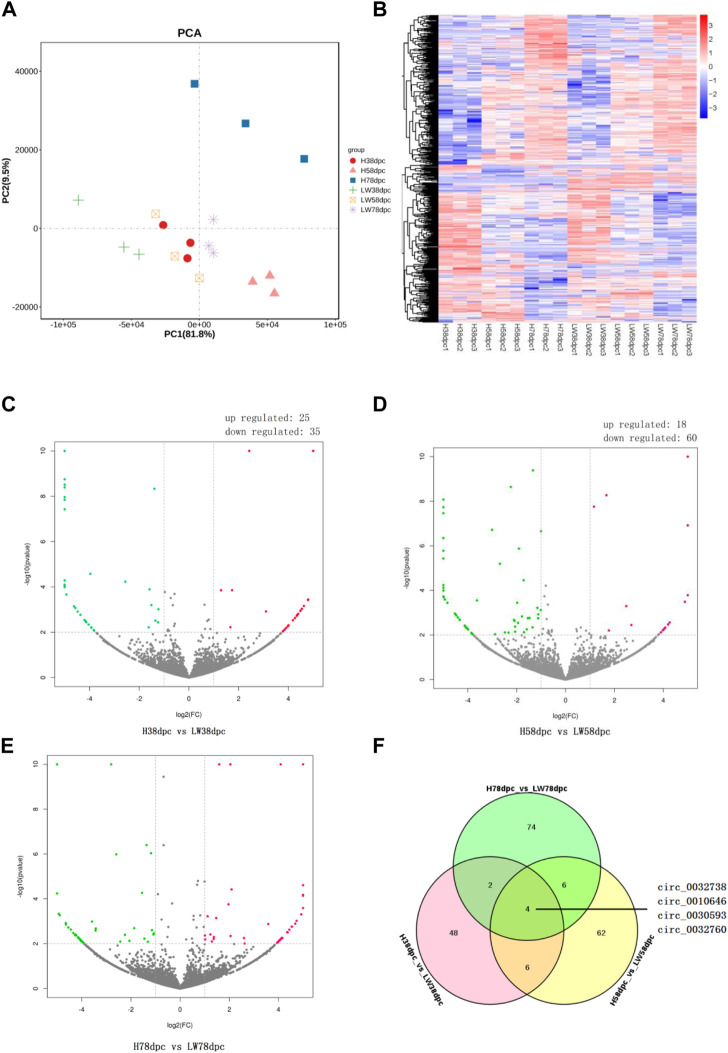
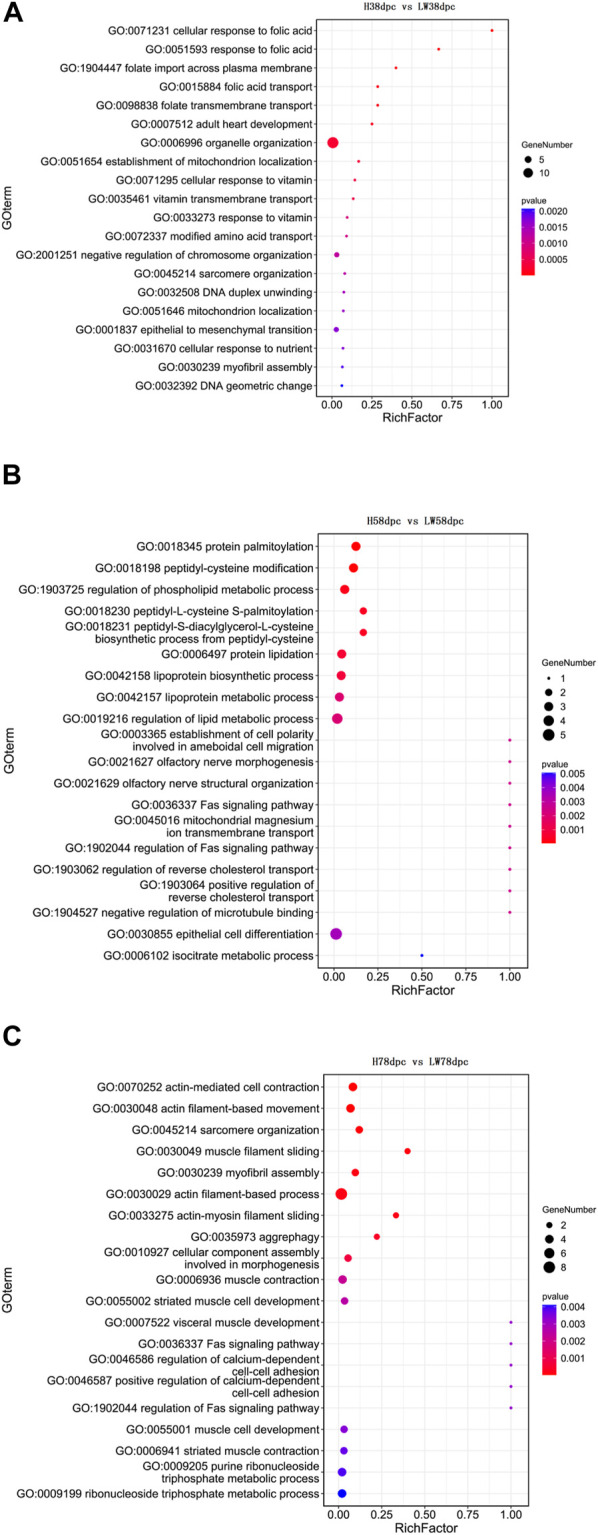
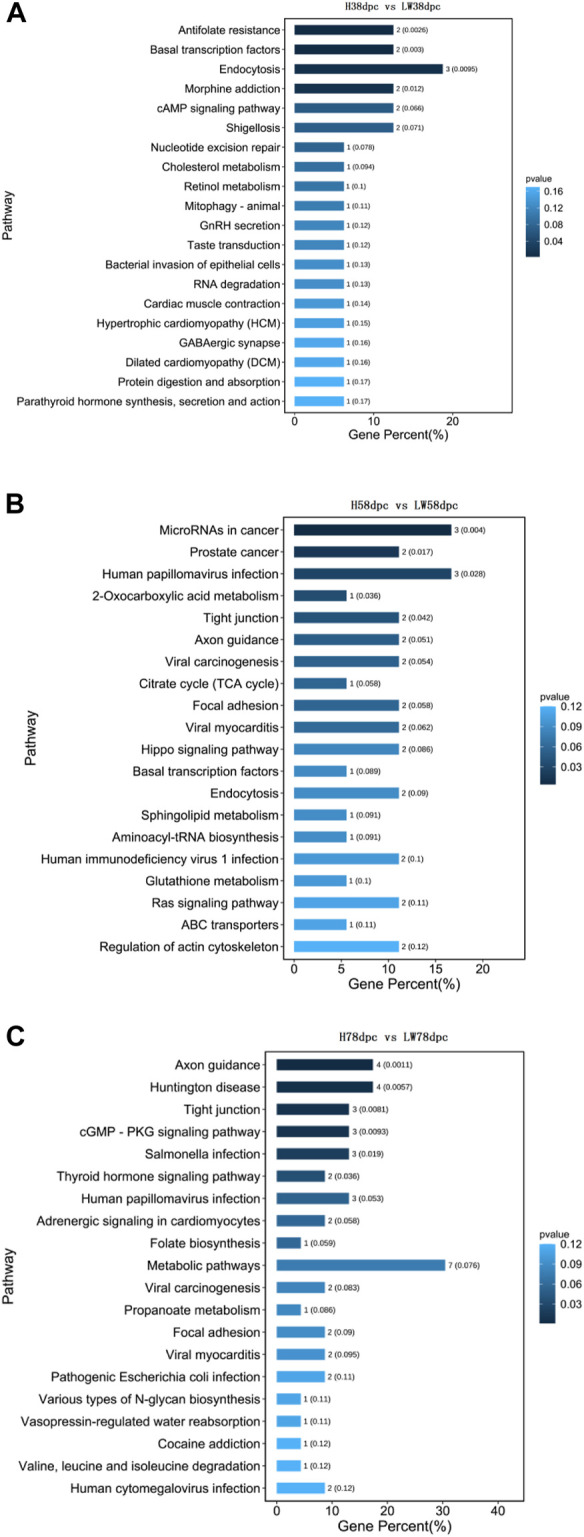
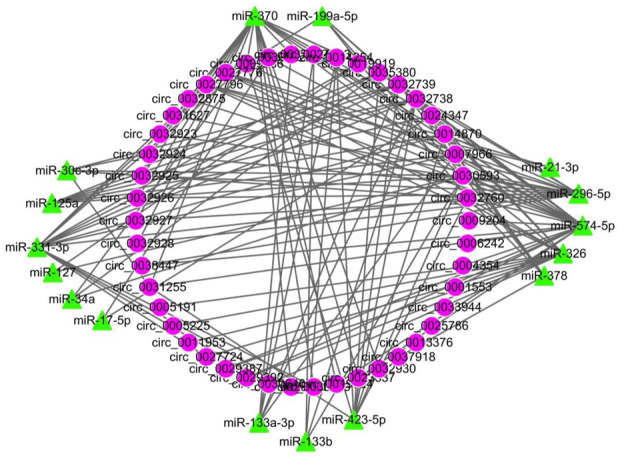
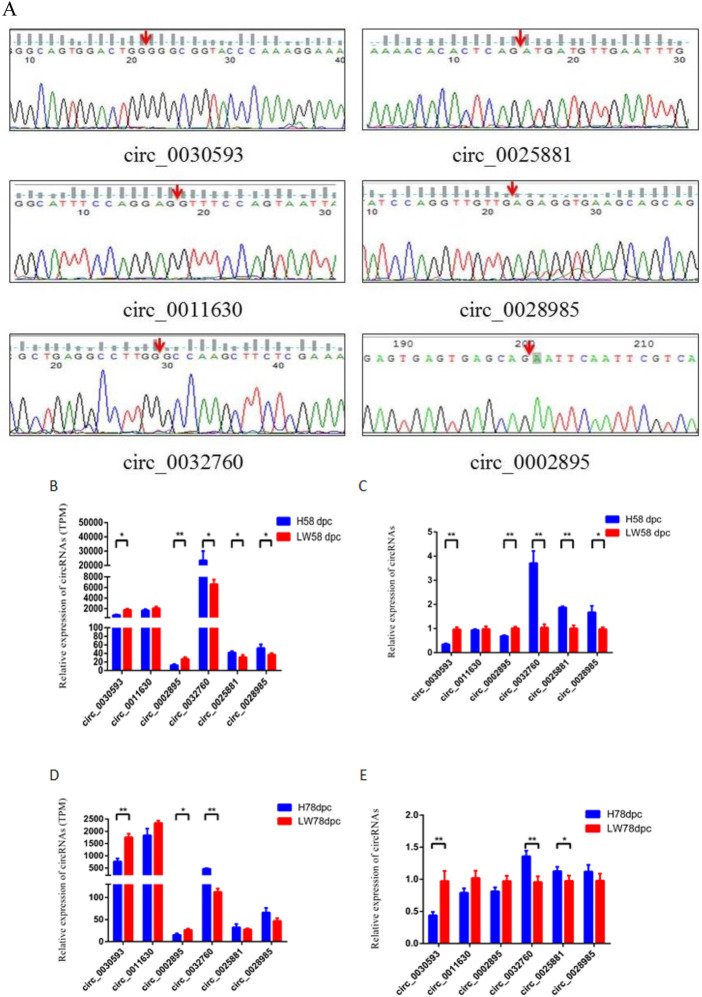
Meat quality, an important economic trait, is regulated by many factors, especially by genetic factors, including coding genes, miRNAs, and lncRNAs. Recent studies have elucidated that circRNAs also play a key role in muscle development and lipid deposition. However, the functions and regulatory mechanisms of circRNAs in meat quality remain mostly unknown. The circRNA expression profiles between Huainan pigs (Chinese indigenous pigs, fat-type, Huainan HN) and Large White pigs (Western commercial pigs, lean-type, LW) in the longissimus dorsi (LD) muscle at 38, 58, and 78 days post conception (dpc) were compared by sequencing. In total, 39,887 circRNAs were identified in 18 samples, and 60, 78, and 86 differentially expressed circRNAs (DECs) were found at the three stages mentioned above between these two breeds. The parent genes of DECs were enriched in myogenesis, proliferation, adipogenesis and muscle fiber-type transition. The circRNA-miRNA interaction networks included 38 DECs and 47 miRNAs, and these miRNAs were involved in muscle development and lipid metabolism. Two shared DECs (circ_0030593 and circ_0032760) of these three stages were selected, their head-to-tail junction sites were validated by Sanger sequencing, and RT‒qPCR results suggested that these two DECs might be involved in intramuscular fat deposition. These findings provide a basis for understanding the role of circRNAs in meat quality.
肉质是一个重要的经济性状,受多种因素调控,尤其是遗传因素,包括编码基因、微小RNA(miRNA)和长链非编码RNA(lncRNA)。最近的研究表明,环状RNA(circRNA)在肌肉发育和脂质沉积中也起着关键作用。然而,circRNA在肉质方面的功能和调控机制大多仍不清楚。通过测序比较了淮南猪(中国地方猪种,脂肪型,淮南HN)和大白猪(西方商业猪种,瘦肉型,LW)在妊娠38、58和78天(dpc)时背最长肌(LD)中circRNA的表达谱。在18个样本中共鉴定出39,887个circRNA,在上述两个品种的三个阶段分别发现了60、78和86个差异表达的circRNA(DECs)。DECs的亲本基因在肌生成、增殖、脂肪生成和肌纤维类型转变中富集。circRNA-miRNA相互作用网络包括38个DECs和47个miRNA,这些miRNA参与肌肉发育和脂质代谢。选择了这三个阶段共有的两个DECs(circ_0030593和circ_0032760),通过Sanger测序验证了它们的头对头连接位点,逆转录定量PCR(RT-qPCR)结果表明这两个DECs可能参与肌内脂肪沉积。这些发现为理解circRNA在肉质中的作用提供了依据。