Ly Socheata, Didiot Marie-Cécile, Ferguson Chantal M, Coles Andrew H, Miller Rachael, Chase Kathryn, Echeverria Dimas, Wang Feng, Sadri-Vakili Ghazaleh, Aronin Neil, Khvorova Anastasia
RNA Therapeutics Institute, University of Massachusetts Chan Medical School, Worcester, MA 01655, USA.
Mass General Institute for Neurodegenerative Disease, Massachusetts General Hospital, Boston, MA 02114, USA.
Brain Commun. 2022 Oct 13;4(6):fcac248. doi: 10.1093/braincomms/fcac248. eCollection 2022.
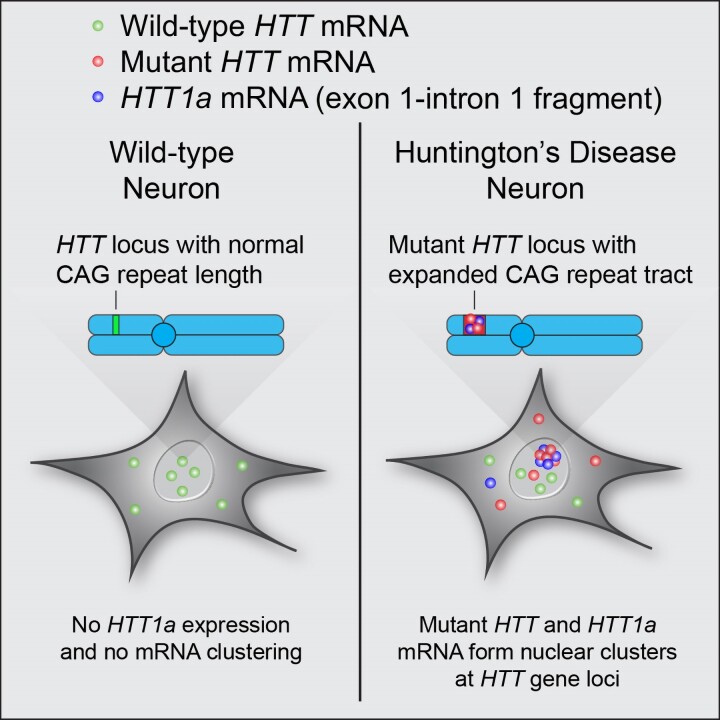
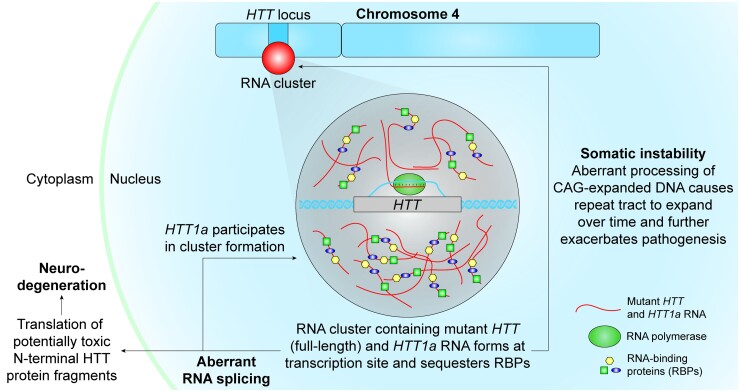
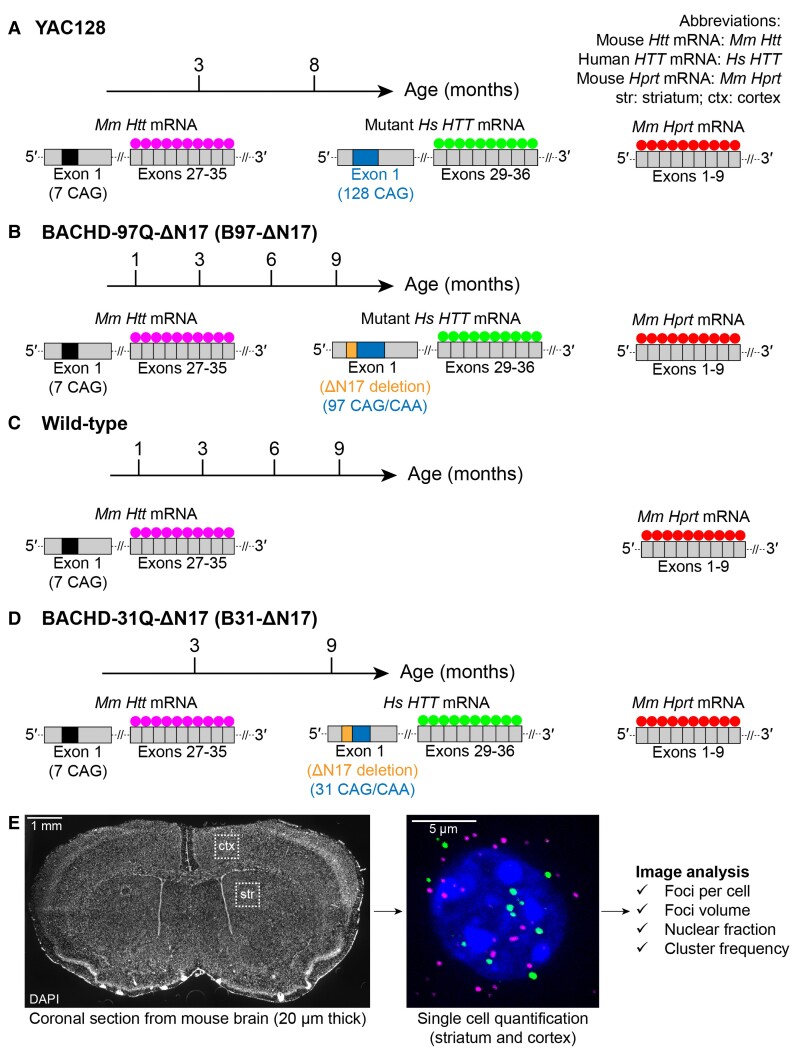
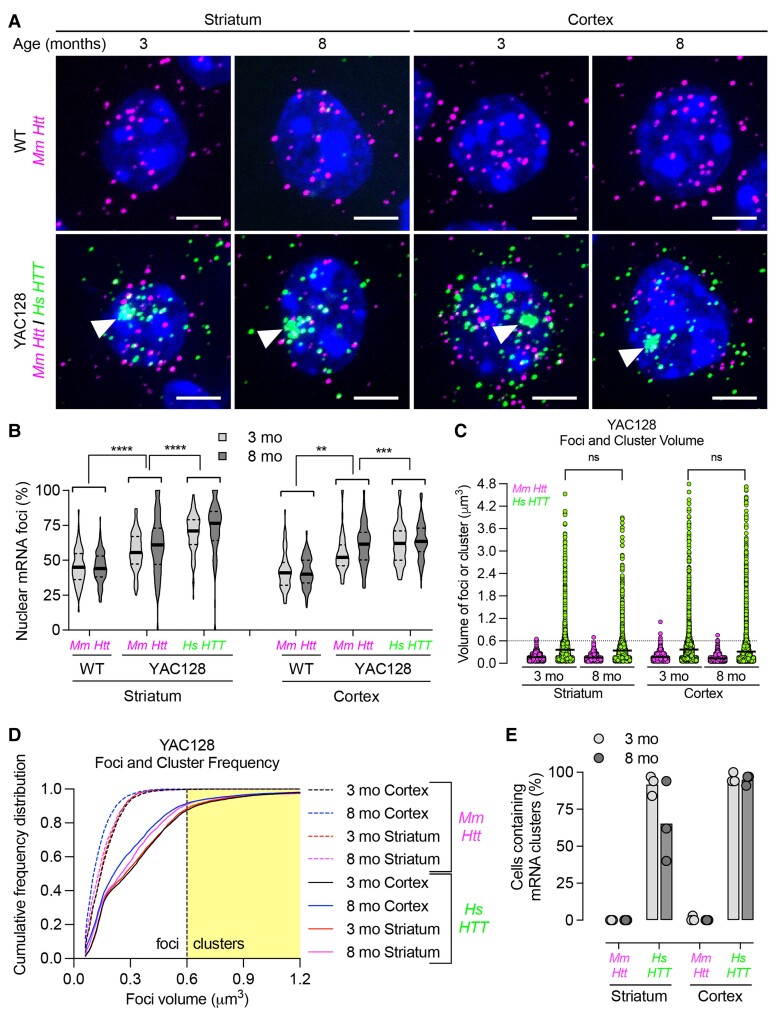
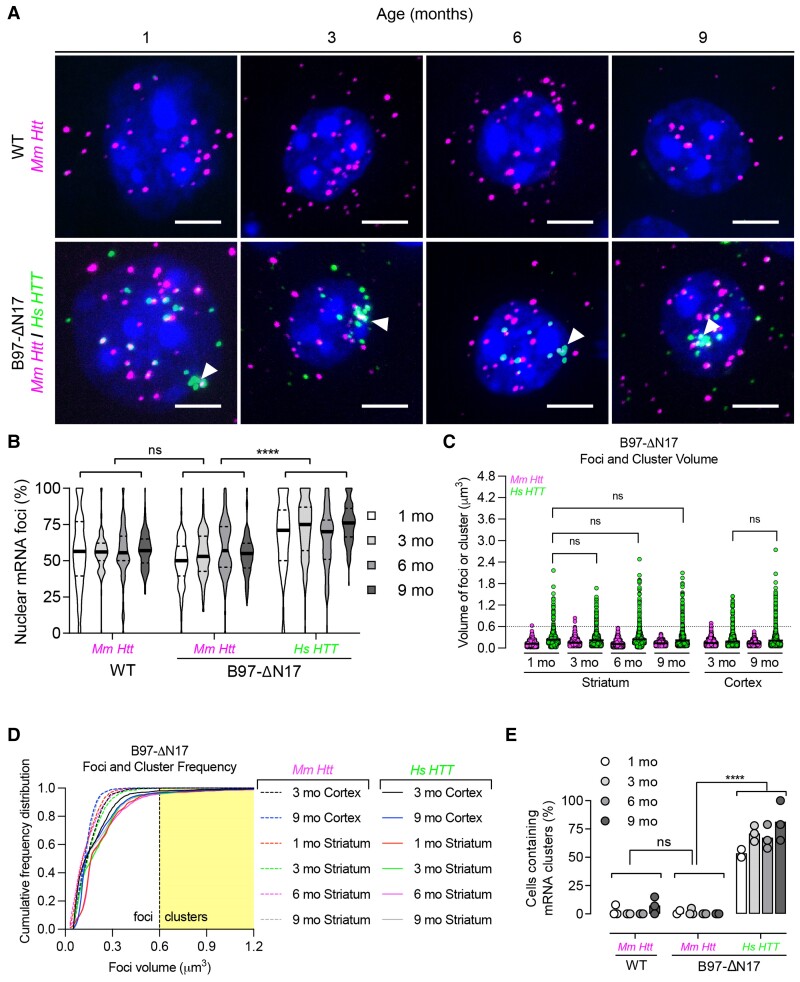
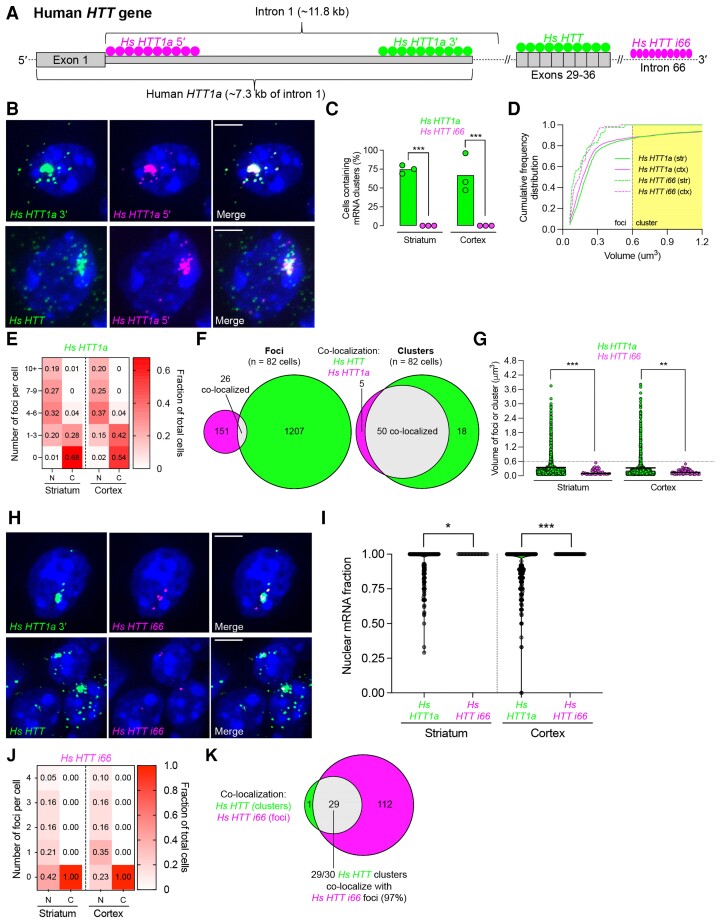
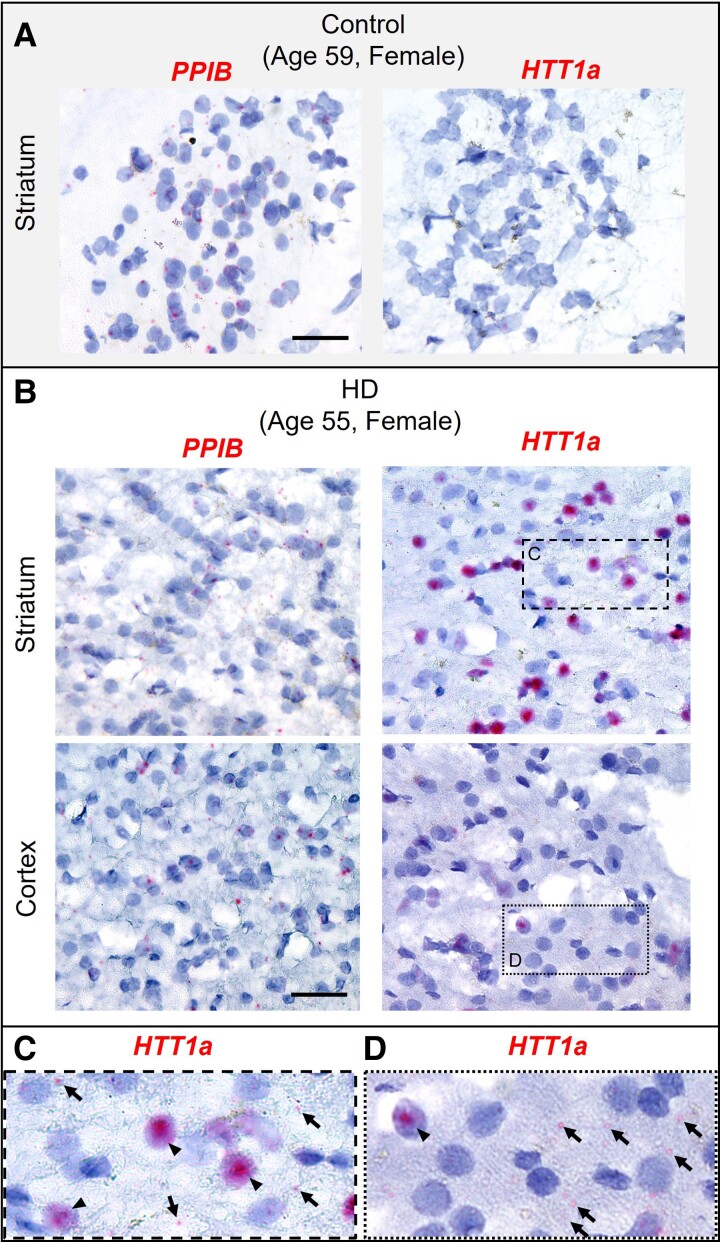
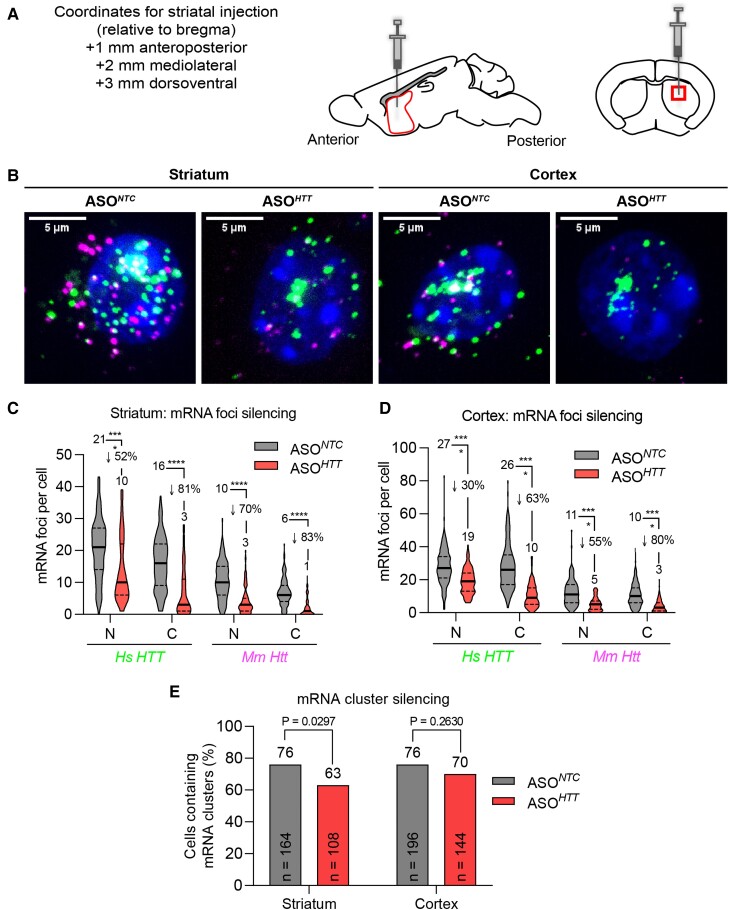
Mutant messenger RNA (mRNA) and protein contribute to the clinical manifestation of many repeat-associated neurological disorders, with the presence of nuclear RNA clusters being a common pathological feature. Yet, investigations into Huntington's disease-caused by a CAG repeat expansion in exon 1 of the () gene-have primarily focused on toxic protein gain-of-function as the primary disease-causing feature. To date, mutant mRNA has not been identified as an hallmark of Huntington's disease. Here, we report that, in two Huntington's disease mouse models (YAC128 and BACHD-97Q-ΔN17), mutant mRNA is retained in the nucleus. Widespread formation of large mRNA clusters (∼0.6-5 µm) occurred in 50-75% of striatal and cortical neurons. Cluster formation was independent of age and driven by expanded repeats. Clusters associate with chromosomal transcriptional sites and quantitatively co-localize with the aberrantly processed N-terminal exon 1-intron 1 mRNA isoform, . mRNA clusters are observed in a subset of neurons from human Huntington's disease post-mortem brain and are likely caused by somatic expansion of repeats. In YAC128 mice, clusters, but not individual mRNA, are resistant to antisense oligonucleotide treatment. Our findings identify mutant / mRNA clustering as an early, robust molecular signature of Huntington's disease, providing evidence that Huntington's disease is a repeat expansion disease with mRNA involvement.
突变信使核糖核酸(mRNA)和蛋白质在许多重复序列相关神经疾病的临床表现中起作用,核RNA聚集体的存在是一个常见的病理特征。然而,对由()基因外显子1中CAG重复序列扩增导致的亨廷顿病的研究主要集中在有毒蛋白质功能获得作为主要致病特征。迄今为止,突变mRNA尚未被确定为亨廷顿病的标志。在此,我们报告,在两种亨廷顿病小鼠模型(YAC128和BACHD - 97Q - ΔN17)中,突变mRNA保留在细胞核中。在50 - 75%的纹状体和皮质神经元中广泛形成大的mRNA聚集体(约0.6 - 5微米)。聚集体的形成与年龄无关,由扩增的重复序列驱动。聚集体与染色体转录位点相关,并与异常加工的N端外显子1 - 内含子1 mRNA异构体定量共定位。在人类亨廷顿病死后大脑的一部分神经元中观察到mRNA聚集体,并且可能是由重复序列的体细胞扩增引起的。在YAC128小鼠中,聚集体而非单个mRNA对反义寡核苷酸治疗有抗性。我们的发现确定突变/ mRNA聚集是亨廷顿病早期、强有力的分子特征,提供了证据表明亨廷顿病是一种涉及mRNA的重复序列扩增疾病。