Department of Gynaecology, The First Affiliated Hospital of Chengdu Medical College, Chengdu, Sichuan, China.
Front Endocrinol (Lausanne). 2022 Nov 16;13:977254. doi: 10.3389/fendo.2022.977254. eCollection 2022.
Gestational diabetes mellitus (GDM) has adverse effects on the health of mothers and their offspring. Currently, no known biomarker has been proven to have sufficient validity for the prediction of GDM in the first trimester of pregnancy. The aim of this study was to investigate the potential relationship between serum neutrophil gelatinase-associated lipocalin (NGAL) levels in the first trimester of pregnancy and later GDM risk and to evaluate the performance of serum NGAL as a biomarker for the prediction of GDM.
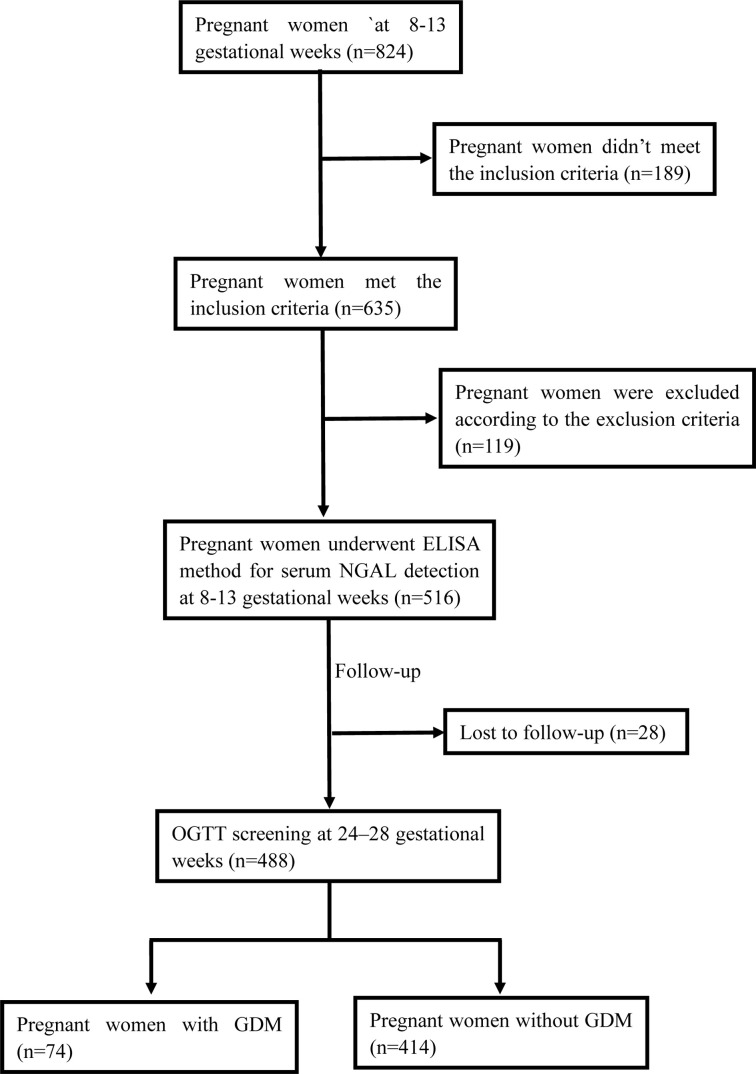
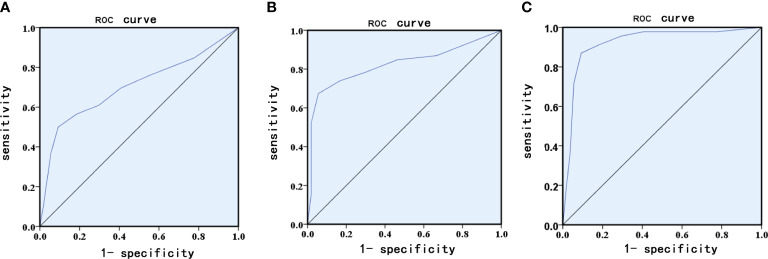
The study was conducted by recruiting participants at 8-13 weeks of gestation from The First Affiliated Hospital of Chengdu Medical College between January and June 2021; participants were followed up for oral glucose tolerance test (OGTT) screening at 24-28 gestational weeks. We examined the serum NGAL levels of all subjects in the first trimester who met the inclusion and exclusion criteria. Anthropometric, clinical, and laboratory parameters of the study subjects were obtained during the same study period. A logistic regression model was carried out to investigate the potential relationship between serum NGAL levels in the first trimester of pregnancy and later GDM risk. The receiver operating characteristic (ROC) curve and area under the curve (AUC) were used to assess the discrimination and calibration of serum NGAL as a biomarker for the prediction of GDM in the first trimester of pregnancy.
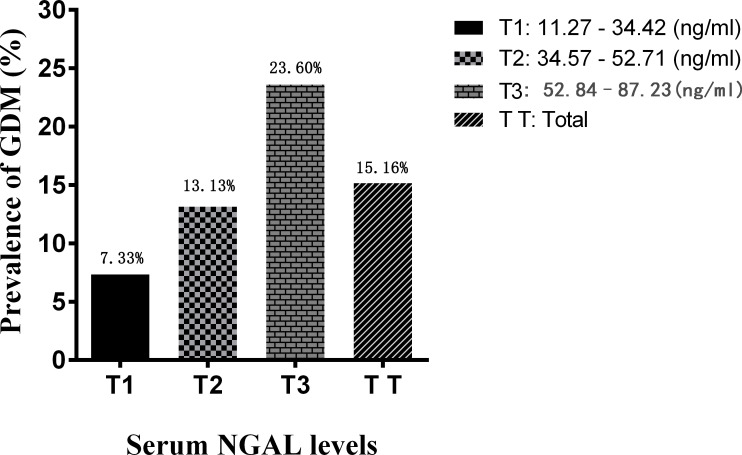
Serum NGAL levels in the first trimester of pregnancy were significantly higher in women who later developed GDM than in those who did not develop GDM. Serum NGAL levels in the first trimester of pregnancy were positively associated with an increased risk of GDM after adjustment for potential confounding factors. The risk prediction model for GDM constructed by using serum NGAL levels in the first trimester of pregnancy achieved excellent performance.
Maternal serum NGAL in the first trimester of pregnancy is a potential biomarker for the prediction of GDM, which could help guide the clinical practice of antenatal care.
妊娠期糖尿病(GDM)对母婴健康均有不良影响。目前,尚无已知的生物标志物被证实对预测妊娠早期的 GDM 具有足够的有效性。本研究旨在探讨妊娠早期血清中性粒细胞明胶酶相关脂质运载蛋白(NGAL)水平与随后发生 GDM 风险之间的潜在关系,并评估血清 NGAL 作为预测 GDM 的生物标志物的性能。
该研究于 2021 年 1 月至 6 月在成都医学院第一附属医院招募了 8-13 孕周的参与者;在 24-28 孕周时对参与者进行口服葡萄糖耐量试验(OGTT)筛查。我们检查了符合纳入和排除标准的所有符合条件的研究对象在妊娠早期的血清 NGAL 水平。在同一研究期间获得了研究对象的人体测量、临床和实验室参数。使用逻辑回归模型来研究妊娠早期血清 NGAL 水平与随后发生 GDM 风险之间的潜在关系。接收者操作特征(ROC)曲线和曲线下面积(AUC)用于评估妊娠早期血清 NGAL 作为预测 GDM 的生物标志物的区分度和校准度。
妊娠早期血清 NGAL 水平在以后发生 GDM 的女性中明显高于未发生 GDM 的女性。在校正潜在混杂因素后,妊娠早期血清 NGAL 水平与 GDM 风险增加呈正相关。使用妊娠早期血清 NGAL 水平构建的 GDM 风险预测模型表现出色。
妊娠早期母体血清 NGAL 是预测 GDM 的潜在生物标志物,有助于指导产前保健的临床实践。