Oxford University Clinical Research Unit, Hospital for Tropical Diseases, Ho Chi Minh City, Viet Nam.
Centre for Tropical Medicine and Global Health, Nuffield Department of Medicine, University of Oxford, Oxford, United Kingdom.
Elife. 2022 Dec 6;11:e83433. doi: 10.7554/eLife.83433.
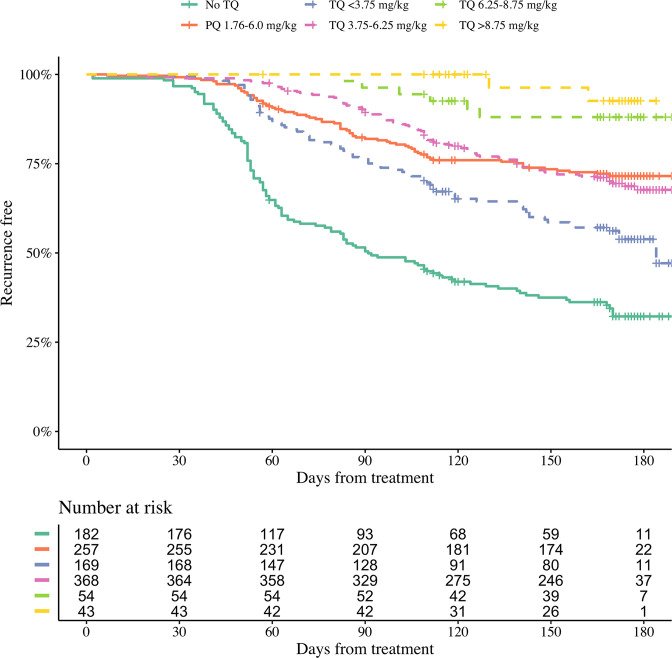
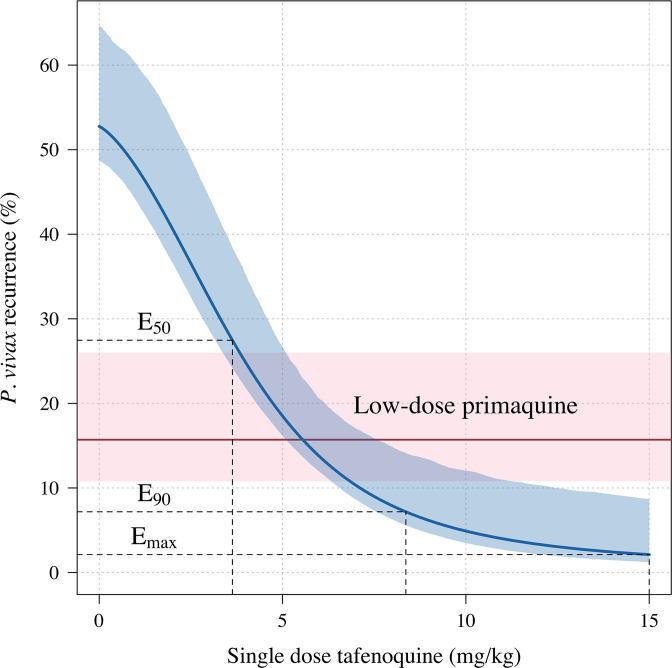
Tafenoquine is a newly licensed antimalarial drug for the radical cure of malaria. The mechanism of action and optimal dosing are uncertain. We pooled individual data from 1102 patients and 72 healthy volunteers studied in the pre-registration trials. We show that tafenoquine dose is the primary determinant of efficacy. Under an Emax model, we estimate the currently recommended 300 mg dose in a 60 kg adult (5 mg/kg) results in 70% of the maximal obtainable hypnozoiticidal effect. Increasing the dose to 7.5 mg/kg (i.e. 450 mg) would result in 90% reduction in the risk of recurrence. After adjustment for dose, the tafenoquine terminal elimination half-life, and day 7 methaemoglobin concentration, but not the parent compound exposure, were also associated with recurrence. These results suggest that the production of oxidative metabolites is central to tafenoquine's hypnozoiticidal efficacy. Clinical trials of higher tafenoquine doses are needed to characterise their efficacy, safety and tolerability.
特非那喹是一种新获得许可的抗疟药物,用于根治疟疾。其作用机制和最佳剂量尚不确定。我们对注册前试验中 1102 名患者和 72 名健康志愿者的个体数据进行了汇总。结果表明,特非那喹剂量是疗效的主要决定因素。在 Emax 模型下,我们估计目前推荐的 60 公斤成人 300mg 剂量(5mg/kg)可获得 70%的最大休眠杀伤效果。将剂量增加到 7.5mg/kg(即 450mg)可将复发风险降低 90%。调整剂量、特非那喹终末消除半衰期和第 7 天高铁血红蛋白浓度后,与复发相关,但母体化合物暴露水平与复发无关。这些结果表明,氧化代谢物的产生是特非那喹休眠杀伤效果的关键。需要开展更高剂量特非那喹的临床试验,以明确其疗效、安全性和耐受性。