Department of Gynaecology and Obstetrics, Copenhagen University Hospital - North Zealand, Hillerod, Denmark.
Department of Biomedical Sciences, University of Copenhagen, Copenhagen, Denmark.
BMC Public Health. 2022 Dec 6;22(1):2283. doi: 10.1186/s12889-022-14717-1.
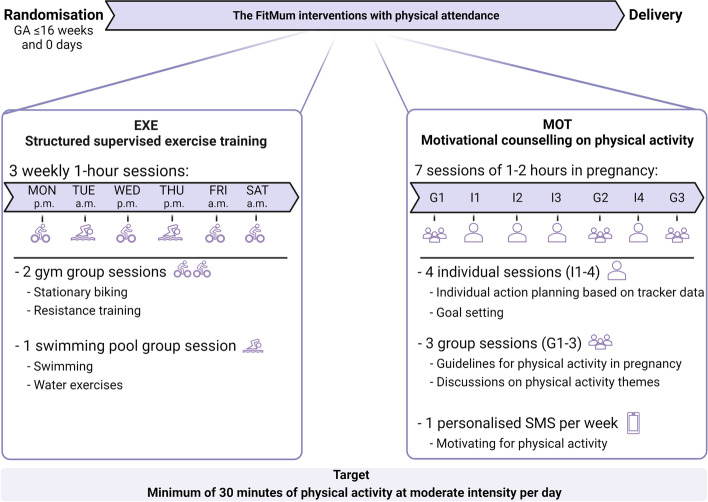
Physical activity (PA) at moderate intensity is recommended for healthy pregnant women. The three-arm FitMum randomised controlled trial showed that it was possible to increase PA level during pregnancy with structured supervised exercise training (EXE) compared to standard care. Motivational counselling on PA (MOT) did not increase PA. This process evaluation aims to understand the implementation and mechanisms of impact of EXE and MOT.
A mixed methods process evaluation was conducted using the UK Medical Research Council's process evaluation framework by assessing implementation (reach, fidelity, and dose) and mechanisms of impact of the two interventions provided to pregnant women in FitMum. Data was collected both quantitatively (n = 220) and qualitatively (n = 20).
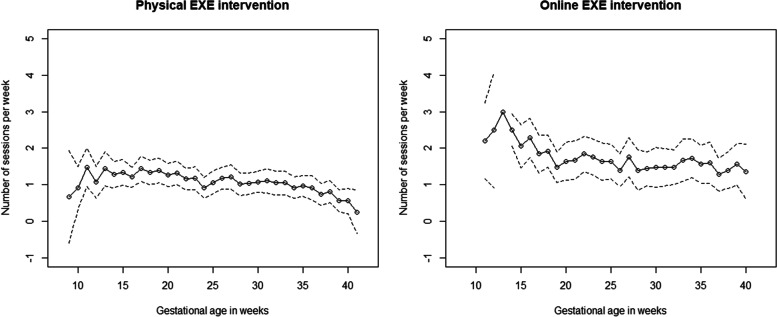
The FitMum trial reached educated pregnant women (80% having an educational level ≥ bachelor's degree) with high autonomy of everyday life. Most participants (58%) were recruited at their first-trimester ultrasonic scan. Reasons to participate were personal (91%) and altruistic (56%). The intervention dose was delivered as intended with high fidelity in the original physical intervention setup and in the altered online setup during the COVID-19 restrictions. A low dose received in EXE (1.3 [95% CI, 1.1; 1.5] sessions/week) was partly explained by the pre-scheduled EXE sessions favouring participants with a flexible everyday life and a supportive social network. Dose received in EXE increased during online intervention delivery. Participants in MOT received 5.2 [4.7; 5.7] of 7 sessions. Mechanisms of impact comprised a perception of intervention commitment among participants in EXE due to the scheduled EXE sessions, whereas participants in MOT considered themselves as PA self-determined. PA was considered as constrained activities in EXE and included in daily activities in MOT.
The FitMum interventions was delivered with high fidelity. During COVID-19, the dose received in EXE increased compared to the previous physical setup. Mechanisms of impact as commitment, perception of empowerment and perception of PA as well as the paradox between prioritising PA and family and the need of a flexible everyday life need to be considered when offering pregnant women PA interventions. Future interventions should consider a combination of physical and online exercise training for pregnant women.
建议健康孕妇进行中等强度的身体活动(PA)。三臂 FitMum 随机对照试验表明,与标准护理相比,通过结构化监督运动训练(EXE)有可能在怀孕期间提高 PA 水平。PA 的动机咨询(MOT)并没有增加 PA。本过程评估旨在了解 EXE 和 MOT 的实施和影响机制。
使用英国医学研究理事会的过程评估框架,通过评估 FitMum 中为孕妇提供的两种干预措施的实施(覆盖范围、保真度和剂量)和影响机制,对 FitMum 中的实施进行了混合方法的过程评估。数据既通过定量(n=220)又通过定性(n=20)收集。
FitMum 试验覆盖了受过教育的孕妇(80%具有学士及以上学历),具有较高的日常生活自主能力。大多数参与者(58%)是在第一次超声扫描时招募的。参与的原因是个人(91%)和利他主义(56%)。干预剂量按照最初的物理干预设置和 COVID-19 限制期间的在线更改设置进行了高保真度的交付。EXE 中接受的低剂量(1.3[95%CI,1.1;1.5] 节/周)部分解释了由于预先安排的 EXE 课程有利于日常生活灵活和支持性社交网络的参与者。在线干预交付期间,EXE 中接受的剂量增加。MOT 中的参与者接受了 7 节课中的 5.2[4.7;5.7]节。影响机制包括由于计划的 EXE 课程,EXE 中的参与者对干预的承诺感,而 MOT 中的参与者则认为自己是 PA 自主决定的。在 EXE 中,PA 被视为受限活动,在 MOT 中则被纳入日常活动。
FitMum 干预措施的实施具有高度的保真度。在 COVID-19 期间,与之前的物理设置相比,EXE 中接受的剂量增加。当为孕妇提供 PA 干预时,需要考虑影响机制,如承诺、赋权感和 PA 感,以及在优先考虑 PA 和家庭之间的悖论以及日常生活灵活性的需要。未来的干预措施应考虑为孕妇提供物理和在线运动训练的结合。