Division of Neonatology, Children's Hospital of Philadelphia, Philadelphia, Pennsylvania, United States.
Department of Pediatrics, University of Pennsylvania Perelman School of Medicine, Philadelphia, Pennsylvania, United States.
Gut Microbes. 2022 Jan-Dec;14(1):2154091. doi: 10.1080/19490976.2022.2154091.
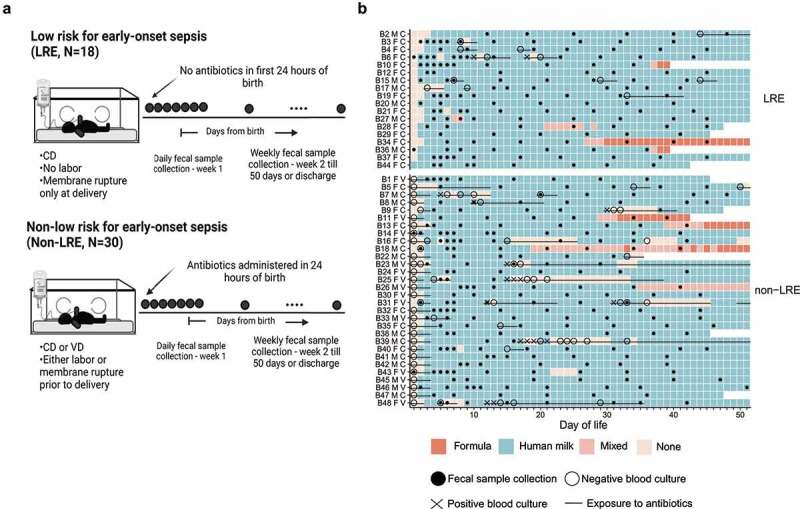
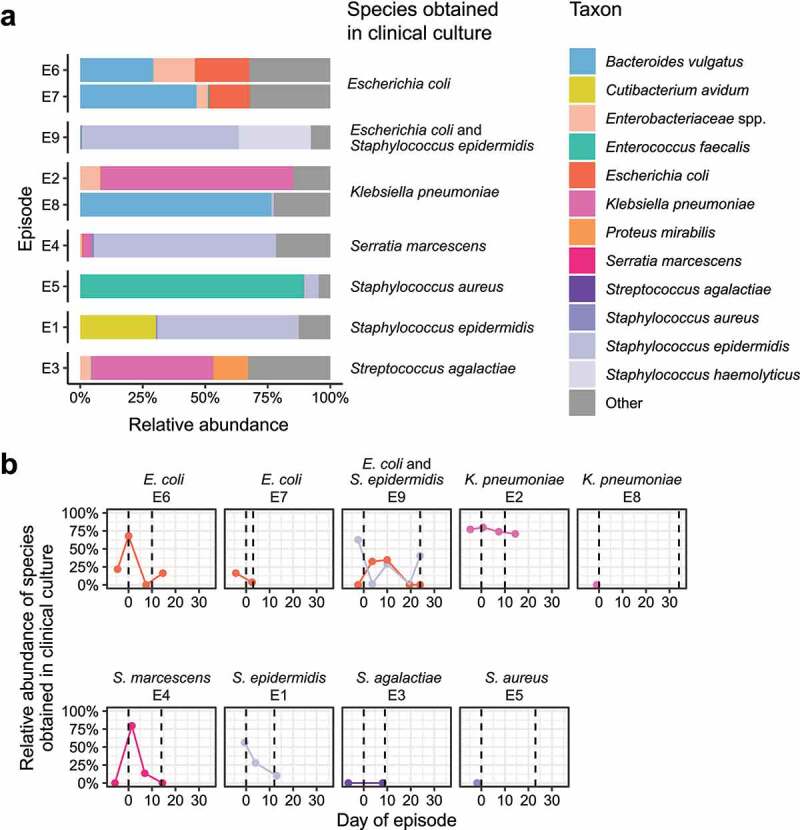
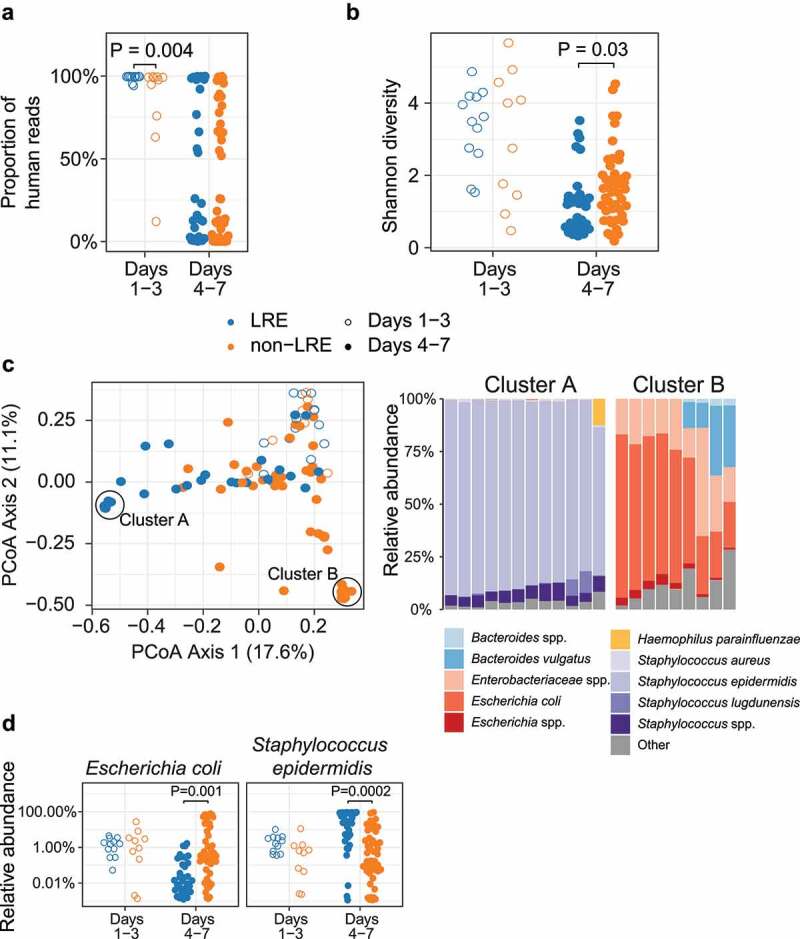
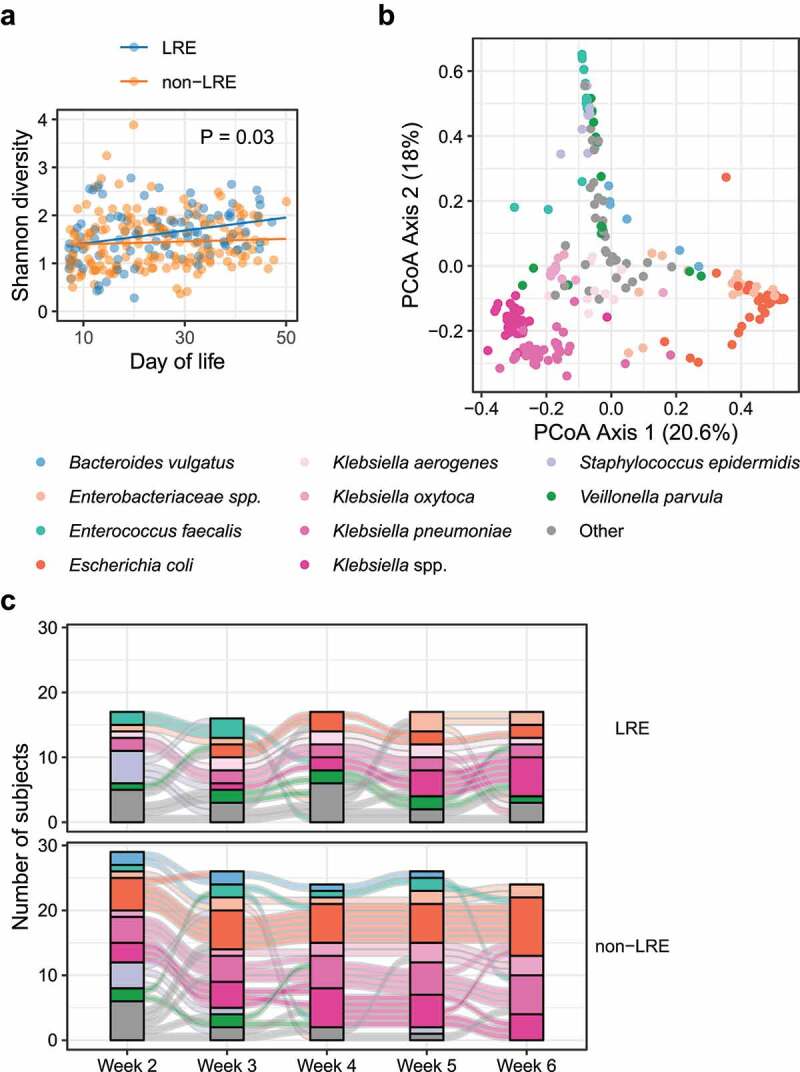
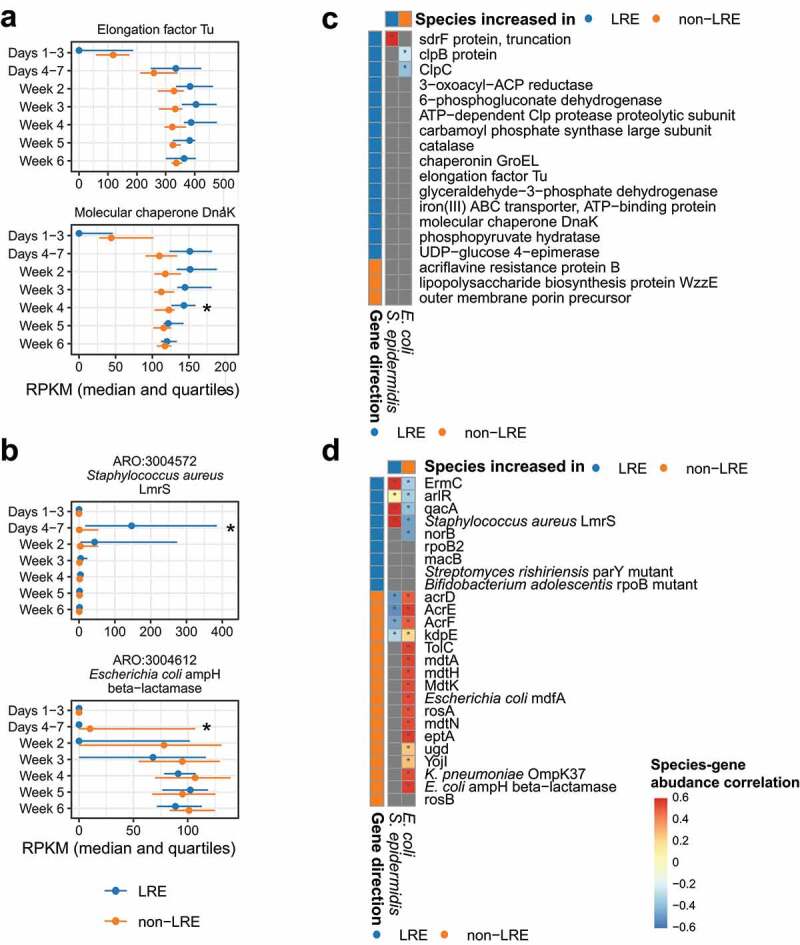
Antibiotics are administered near-universally to very low birth weight (VLBW) infants after birth for suspected early-onset sepsis (EOS). We previously identified a phenotypic group of VLBW infants, referred to as low-risk for EOS (LRE), whose risk of EOS is low enough to avoid routine antibiotic initiation. In this cohort study, we compared 18 such infants with 30 infants categorized as non-LRE to determine if the lower risk of pathogen transmission at birth is accompanied by differences in microbiome acquisition and development. We did shotgun metagenomic sequencing of 361 fecal samples obtained serially. LRE infants had a higher human-to-bacterial DNA ratio than non-LRE infants in fecal samples on days 1-3 after birth, confirming lower bacterial acquisition among LRE infants. The microbial diversity and composition in samples from days 4-7 differed between the groups with a predominance of in LRE infants and Enterobacteriaceae sp. in non-LRE infants. Compositional differences were congruent with the distribution of virulence factors and antibiotic resistant genes. After the first week, the overall composition was similar, but changes in relative abundance for several taxa with increasing age differed between groups. Of the nine late-onset bacteremia episodes, eight occurred in non-LRE infants. Species isolated from the blood culture was detected in the pre-antibiotic fecal samples of the infant for all episodes, though these species were also found in infants without bacteremia. In conclusion, LRE infants present a distinct pattern of microbiome development that is aligned with their low risk for EOS. Further investigation to determine the impact of these differences on later outcomes such as late-onset bacteremia is warranted.
抗生素在极低出生体重(VLBW)婴儿出生后普遍用于疑似早发性败血症(EOS)。我们之前确定了一个 VLBW 婴儿的表型组,称为 EOS 低风险(LRE),其 EOS 风险低到足以避免常规抗生素的启动。在这项队列研究中,我们比较了 18 名这样的婴儿和 30 名归类为非 LRE 的婴儿,以确定出生时病原体传播风险较低是否伴随着微生物组获得和发育的差异。我们对 361 个连续获得的粪便样本进行了 shotgun 宏基因组测序。LRE 婴儿在出生后 1-3 天的粪便样本中,人类与细菌 DNA 的比值高于非 LRE 婴儿,这证实了 LRE 婴儿中细菌获得率较低。第 4-7 天的样本中微生物多样性和组成在两组之间存在差异,LRE 婴儿以占优势,而非 LRE 婴儿以肠杆菌科 sp.为主。组成差异与毒力因子和抗生素耐药基因的分布一致。在第一周后,总体组成相似,但随着年龄的增长,几个分类群的相对丰度变化在两组之间存在差异。在 9 例晚发性菌血症发作中,有 8 例发生在非 LRE 婴儿中。所有发作中,从血液培养物中分离出的物种都在婴儿的抗生素前粪便样本中被检测到,尽管这些物种也在没有菌血症的婴儿中被发现。总之,LRE 婴儿表现出独特的微生物组发育模式,与他们 EOS 风险低相一致。需要进一步研究以确定这些差异对晚发性菌血症等后期结果的影响。