Department of Pediatrics, Morsani College of Medicine, University of South Florida, Tampa, FL, USA.
College of Nursing, University of South Florida, Tampa, FL, USA.
Microbiome. 2018 Sep 12;6(1):157. doi: 10.1186/s40168-018-0547-8.
Preterm infants are at risk of developing intestinal dysbiosis with an increased proportion of Gammaproteobacteria. In this study, we sought the clinical determinants of the relative abundance of feces-associated Gammaproteobacteria in very low birth weight (VLBW) infants. Fecal microbiome was characterized at ≤ 2 weeks and during the 3rd and 4th weeks after birth, by 16S rRNA amplicon sequencing. Maternal and infant clinical characteristics were extracted from electronic medical records. Data were analyzed by linear mixed modeling and linear regression.
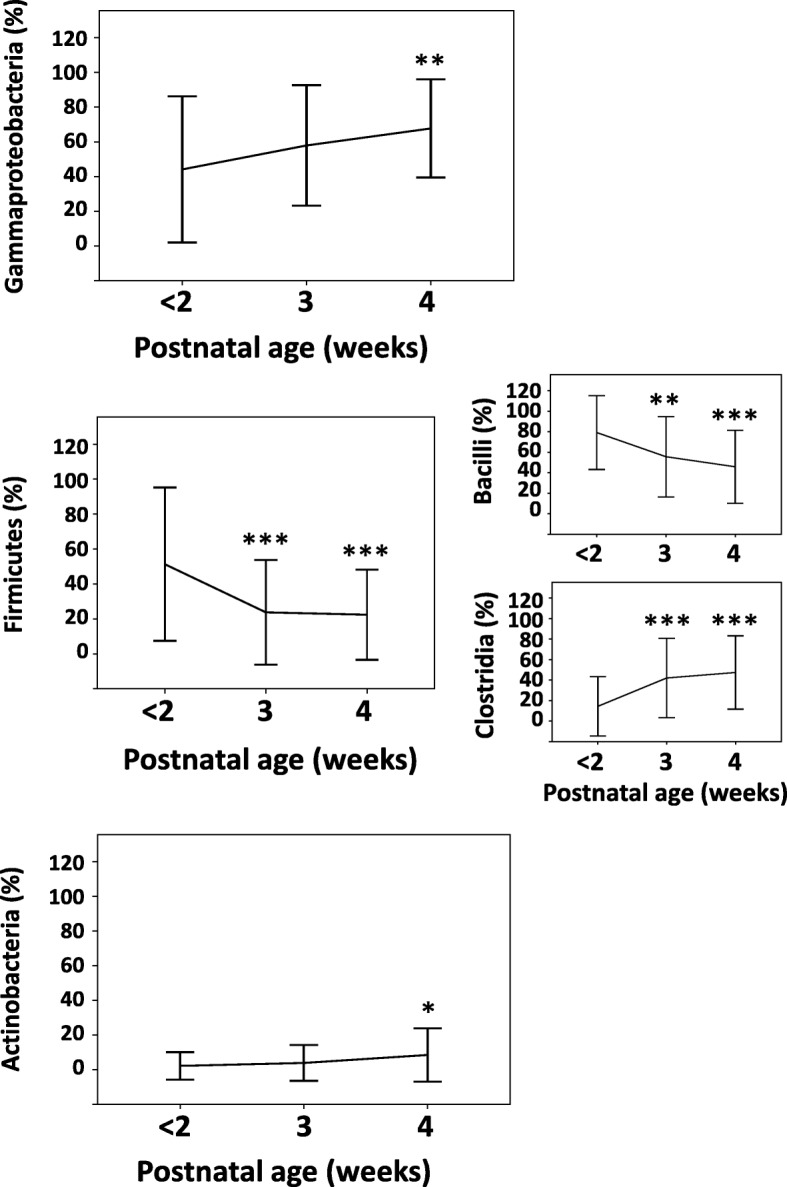
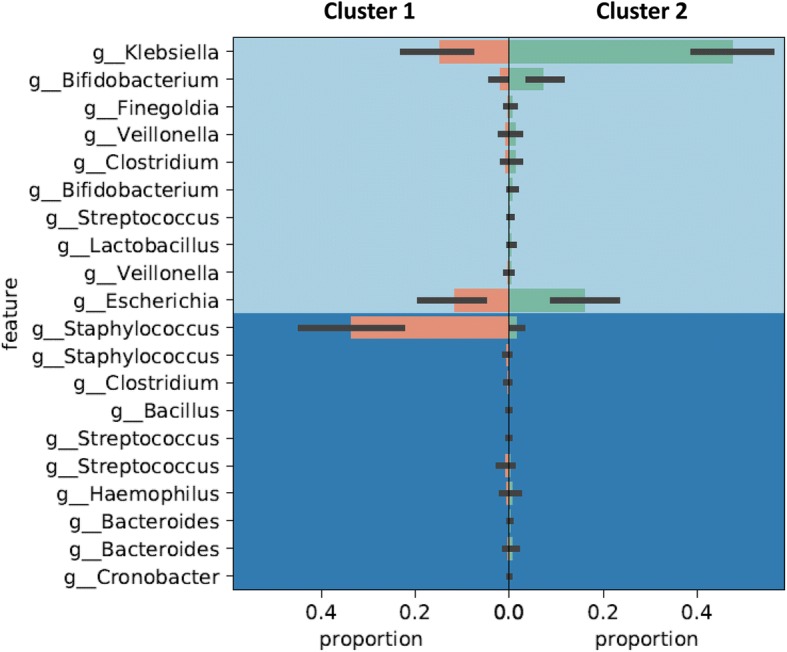
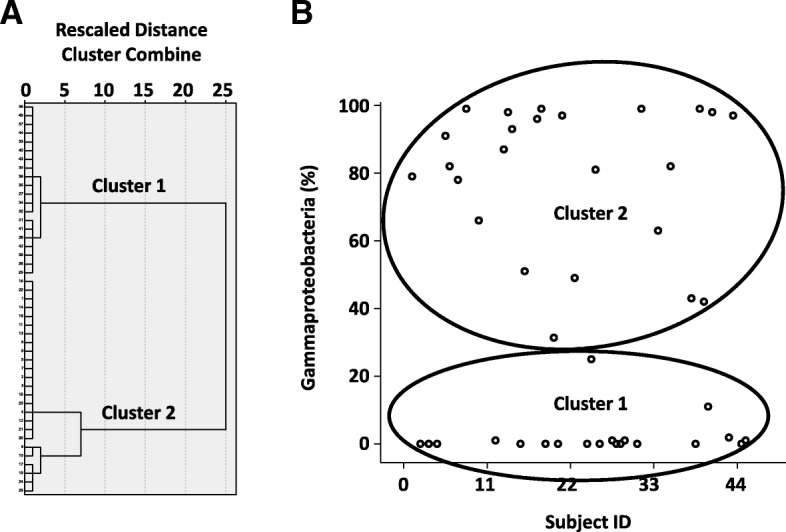
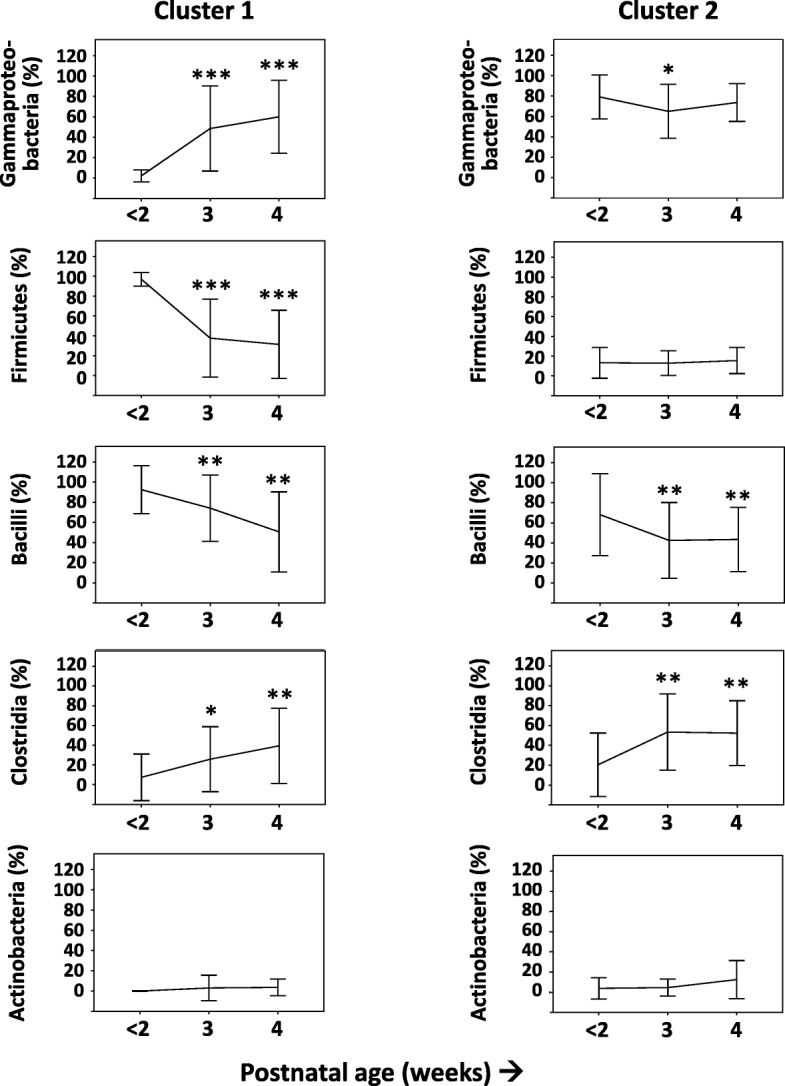
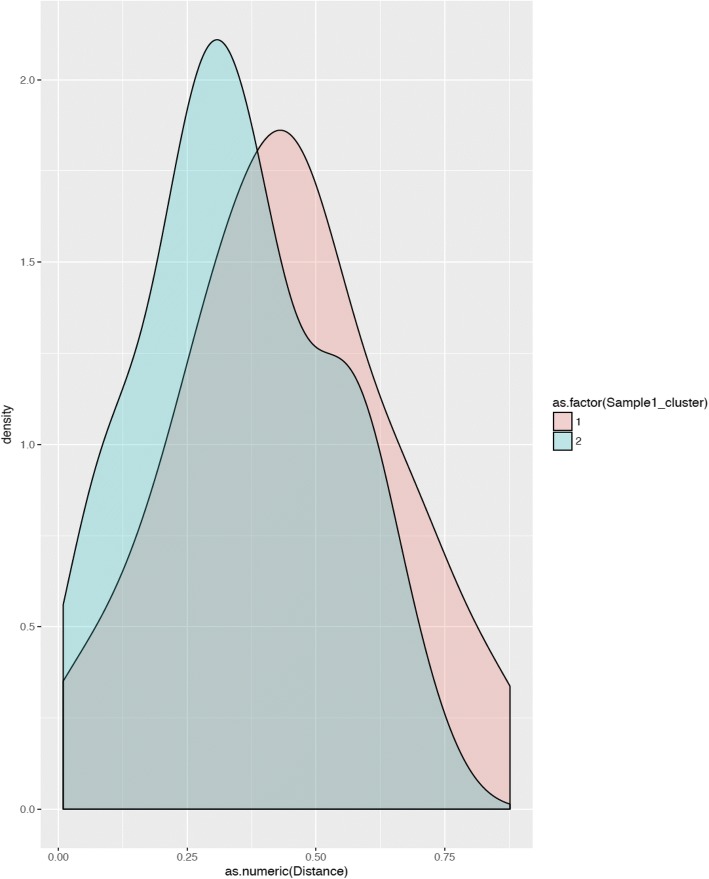
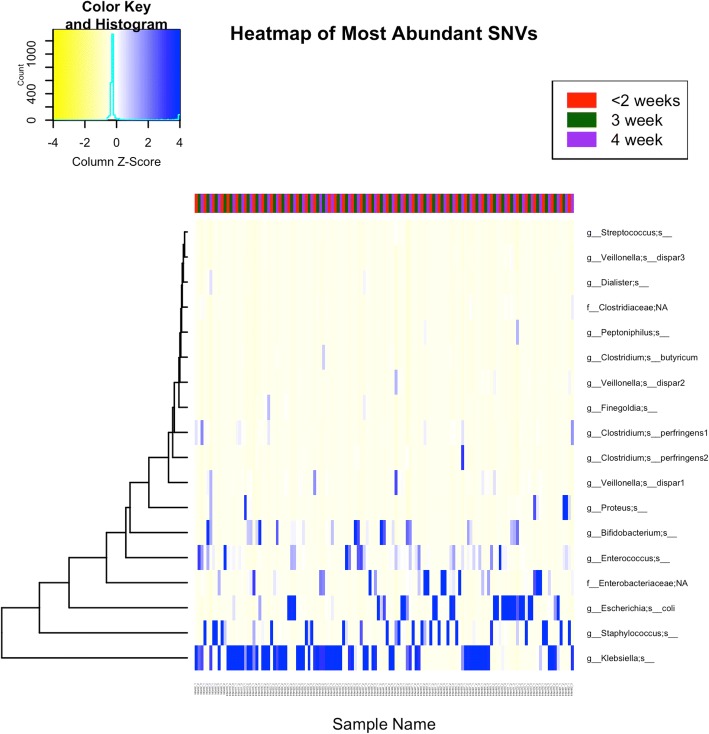
Clinical data and fecal microbiome profiles of 45 VLBW infants (gestational age 27.9 ± 2.2 weeks; birth weight 1126 ± 208 g) were studied. Three stool samples were analyzed for each infant at mean postnatal ages of 9.9 ± 3, 20.7 ± 4.1, and 29.4 ± 4.9 days. The average relative abundance of Gammaproteobacteria was 42.5% (0-90%) at ≤ 2 weeks, 69.7% (29.9-86.9%) in the 3rd, and 75.5% (54.5-86%) in the 4th week (p < 0.001). Hierarchical and K-means clustering identified two distinct subgroups: cluster 1 started with comparatively low abundance that increased with time, whereas cluster 2 began with a greater abundance at ≤ 2 weeks (p < 0.001) that decreased over time. Both groups resembled each other by the 3rd week. Single variants of Klebsiella and Staphylococcus described variance in community structure between clusters and were shared between all infants, suggesting a common, hospital-derived source. Fecal Gammaproteobacteria was positively associated with vaginal delivery and antenatal steroids.
We detected a dichotomy in gut microbiome assembly in preterm infants: some preterm infants started with low relative gammaproteobacterial abundance in stool that increased as a function of postnatal age, whereas others began with and maintained high abundance. Vaginal birth and antenatal steroids were identified as predictors of Gammaproteobacteria abundance in the early (≤ 2 weeks) and later (3rd and 4th weeks) stool samples, respectively. These findings are important in understanding the development of the gut microbiome in premature infants.
早产儿有发生肠道菌群失调的风险,其 γ-变形菌的比例增加。本研究旨在探寻极低出生体重儿(VLBW)粪便 γ-变形菌相对丰度的临床决定因素。通过 16S rRNA 扩增子测序,在出生后≤2 周、第 3 周和第 4 周,对粪便微生物组进行了特征描述。从电子病历中提取母婴临床特征。采用线性混合模型和线性回归进行数据分析。
研究了 45 名 VLBW 婴儿(胎龄 27.9±2.2 周;出生体重 1126±208g)的临床数据和粪便微生物组谱。每名婴儿平均在出生后 9.9±3、20.7±4.1 和 29.4±4.9 天分别分析 3 个粪便样本。γ-变形菌的平均相对丰度在出生后≤2 周时为 42.5%(0-90%),在第 3 周时为 69.7%(29.9-86.9%),在第 4 周时为 75.5%(54.5-86%)(p<0.001)。分层和 K 均值聚类确定了两个截然不同的亚群:群 1开始时丰度相对较低,随时间增加而增加,而群 2在出生后≤2 周时丰度较高(p<0.001),随时间减少。两组在第 3 周时彼此相似。群间结构变异的单个克氏菌和葡萄球菌变体在聚类间具有相似性,并且在所有婴儿中共享,表明存在共同的、源自医院的来源。粪便 γ-变形菌与阴道分娩和产前类固醇呈正相关。
我们在早产儿的肠道微生物组组装中发现了二分法:一些早产儿的粪便 γ-变形菌相对丰度较低,随出生后年龄的增长而增加,而另一些早产儿的粪便 γ-变形菌丰度较高且维持不变。阴道分娩和产前类固醇分别被确定为早期(≤2 周)和晚期(第 3 周和第 4 周)粪便样本中 γ-变形菌丰度的预测因子。这些发现对于理解早产儿肠道微生物组的发育非常重要。