Semyung University, Jecheon, South Korea.
Seogang University, Seoul, South Korea.
BMC Public Health. 2022 Dec 8;22(1):2298. doi: 10.1186/s12889-022-14722-4.
Korean government has established various policies to counter the low fertility rate since the mid-2000s, but it still has the lowest fertility rate among OECD member countries. This study investigated the relationship between changes in the Korean fertility rate and policies to encourage fertility.
This study utilized data of the total fertility rate of 250 local governments between 2014 and 2018, and a casebook of local government birth promotion policies. The dependent variable was fertility rate, and the independent variable was fertility promotion policy. Using SPSS 25.0 and M-plus 8.0 programs, descriptive statistical analysis and latent growth modeling were conducted. An unconditional quadratic function change model was selected as a final model of this study.
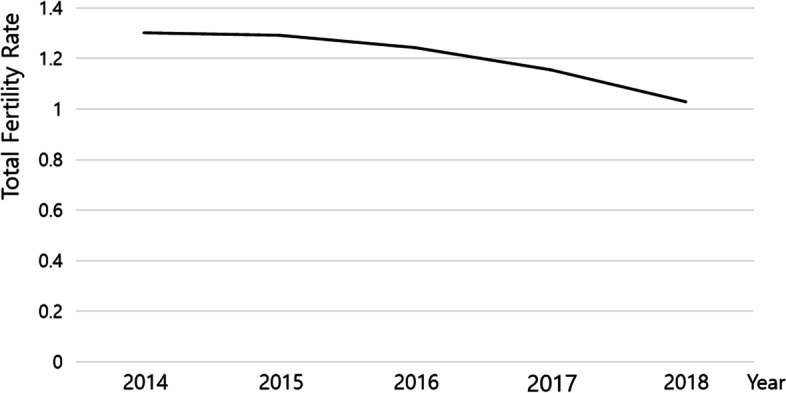
The average of the initial fertility rate and the linear rate of change in the Korean fertility rate, and the rate of change of the quadratic function were all statistically significant, meaning that the fertility rate of decline increases over time. Also, the linear rate of change and the quadratic function change rate were significant, showing significant differences in the initial level and rate of change of the fertility rate between local governments. Among fertility policies, only the in-kind policy had a significant effect on the initial value of the fertility rate, meaning that the higher the number of in-kind policies, the higher the fertility rate.
This study is crucial as it examined the changes in the fertility rate of Korean local governments as well as the policy factors affecting the fertility rate at a quantitative level.
自 21 世纪中期以来,韩国政府制定了各种政策来应对低生育率问题,但韩国的生育率仍然是经合组织成员国中最低的。本研究调查了韩国生育率变化与鼓励生育政策之间的关系。
本研究使用了 2014 年至 2018 年间 250 个地方政府的总和生育率数据和地方政府生育促进政策案例集。因变量为生育率,自变量为生育促进政策。使用 SPSS 25.0 和 M-plus 8.0 程序进行描述性统计分析和潜在增长模型分析。最终选择无条件二次函数变化模型作为本研究的最终模型。
韩国生育率的初始值、线性变化率和二次函数变化率的平均值均具有统计学意义,这意味着生育率的下降速度随着时间的推移而增加。此外,线性变化率和二次函数变化率均具有统计学意义,表明地方政府之间的生育率初始水平和变化率存在显著差异。在生育政策中,只有实物政策对生育率的初始值有显著影响,这意味着实物政策的数量越多,生育率越高。
本研究通过定量水平考察了韩国地方政府生育率的变化以及影响生育率的政策因素,具有重要意义。