Braun Tosca D, Olson Kayloni, Panza Emily, Lillis Jason, Schumacher Leah, Abrantes Ana M, Kunicki Zachary, Unick Jessica L
Alpert Medical School of Brown University Providence RI USA.
Centers for Behavioral and Preventive Medicine The Miriam Hospital Providence RI USA.
Obes Sci Pract. 2022 Jun 11;8(6):816-827. doi: 10.1002/osp4.616. eCollection 2022 Dec.
Internalized weight stigma (Internalized-WS) is prevalent among individuals with severe obesity, particularly women, and is associated with shame, disordered eating, and weight gain. Effective, accessible interventions that address both severe (Class-III) obesity and Internalized-WS are needed. This randomized pilot trial evaluated the feasibility, acceptability, and preliminary efficacy of a fully-remote lifestyle modification intervention (LM) followed by mindful self-compassion training (MSC) or control.
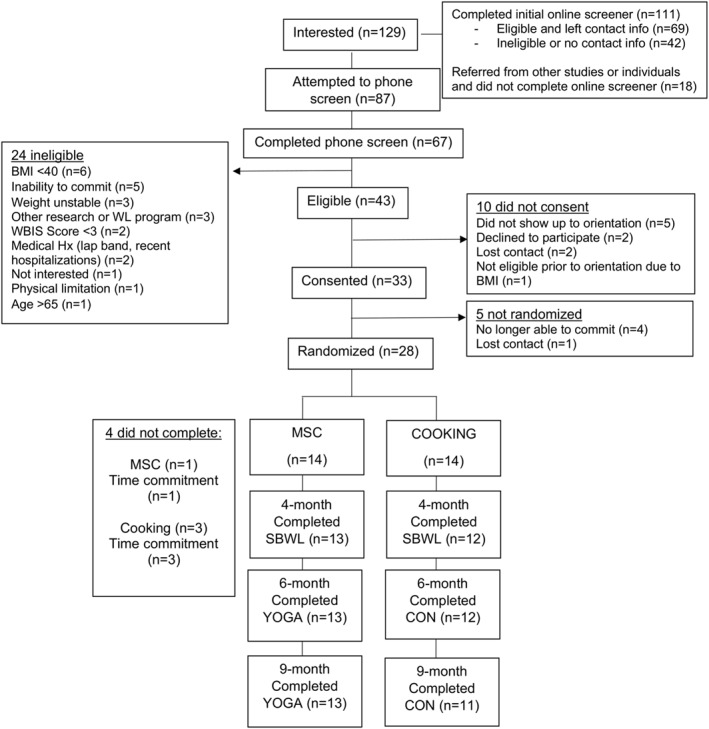
Twenty-eight women with Class-III obesity (46.6 ± 3.7 kg/m) and elevated Internalized-WS were randomized to a virtually-delivered 4-month LM followed by a 2-month MSC or cooking/dietary education (CON). Psychosocial measures/weight were assessed at baseline, 4-(post-LM), 6-(post-MSC/CON), and 9-month (follow-up).
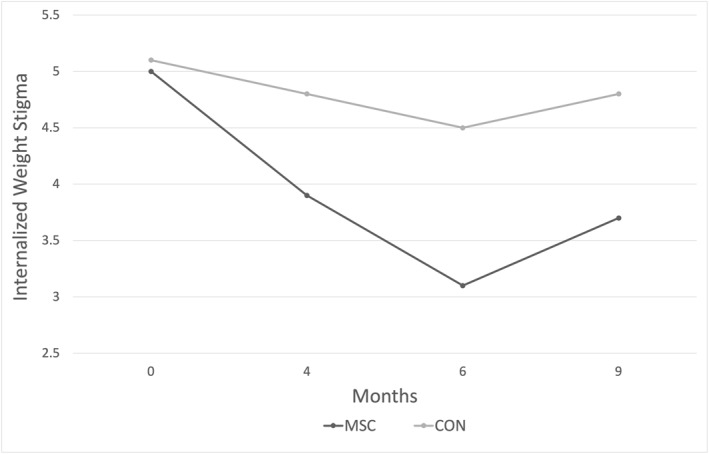
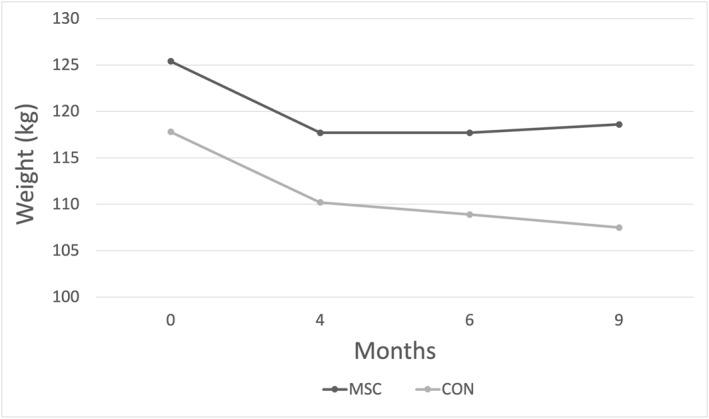
Improvements in Internalized-WS, shame, and self-compassion were observed with LM. Mean 4-month weight loss was 6.3 ± 3.7%. MSC had lower attendance and usefulness ratings versus CON. Post-MSC/CON, MSC yielded significant and/or meaningful improvements in Internalized-WS, self-compassion, and intuitive eating relative to CON. Weight loss did not differ by group at 6-month, and at 9-month trended lower in MSC versus CON.
Virtual LM is feasible, acceptable, and leads to significant weight loss among women with severe obesity; MSC led to further improved Internalized-WS, self-compassion, and intuitive eating. Continued work is needed to elucidate effects of self-compassion training on Internalized-WS, its mechanisms, and linkages to cardiometabolic health and long-term weight loss.
内化的体重歧视(Internalized-WS)在重度肥胖个体中普遍存在,尤其是女性,且与羞耻感、饮食失调和体重增加有关。需要有效且易于获得的干预措施来解决重度(III类)肥胖和内化的体重歧视问题。这项随机试点试验评估了一种完全远程的生活方式改变干预措施(LM),随后进行正念自我同情训练(MSC)或对照的可行性、可接受性和初步疗效。
28名患有III类肥胖(体重指数为46.6 ± 3.7kg/m²)且内化的体重歧视程度较高的女性被随机分为接受为期4个月的虚拟LM干预,随后进行为期2个月的MSC训练或烹饪/饮食教育(对照组)。在基线、4个月(LM干预后)、6个月(MSC/对照组干预后)和9个月(随访)时评估心理社会指标/体重。
观察到LM干预后内化的体重歧视、羞耻感和自我同情有所改善。平均4个月体重减轻了6.3 ± 3.7%。与对照组相比,MSC的参与率和有用性评分较低。在MSC/对照组干预后,相对于对照组,MSC在内化的体重歧视、自我同情和直觉饮食方面产生了显著和/或有意义的改善。6个月时两组体重减轻情况无差异,9个月时MSC组体重下降趋势低于对照组。
虚拟LM干预是可行的、可接受的,并能使重度肥胖女性显著减重;MSC进一步改善了内化的体重歧视、自我同情和直觉饮食。需要继续开展工作以阐明自我同情训练对内化的体重歧视的影响、其机制以及与心脏代谢健康和长期体重减轻的联系。