Shi Liping, Song Feibiao, Zhang Kaixi, Gu Yue, Hu Jinghan, Sun Junlong, Wang Zhongwei, Zhou Li, Luo Jian
State Key Laboratory of Marine Resource Utilization in South China Sea, Hainan Aquaculture Breeding Engineering Research Center, Hainan Academician Team Innovation Center, Hainan University, Haikou 570228, China.
State Key Laboratory of Freshwater Ecology and Biotechnology, Institute of Hydrobiology, Chinese Academy of Sciences, Wuhan 430072, China.
Animals (Basel). 2022 Nov 29;12(23):3342. doi: 10.3390/ani12233342.
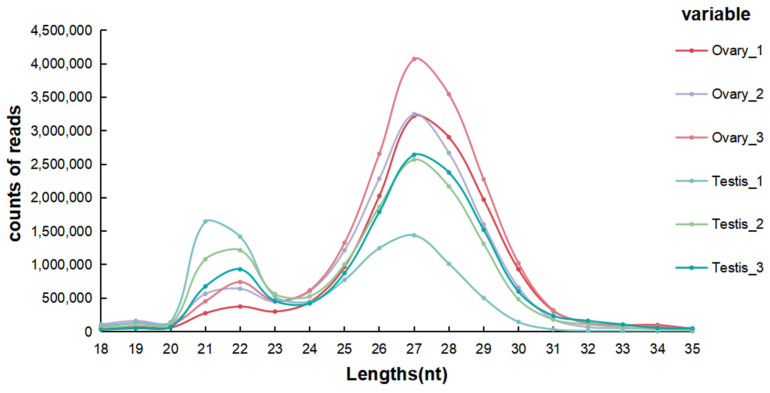
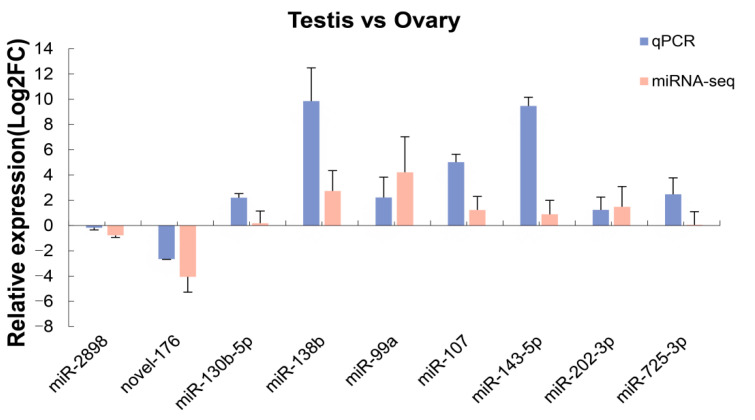
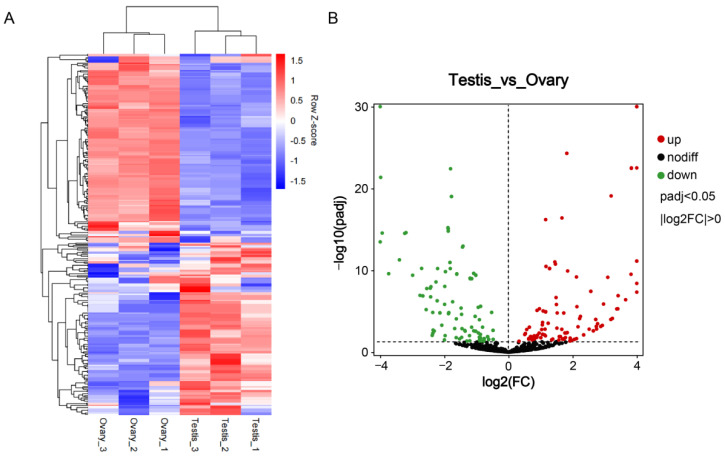
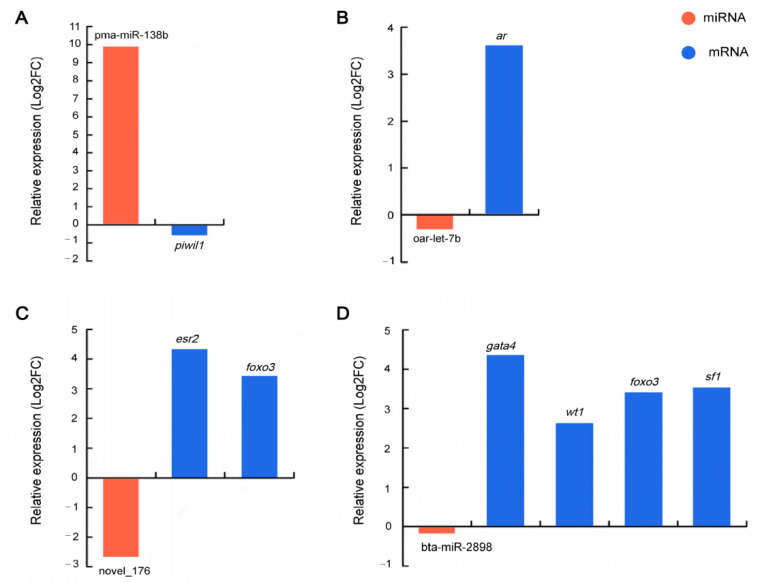
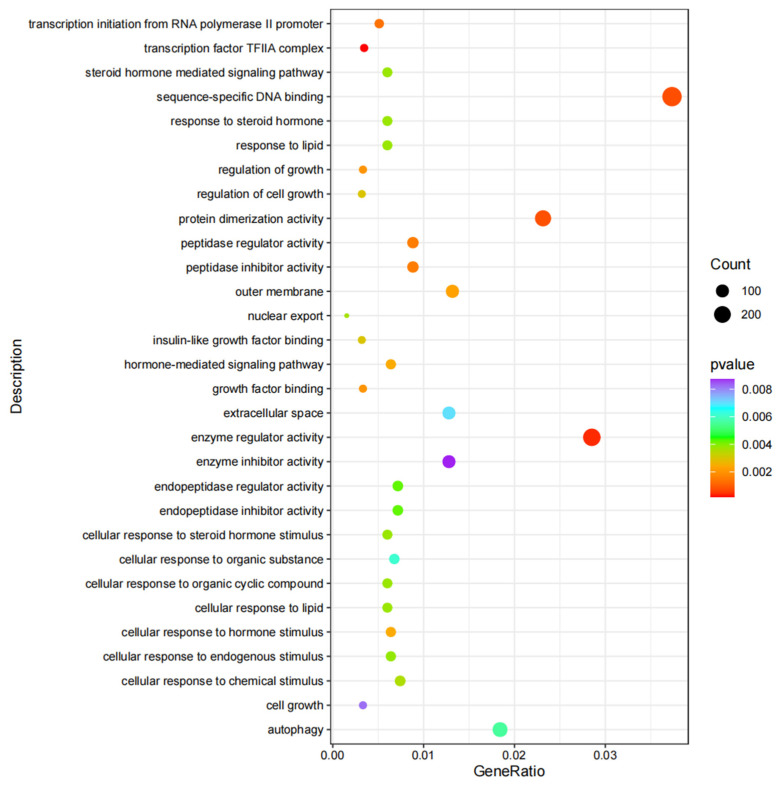
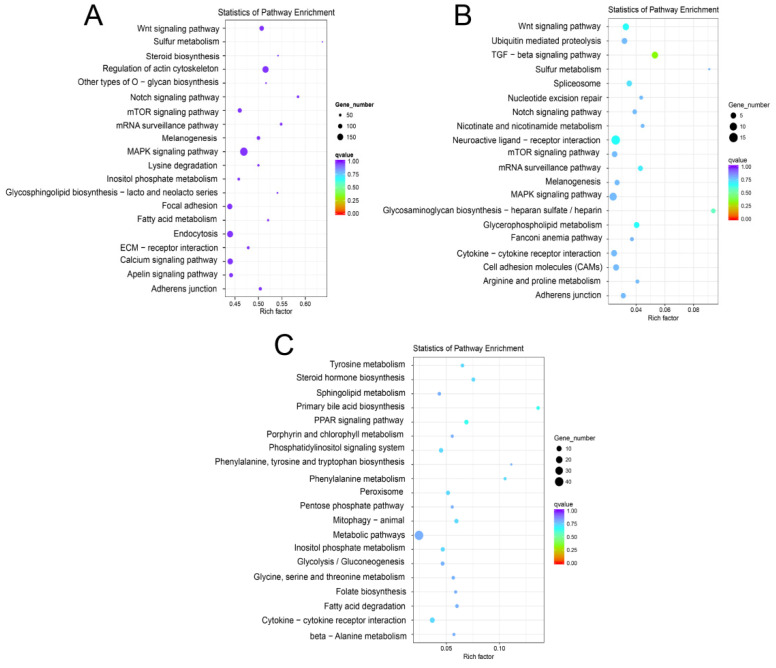
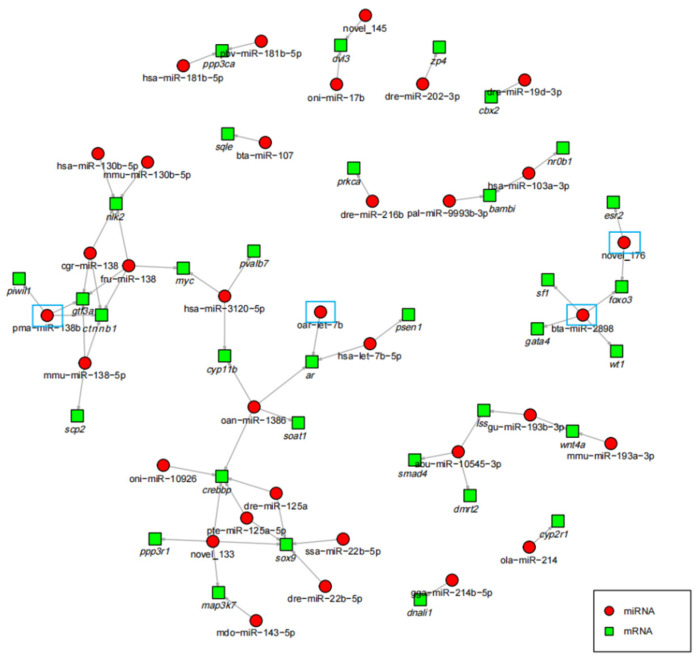
The golden pompano (Trachinotus blochii) is a marine fish of considerable commercial importance in China. It shows notable sexual size dimorphism; the growth rate of females is faster than that of males. Therefore, sex-biased research is of great importance in T. blochii breeding. However, there have been few studies on sex differentiation and mechanisms underlying sex determination in T. blochii. MicroRNAs (miRNAs) play crucial roles in sex differentiation and determination in animals. However, limited miRNA data are available on fish. In this study, two small RNA libraries prepared from the gonads of T. blochii were constructed and sequenced. The RNA-seq analysis yielded 1366 known and 69 novel miRNAs with 289 significantly differentially expressed miRNAs (p < 0.05). Gene ontology (GO) analysis confirmed that the TFIIA transcription factor complex (GO: 0005672) was the most significantly enriched GO term. The Kyoto Encyclopedia of Genes and Genomes (KEGG) analysis showed that the differentially expressed miRNAs and target genes were mainly related to sex determination and gonadal developmental signaling pathways, specifically the Wnt signaling pathway, MAPK signaling pathway, and steroid biosynthetic pathway. MiRNA-mRNA co-expression network analysis strongly suggested a role for sex-biased miRNAs in sex determination/differentiation and gonadal development. For example, gata4, foxo3, wt1, and sf1 genes were found to be regulated by bta-miR-2898; esr2 and foxo3 by novel_176, and ar by oar-let-7b. Quantitative real-time polymerase chain reaction analysis of selected mRNAs and miRNAs validated the integrated analysis. This study established a set of sex-biased miRNAs that are potential regulatory factors in gonadal development in T. blochii. These results provide new insight into the function of miRNAs in sex differentiation and determination in T. blochii and highlight some key miRNAs for future studies.
黄鳍鲷(Trachinotus blochii)是中国一种具有重要商业价值的海鱼。它表现出显著的两性体型差异;雌性的生长速度比雄性快。因此,性别偏向研究在黄鳍鲷养殖中具有重要意义。然而,关于黄鳍鲷性别分化和性别决定机制的研究很少。微小RNA(miRNA)在动物的性别分化和决定中起关键作用。然而,鱼类的miRNA数据有限。在本研究中,构建并测序了两个从黄鳍鲷性腺制备的小RNA文库。RNA测序分析产生了1366个已知的和69个新的miRNA,其中289个miRNA有显著差异表达(p < 0.05)。基因本体(GO)分析证实,TFIIA转录因子复合物(GO: 0005672)是最显著富集的GO术语。京都基因与基因组百科全书(KEGG)分析表明,差异表达的miRNA和靶基因主要与性别决定和性腺发育信号通路有关,特别是Wnt信号通路、MAPK信号通路和类固醇生物合成通路。miRNA-mRNA共表达网络分析强烈表明,性别偏向的miRNA在性别决定/分化和性腺发育中起作用。例如,发现gata4、foxo3、wt1和sf1基因受bta-miR-2898调控;esr2和foxo3受novel_176调控,ar受oar-let-7b调控。对选定的mRNA和miRNA进行定量实时聚合酶链反应分析验证了综合分析结果。本研究建立了一组性别偏向的miRNA,它们是黄鳍鲷性腺发育中的潜在调控因子。这些结果为miRNA在黄鳍鲷性别分化和决定中的功能提供了新的见解,并突出了一些未来研究的关键miRNA。