Matthews Andrew H, Pratz Keith W, Carroll Martin P
Department of Medicine, Abramson Cancer Center, Perelman School of Medicine, University of Pennsylvania, Philadelphia, PA 19104, USA.
Department of Medicine, Perelman School of Medicine, University of Pennsylvania, 715 Biomedical Research Building II/III, 421 Curie Boulevard, Philadelphia, PA 19104, USA.
Cancers (Basel). 2022 Nov 29;14(23):5906. doi: 10.3390/cancers14235906.
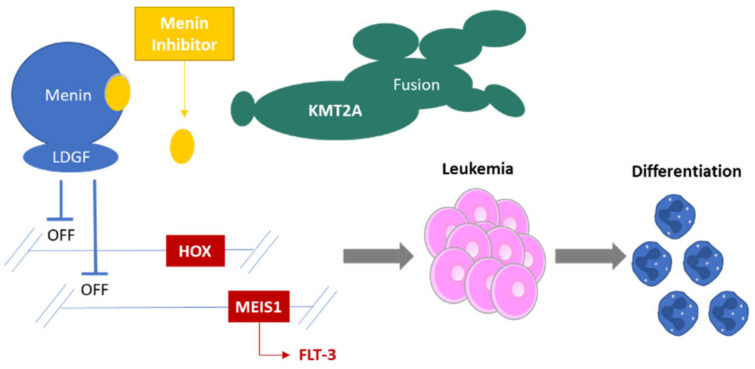
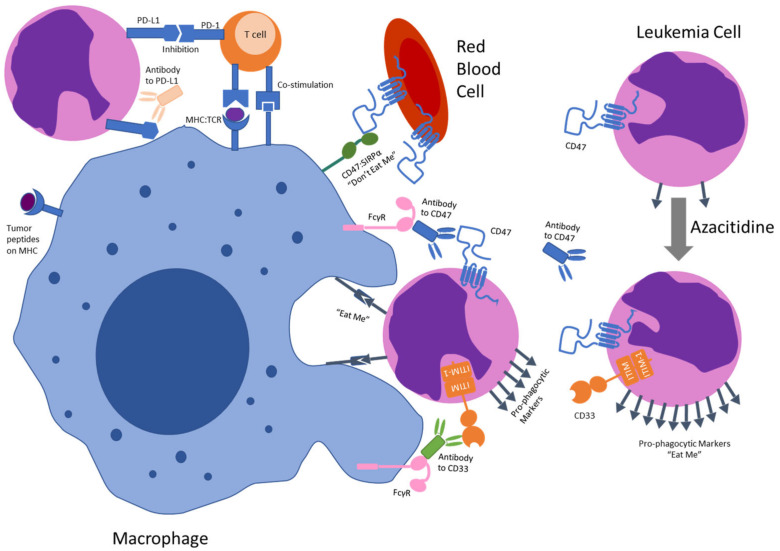
After forty years of essentially unchanged treatment in acute myeloid leukemia (AML), innovation over the past five years has been rapid, with nine drug approvals from 2016 to 2021. Increased understanding of the molecular changes and genetic ontology of disease have led to targeting mutations in isocitrate dehydrogenase, FMS-like tyrosine kinase 3 (), B-cell lymphoma 2 and hedgehog pathways. Yet outcomes remain variable; especially in defined molecular and genetic subgroups such as (Nucleophosmin 1) mutations, 11q23/ rearranged and TP53 mutations. Emerging therapies seek to address these unmet needs, and all three of these subgroups have promising new therapeutic approaches. Here, we will discuss the normal biological roles of menin in acute leukemia, notably in translocations and mutation, as well as current drug development. We will also explore how CD47 inhibition may move immunotherapy into front-line settings and unlock new treatment strategies in TP53 mutated disease. We will then consider how these new therapeutic advances may change the management of AML overall.
在急性髓系白血病(AML)治疗基本保持不变40年后,过去五年创新迅速,2016年至2021年期间有九种药物获批。对疾病分子变化和基因本体的深入了解促使人们针对异柠檬酸脱氢酶、FMS样酪氨酸激酶3(FLT3)、B细胞淋巴瘤2和刺猬信号通路中的突变进行靶向治疗。然而,治疗结果仍然存在差异;尤其是在特定的分子和基因亚组中,如核磷蛋白1(NPM1)突变、11q23/ MLL重排和TP53突变。新兴疗法试图满足这些未得到满足的需求,并且所有这三个亚组都有前景良好的新治疗方法。在此,我们将讨论Menin在急性白血病中的正常生物学作用,特别是在MLL易位和NPM1突变中的作用,以及当前的药物研发情况。我们还将探讨CD47抑制如何将免疫疗法引入一线治疗,并在TP53突变疾病中开启新的治疗策略。然后,我们将思考这些新的治疗进展如何可能改变AML的整体治疗管理。