Hershkovich Oded, Grevitt Michael Paul, Lotan Raphael
Department of Orthopedic Surgery, Wolfson Medical Center, Holon 5822012, Israel.
Sackler School of Medicine, Tel Aviv University, Tel Aviv 6997801, Israel.
J Clin Med. 2022 Nov 22;11(23):6895. doi: 10.3390/jcm11236895.
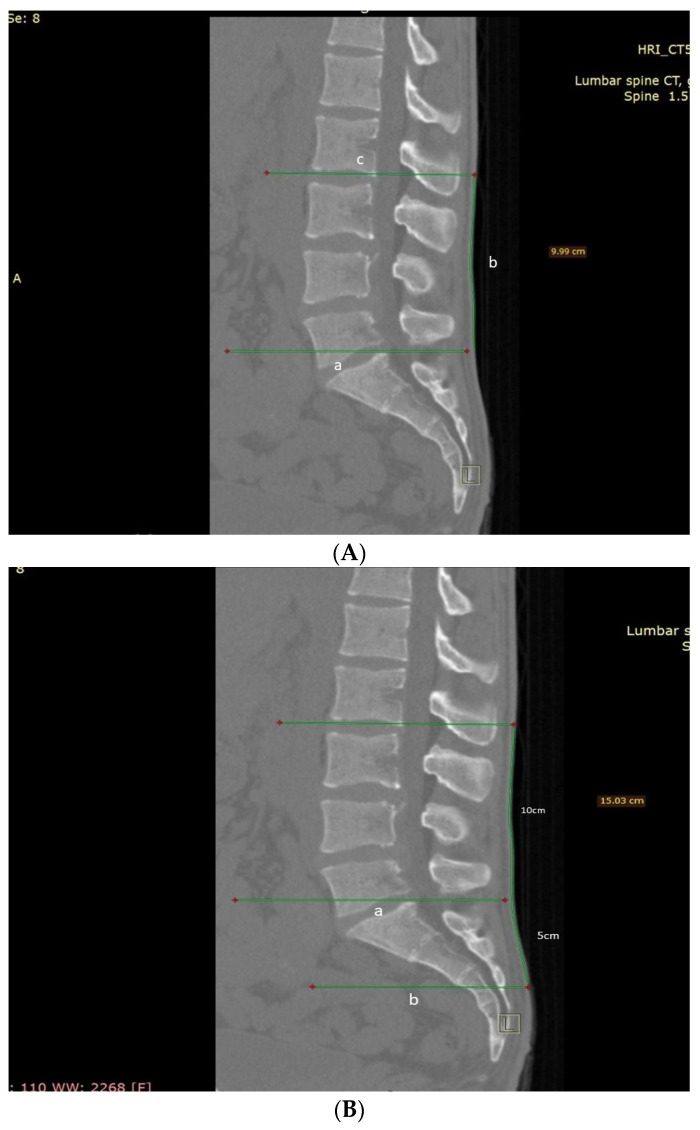
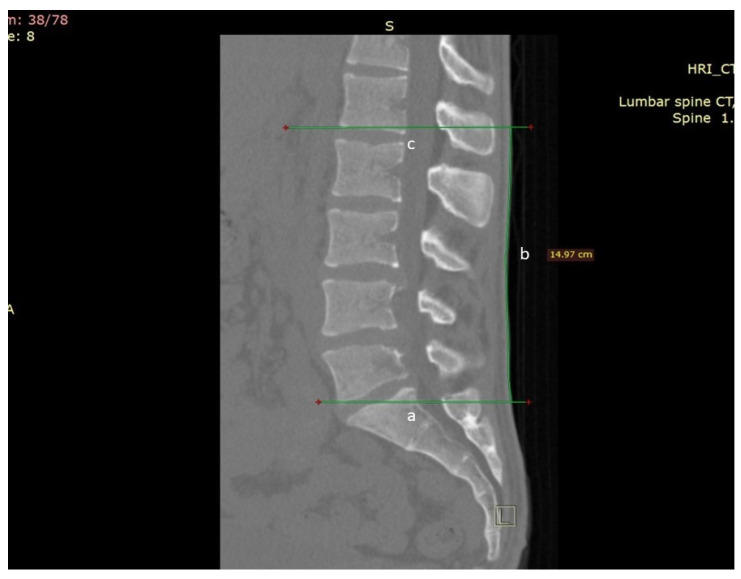
Examine Schober test's (ST), Modified ST (MST), and Modified-Modified ST (MMST) surface markers' accuracy in spanning lumbar L1-S1 motion segments and repeatability related to actual patient anatomy as measured on sagittal CT scans.
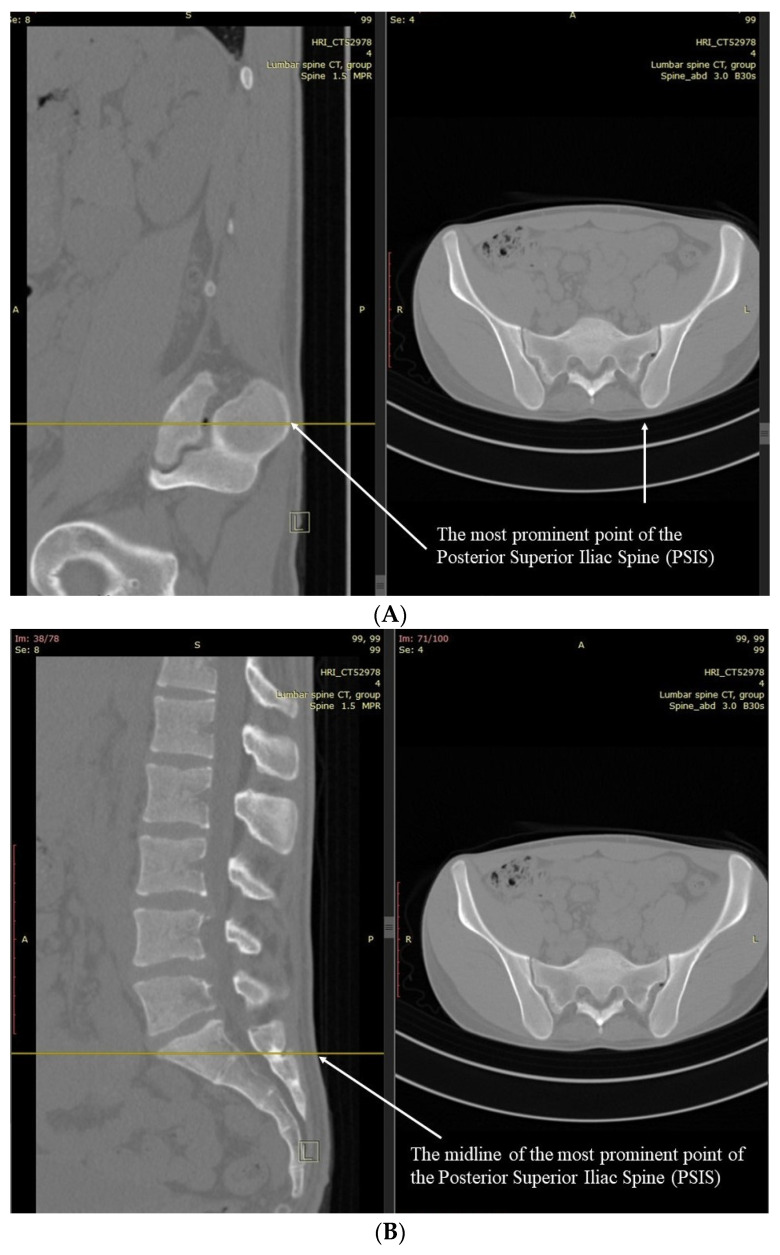
The study included 25 patients of varying heights, weights, and gender without prior spinal surgery or deformity. Researchers assessed patients' CT scans for ST, MST, and MMST skin levels of the measured cephalic and caudal endpoints.
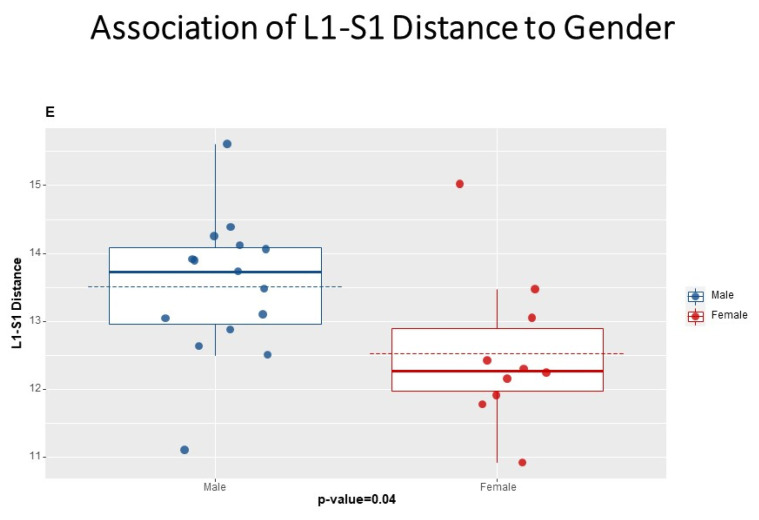
The original ST failed to include at least one lumbar motion segment in all patients, omitting the L1-L2 motion segment in 17 patients and the L2-L3 in another eight. The additional cephalic length of the MST did not improve the inclusion of the actual L1-S1 components. The MMST measured 19 'patients' entire L1-S1 motion segments, reaching a 76% accuracy rate. WMST, measuring 16 cm (instead of MMST's 15 cm), improved the measurement significantly, measuring the L1-S1 motion segments in all cases (with 100% accuracy).
ST and its modifications fail to span the L1-S1 motion segments and are thus prone to underestimating lumbar spine motion. This study shows that the WMST is much more accurate than previous modifications and is a better tool for evaluating lumbar spine motion.
研究在矢状面CT扫描上,Schober试验(ST)、改良Schober试验(MST)和改良改良Schober试验(MMST)的体表标记在跨越腰椎L1 - S1运动节段方面的准确性,以及与实际患者解剖结构相关的重复性。
该研究纳入了25名身高、体重和性别各异且既往无脊柱手术或畸形的患者。研究人员评估了患者CT扫描中ST、MST和MMST测量的头端和尾端终点的皮肤水平。
原始的ST在所有患者中均未能包含至少一个腰椎运动节段,17例患者遗漏了L1 - L2运动节段,另外8例遗漏了L2 - L3运动节段。MST增加的头端长度并未改善对实际L1 - S1节段的覆盖。MMST测量了19例患者的整个L1 - S1运动节段,准确率达76%。宽度改良Schober试验(WMST)测量长度为16厘米(而非MMST的15厘米),显著改善了测量结果,在所有病例中均测量到了L1 - S1运动节段(准确率达100%)。
ST及其改良方法均未能跨越L1 - S1运动节段,因此容易低估腰椎运动。本研究表明,WMST比之前的改良方法准确得多,是评估腰椎运动的更好工具。