Li Chunchun, Ul Haq Inzamam, Khurshid Aroosa, Tao Yan, Quandahor Peter, Zhou Jing-Jiang, Liu Chang-Zhong
Biocontrol Engineering Laboratory of Crop Diseases and Pests of Gansu Province, College of Plant Protection, Gansu Agricultural University, Lanzhou, China.
CSIR-Savanna Agricultural Research Institute, Tamale, Ghana.
Front Physiol. 2022 Nov 23;13:1024136. doi: 10.3389/fphys.2022.1024136. eCollection 2022.
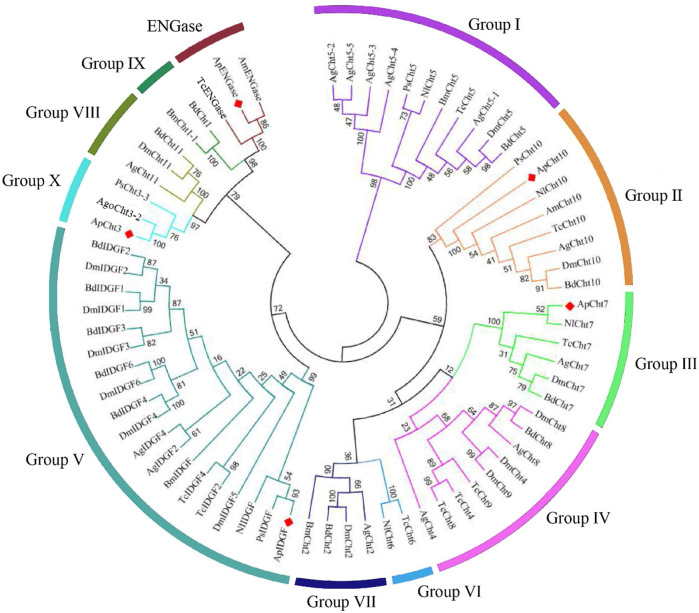
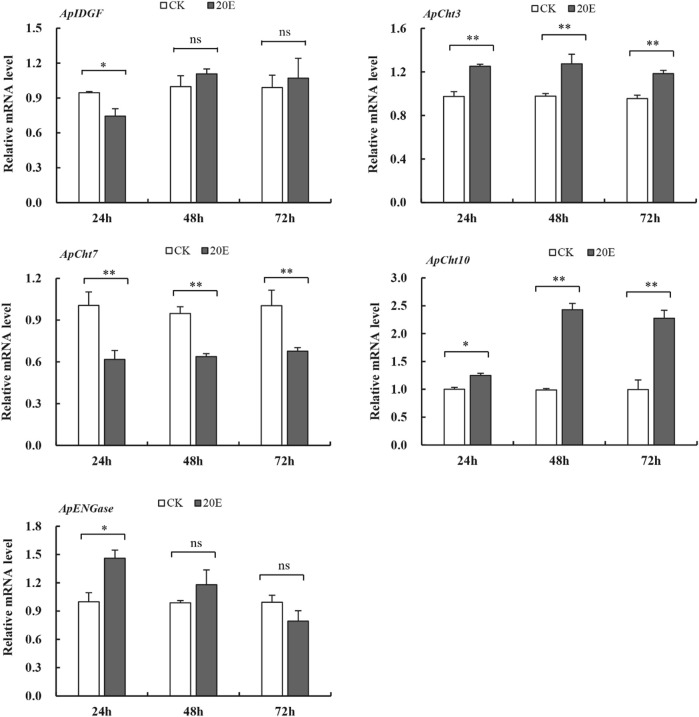
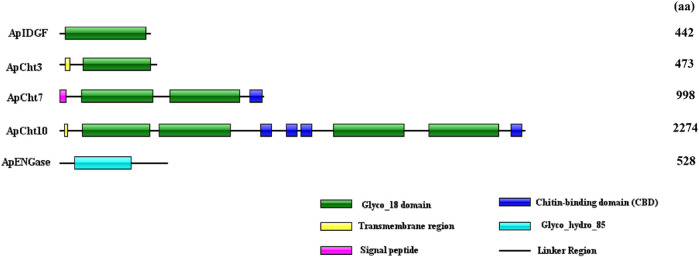
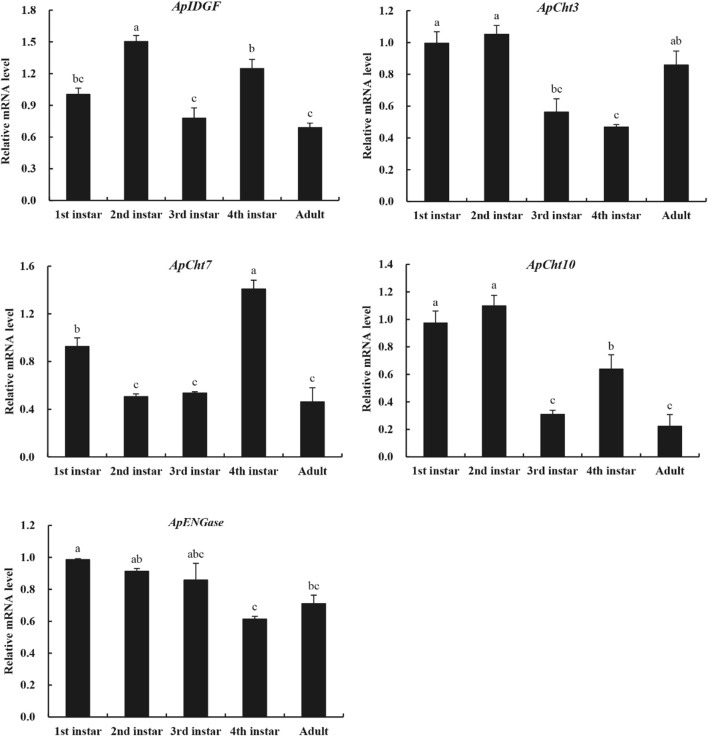
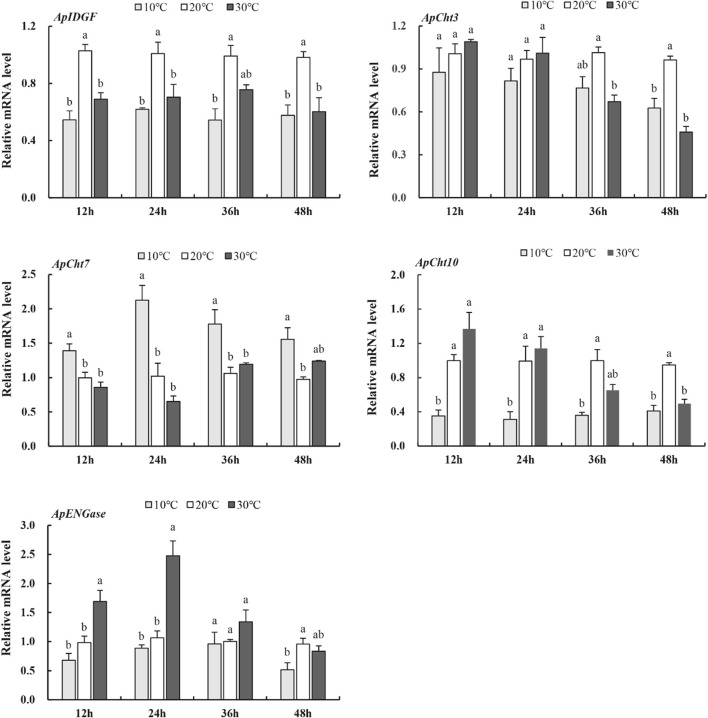
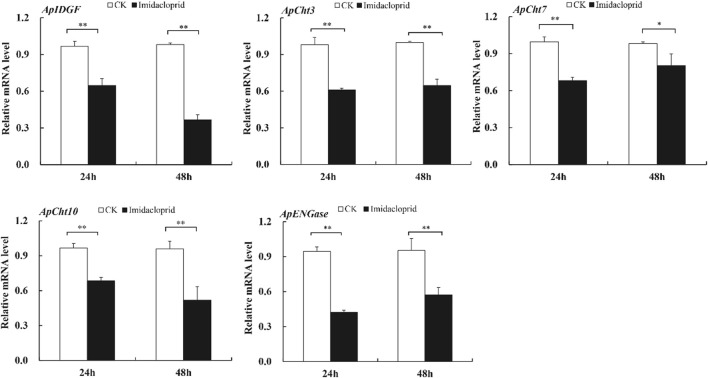
Insect chitinases play a crucial part to digest chitin in the exoskeleton during the molting process. However, research on insect chitinase related to the environmental stress response is very limited. This study was the first conducted to expression analysis of chitinase- related genes in under abiotic stresses. Here, we identified five chitinase-like proteins (ApIDGF, ApCht3, ApCht7, ApCht10 and ApENGase), and clustered them into five groups (group II, III, V, Ⅹ, and ENGase). Developmental expression analysis revealed that the five chitinase-related genes were expressed at whole developmental stages with different relative expression patterns. When aphids were exposed to various abiotic stresses including temperature, insecticide and the stress 20-hydroxyecdysone (20E), all five chitinase genes were differentially expressed in . The results showed that insecticide such as imidacloprid down-regulated the expression of these five Cht-related genes. Analysis of temperature stress of chitinase suggested that expression was high at 10°C, which demonstrates its important role in pea aphids under low temperature. Conversely, was more active under high temperature stress, as it was significantly up-regulated at 30°C. Besides, 20E enhanced and expression in , but reduced expression. These findings provide basic information and insights for the study of the role of these genes under abiotic stress, which advances our knowledge in the management of pea aphids under multiple stresses.
昆虫几丁质酶在蜕皮过程中对消化外骨骼中的几丁质起着关键作用。然而,关于昆虫几丁质酶与环境应激反应的研究非常有限。本研究首次对非生物胁迫下几丁质酶相关基因进行表达分析。在此,我们鉴定出了5种几丁质酶样蛋白(ApIDGF、ApCht3、ApCht7、ApCht10和ApENGase),并将它们分为5组(第二组、第三组、第五组、第十组和ENGase组)。发育表达分析表明,这5个几丁质酶相关基因在整个发育阶段均有表达,且具有不同的相对表达模式。当蚜虫暴露于包括温度、杀虫剂和应激激素20-羟基蜕皮酮(20E)在内的各种非生物胁迫时,所有5个几丁质酶基因在[具体蚜虫品种]中均有差异表达。结果表明,吡虫啉等杀虫剂下调了这5个几丁质酶相关基因的表达。几丁质酶的温度胁迫分析表明,[具体基因]在10°C时表达量较高,这表明其在低温下对豌豆蚜具有重要作用。相反,[具体基因]在高温胁迫下更活跃,因为它在30°C时显著上调。此外,20E增强了[具体基因]和[具体基因]在[具体蚜虫品种]中的表达,但降低了[具体基因]的表达。这些发现为研究这些基因在非生物胁迫下的作用提供了基础信息和见解,有助于我们在多重胁迫下管理豌豆蚜方面的知识进步。