García-Vargas Aileen M, Roque-Reyes Yarelis M, Arroyo-Villegas Desiree M, Santiago-Negron Daniel, Sánchez-Vázquez María M, Rivera-Torres Alejandro, Reyes-Meléndez Andrea C, Cardona-Berdecía Valerie, García-Maldonado Miosotis, Víquez Olga M, Martínez-Ferrer Magaly
Department of Pharmacology and Toxicology, School of Medicine, University of Puerto Rico, Medical Sciences Campus, San Juan, PR, United States.
Division of Cancer Biology, University of Puerto Rico Comprehensive Cancer Center, San Juan, PR, United States.
Front Oncol. 2022 Nov 23;12:969396. doi: 10.3389/fonc.2022.969396. eCollection 2022.
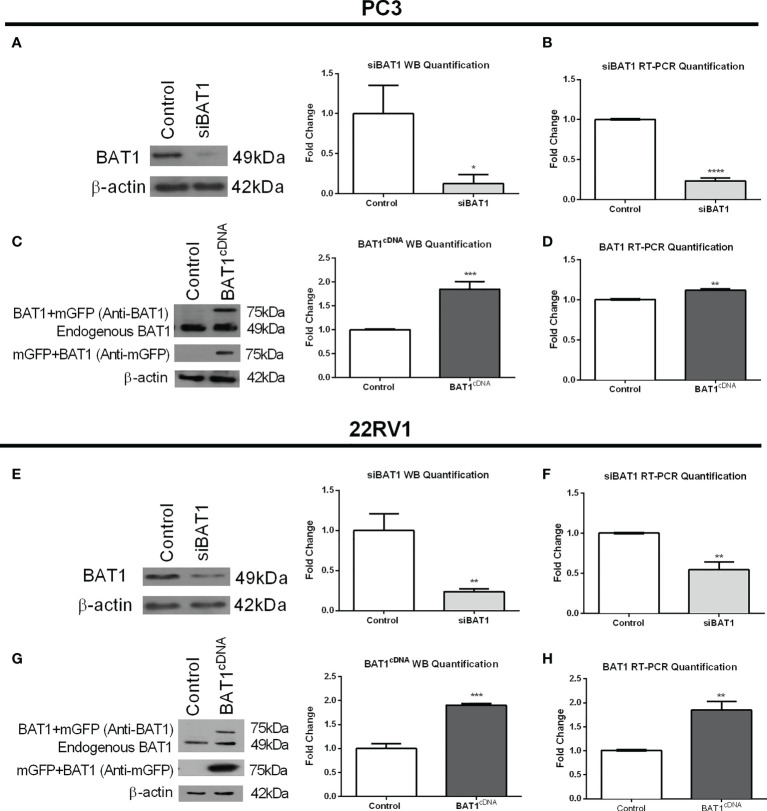
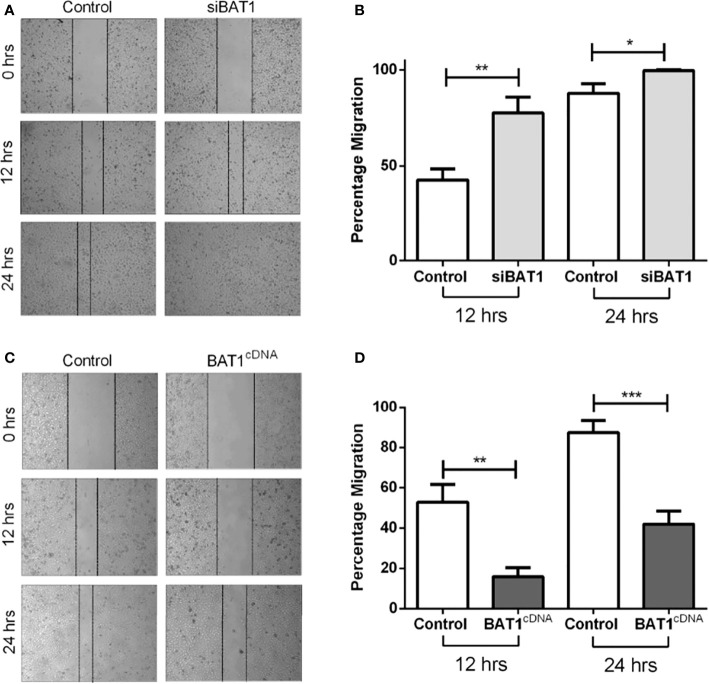
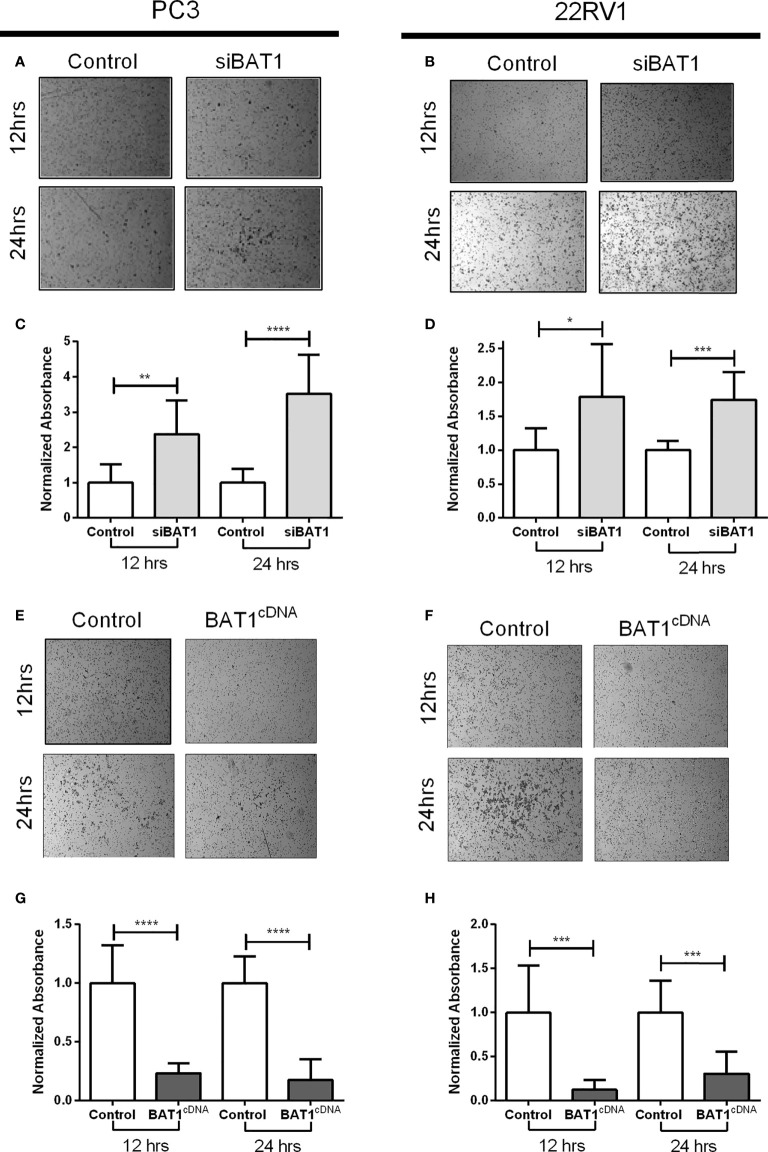
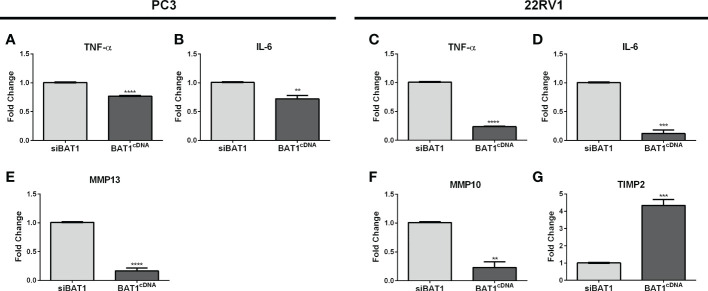
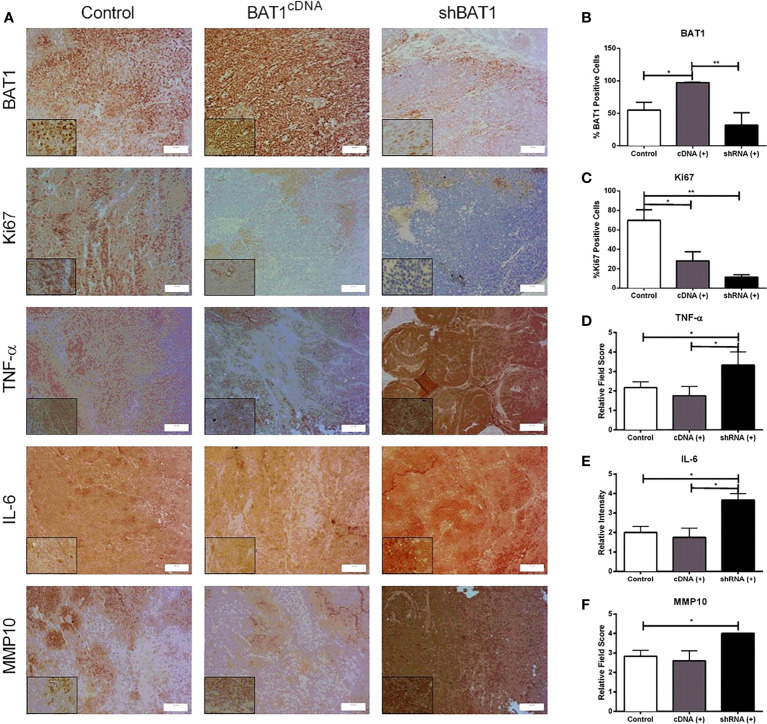
Prostate cancer (PCa) accounts for more than 1 in 5 diagnoses and is the second cause of cancer-related deaths in men. Although PCa may be successfully treated, patients may undergo cancer recurrence and there is a need for new biomarkers to improve the prediction of prostate cancer recurrence and improve treatment. Our laboratory demonstrated that HLA-B-associated transcript 1 (BAT1) was differentially expressed in patients with high Gleason scores when compared to low Gleason scores. BAT1 is an anti-inflammatory gene but its role in PCa has not been identified. The objective of this study is to understand the role of BAT1 in prostate cancer. studies showed that BAT1 down-regulation increased cell migration and invasion. In contrast, BAT1 overexpression decreased cell migration and invasion. RT-PCR analysis showed differential expression of pro-inflammatory cytokines (TNF-α and IL-6) and cell adhesion and migration genes (MMP10, MMP13, and TIMPs) in BAT1 overexpressed cells when compared to BAT1 siRNA cells. Our studies demonstrated up-regulation of TNF-α, IL-6, and MMP10 in tumors developed from transfected BAT1 shRNA cells when compared to tumors developed from BAT1 cDNA cells. These findings indicate that BAT1 down-regulation modulates TNF-α and IL-6 expression which may lead to the secretion of MMP-10 and inhibition of TIMP2.
前列腺癌(PCa)占所有诊断病例的五分之一以上,是男性癌症相关死亡的第二大原因。尽管PCa可能得到成功治疗,但患者可能会出现癌症复发,因此需要新的生物标志物来改善前列腺癌复发的预测并优化治疗。我们的实验室证明,与低Gleason评分患者相比,HLA - B相关转录本1(BAT1)在高Gleason评分患者中差异表达。BAT1是一种抗炎基因,但其在PCa中的作用尚未明确。本研究的目的是了解BAT1在前列腺癌中的作用。研究表明,BAT1下调会增加细胞迁移和侵袭。相反,BAT1过表达会减少细胞迁移和侵袭。逆转录聚合酶链反应(RT-PCR)分析显示,与BAT1小干扰RNA(siRNA)细胞相比,BAT1过表达细胞中促炎细胞因子(肿瘤坏死因子-α和白细胞介素-6)以及细胞黏附与迁移基因(基质金属蛋白酶10、基质金属蛋白酶13和金属蛋白酶组织抑制因子)存在差异表达。我们的研究表明,与由BAT1互补DNA(cDNA)细胞形成的肿瘤相比,由转染BAT1短发夹RNA(shRNA)细胞形成的肿瘤中肿瘤坏死因子-α、白细胞介素-6和基质金属蛋白酶10上调。这些发现表明,BAT1下调会调节肿瘤坏死因子-α和白细胞介素-6的表达,这可能导致基质金属蛋白酶-10的分泌并抑制金属蛋白酶组织抑制因子2。