Department of Human Genetics, University of Utah, Salt Lake City, UT, USA.
Utrecht University Medical Center, Utrecht, The Netherlands.
Genome Biol. 2022 Dec 14;23(1):257. doi: 10.1186/s13059-022-02826-4.
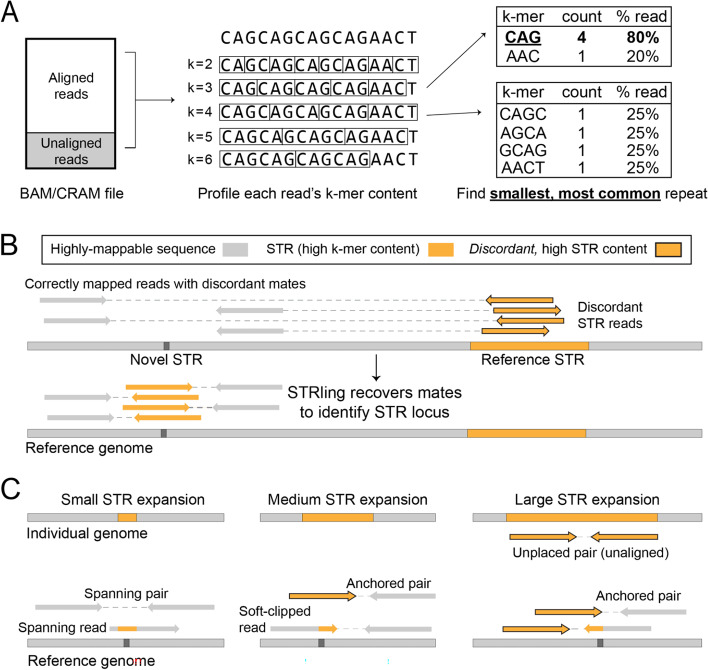
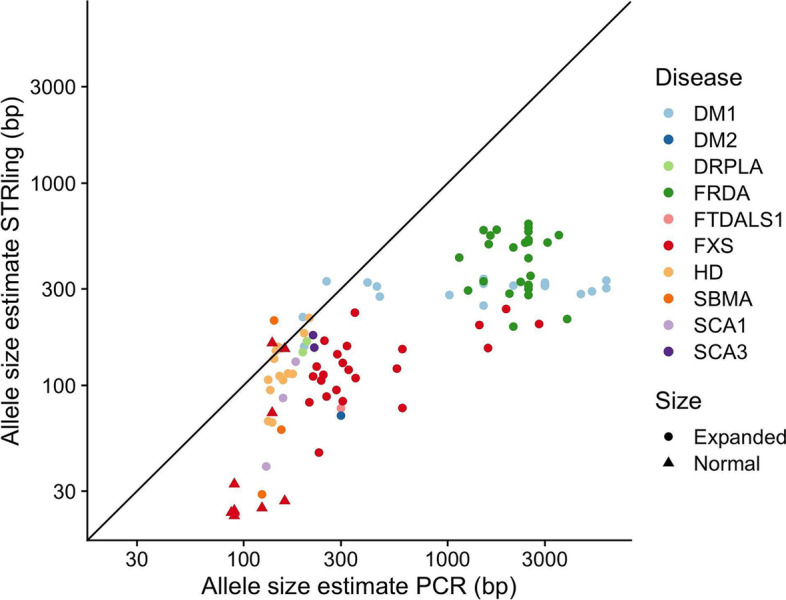
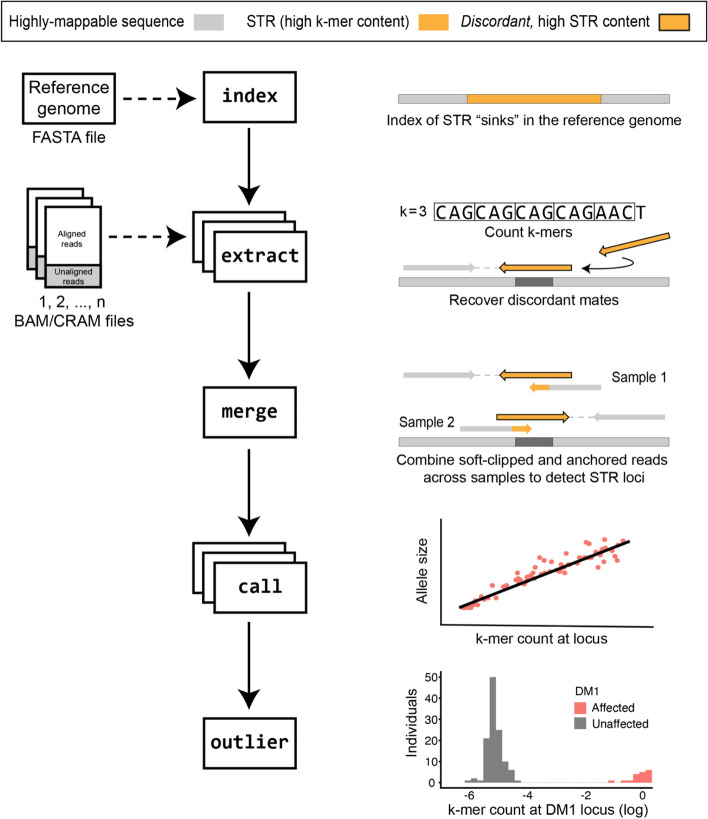
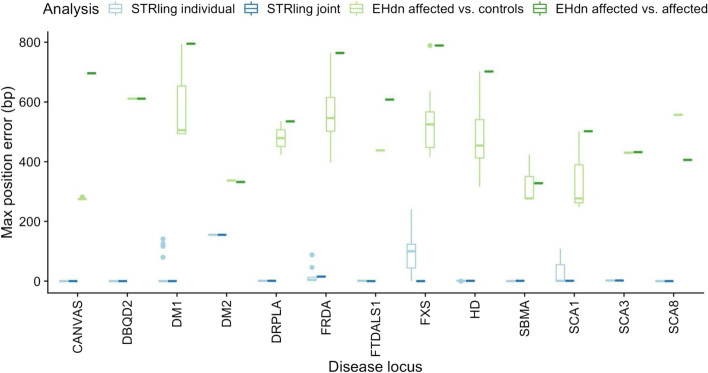
Expansions of short tandem repeats (STRs) cause many rare diseases. Expansion detection is challenging with short-read DNA sequencing data since supporting reads are often mapped incorrectly. Detection is particularly difficult for "novel" STRs, which include new motifs at known loci or STRs absent from the reference genome. We developed STRling to efficiently count k-mers to recover informative reads and call expansions at known and novel STR loci. STRling is sensitive to known STR disease loci, has a low false discovery rate, and resolves novel STR expansions to base-pair position accuracy. It is fast, scalable, open-source, and available at: github.com/quinlan-lab/STRling .
短串联重复序列(STRs)的扩展导致了许多罕见疾病。由于支持的reads 通常映射不正确,因此使用短读 DNA 测序数据进行扩展检测具有挑战性。对于“新颖”STRs 的检测尤其困难,因为它们包括已知基因座的新基序或参考基因组中不存在的 STRs。我们开发了 STRling 来有效地计数 k-mer,以恢复信息性reads,并在已知和新颖 STR 基因座上调用扩展。STRling 对已知的 STR 疾病基因座敏感,具有低的假阳性率,并能够准确解析新颖 STR 的扩展到碱基对位置。它快速、可扩展、开源,并可在 github.com/quinlan-lab/STRling 上获得。