Arslanova Irena, Galvez-Pol Alejandro, Kilner James, Finotti Gianluca, Tsakiris Manos
Department of Psychology, Royal Holloway, University of London, London, UK.
Psychology Department, University of Balearic Islands, Palma, Spain.
Affect Sci. 2022 Nov 2;3(4):862-877. doi: 10.1007/s42761-022-00151-4. eCollection 2022 Dec.
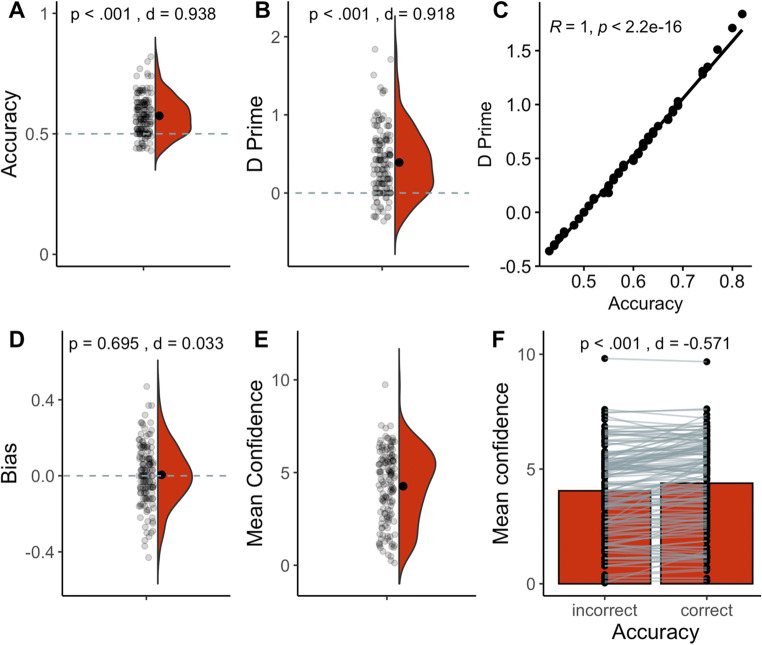
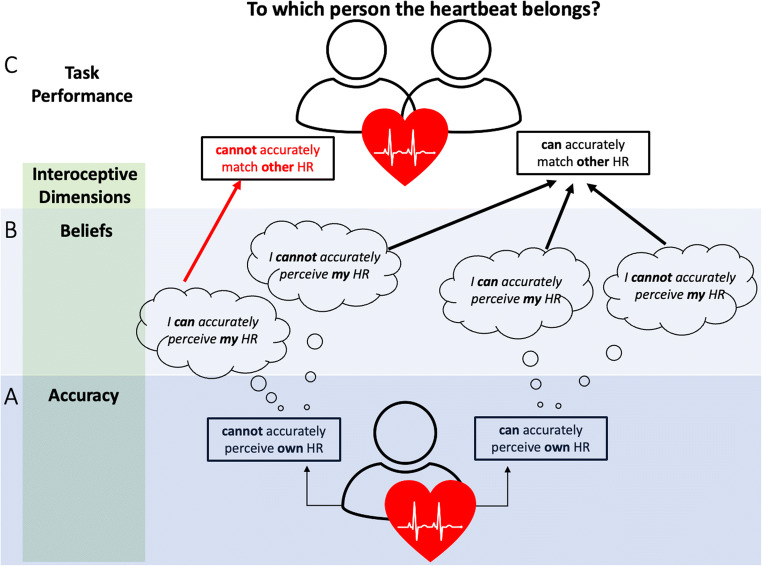
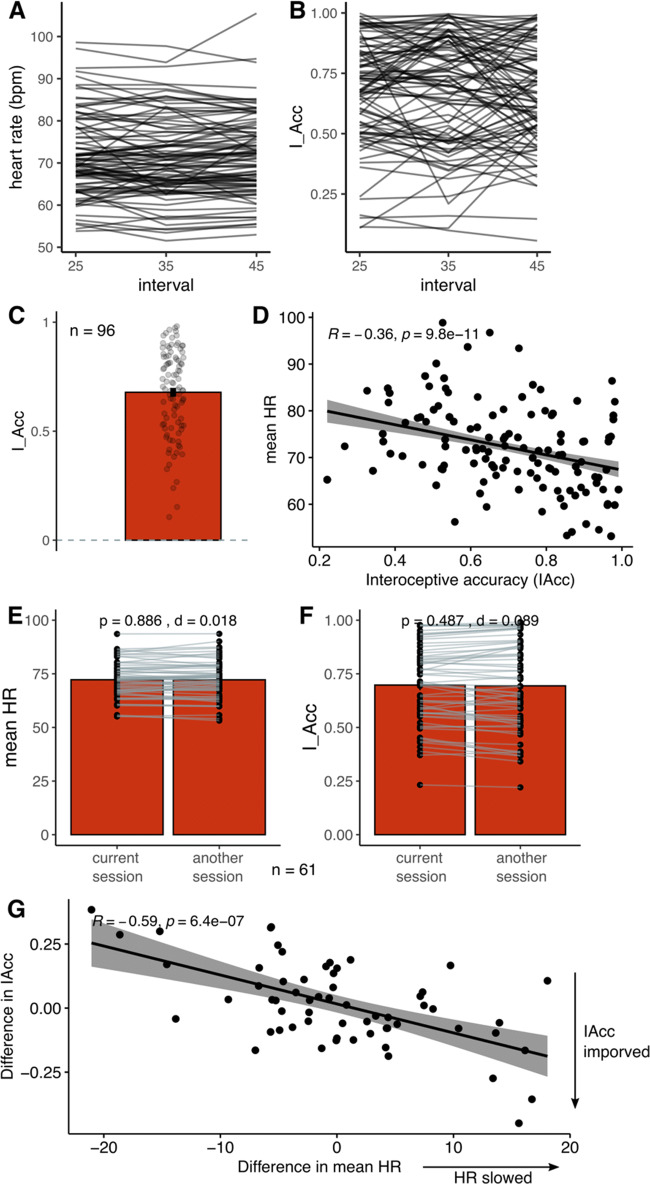
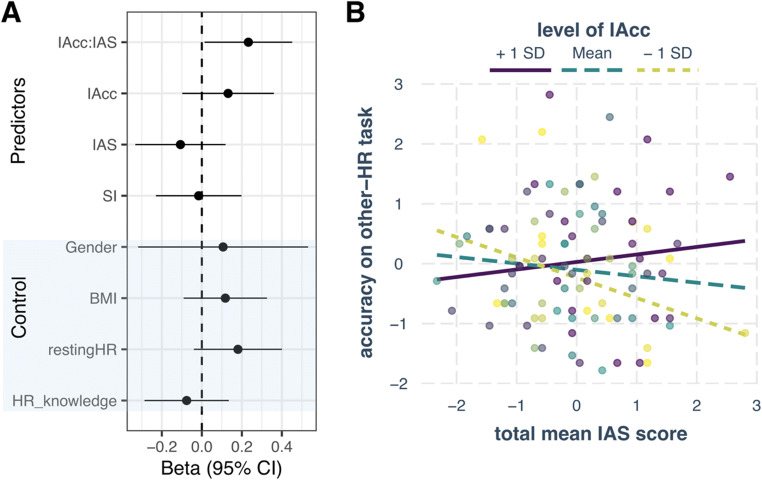
Successful social interactions require a good understanding of the emotional states of other people. This information is often not directly communicated but must be inferred. As all emotional experiences are also imbedded in the visceral or interoceptive state of the body (i.e., accelerating heart rate during arousal), successfully inferring the interoceptive states of others may open a window into their emotional state. But how well can people do that? Here, we replicate recent results showing that people can discriminate between the cardiac states (i.e., the resting heartrate) of other people by simply looking at them. We further tested whether the ability to infer the interoceptive states of others depends on one's own interoceptive abilities. We measured people's performance in a cardioception task and their self-reported interoceptive accuracy. Whilst neither was directly associated to their ability to infer the heartrate of another person, we found a significant interaction. Specifically, overestimating one's own interoceptive capacities was associated with a worse performance at inferring the heartrate of others. In contrast, underestimating one's own interoceptive capacities did not have such influence. This pattern suggests that deficient beliefs about own interoceptive capacities can have detrimental effects on inferring the interoceptive states of other people.
The online version contains supplementary material available at 10.1007/s42761-022-00151-4.
成功的社交互动需要很好地理解他人的情绪状态。这类信息通常不会直接传达,而必须进行推断。由于所有情绪体验也都体现在身体的内脏或内感受状态中(例如,兴奋时心率加快),成功推断他人的内感受状态可能会为了解他们的情绪状态打开一扇窗。但人们在这方面的能力如何呢?在此,我们重复了近期的研究结果,即人们仅通过观察就能区分他人的心脏状态(即静息心率)。我们进一步测试了推断他人内感受状态的能力是否取决于自身的内感受能力。我们测量了人们在心脏感知任务中的表现以及他们自我报告的内感受准确性。虽然这两者都与他们推断他人心率的能力没有直接关联,但我们发现了一个显著的交互作用。具体而言,高估自己的内感受能力与推断他人心率时表现较差有关。相比之下,低估自己的内感受能力则没有这种影响。这种模式表明,对自身内感受能力的错误认知可能会对推断他人的内感受状态产生不利影响。
在线版本包含可在10.1007/s42761-022-00151-4获取的补充材料。