Brown University, Department of Molecular Biology, Cell Biology & Biochemistry, Providence, RI, USA.
Brown University, Department of Molecular Biology, Cell Biology & Biochemistry, Providence, RI, USA.
Dev Biol. 2023 Feb;494:13-25. doi: 10.1016/j.ydbio.2022.11.008. Epub 2022 Nov 26.
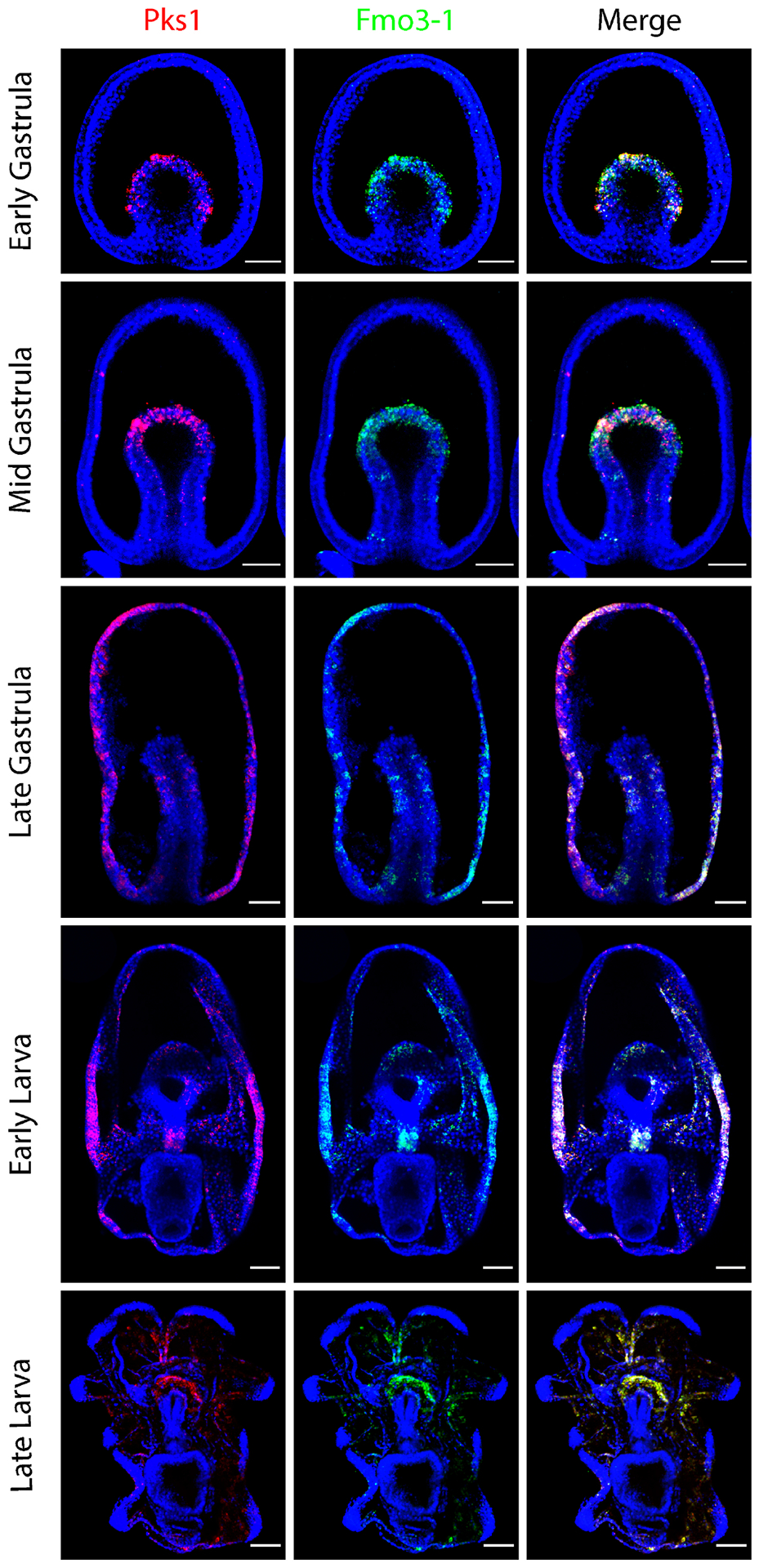
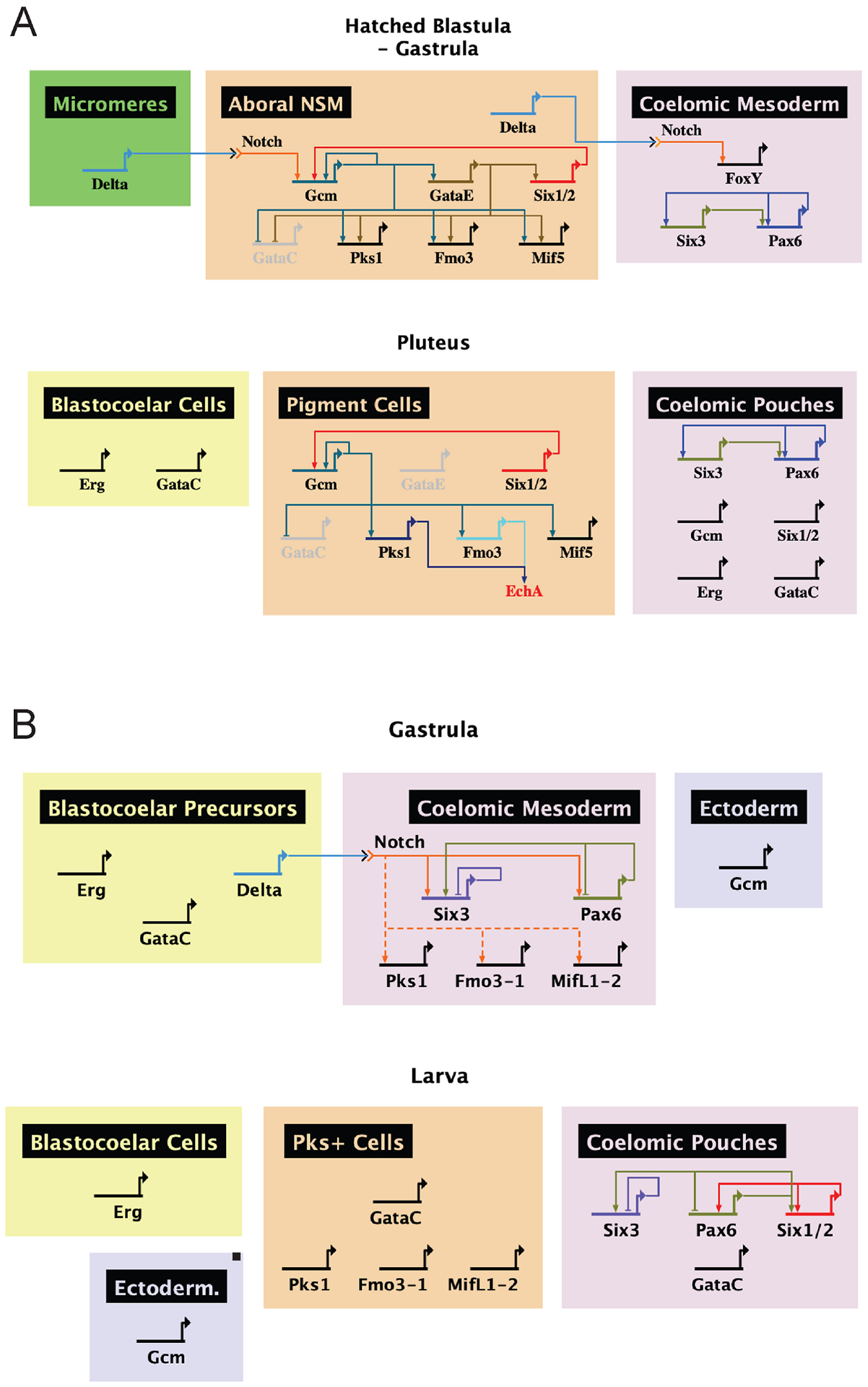
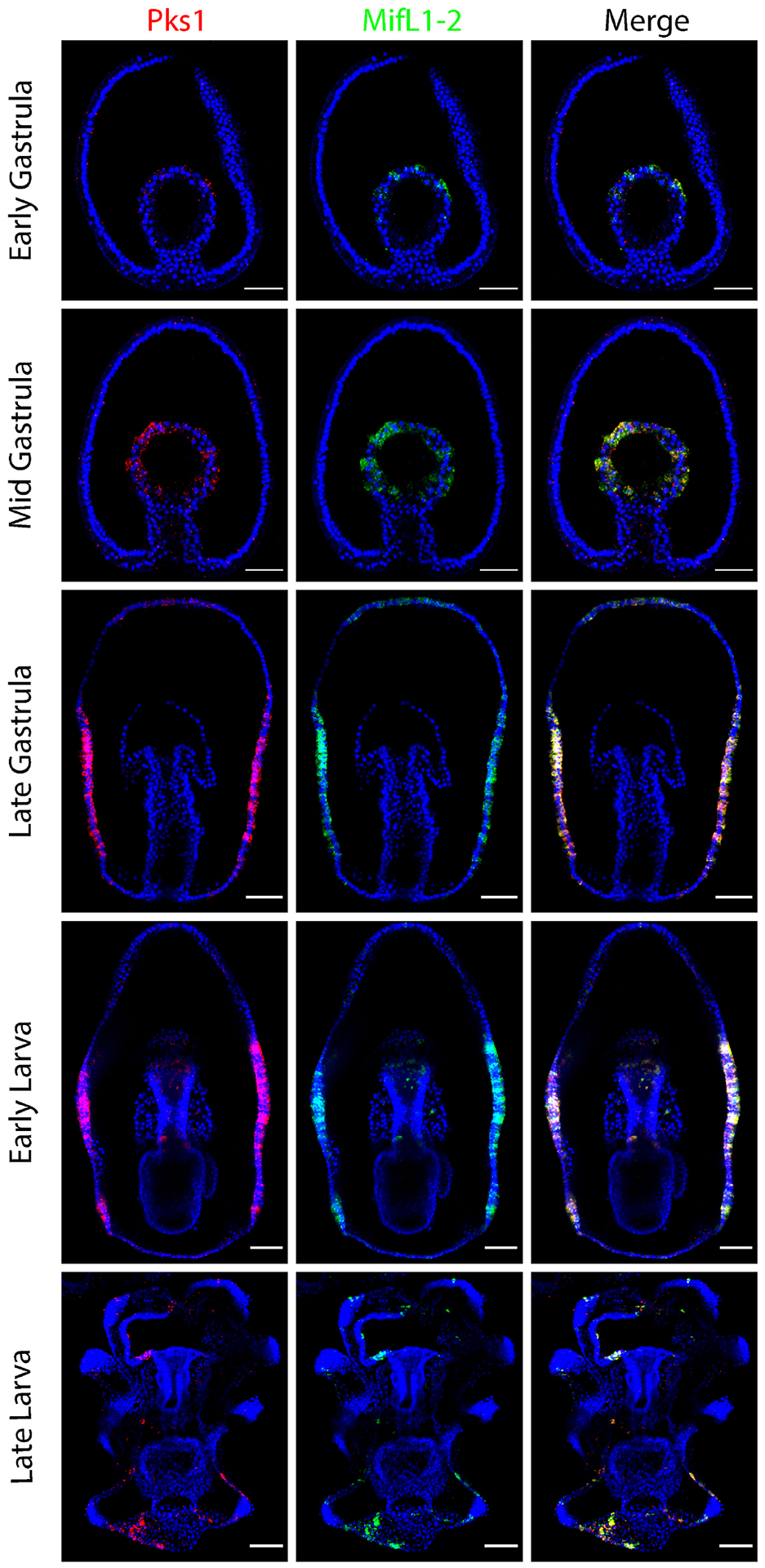
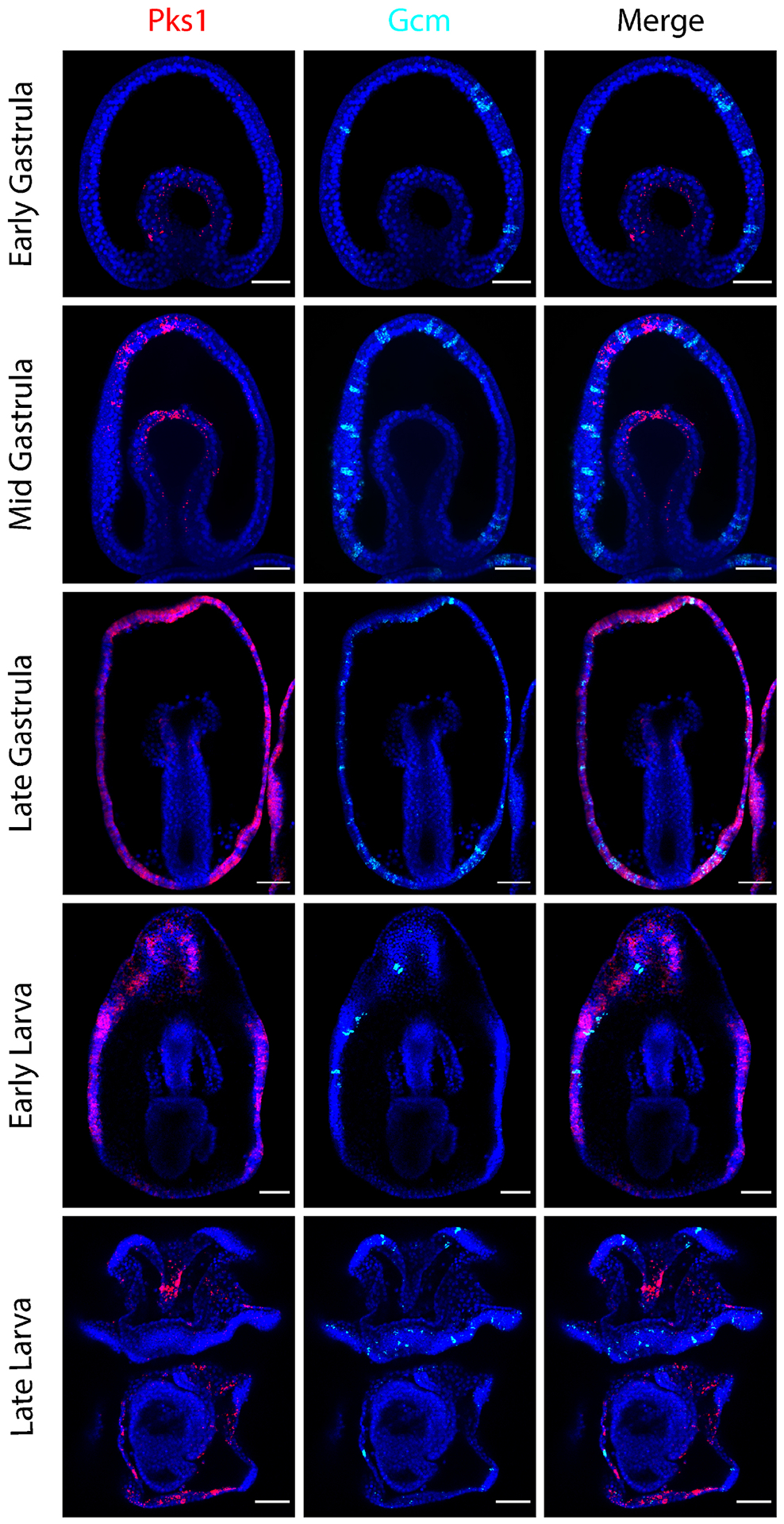
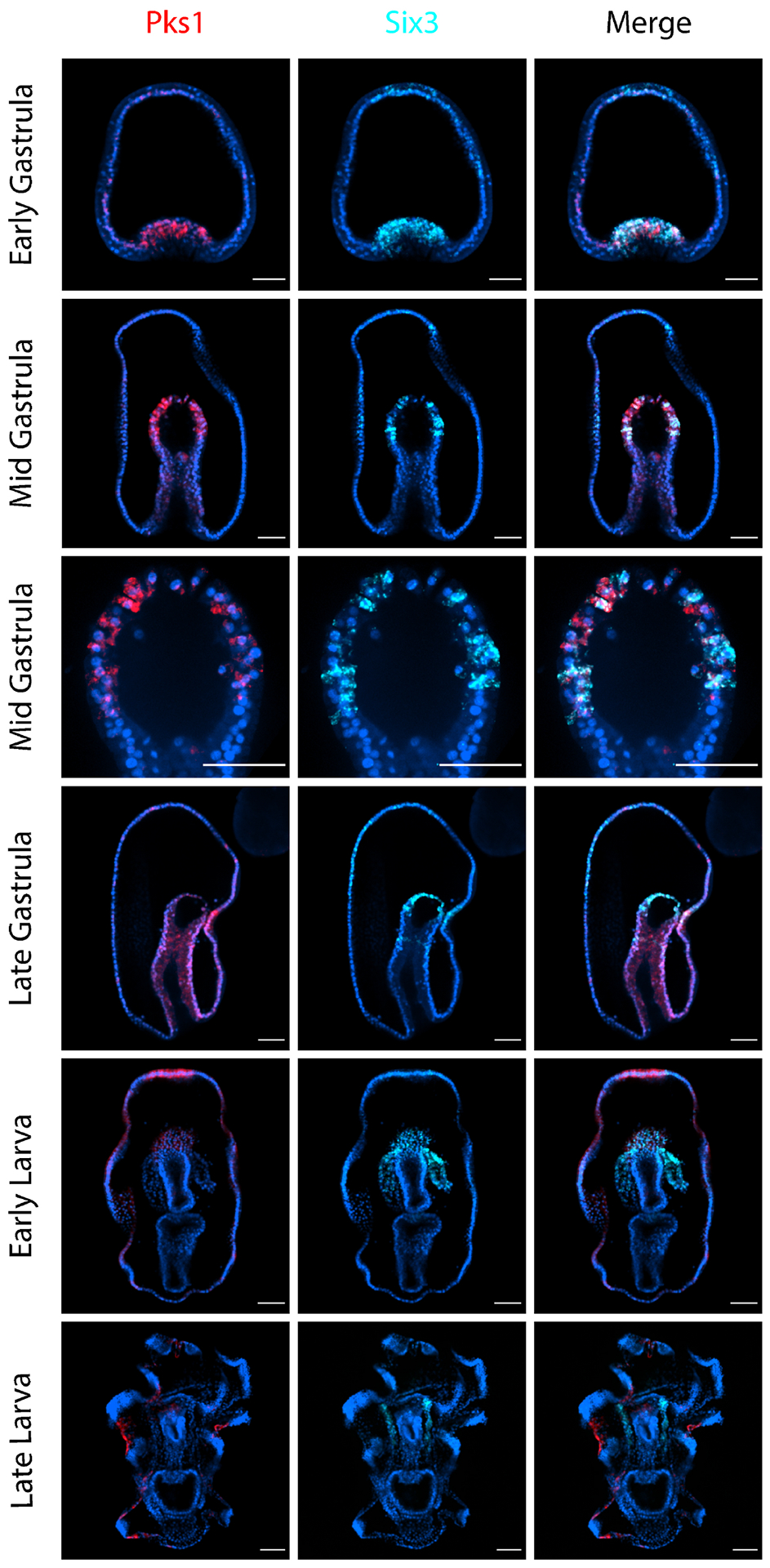
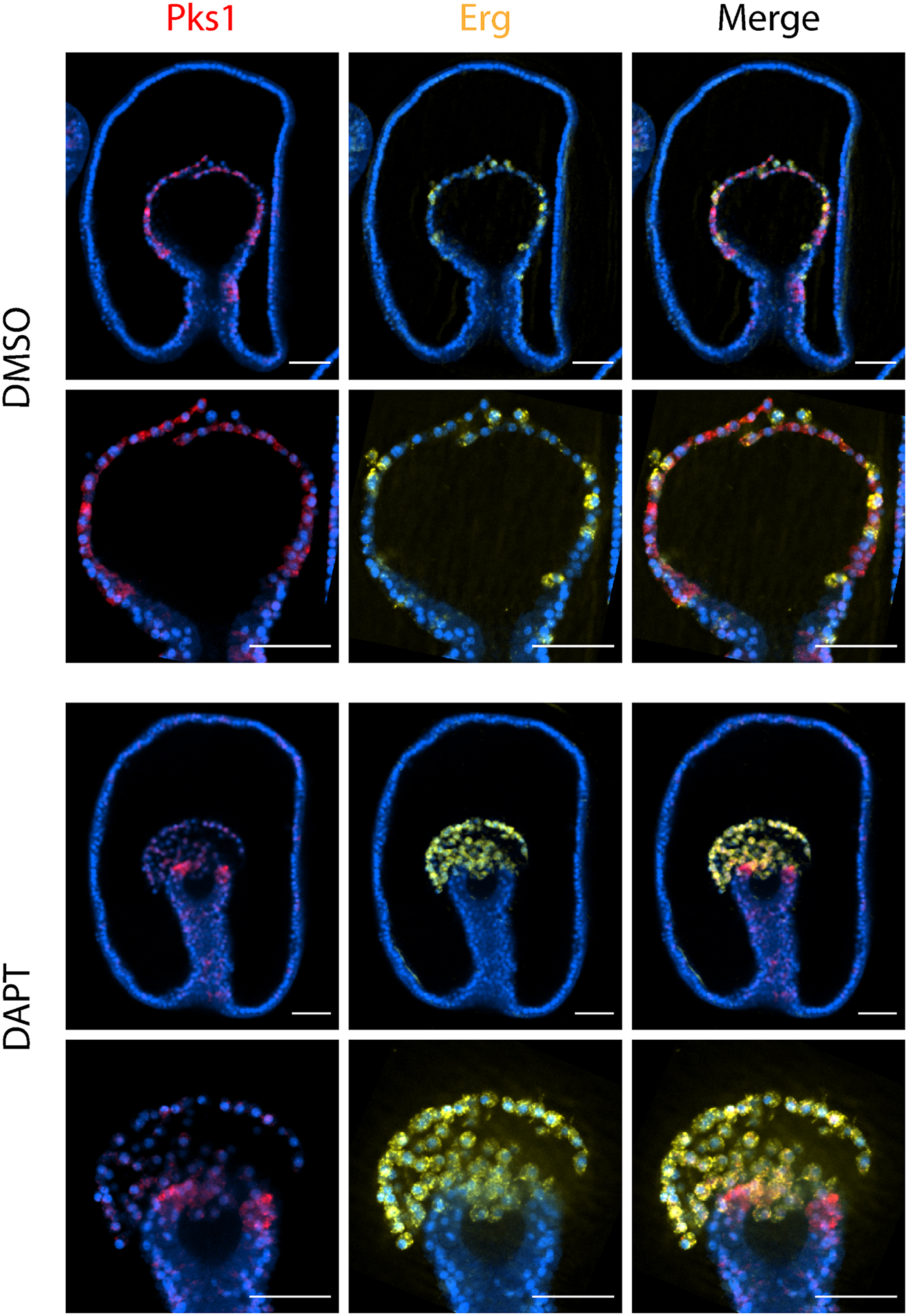
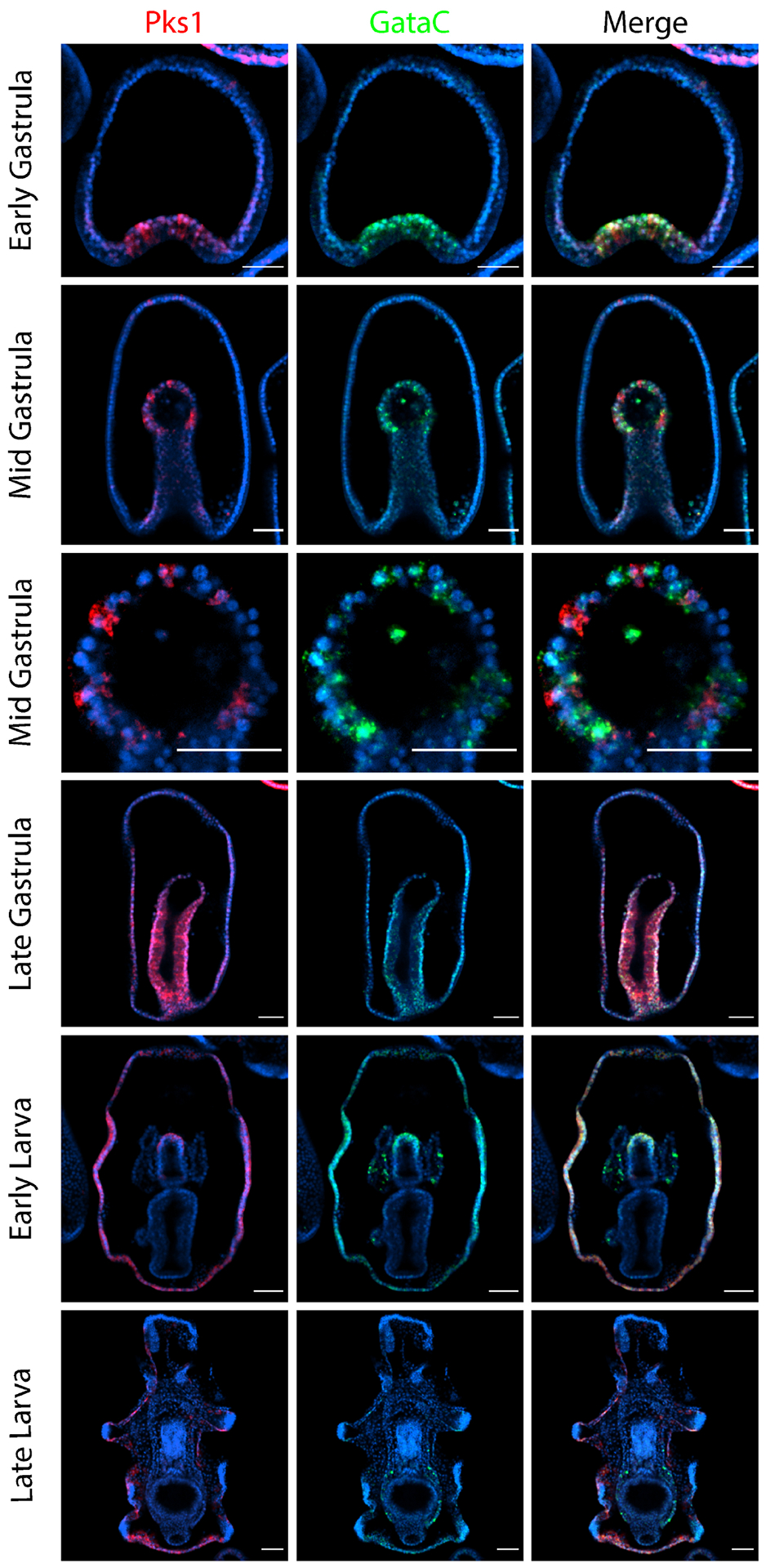
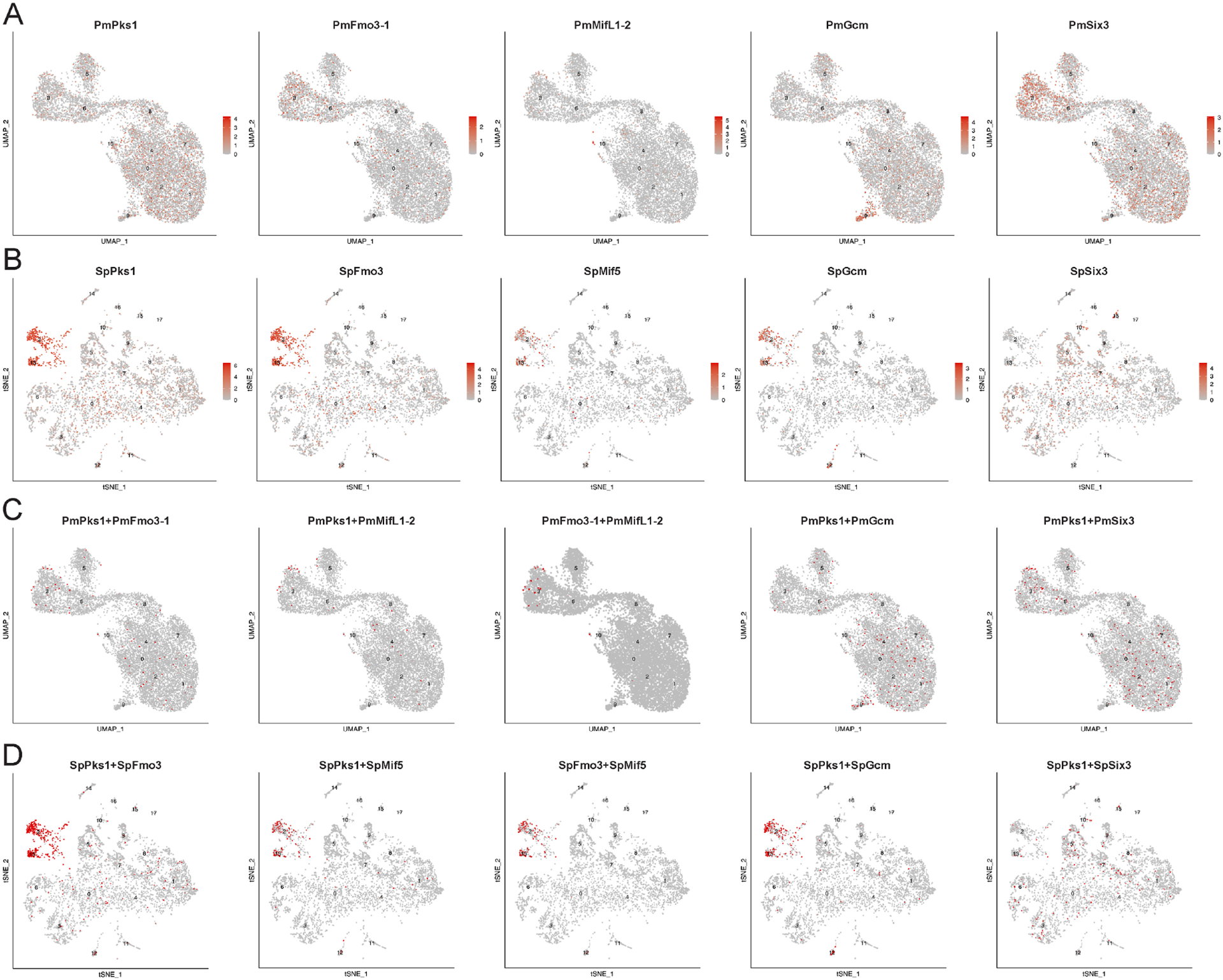
Larvae of the sea urchin, Strongylocentrotus purpuratus, have pigmented migratory cells implicated in immune defense and gut patterning. The transcription factor SpGcm activates the expression of many pigment cell-specific genes, including those involved in pigment biosynthesis (SpPks1 and SpFmo3) and immune related genes (e.g. SpMif5). Despite the importance of this cell type in sea urchins, pigmented cells are absent in larvae of the sea star, Patiria miniata. In this study, we tested the premises that sea stars lack genes to synthesize echinochrome pigment, that the genes are present but are not expressed in the larvae, or rather that the homologous gene expression does not contribute to echinochrome synthesis. Our results show that orthologs of sea urchin pigment cell-specific genes (PmPks1, PmFmo3-1 and PmMifL1-2) are present in the sea star genome and expressed in the larvae. Although no cell lineage homologous to migratory sea urchin pigment cells is present, dynamic gene activation accomplishes a similar spatial and temporal expression profile. The mechanisms regulating the expression of these genes, though, is highly divergent. In sea stars, PmGcm lacks the central role in pigment gene expression since it is not expressed in PmPks1 and PmFmo3-1-positive cells, and knockdown of Gcm does not abrogate pigment gene expression. Pigment genes are instead expressed in the coelomic mesoderm early in development before later being expressed in the ectoderm. These findings were supported by in situ RNA hybridization and comparative scRNA-seq analyses. We conclude that simply the coexpression of Pks1 and Fmo3 orthologs in cells of the sea star is not sufficient to underlie the emergence of the larval pigment cell in the sea urchin.
海胆幼虫具有色素迁移细胞,这些细胞参与免疫防御和肠道模式形成。转录因子 SpGcm 激活许多色素细胞特异性基因的表达,包括参与色素生物合成的基因(SpPks1 和 SpFmo3)和免疫相关基因(例如 SpMif5)。尽管这种细胞类型在海胆中非常重要,但海星幼虫中却没有色素细胞。在这项研究中,我们检验了以下假设:海星缺乏合成胆绿素色素的基因,这些基因存在但在幼虫中不表达,或者同源基因表达对胆绿素合成没有贡献。我们的结果表明,海胆色素细胞特异性基因(PmPks1、PmFmo3-1 和 PmMifL1-2)的同源基因存在于海星基因组中,并在幼虫中表达。尽管没有与迁移的海胆色素细胞同源的细胞谱系存在,但动态基因激活可实现类似的时空表达模式。然而,调节这些基因表达的机制高度不同。在海星中,PmGcm 在色素基因表达中不起核心作用,因为它在 PmPks1 和 PmFmo3-1 阳性细胞中不表达,并且 Gcm 的敲低并不能消除色素基因的表达。相反,色素基因在胚胎发育早期的体腔中表达,然后在表皮中表达。这些发现得到了原位 RNA 杂交和比较 scRNA-seq 分析的支持。我们得出结论,仅仅是海星细胞中 Pks1 和 Fmo3 同源物的共表达不足以在海胆幼虫中产生色素细胞。