Shanghai Key Laboratory for Nucleic Acid Chemistry and Nanomedicine, Institute of Molecular Medicine, State Key Laboratory of Oncogenes and Related Genes, Shanghai Cancer Institute, Renji Hospital, School of Medicine, Shanghai Jiao Tong University, 200127, Shanghai, China.
Nat Commun. 2022 Dec 17;13(1):7808. doi: 10.1038/s41467-022-35579-6.
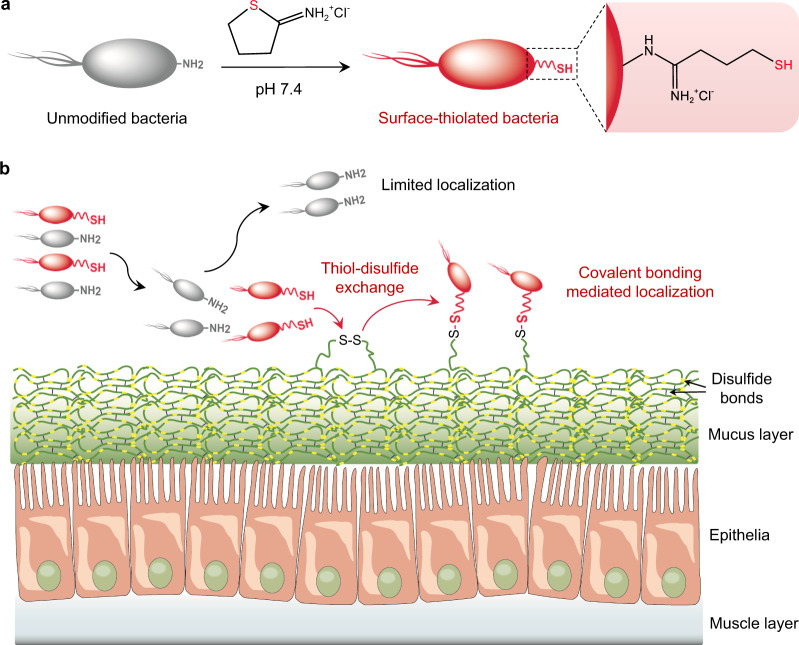
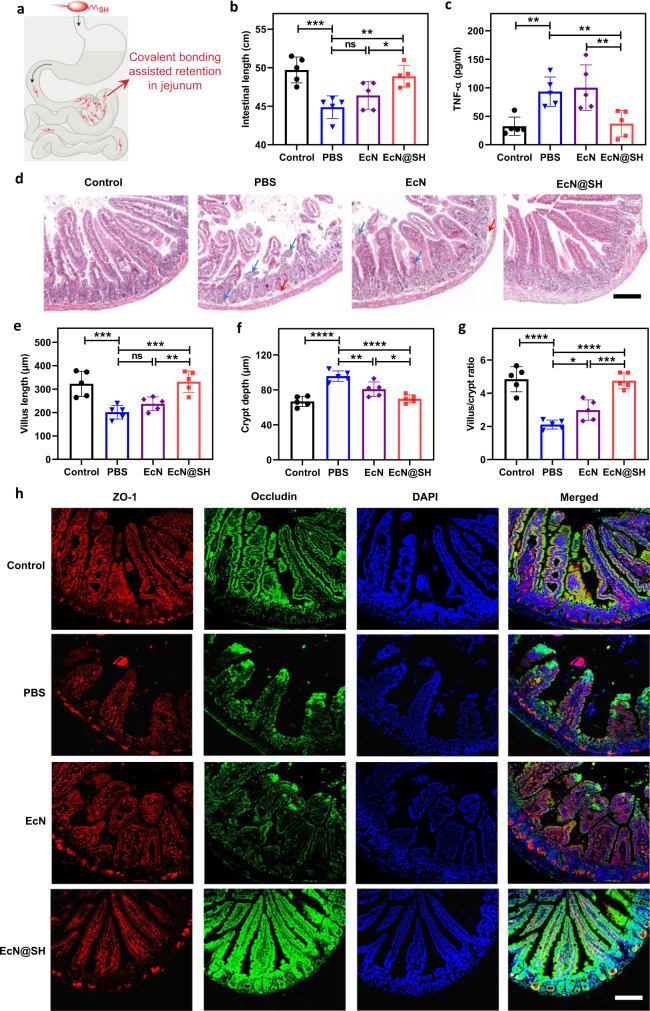
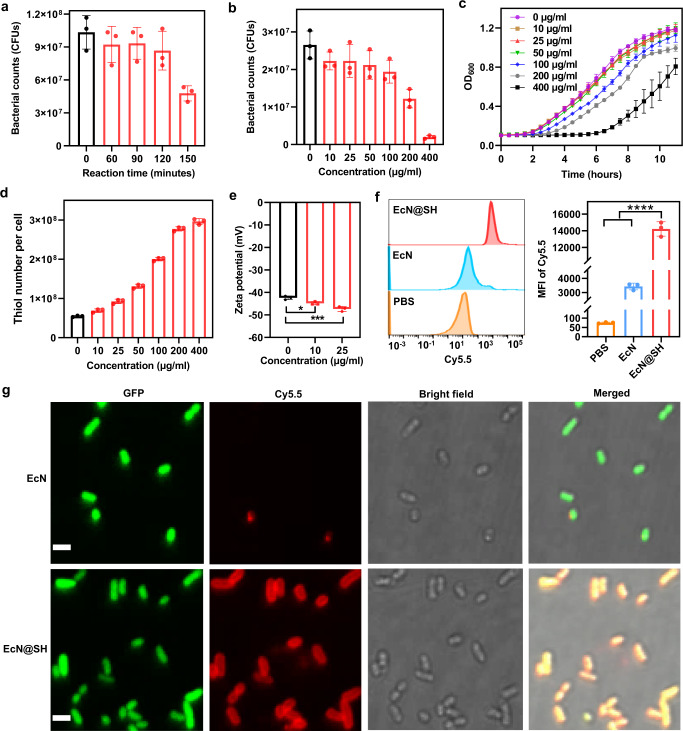
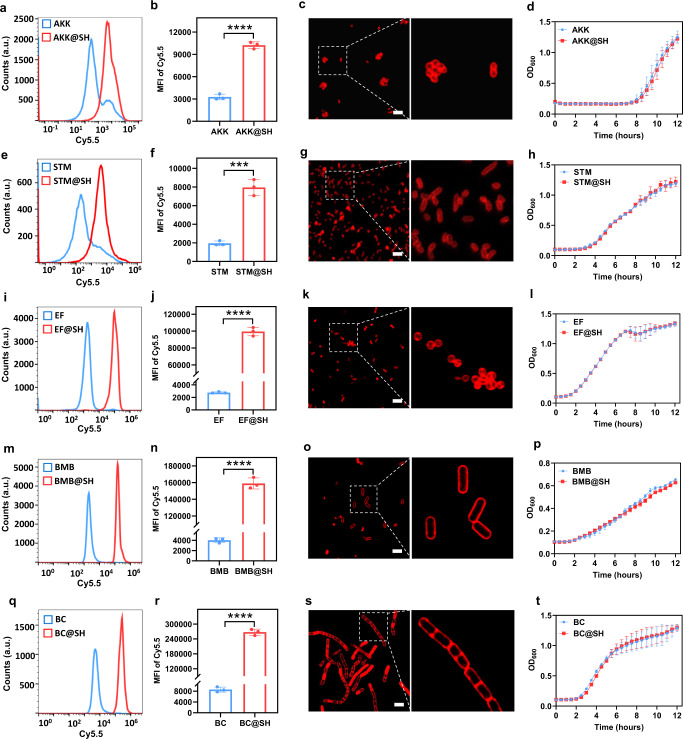
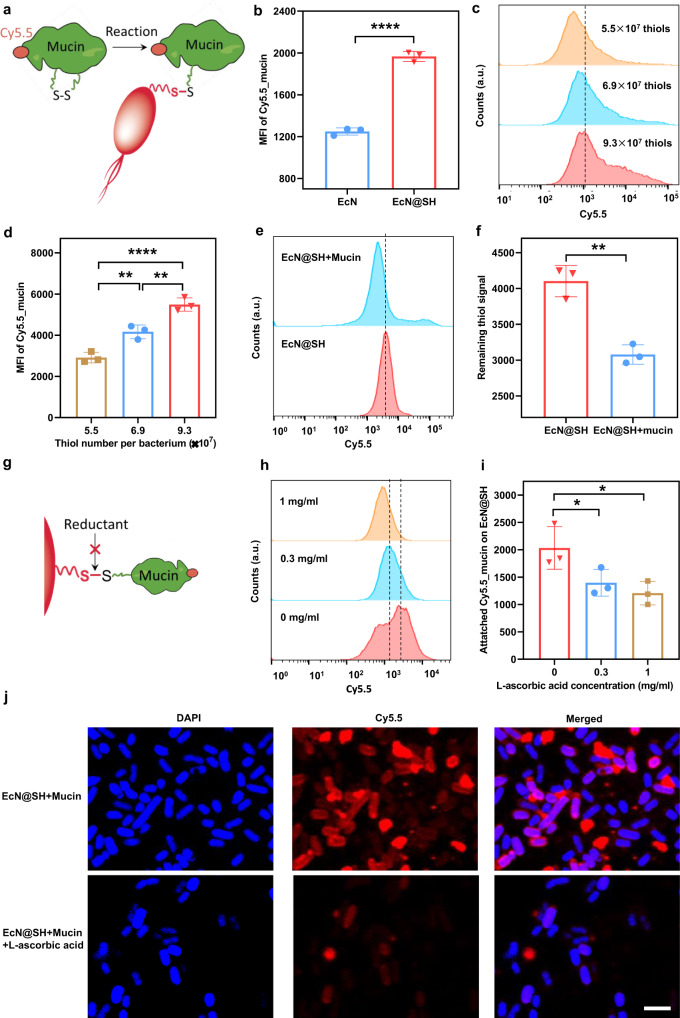
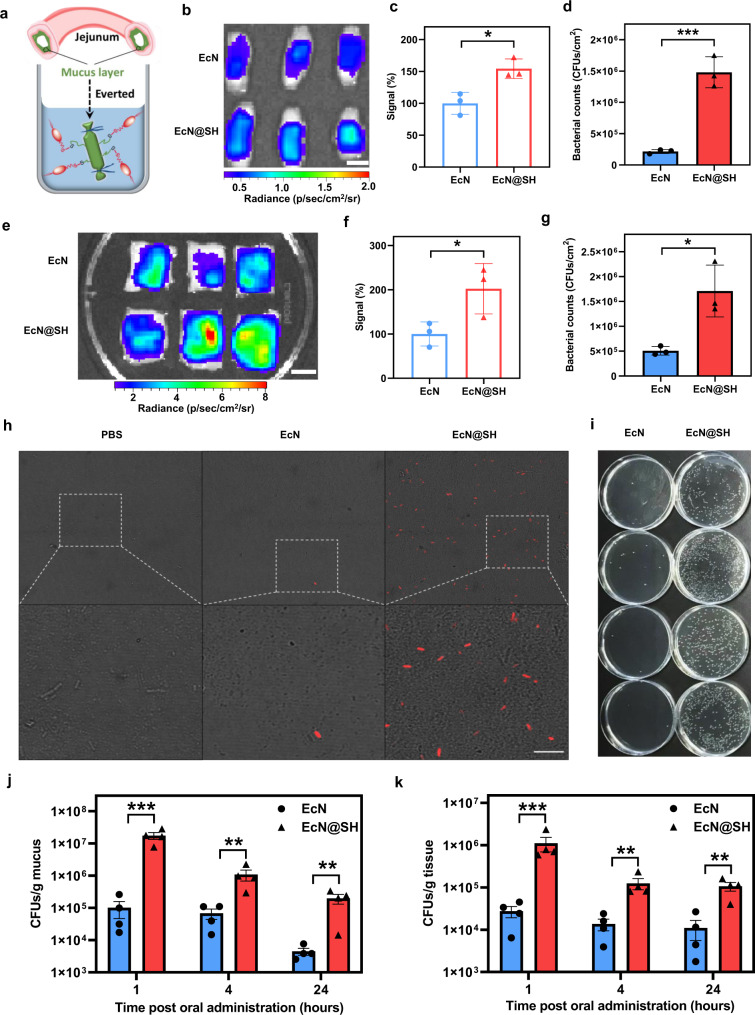
Methods capable of manipulating bacterial colonization are of great significance for modulating host-microbiota relationships. Here, we describe a strategy of in-situ chemical reaction-mediated covalent localization of bacteria. Through a simple one-step imidoester reaction, primary amino groups on bacterial surface can be converted to free thiols under cytocompatible conditions. Surface thiolation is applicable to modify diverse strains and the number of introduced thiols per bacterium can be easily tuned by varying feed ratios. These chemically reactive bacteria are able to spontaneously bond with mucous layer by catalyst-free thiol-disulfide exchange between mucin-associated disulfides and newly converted thiols on bacterial surface and show thiolation level-dependent attachment. Bacteria optimized with 9.3 × 10 thiols per cell achieve 170-fold higher attachment in mucin-enriched jejunum, a challenging location for gut microbiota to colonize. As a proof-of-concept application for microbiota transplantation, covalent bonding-assisted localization of an oral probiotic in the jejunum generates an improved remission of jejunal mucositis. Our findings demonstrate that transforming bacteria with a reactive surface provides an approach to chemically control bacterial localization, which is highly desirable for developing next-generation bacterial living bioagents.
能够操纵细菌定植的方法对于调节宿主-微生物群关系具有重要意义。在这里,我们描述了一种原位化学反应介导的细菌共价定位策略。通过简单的一步酰亚胺反应,在细胞相容性条件下,细菌表面的伯氨基可以转化为游离硫醇。表面巯基化适用于修饰多种菌株,并且可以通过改变进料比轻松调节每个细菌引入的硫醇数量。这些具有反应性的细菌能够通过粘蛋白相关二硫键和细菌表面新转化的硫醇之间的无催化剂硫醇-二硫键交换,自发地与粘液层结合,并且表现出巯基化水平依赖性的附着。经过优化,每个细胞带有 9.3×10 个硫醇的细菌在富含粘蛋白的空肠中附着增加了 170 倍,这是空肠中微生物群定植的一个极具挑战性的位置。作为菌群移植的概念验证应用,共价键辅助定位口腔益生菌在空肠中的定位,可改善空肠黏膜炎的缓解。我们的研究结果表明,将具有反应性表面的细菌进行转化为化学控制细菌定位提供了一种方法,这对于开发下一代细菌活体生物制剂是非常理想的。