EPIUnit, Instituto de Saúde Pública, Universidade do Porto, Porto, Portugal.
Laboratório para a Investigação Integrativa e Translacional em Saúde Populacional (ITR), Porto, Portugal.
Int J Gynaecol Obstet. 2022 Dec;159 Suppl 1(Suppl 1):137-153. doi: 10.1002/ijgo.14507.
To compare women's perspectives on the quality of maternal and newborn care (QMNC) around the time of childbirth across Nomenclature of Territorial Units for Statistics 2 (NUTS-II) regions in Portugal during the COVID-19 pandemic.
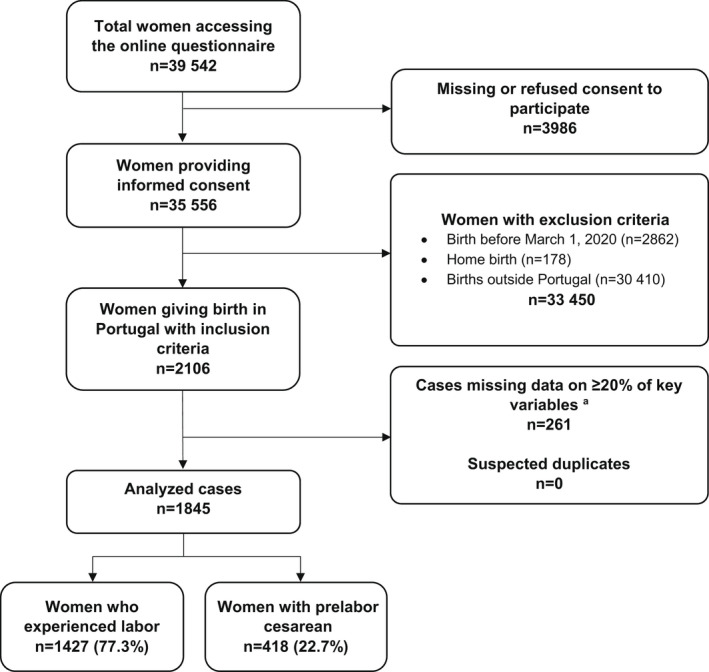
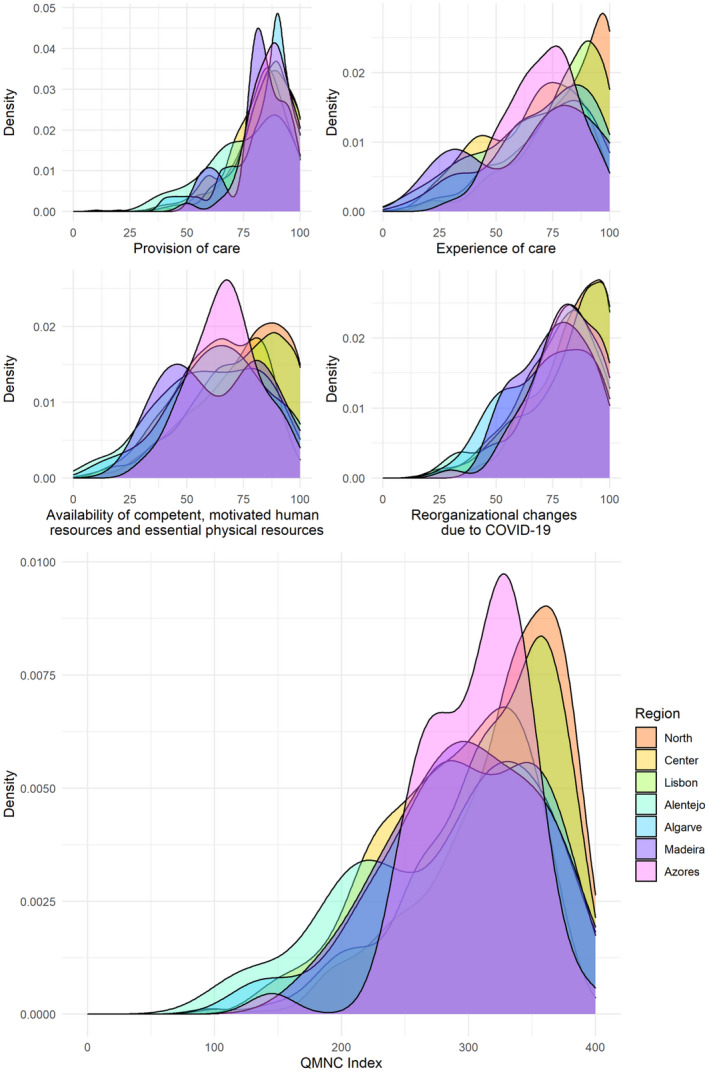
Women participating in the cross-sectional IMAgiNE EURO study who gave birth in Portugal from March 1, 2020, to October 28, 2021, completed a structured questionnaire with 40 key WHO standards-based quality measures. Four domains of QMNC were assessed: (1) provision of care; (2) experience of care; (3) availability of human and physical resources; and (4) reorganizational changes due to the COVID-19 pandemic. Frequencies for each quality measure within each QMNC domain were computed overall and by region.
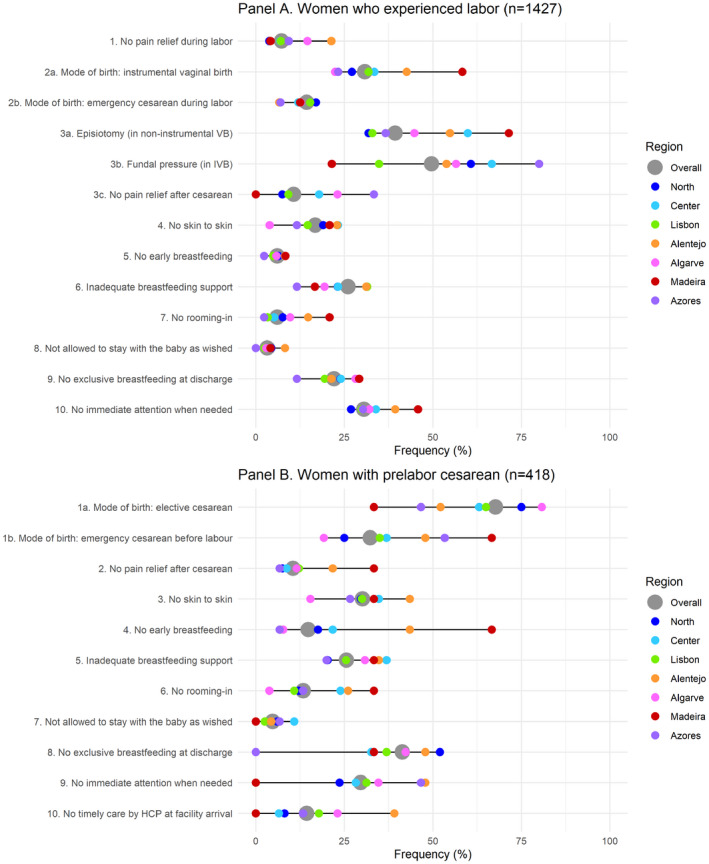
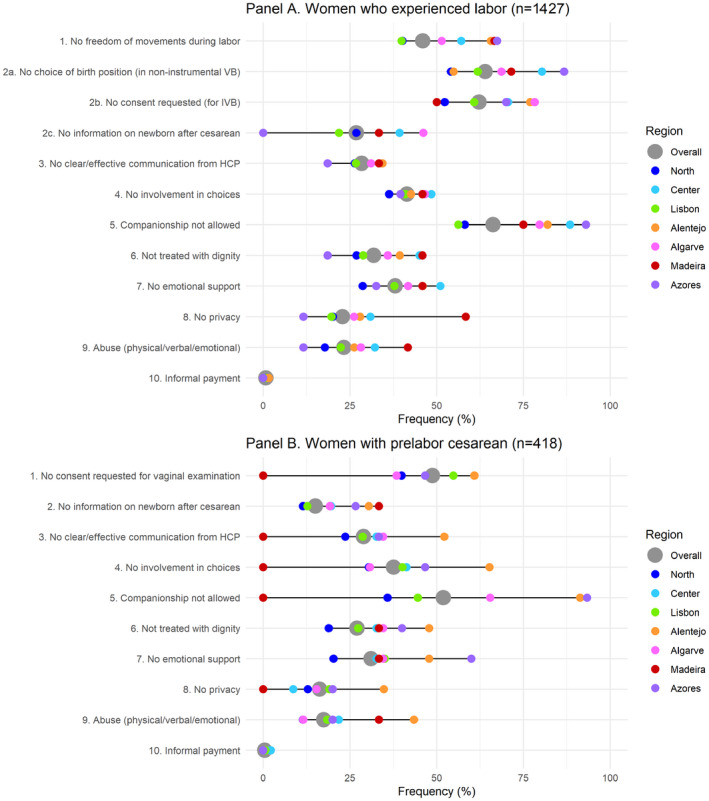
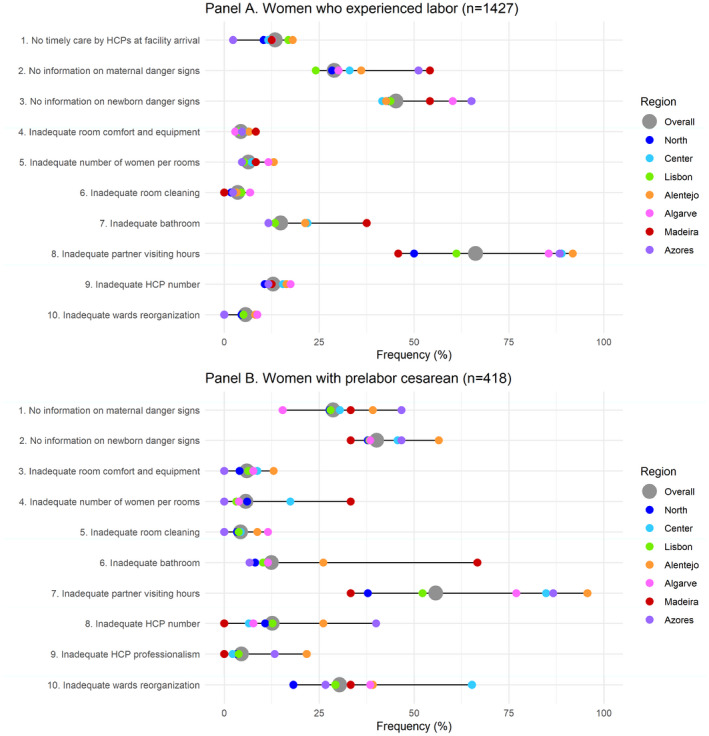
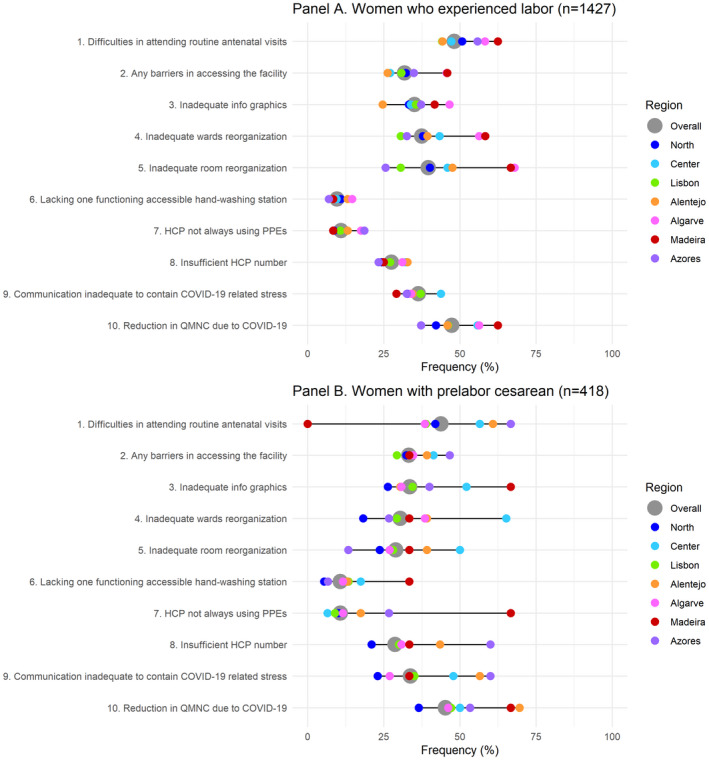
Out of 1845 participants, one-third (33.7%) had a cesarean. Examples of high-quality care included: low frequencies of lack of early breastfeeding and rooming-in (8.0% and 7.7%, respectively) and informal payment (0.7%); adequate staff professionalism (94.6%); adequate room comfort and equipment (95.2%). However, substandard practices with large heterogeneity across regions were also reported. Among women who experienced labor, the percentage of instrumental vaginal births ranged from 22.3% in the Algarve to 33.5% in Center; among these, fundal pressure ranged from 34.8% in Lisbon to 66.7% in Center. Episiotomy was performed in 39.3% of noninstrumental vaginal births with variations between 31.8% in the North to 59.8% in Center. One in four women reported inadequate breastfeeding support (26.1%, ranging from 19.4% in Algarve to 31.5% in Lisbon). One in five reported no exclusive breastfeeding at discharge (22.1%; 19.5% in Lisbon to 28.2% in Algarve).
Urgent actions are needed to harmonize QMNC and reduce inequities across regions in Portugal.
比较葡萄牙 Nomenclature of Territorial Units for Statistics 2(NUTS-II)区域在 COVID-19 大流行期间,女性在分娩前后对母婴保健质量(QMNC)的看法。
参加跨地区 IMAgiNE EURO 研究的女性于 2020 年 3 月 1 日至 2021 年 10 月 28 日在葡萄牙分娩,完成了一个包含 40 项基于世卫组织标准的关键质量措施的结构化问卷。评估了 QMNC 的四个领域:(1)护理提供;(2)护理体验;(3)人力和物力资源的可用性;(4)因 COVID-19 大流行而进行的重组变化。在每个 QMNC 领域内,计算了每个质量措施的频率,总体和按地区计算。
在 1845 名参与者中,有三分之一(33.7%)进行了剖宫产。高质量护理的例子包括:缺乏早期母乳喂养和母婴同室的情况很少见(分别为 8.0%和 7.7%),以及非正式支付(0.7%);员工专业素质较高(94.6%);房间舒适度和设备充足(95.2%)。然而,也报告了大量地区间存在的不达标实践。在经历分娩的女性中,器械性阴道分娩的百分比从阿尔加维的 22.3%到中心的 33.5%不等;在这些地区,宫底压力从里斯本的 34.8%到中心的 66.7%不等。在非器械性阴道分娩中,会阴切开术的实施率为 39.3%,从北部的 31.8%到中心的 59.8%不等。四分之一的女性报告母乳喂养支持不足(26.1%,从阿尔加维的 19.4%到里斯本的 31.5%不等)。五分之一的女性报告出院时没有进行纯母乳喂养(22.1%;从里斯本的 19.5%到阿尔加维的 28.2%不等)。
需要采取紧急行动,协调葡萄牙各地区的 QMNC,并减少地区间的不平等。