Rinaldi Virginia, Bellucci Gianmarco, Buscarinu Maria Chiara, Reniè Roberta, Marrone Antonio, Nasello Martina, Zancan Valeria, Nistri Riccardo, Palumbo Roberto, Salerno Antonio, Salvetti Marco, Ristori Giovanni
Neurology Unit, Department of Neurosciences, Mental Health and Sensory Organs (NESMOS), Sapienza University of Rome, Rome, Italy.
Department of Neurosciences, Sapienza University of Rome, Rome, Italy.
Front Neurol. 2022 Dec 1;13:1018785. doi: 10.3389/fneur.2022.1018785. eCollection 2022.
Vaccinations provided the most effective tool to fight the SARS-CoV-2 pandemic. It is now well established that COVID-19 vaccines are safe for the general population; however, some cases of rare adverse events following immunization have been described, including CNS Inflammatory Demyelinating Events (CIDEs). Although observational studies are showing that these events are rare and vaccines' benefits highly outweigh the risks, collecting and characterizing post-COVID-19 vaccine CIDEs might be relevant to single out potential risk factors and suggest possible underlying mechanisms.
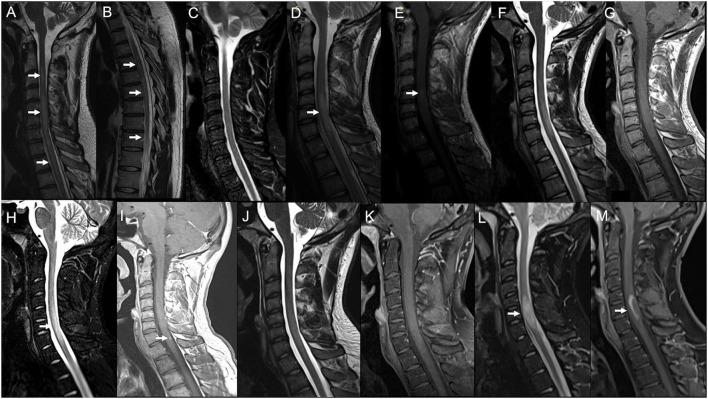
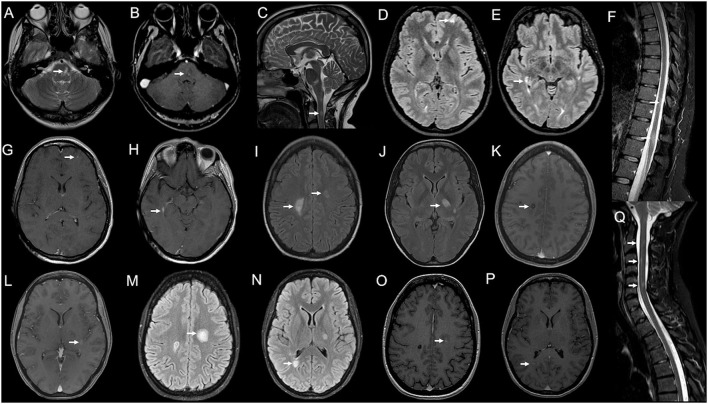
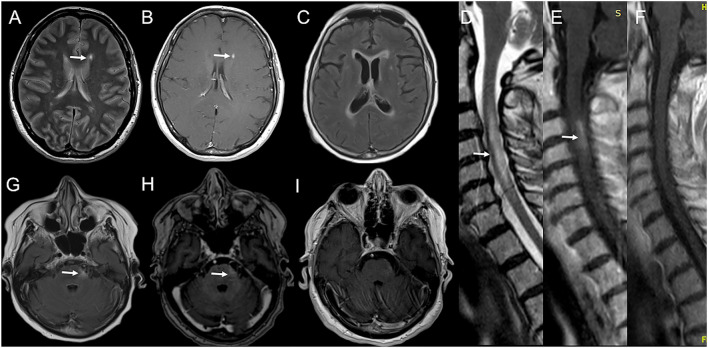
Here we describe six CIDEs, including two acute transverse myelitis (ATM), three multiple sclerosis (MS), and one neuromyelitis optica spectrum disorder (NMOSD), occurring between 8 and 35 days from a COVID-19 vaccine. Moreover, we performed a systematic literature search of post-COVID-19 vaccines CIDEs, including ATM, ADEM, MS, and NMOSD/MOGAD, published worldwide between December 2020 and December 2021, during 1 year of the vaccination campaign. Clinical/MRI and CSF/serum characteristics were extracted from reviewed studies and pooled-analyzed.
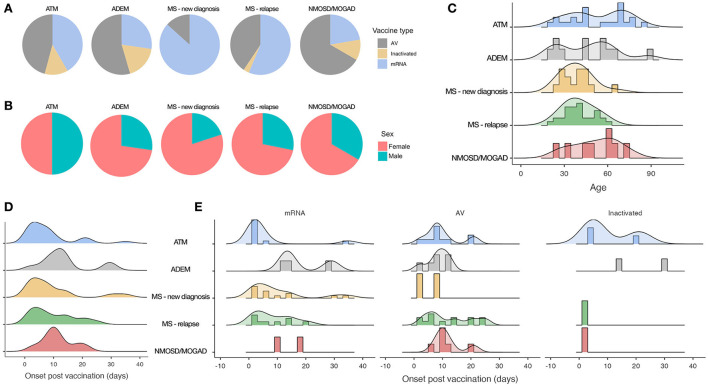
Forty-nine studies were included in the systematic review, reporting a total amount of 85 CIDEs. Considering our additional six cases, 91 CIDEs were summarized, including 24 ATM, 11 ADEM, 47 MS, and nine NMOSD/MOGAD. Overall, CIDEs occurred after both mRNA ( = 46), adenoviral-vectored ( = 37), and inactivated vaccines ( = 8). Adenoviral-vectored vaccines accounted for the majority of ADEM (55%) and NMOSD/MOGAD (56%), while mRNA vaccines were more frequent in MS new diagnoses (87%) and relapses (56%). Age was heterogeneous (19-88) and the female sex was prevalent. Time from vaccine to symptoms onset was notably variable: ADEM and NMOSD/MOGAD had a longer median time of onset (12.5 and 10 days) compared to ATM and MS (6 and 7 days) and further timing differences were observed between events following different vaccine types, with ATM and MS after mRNA-vaccines occurring earlier than those following adenoviral-vectored ones.
Both the prevalence of vaccine types for certain CIDEs and the heterogeneity in time of onset suggest that different mechanisms-with distinct dynamic/kinetic-might underly these events. While epidemiological studies have assessed the safety of COVID-19 vaccines, descriptions and pooled analyses of sporadic cases may still be valuable to gain insights into CIDE's pathophysiology.
疫苗接种是抗击新型冠状病毒肺炎大流行最有效的工具。目前已充分证实,新冠疫苗对普通人群是安全的;然而,已有一些免疫接种后罕见不良事件的病例报道,包括中枢神经系统炎性脱髓鞘事件(CIDEs)。尽管观察性研究表明这些事件很罕见,且疫苗的益处远大于风险,但收集和描述新冠疫苗接种后发生的CIDEs可能有助于找出潜在风险因素并提示可能的潜在机制。
在此,我们描述了6例CIDEs,包括2例急性横贯性脊髓炎(ATM)、3例多发性硬化症(MS)和1例视神经脊髓炎谱系障碍(NMOSD),这些病例发生在接种新冠疫苗后的8至35天之间。此外,我们对2020年12月至2021年12月疫苗接种活动的1年期间在全球发表的有关新冠疫苗接种后发生的CIDEs(包括ATM、急性播散性脑脊髓炎(ADEM)、MS和NMOSD/视神经脊髓炎谱系疾病相关自身免疫性疾病(MOGAD))进行了系统的文献检索。从纳入综述的研究中提取临床/磁共振成像(MRI)以及脑脊液/血清特征,并进行汇总分析。
系统评价纳入了49项研究,共报告了85例CIDEs。加上我们的另外6例病例,共总结了91例CIDEs,包括24例ATM、11例ADEM、47例MS和9例NMOSD/MOGAD。总体而言,CIDEs在信使核糖核酸(mRNA)疫苗(n = 46)、腺病毒载体疫苗(n = 37)和灭活疫苗(n = 8)接种后均有发生。腺病毒载体疫苗导致的ADEM(55%)和NMOSD/MOGAD(56%)占大多数,而mRNA疫苗在MS新诊断病例(87%)和复发病例(56%)中更为常见。年龄分布不均(19 - 88岁),女性居多。从接种疫苗到症状出现的时间差异显著:与ATM和MS(分别为6天和7天)相比,ADEM和NMOSD/MOGAD的中位发病时间更长(分别为12.5天和10天),并且在不同类型疫苗接种后发生的事件之间观察到进一步的时间差异,mRNA疫苗接种后发生的ATM和MS比腺病毒载体疫苗接种后发生的更早。
某些CIDEs的疫苗类型患病率以及发病时间的异质性表明这些事件可能有不同的机制——具有不同的动态/动力学特征。虽然流行病学研究已经评估了新冠疫苗的安全性,但对散发病例的描述和汇总分析对于深入了解CIDEs的病理生理学可能仍然具有价值。