Elisia Ingrid, Yeung Michelle, Kowalski Sara, Wong Jennifer, Rafiei Hossein, Dyer Roger A, Atkar-Khattra Sukhinder, Lam Stephen, Krystal Gerald
The Terry Fox Laboratory, BC Cancer Research Centre, Vancouver, BC, Canada.
Analytical Core for Metabolomics and Nutrition, BC Children's Hospital Research Institute, Vancouver, BC, Canada.
Front Nutr. 2022 Dec 1;9:1051418. doi: 10.3389/fnut.2022.1051418. eCollection 2022.
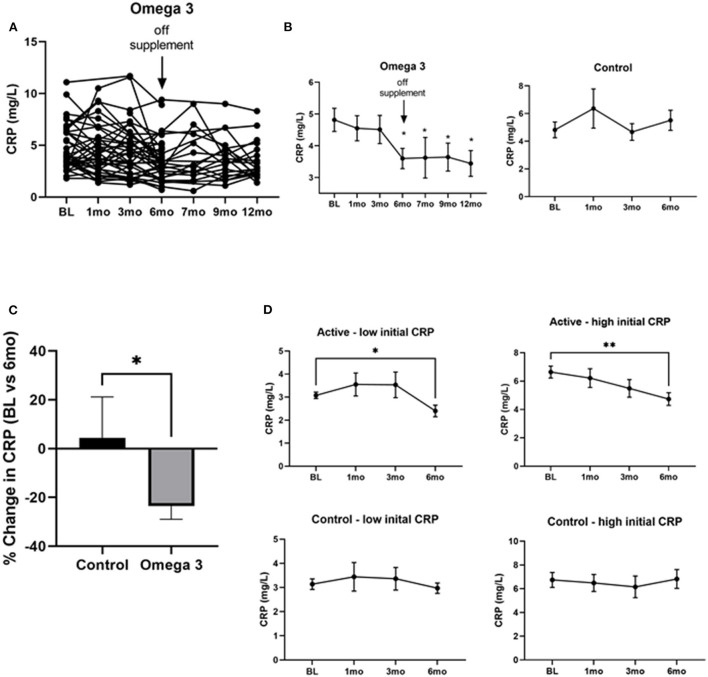
Given the current controversy concerning the efficacy of omega 3 supplements at reducing inflammation, we evaluated the safety and efficacy of omega 3 on reducing inflammation in people with a 6-year lung cancer risk >1.5% and a C reactive protein (CRP) level >2 mg/L in a phase IIa cross-over study.
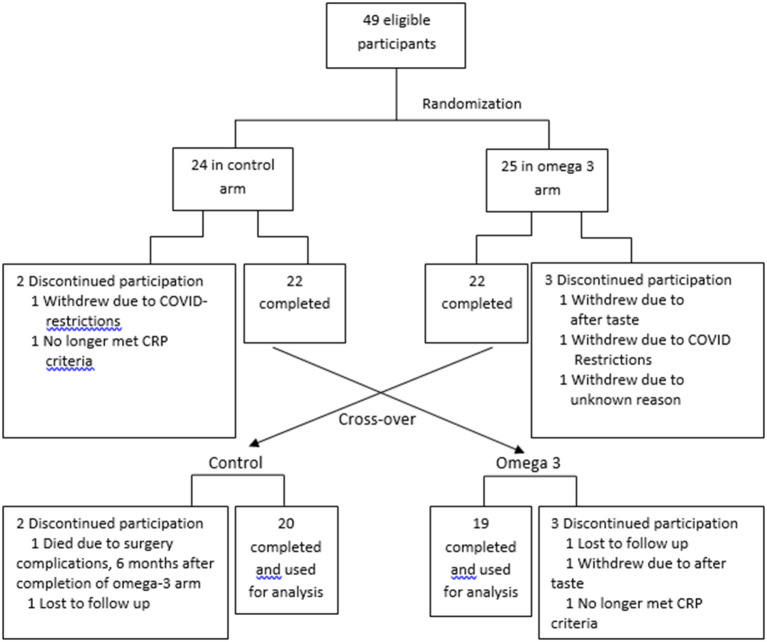
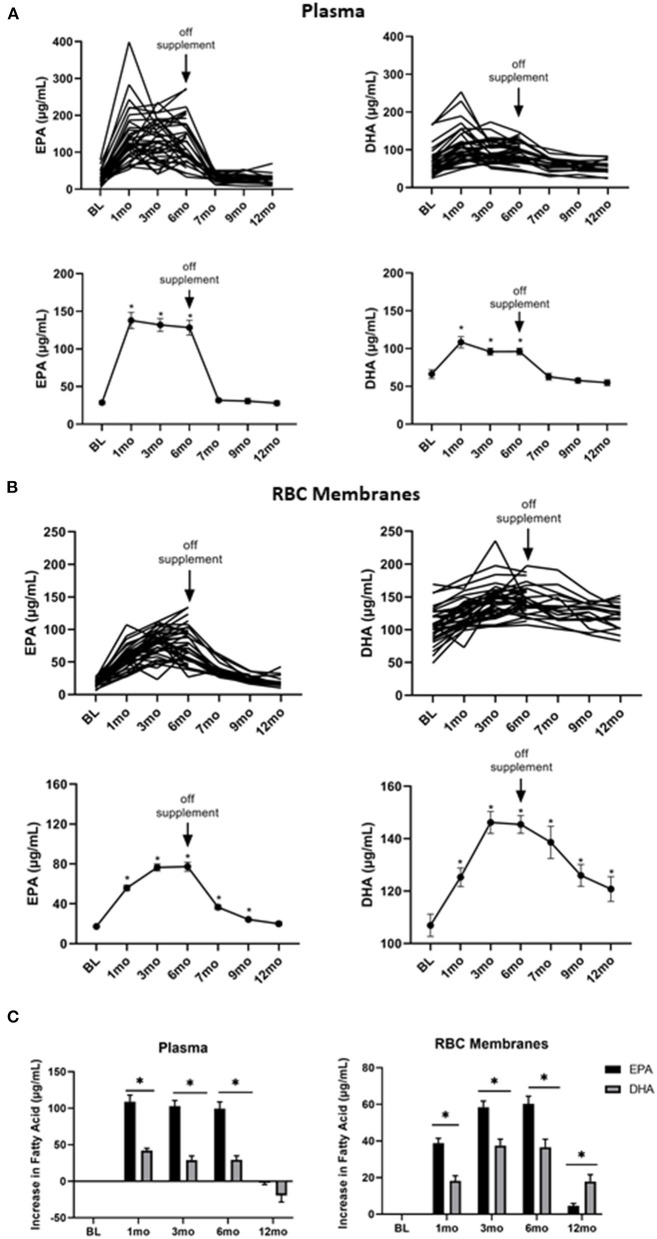
Forty-nine healthy participants ages 55 to 80, who were still smoking or had smoked in the past with ≥30 pack-years smoking history, living in British Columbia, Canada, were randomized in an open-label trial to receive 2.4 g eicosapentaenoic acid (EPA) + 1.2 g docosahexaenoic acid (DHA)/day for 6 months followed by observation for 6 months or observation for 6 months first and then active treatment for the next 6 months. Blood samples were collected over 1 year for measurement of plasma CRP, plasma and red blood cell (RBC) membrane levels of EPA, DHA and other fatty acids, Prostaglandin E (PGE), Leukotriene B (LTB) and an inflammatory marker panel.
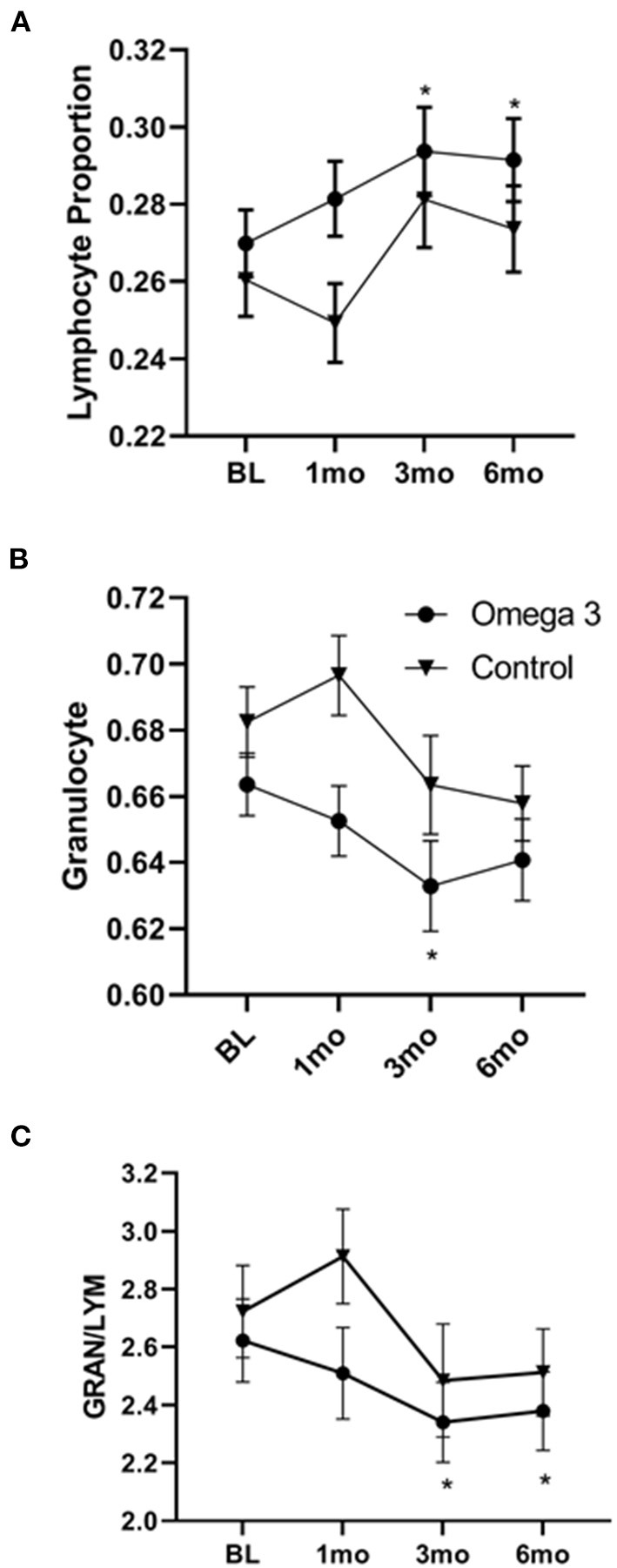
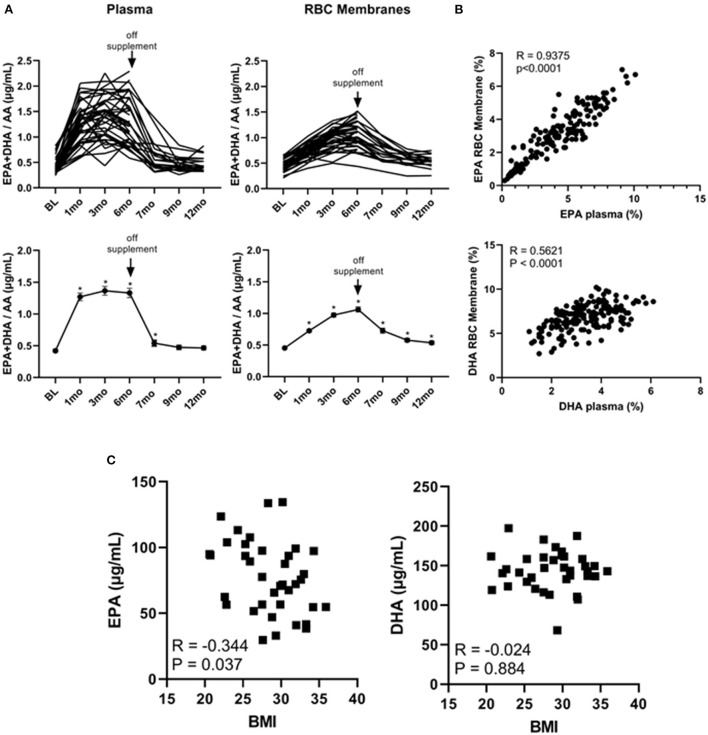
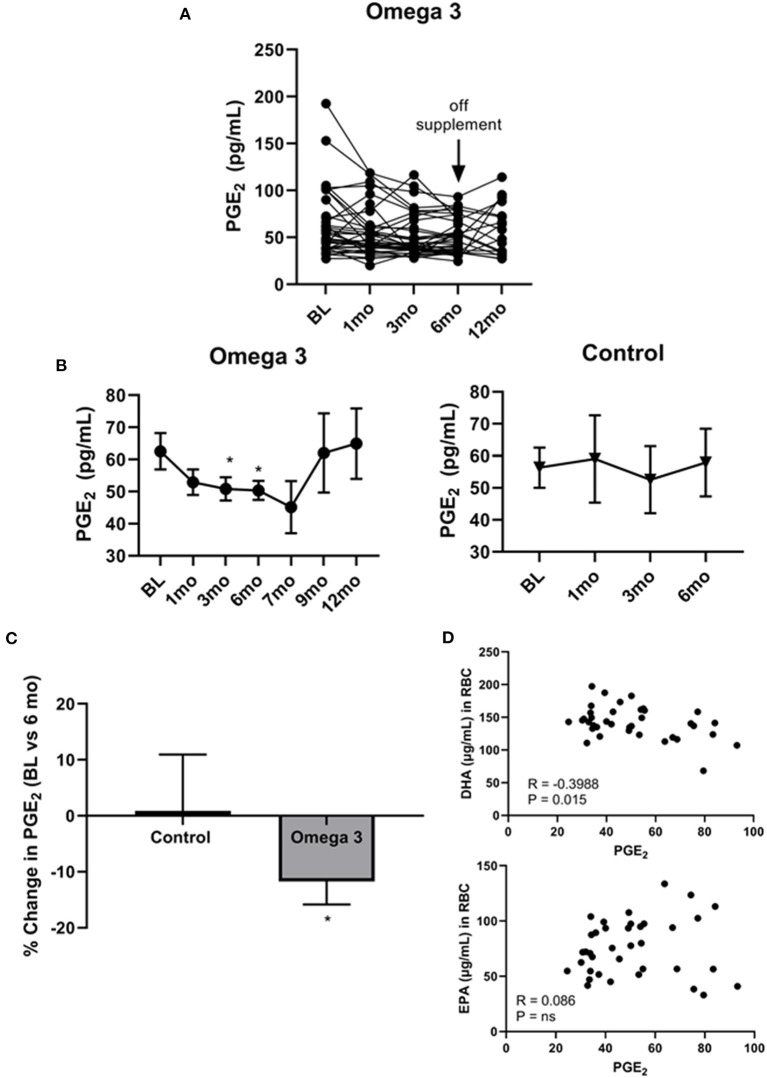
Twenty one participants who began the trial within the active arm completed the trial while 20 participants who started in the control arm completed the study. Taking omega 3 resulted in a significant decrease in plasma CRP and PGE but not LTB levels. Importantly, the effect size for the primary outcome, CRP values, at the end of the intervention relative to baseline was medium (Cohen's = 0.56). DHA, but not EPA levels in RBC membranes inversely correlated with PGE levels. Omega 3 also led to a significant reduction in granulocytes and an increase in lymphocytes. These high-dose omega 3 supplements were well tolerated, with only minor gastrointestinal symptoms in a subset of participants.
Omega 3 fatty acids taken at 3.6 g/day significantly reduce systemic inflammation with negligible adverse health effects in people who smoke or have smoked and are at high risk of lung cancer.ClinicalTrials.gov, NCT number: NCT03936621.
鉴于目前关于ω-3补充剂在减轻炎症方面疗效的争议,我们在一项IIa期交叉研究中评估了ω-3对肺癌风险在6年内大于1.5%且C反应蛋白(CRP)水平大于2mg/L的人群减轻炎症的安全性和疗效。
49名年龄在55至80岁之间、仍在吸烟或过去有吸烟史且吸烟史≥30包年、居住在加拿大不列颠哥伦比亚省的健康参与者,在一项开放标签试验中被随机分组,接受每天2.4克二十碳五烯酸(EPA)+1.2克二十二碳六烯酸(DHA),持续6个月,随后观察6个月;或先观察6个月,然后在接下来的6个月接受积极治疗。在1年的时间里采集血样,以测量血浆CRP、血浆和红细胞(RBC)膜中EPA、DHA和其他脂肪酸、前列腺素E(PGE)、白三烯B(LTB)以及一组炎症标志物的水平。
在积极治疗组开始试验的21名参与者完成了试验,而在对照组开始试验的20名参与者完成了研究。服用ω-3导致血浆CRP和PGE水平显著降低,但LTB水平未降低。重要的是,干预结束时相对于基线的主要结局CRP值的效应大小为中等(科恩d值=0.56)。红细胞膜中的DHA水平而非EPA水平与PGE水平呈负相关。ω-3还导致粒细胞显著减少,淋巴细胞增加。这些高剂量的ω-3补充剂耐受性良好,只有一部分参与者出现轻微的胃肠道症状。
对于吸烟或有吸烟史且肺癌风险高的人群,每天服用3.6克ω-3脂肪酸可显著减轻全身炎症,对健康的不良影响可忽略不计。ClinicalTrials.gov,NCT编号:NCT03936621。