Laboratory for Intestinal Ecosystem, RIKEN Center for Integrative Medical Sciences, Kanagawa, Japan.
Division of Diabetes and Metabolism, The Institute of Medical Science, Asahi Life Foundation, Tokyo, Japan.
PLoS One. 2022 Dec 22;17(12):e0271651. doi: 10.1371/journal.pone.0271651. eCollection 2022.
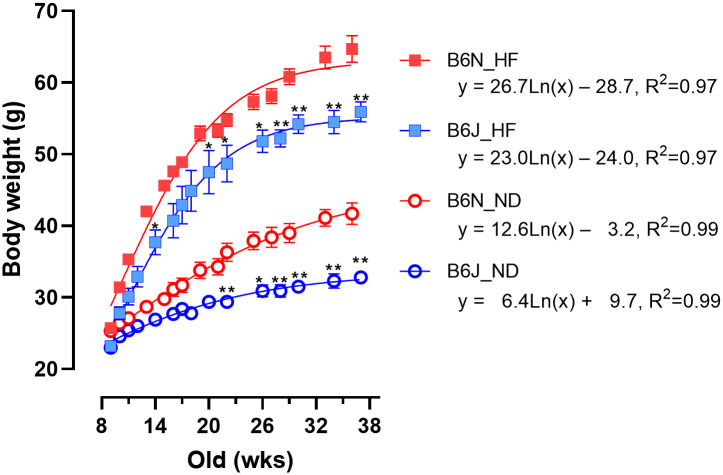
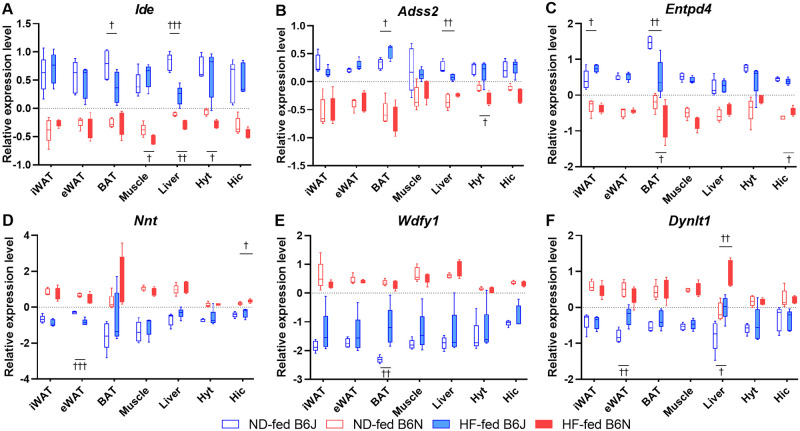
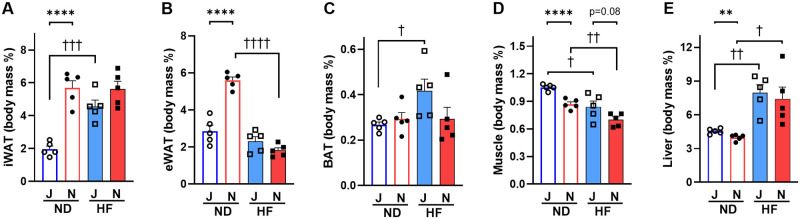
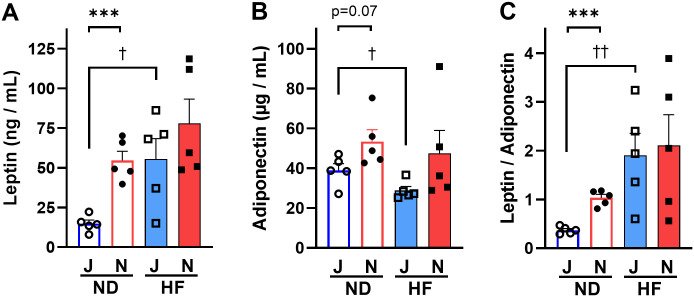
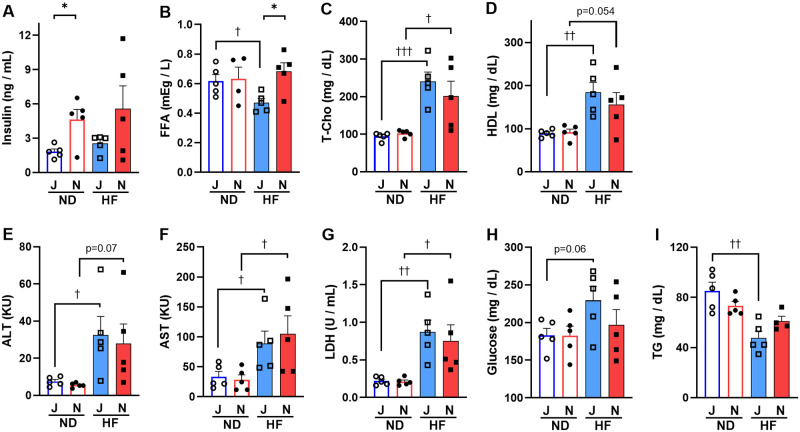
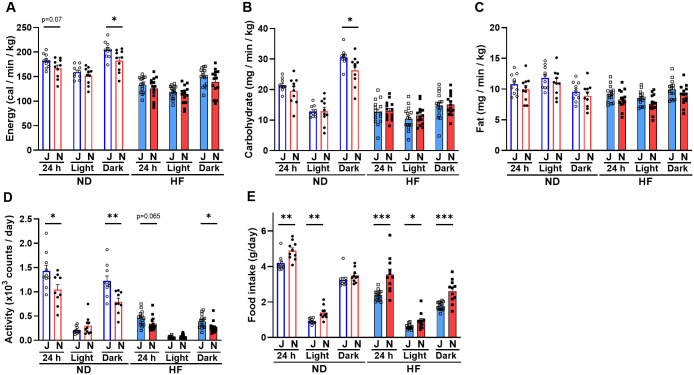
C57BL/6J (B6J) and C57BL/6N (B6N) mice are the most frequently used substrains in C57BL/6 (B6) inbred mice, serving as physiological models for in vivo studies and as background strains to build transgenic mice. However, the differences in metabolic phenotypes between B6J and B6N mice are not coherent, and genotypic differences in metabolically important tissues have not been well studied. The phenotypic differences between B6J and B6N substrains have often been attributed to the role of the nicotinamide nucleotide transhydrogenase (Nnt) gene, whereby B6J has a spontaneous missense mutation of Nnt. Nevertheless, phenotypic differences between the two cannot be explained by Nnt mutations alone, especially in metabolic traits. Therefore, we aimed to investigate the genetic cause of the phenotypic differences between B6J and B6N mice. Determining consistent genetic differences across multiple tissues involved in metabolic traits such as subcutaneous and visceral white adipose tissues, brown adipose tissue, skeletal muscle, liver, hypothalamus, and hippocampus, may help explain phenotypic differences in metabolism between the two substrains. We report candidate genes along with comparative data on body weight, tissue weight, blood components involved in metabolism, and energy balance of B6J and B6N mice. Insulin degrading enzyme, adenylosuccinate synthase 2, and ectonucleotide triphosphate diphosphohydrolase 4 were highly expressed in B6J mice compared with those in B6N mice, and Nnt, WD repeat and FYVE domain containing 1, and dynein light chain Tctex-type 1 were less expressed in B6J mice compared with those in B6N mice in all seven tissues. Considering the extremely wide use of both substrains and their critical importance in generating transgenic and knock-out models, these findings guide future research across several interrelated fields.
C57BL/6J(B6J)和 C57BL/6N(B6N)小鼠是 C57BL/6(B6)近交系小鼠中最常用的亚系,它们作为体内研究的生理模型和构建转基因小鼠的背景品系。然而,B6J 和 B6N 小鼠之间代谢表型的差异并不一致,而且在代谢重要组织中的基因型差异尚未得到很好的研究。B6J 和 B6N 亚系之间的表型差异通常归因于烟酰胺核苷酸转氢酶(Nnt)基因的作用,其中 B6J 有 Nnt 的自发错义突变。然而,仅 Nnt 突变并不能解释这两个亚系之间的表型差异,特别是在代谢特征方面。因此,我们旨在研究 B6J 和 B6N 小鼠之间表型差异的遗传原因。确定参与代谢特征(如皮下和内脏白色脂肪组织、棕色脂肪组织、骨骼肌、肝脏、下丘脑和海马体)的多个组织中一致的遗传差异,可能有助于解释这两个亚系之间代谢表型的差异。我们报告了候选基因以及 B6J 和 B6N 小鼠体重、组织重量、代谢相关血液成分和能量平衡的比较数据。与 B6N 小鼠相比,胰岛素降解酶、腺嘌呤核苷酸琥珀酸合成酶 2 和核苷酸三磷酸二磷酸水解酶 4 在 B6J 小鼠中高度表达,而 Nnt、WD 重复和 FYVE 结构域包含蛋白 1 和动力蛋白轻链 Tctex 型 1 在 B6J 小鼠中表达水平低于 B6N 小鼠,在所有七个组织中均是如此。考虑到这两个亚系的极其广泛应用及其在生成转基因和敲除模型方面的重要性,这些发现指导了未来在几个相互关联的领域进行的研究。