School of Nursing and Rehabilitation, Cheeloo College of Medicine, Shandong University, Jinan, 250012, China.
Department of Biomedical Engineering, College of Science and Technology, Konkuk University, Chungju, Korea.
BMC Oral Health. 2022 Dec 22;22(1):626. doi: 10.1186/s12903-022-02665-6.
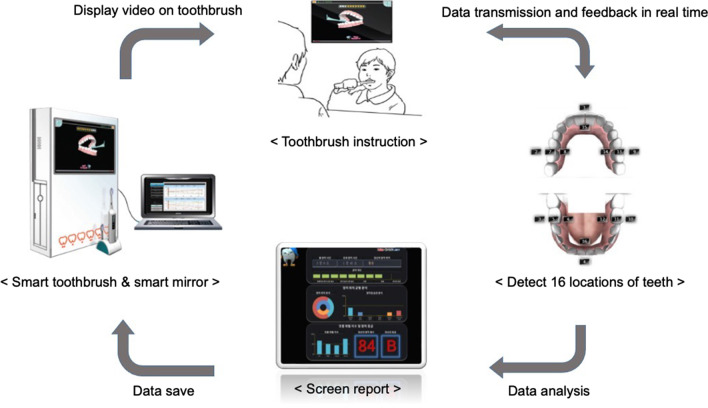
School children are in a developmental period in which permanent teeth replace primary dentition. It is also a period with a high incidence of gingivitis and caries, which can be improved with adequate tooth brushing. Advances in information technology have led to the development of smart health devices that assist in tooth brushing. We compared the effectiveness of computer-assisted toothbrushing using a toothbrushing instruction (TBI) method called the smart toothbrush and smart mirror (STM) system with that of conventional TBI (verbal instructions) for plaque control in school children.
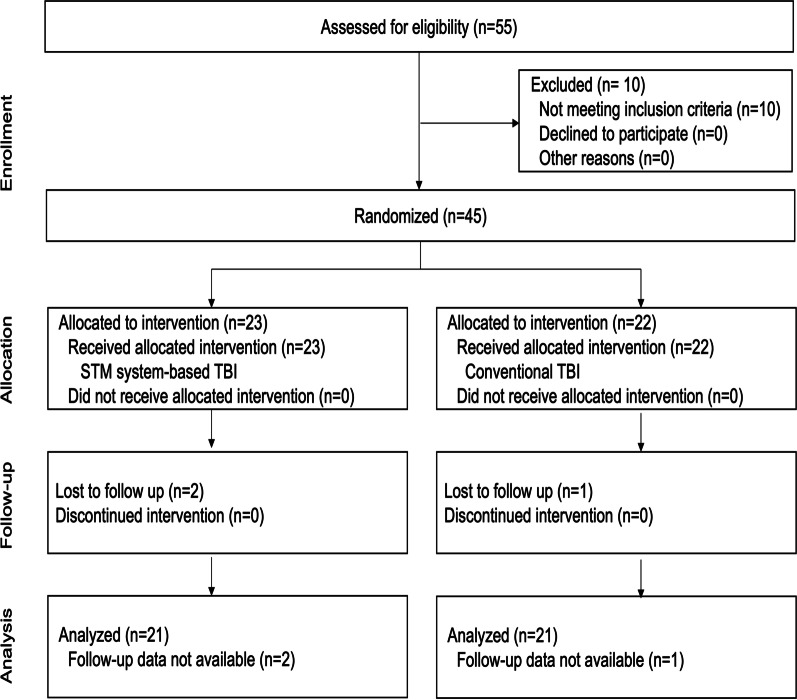
This randomized controlled clinical trial analyzed and compared the reduction of the modified Quigley-Hein plaque index between the two methods in 42 school children. The participants were randomly assigned to the STM system group (n = 21) or conventional-TBI group (n = 21). The plaque indices were evaluated at baseline, immediately after TBI (day 0), and 1 week and 1 month after TBI.
The STM system and conventional TBI led to an average reduction of 40.50% and 40.57%, respectively, in whole mouth plaque. Reductions in the plaque indices within each tested time period were observed in both groups (P < 0.001), and the mean plaque reduction did not differ between the two groups (P = 0.44).
The present study tested a computer assisted system for TBI, more studies are needed to confirm its usefulness in different objectives. Clinical relevance The computer-assisted STM system may be an alternative of TBI for children. Trial registration ClinicalTrials.gov (NCT04627324) Registered 13/11/2020-Retrospectively registered, https://clinicaltrials.gov/ct2/show/NCT04627324 .
学童正处于恒牙替换乳牙的发育期。这也是牙龈炎和龋齿高发的时期,通过充分刷牙可以改善这一情况。信息技术的进步催生了智能健康设备,帮助人们刷牙。我们比较了使用一种名为智能牙刷和智能镜(STM)系统的计算机辅助刷牙指导(TBI)方法与传统 TBI(口头指导)在控制学童菌斑方面的效果。
这项随机对照临床试验分析并比较了 42 名学童中两种方法对改良 Quigley-Hein 菌斑指数降低的效果。参与者被随机分配到 STM 系统组(n = 21)或传统 TBI 组(n = 21)。在基线、TBI 后即刻(第 0 天)以及 TBI 后 1 周和 1 个月时评估菌斑指数。
STM 系统和传统 TBI 分别使全口菌斑平均降低了 40.50%和 40.57%。两组在每个测试时间段内的菌斑指数均有降低(P < 0.001),两组之间的平均菌斑减少没有差异(P = 0.44)。
本研究测试了一种用于 TBI 的计算机辅助系统,还需要更多的研究来确认其在不同目标中的有效性。临床意义计算机辅助的 STM 系统可能是儿童 TBI 的一种替代方法。试验注册ClinicalTrials.gov(NCT04627324)2020 年 11 月 13 日注册-回顾性注册,https://clinicaltrials.gov/ct2/show/NCT04627324。