School of Nursing and Midwifery, Aga Khan University, Stadium Road, P.O. Box 3500, Karachi, Pakistan.
Department of Community Health Sciences, Aga Khan University, Stadium Road, P.O. Box 3500, Karachi, Pakistan.
BMC Womens Health. 2022 Dec 22;22(1):540. doi: 10.1186/s12905-022-02011-6.
Gender discrimination is any unequal treatment of a person based on their sex. Women and girls are most likely to experience the negative impact of gender discrimination. The aim of this study is to assess the factors that influence gender discrimination in Pakistan, and its impact on women's life.
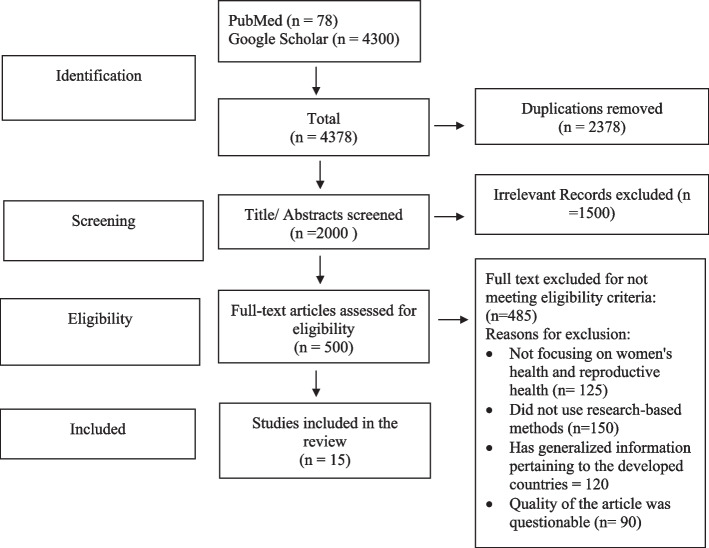
A mixed method approach was used in the study in which a systematic review was done in phase one to explore the themes on gender discrimination, and qualitative interviews were conducted in phase two to explore the perception of people regarding gender discrimination. The qualitative interviews (in-depth interviews and focus group discussions) were conducted from married men and women, adolescent boys and girls, Healthcare Professionals (HCPs), Lady Health Visitors (LHVs) and Community Midwives (CMWs). The qualitative interviews were analyzed both manually and electronically through QSR NVivo 10. The triangulation of data from the systematic review and qualitative interviews were done to explore the gender discrimination related issues in Pakistan.
The six major themes have emerged from the systematic review and qualitative interviews. It includes (1) Status of a woman in the society (2) Gender inequality in health (3) Gender inequality in education (4) Gender inequality in employment (5) Gender biased social norms and cultural practices and (6) Micro and macro level recommendations. In addition, a woman is often viewed as a sexual object and dependent being who lacks self identity unless being married. Furthermore, women are restricted to household and child rearing responsibilities and are often neglected and forced to suppress self-expression. Likewise, men are viewed as dominant figures in lives of women who usually makes all family decisions. They are considered as financial providers and source of protection. Moreover, women face gender discrimination in many aspects of life including education and access to health care.
Gender discrimination is deeply rooted in the Pakistani society. To prevent gender discrimination, the entire society, especially women should be educated and gendered sensitized to improve the status of women in Pakistan.
性别歧视是指基于性别的任何不平等对待。妇女和女童最有可能受到性别歧视的负面影响。本研究旨在评估影响巴基斯坦性别歧视的因素及其对妇女生活的影响。
本研究采用混合方法,第一阶段进行系统评价,以探讨性别歧视的主题;第二阶段进行定性访谈,以探讨人们对性别歧视的看法。定性访谈(深度访谈和焦点小组讨论)在已婚男女、青少年男女、医疗保健专业人员(HCPs)、女卫生员(LHVs)和社区助产士(CMWs)中进行。定性访谈通过 QSR NVivo 10 进行手动和电子分析。通过系统评价和定性访谈的数据三角测量,探讨了巴基斯坦与性别歧视相关的问题。
系统评价和定性访谈中出现了六个主要主题。包括:(1)社会中妇女的地位;(2)卫生方面的性别不平等;(3)教育方面的性别不平等;(4)就业方面的性别不平等;(5)性别偏见的社会规范和文化习俗;(6)微观和宏观层面的建议。此外,人们通常将女性视为性对象和依赖者,缺乏自我认同,除非结婚。此外,女性被限制在家务和育儿责任中,往往被忽视和被迫压抑自我表达。同样,男性被视为女性生活中的主导人物,通常做出所有家庭决策。他们被视为经济提供者和保护者。此外,女性在生活的许多方面都面临性别歧视,包括教育和获得医疗保健。
性别歧视在巴基斯坦社会根深蒂固。为了防止性别歧视,整个社会,特别是妇女,应该接受教育和性别敏感教育,以提高巴基斯坦妇女的地位。