Todros Silvia, Spadoni Silvia, Barbon Silvia, Stocco Elena, Confalonieri Marta, Porzionato Andrea, Pavan Piero Giovanni
Department of Industrial Engineering, University of Padova, via Venezia 1, 35131 Padova, Italy.
Department of Neurosciences, Section of Human Anatomy, University of Padova, via A. Gabelli 65, 35121 Padova, Italy.
Bioengineering (Basel). 2022 Dec 10;9(12):789. doi: 10.3390/bioengineering9120789.
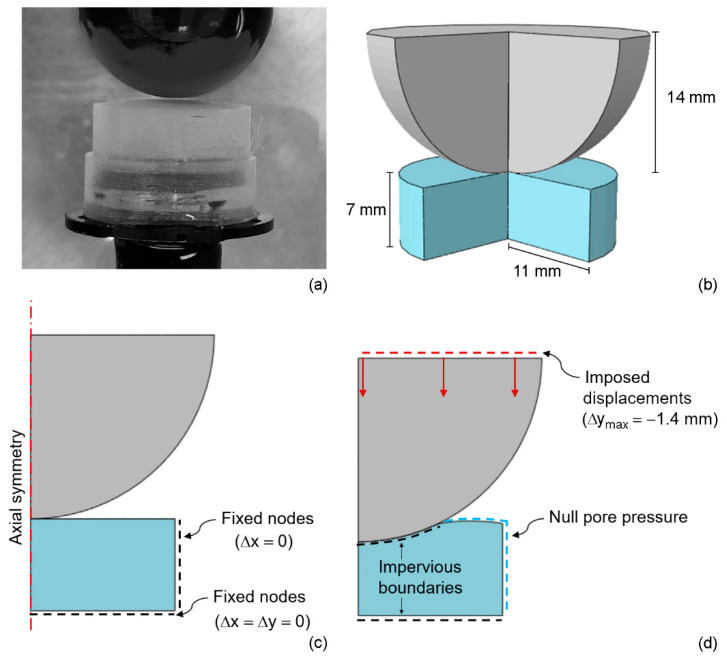
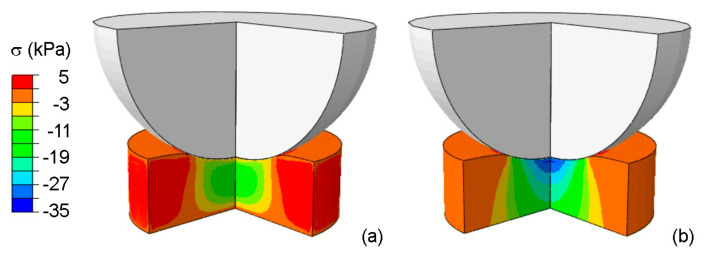
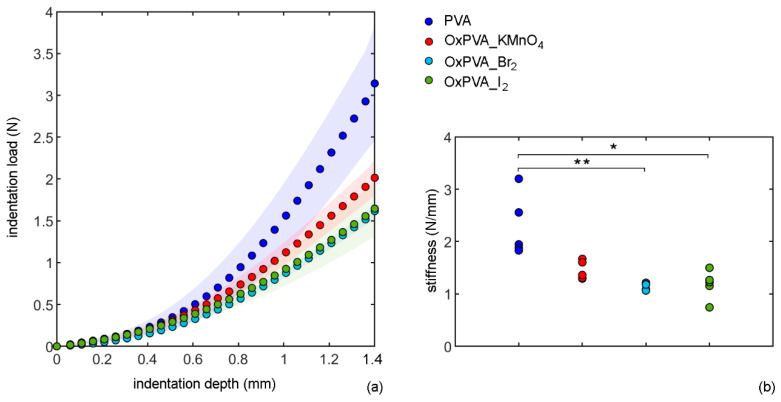
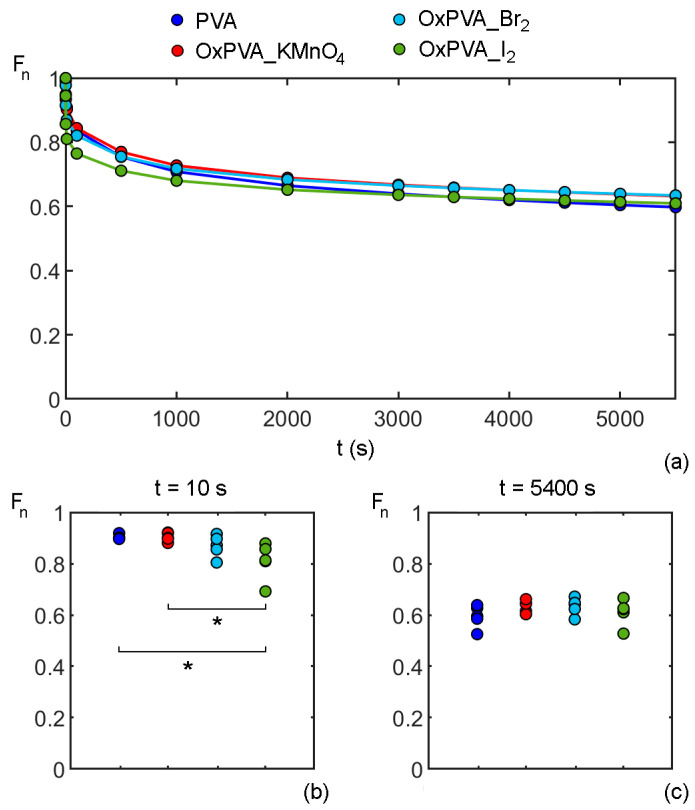
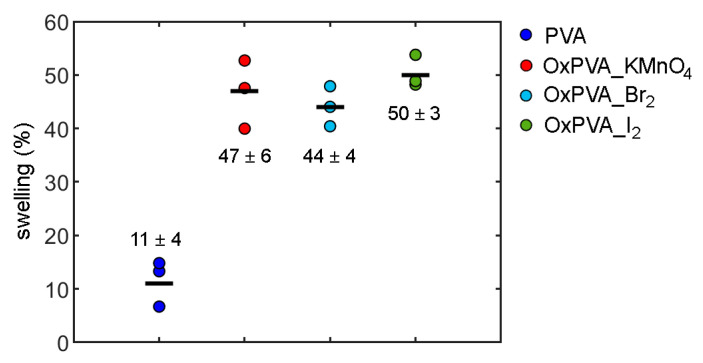
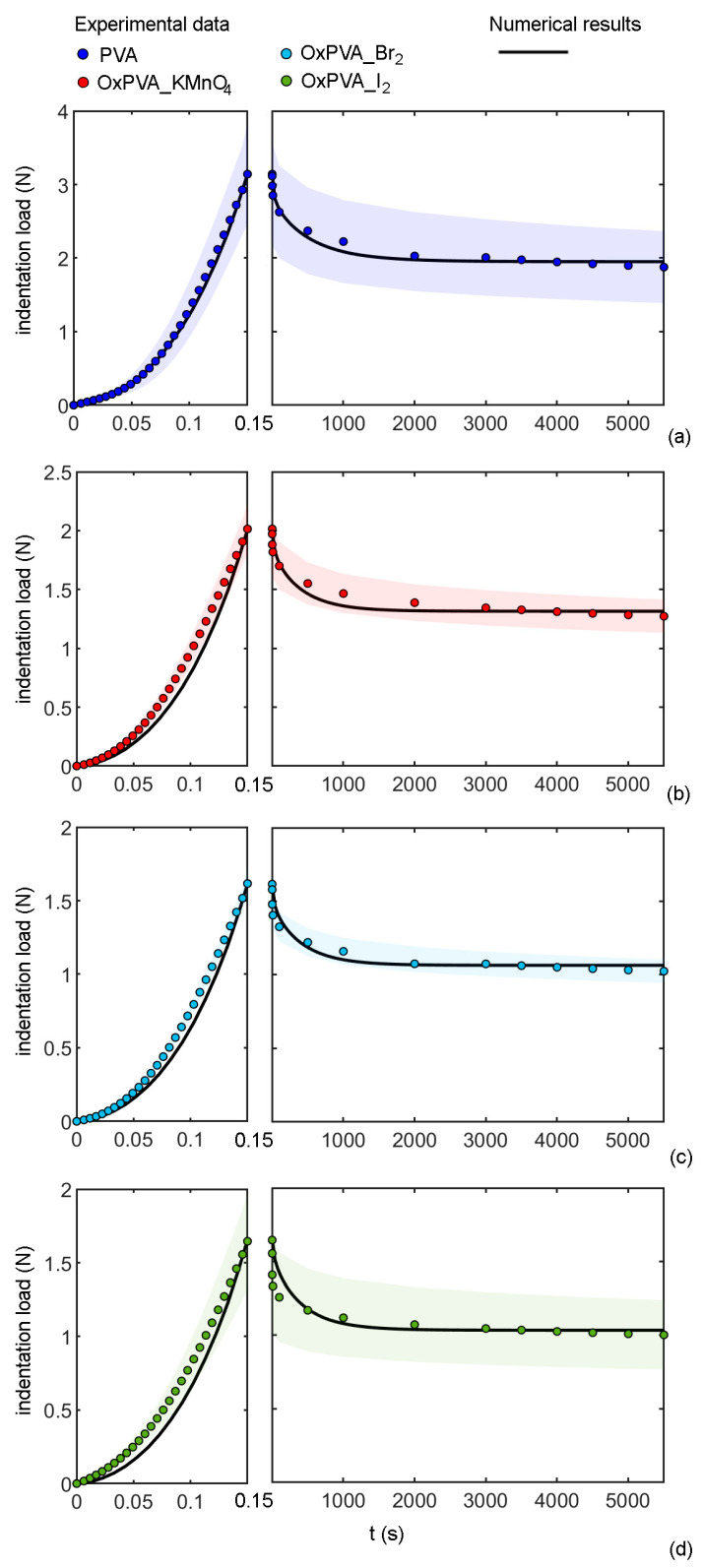
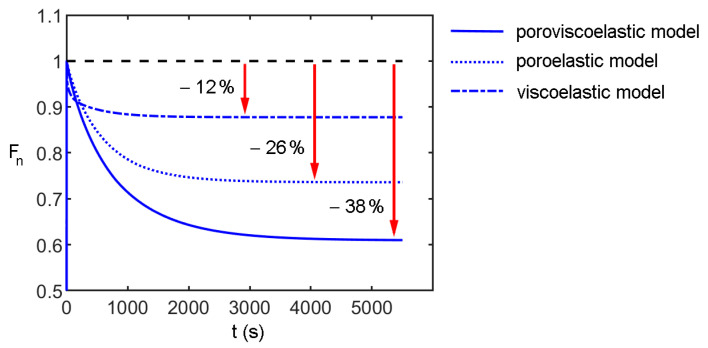
Polyvinyl alcohol (PVA) hydrogels are extensively used as scaffolds for tissue engineering, although their biodegradation properties have not been optimized yet. To overcome this limitation, partially oxidized PVA has been developed by means of different oxidizing agents, obtaining scaffolds with improved biodegradability. The oxidation reaction also allows tuning the mechanical properties, which are essential for effective use in vivo. In this work, the compressive mechanical behavior of native and partially oxidized PVA hydrogels is investigated, to evaluate the effect of different oxidizing agents, i.e., potassium permanganate, bromine, and iodine. For this purpose, PVA hydrogels are tested by means of indentation tests, also considering the time-dependent mechanical response. Indentation results show that the oxidation reduces the compressive stiffness from about 2.3 N/mm for native PVA to 1.1 ÷ 1.4 N/mm for oxidized PVA. During the consolidation, PVA hydrogels exhibit a force reduction of about 40% and this behavior is unaffected by the oxidizing treatment. A poroviscoelastic constitutive model is developed to describe the time-dependent mechanical response, accounting for the viscoelastic polymer matrix properties and the flow of water molecules within the matrix during long-term compression. This model allows to estimate the long-term Young's modulus of PVA hydrogels in drained conditions (66 kPa for native PVA and 34-42 kPa for oxidized PVA) and can be exploited to evaluate their performances under compressive stress in vivo, as in the case of cartilage tissue engineering.
聚乙烯醇(PVA)水凝胶被广泛用作组织工程支架,尽管其生物降解性能尚未得到优化。为克服这一局限性,已通过不同的氧化剂开发出部分氧化的PVA,从而获得了具有更好生物降解性的支架。氧化反应还能调节机械性能,这对于在体内有效应用至关重要。在这项工作中,研究了天然和部分氧化的PVA水凝胶的压缩力学行为,以评估不同氧化剂(即高锰酸钾、溴和碘)的效果。为此,通过压痕试验对PVA水凝胶进行测试,同时也考虑了随时间变化的力学响应。压痕结果表明,氧化使压缩刚度从天然PVA的约2.3 N/mm降低至氧化PVA的1.1÷1.4 N/mm。在固结过程中,PVA水凝胶的力降低约40%,且这种行为不受氧化处理的影响。开发了一种孔隙粘弹性本构模型来描述随时间变化的力学响应,该模型考虑了粘弹性聚合物基体性能以及长期压缩过程中水分子在基体内的流动。该模型能够估计排水条件下PVA水凝胶的长期杨氏模量(天然PVA为66 kPa,氧化PVA为34 - 42 kPa),并且可用于评估其在体内压缩应力下的性能,如在软骨组织工程中的情况。