Aitchison Alexandra Hunter, Allen Nicholas B, Mitra Kishen, Abar Bijan, O'Neill Conor N, Bagheri Kian, Anastasio Albert T, Adams Samuel B
Department of Orthopaedic Surgery, Duke University Health System, Durham, NC 27710, USA.
Department of Mechanical Engineering, Duke University, Durham, NC 27710, USA.
Gels. 2024 Dec 14;10(12):829. doi: 10.3390/gels10120829.
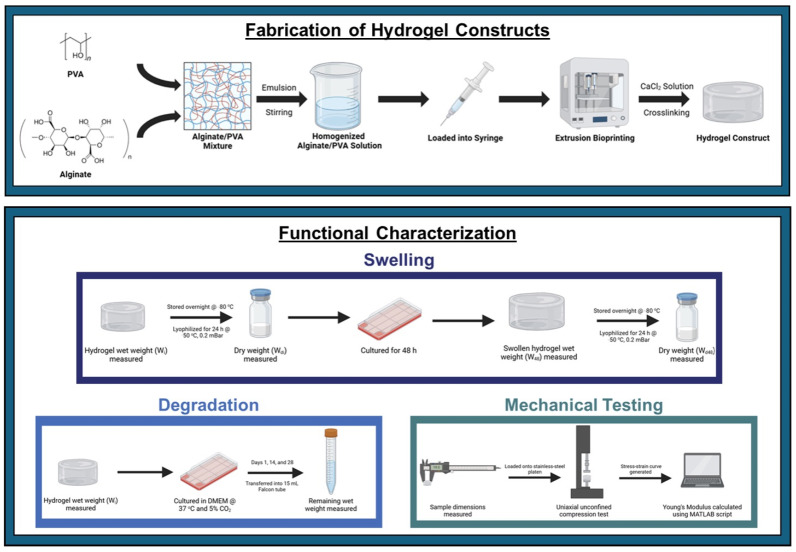
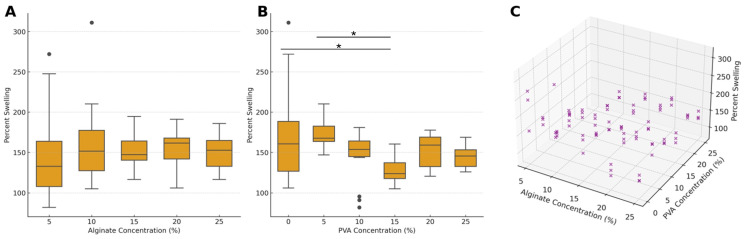
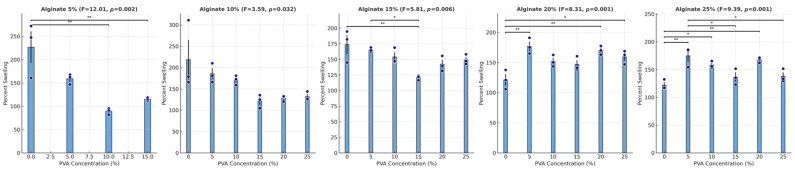
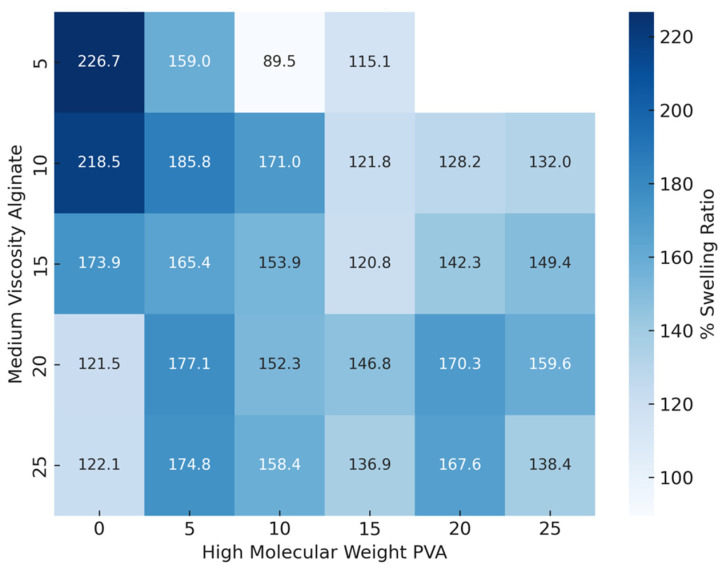
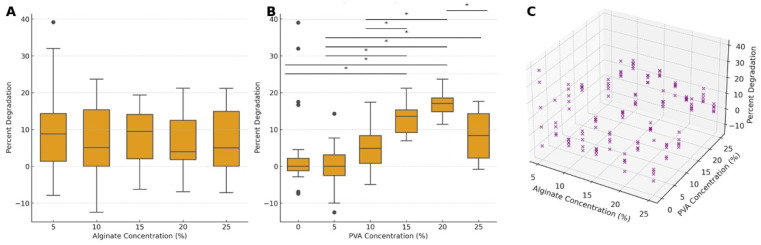
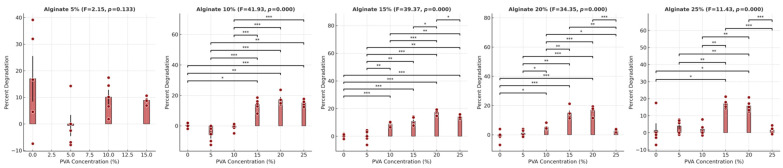
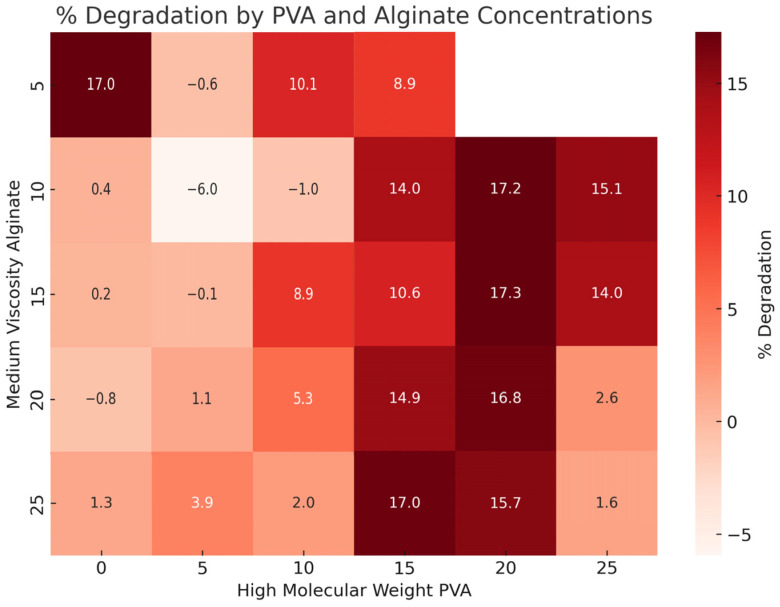
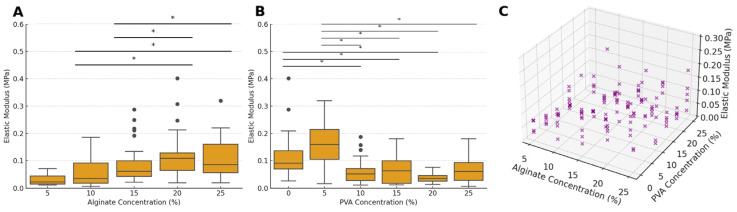
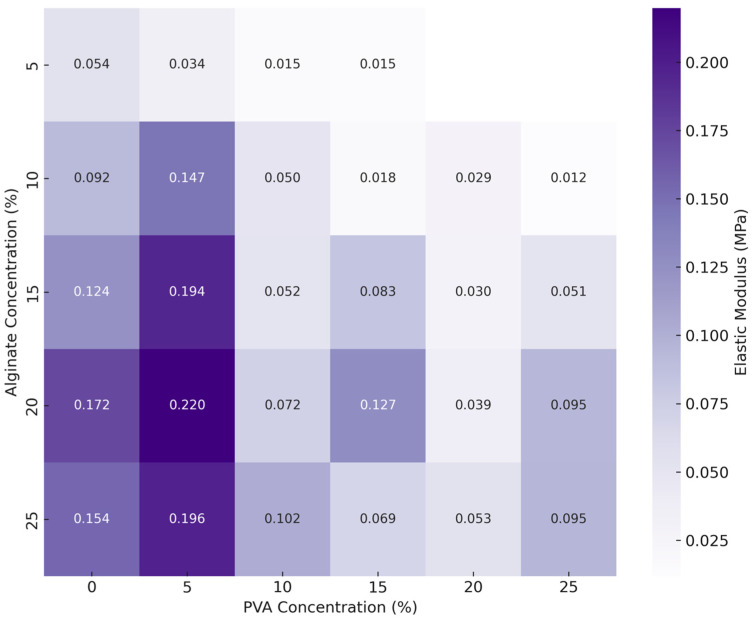
This study investigates 3D extrusion bioinks for cartilage tissue engineering by characterizing the physical properties of 3D-printed scaffolds containing varying alginate and polyvinyl alcohol (PVA) concentrations. We systematically investigated the effects of increasing PVA and alginate concentrations on swelling, degradation, and the elastic modulus of printed hydrogels. Swelling decreased significantly with increased PVA concentrations, while degradation rates rose with higher PVA concentrations, underscoring the role of PVA in modulating hydrogel matrix stability. The highest elastic modulus value was achieved with a composite of 5% PVA and 20% alginate, reaching 0.22 MPa, which approaches that of native cartilage. These findings demonstrate that adjusting PVA and alginate concentrations enables the development of bioinks with tailored physical and mechanical properties, supporting their potential use in cartilage tissue engineering and other biomedical applications.
本研究通过表征含有不同藻酸盐和聚乙烯醇(PVA)浓度的3D打印支架的物理性质,来研究用于软骨组织工程的3D挤出生物墨水。我们系统地研究了增加PVA和藻酸盐浓度对打印水凝胶的溶胀、降解和弹性模量的影响。随着PVA浓度的增加,溶胀显著降低,而降解速率随着PVA浓度的升高而上升,这突出了PVA在调节水凝胶基质稳定性中的作用。5% PVA和20%藻酸盐的复合材料实现了最高弹性模量值,达到0.22 MPa,接近天然软骨的弹性模量。这些发现表明,调整PVA和藻酸盐浓度能够开发出具有定制物理和机械性能的生物墨水,支持它们在软骨组织工程和其他生物医学应用中的潜在用途。