Peters Vera B M, Arulkumaran Nishkantha, Melis Miranda J, Gaupp Charlotte, Roger Thierry, Shankar-Hari Manu, Singer Mervyn
Bloomsbury Institute of Intensive Care Medicine, Division of Medicine, University College London, London WC1E 6BT, UK.
Infectious Diseases Service, Department of Medicine, Lausanne University Hospital and University of Lausanne, CH-1066 Lausanne, Switzerland.
Life (Basel). 2022 Dec 6;12(12):2034. doi: 10.3390/life12122034.
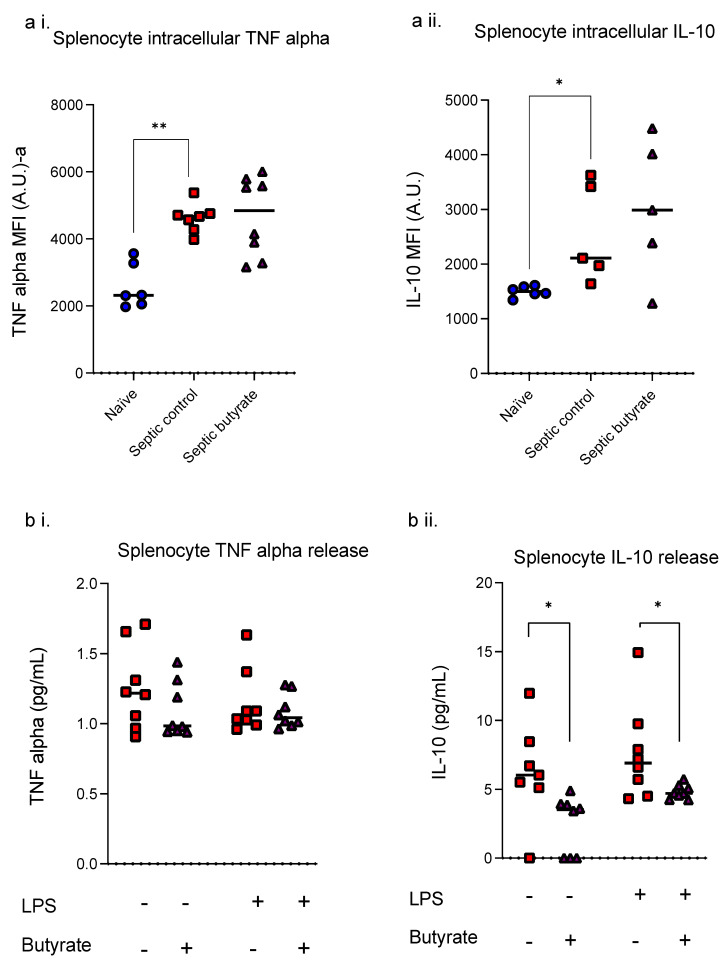
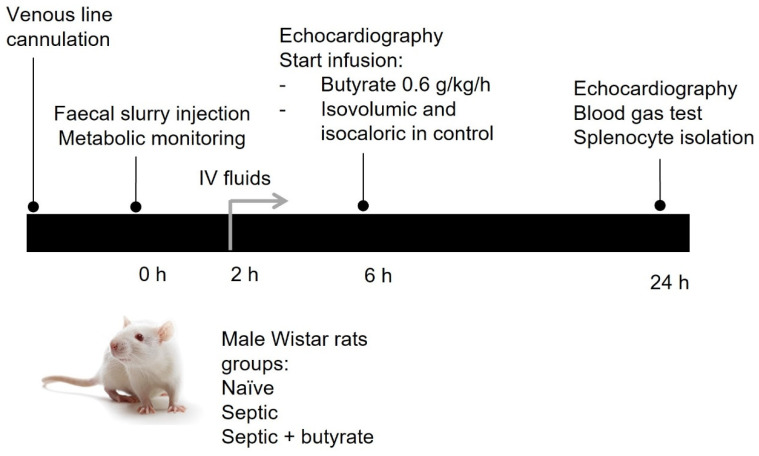
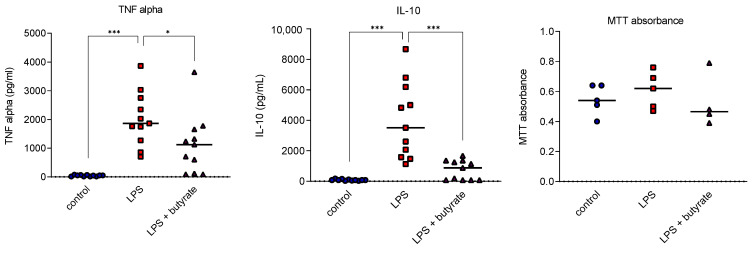
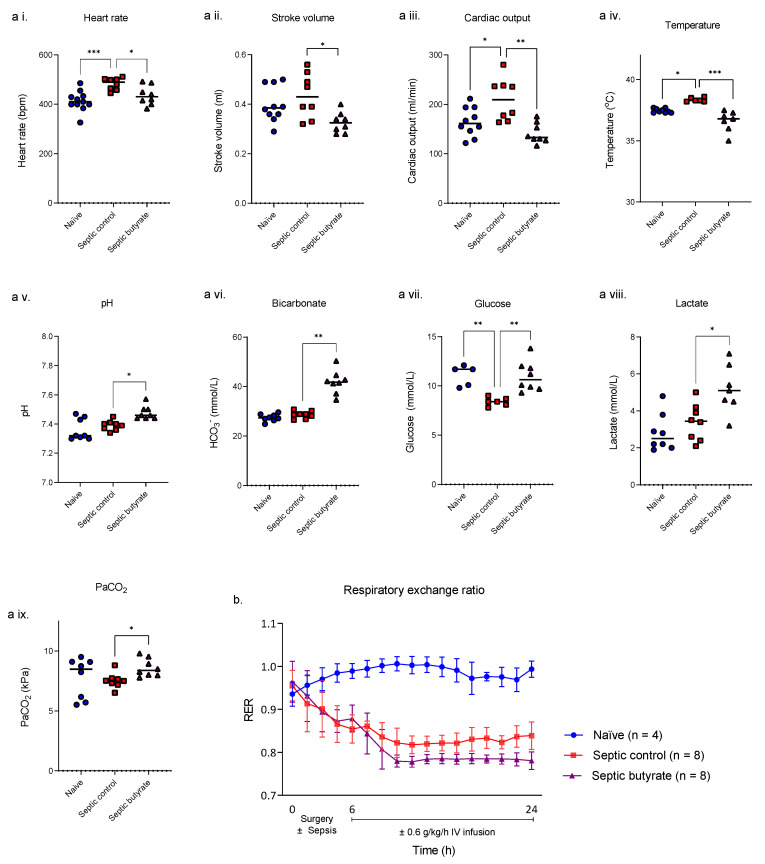
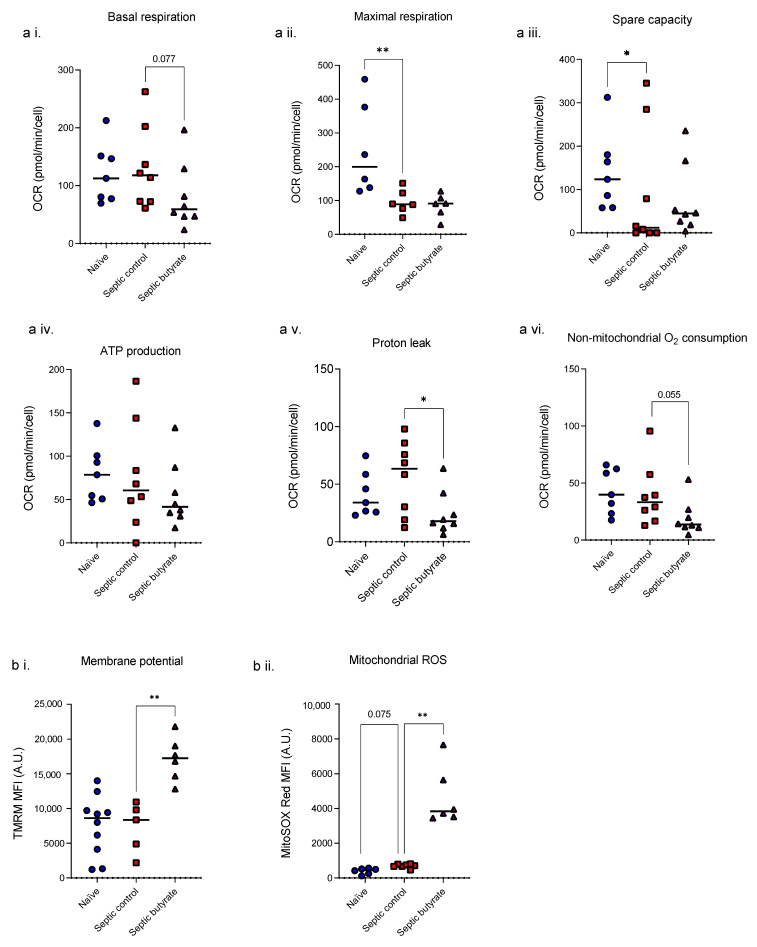
Mitochondrial dysfunction and immune cell dysfunction are commonplace in sepsis and are associated with increased mortality risk. The short chain fatty acid, butyrate, is known to have anti-inflammatory effects and promote mitochondrial biogenesis. We therefore explored the immunometabolic effects of butyrate in an animal model of sepsis. Isolated healthy human volunteer peripheral mononuclear cells were stimulated with LPS in the presence of absence of butyrate, and released cytokines measured. Male Wistar rats housed in metabolic cages received either intravenous butyrate infusion or placebo commencing 6 h following faecal peritonitis induction. At 24 h, splenocytes were isolated for high-resolution respirometry, and measurement of mitochondrial membrane potential (MMP), reactive oxygen species (mtROS), and intracellular cytokines (TNF alpha, IL-10) using flow cytometry. Isolated splenocytes from septic and septic butyrate treated rats were stimulated with LPS for 18 h and the effects of butyrate on cytokine release assessed. Ex vivo, butyrate (1.8 mM) reduced LPS-induced TNF alpha (p = 0.019) and IL-10 (p = 0.001) release by human PBMCs. In septic animals butyrate infusion reduced the respiratory exchange ratio (p < 0.001), consistent with increased fat metabolism. This was associated with a reduction in cardiac output (p = 0.001), and increased lactate (p = 0.031) compared to placebo-treated septic animals (p < 0.05). Butyrate treatment was associated with a reduction in splenocyte basal respiration (p = 0.077), proton leak (p = 0.022), and non-mitochondrial respiration (p = 0.055), and an increase in MMP (p = 0.007) and mtROS (p = 0.027) compared to untreated septic animals. Splenocyte intracellular cytokines were unaffected by butyrate, although LPS-induced IL-10 release was impaired (p = 0.039). In summary, butyrate supplementation exacerbates myocardial and immune cell mitochondrial dysfunction in a rat model of faecal peritonitis.
线粒体功能障碍和免疫细胞功能障碍在脓毒症中很常见,且与死亡风险增加相关。已知短链脂肪酸丁酸具有抗炎作用并能促进线粒体生物合成。因此,我们在脓毒症动物模型中探究了丁酸的免疫代谢效应。在有或无丁酸存在的情况下,用脂多糖刺激分离出的健康人类志愿者外周血单核细胞,并检测释放的细胞因子。饲养在代谢笼中的雄性Wistar大鼠在粪便性腹膜炎诱导后6小时开始接受静脉注射丁酸或安慰剂。24小时时,分离脾细胞进行高分辨率呼吸测定,并使用流式细胞术测量线粒体膜电位(MMP)、活性氧(mtROS)和细胞内细胞因子(肿瘤坏死因子α、白细胞介素-10)。用脂多糖刺激来自脓毒症大鼠和经丁酸治疗的脓毒症大鼠的分离脾细胞18小时,并评估丁酸对细胞因子释放的影响。在体外,丁酸(1.8 mM)可降低脂多糖诱导的人外周血单核细胞肿瘤坏死因子α(p = 0.019)和白细胞介素-10(p = 0.001)的释放。在脓毒症动物中,输注丁酸可降低呼吸交换率(p < 0.001),这与脂肪代谢增加一致。与接受安慰剂治疗的脓毒症动物相比,这与心输出量降低(p = 0.001)和乳酸增加(p = 0.031)相关(p < 0.05)。与未治疗的脓毒症动物相比,丁酸治疗与脾细胞基础呼吸(p = 0.077)、质子泄漏(p = 0.022)和非线粒体呼吸(p = 0.055)降低以及MMP(p = 0.007)和mtROS(p = 0.027)增加相关。脾细胞内细胞因子不受丁酸影响,尽管脂多糖诱导的白细胞介素-10释放受损(p = 0.039)。总之,在粪便性腹膜炎大鼠模型中,补充丁酸会加重心肌和免疫细胞的线粒体功能障碍。