Almutairi Fahad M, Khan Amir, Ajmal Mohammad Rehan, Khan Rizwan Hasan, Khan Mohd Farhan, Lal Hira, Ullah Mohammad Fahad, Ahmad Faheem, Ahamad Lukman, Khan Arshad, Arif Hussain, Ayaz Ahmad M
Physical Biochemistry Research Laboratory, Biochemistry Department, Faculty of Science, University of Tabuk, Tabuk 71491, Saudi Arabia.
Department of Botany, Aligarh Muslim University, Aligarh 202002, India.
Life (Basel). 2022 Dec 15;12(12):2109. doi: 10.3390/life12122109.
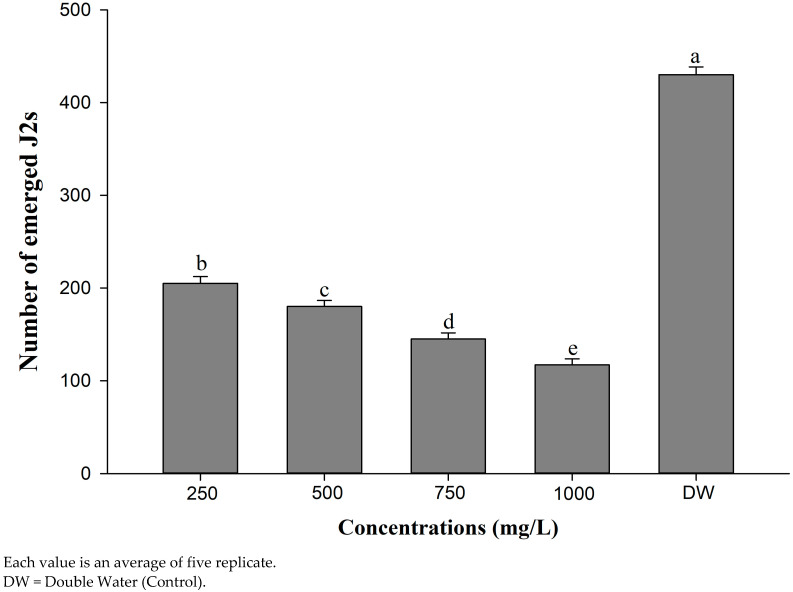
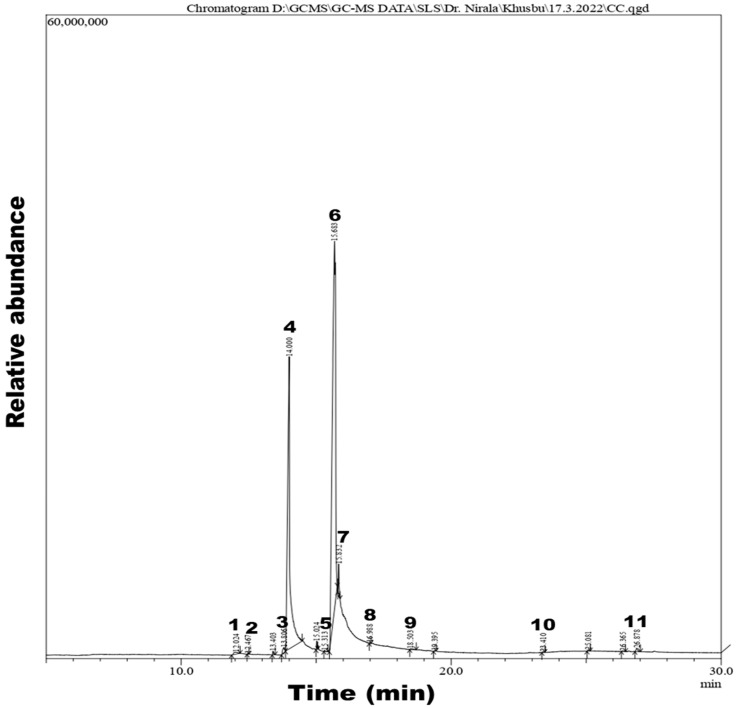
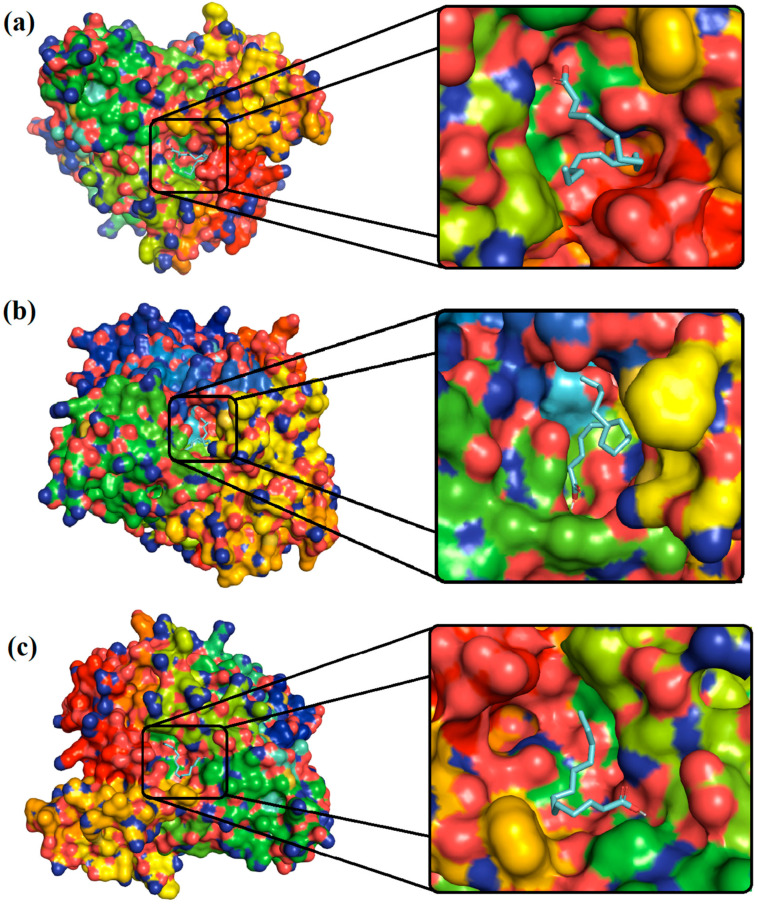
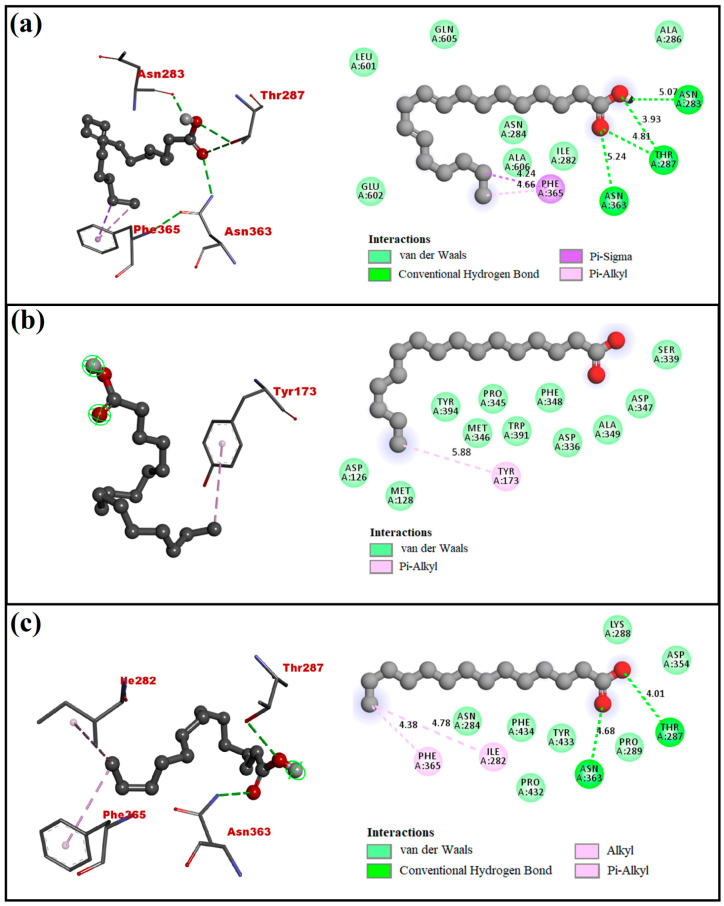
The root-knot nematode is one of the most damaging plant-parasitic nematodes and is responsible for significant crop losses worldwide. Rising human health and environmental concerns have led to the withdrawal of commonly used chemical nematicides. There has been a tremendous demand for eco-friendly bio-nematicides with beneficial properties to the nematode hosting plants, which encourages the need for alternative nematode management practices. The current study was undertaken to determine the nematicidal potential of cotton seed cake (CSC) against second-stage juvenile (J2) hatching, J2 mortality, and J2 penetration of in tomato plants in vitro. J2s and egg masses of were exposed to four concentrations (250, 500, 750, and 1000 mg/L) of CSC extracts. The higher J2 mortality and inhibition of J2 hatching were found at 1000 mg/L, while the least effective result was observed at 250 mg/L of the CSC extract. The CSC extract applied with the concentrations mentioned above also showed inhibition of J2 penetration in tomato roots; 1000 mg/L showed the highest inhibition of penetration, while 250 mg/L displayed the least inhibition. Using gas chromatography-mass spectroscopy, we identified 11 compounds, out of which 9,12-Octadecadienoic acid, Hexadecanoic acid, and Tetradecanoic acid were found as major compounds. Subsequently, in silico molecular docking was conducted to confirm the nematicidal behavior of CSC based on binding interactions of the above three major compounds with the targeted protein acetylcholine esterase (AChE) of . The values of binding free energy are -5.3, -4.5, and -4.9 kcal/mol, observed for 9,12-Octadecadienoic acid, n-Hexadecanoic acid, and Tetradecanoic acid, respectively, suggesting that 9,12-Octadecadienoic acid binds with the receptor AChE more efficiently than the other two ligands. This study indicates that CSC has nematicidal potential that can be used to control for sustainable agriculture.
根结线虫是最具破坏性的植物寄生线虫之一,在全球范围内导致了严重的作物损失。人类对健康和环境的关注度不断提高,导致常用化学杀线虫剂被淘汰。人们对具有对线虫寄主植物有益特性的环保型生物杀线虫剂有巨大需求,这促使人们需要替代的线虫管理方法。当前的研究旨在确定棉籽饼(CSC)对番茄植株体外二龄幼虫(J2)孵化、J2死亡率和J2侵入的杀线虫潜力。将J2和卵块暴露于四种浓度(250、500、750和1000 mg/L)的CSC提取物中。在1000 mg/L时发现J2死亡率较高且J2孵化受到抑制,而在250 mg/L的CSC提取物中观察到效果最差。上述浓度的CSC提取物在番茄根中也显示出对J2侵入的抑制作用;1000 mg/L表现出最高的侵入抑制率,而250 mg/L表现出最低的抑制率。通过气相色谱 - 质谱联用技术,我们鉴定出11种化合物,其中9,12 - 十八碳二烯酸、十六烷酸和十四烷酸为主要化合物。随后,进行了计算机模拟分子对接,以基于上述三种主要化合物与根结线虫靶蛋白乙酰胆碱酯酶(AChE)的结合相互作用来确认CSC的杀线虫行为。9,12 - 十八碳二烯酸、正十六烷酸和十四烷酸的结合自由能值分别为 -5.3、-4.5和 -4.9 kcal/mol,这表明9,12 - 十八碳二烯酸比其他两种配体更有效地与受体AChE结合。这项研究表明,CSC具有杀线虫潜力,可用于可持续农业中防治根结线虫。